Vogue World is coming to San Francisco in early autumn 2027. Fine. The announcement was never going to be the interesting part.
The interesting part is whether Vogue can portray the city’s fashion without reducing it to Levi’s, tech money, and a generic diversity montage. For Banquet readers, Asian designers, collectors, and neighborhoods should be central, not scenery behind the bridge.
Anna Wintour has already reached for diversity, rebelliousness, and innovation. Those words only earn their keep if the cast list and the street map do the same work.
“We’re not a society of red carpets here, we’re more about green carpets.”
Ben Ospital of Modern Appealing Clothing, to the San Francisco Chronicle after the announcement
What Is Locked, and What Is Still Fog
On 6 August 2026, Vogue named San Francisco as the next host after Milan. Vogue World: Milano lands first, on 22 September 2026, inside the Galleria Vittorio Emanuele II, with a craftsmanship brief aimed at an age of technology. Juan Costa Paz of the Paris studio Convoy will creative-direct both cities. Mayor Daniel Lurie is treating the booking as arts-led recovery: visitors, creative industries, proof the city is “on the rise.”
What Vogue has not published matters more. No exact date. No venue. No theme title. No ticket band. No sponsor stack. The San Francisco Standard has reported early meetings between Wintour and Lurie, and a Castro Theatre walk-through; treat the venue talk as rumor until the magazine prints it.
That vacuum is where the flattening happens. Levi’s is a true San Francisco origin story; it is also the easiest costume. Tech is the city’s global brand; it is also the easiest sponsor pitch. “Diverse communities living side by side,” Wintour’s phrase, can become a montage unless someone names which communities, which designers, and which rooms.
Every Edition Edits a City. Which Edit Is This?
Vogue World does not invent a city from scratch. It edits one, then livestreams the cut.
New York in 2022 sold recovery as a downtown street fair. London in 2023 sold the West End as civic charity at Theatre Royal Drury Lane. Paris in 2024 turned Place Vendôme into fashion-and-sport. Hollywood in 2025 put fashion beside film costume on the Paramount lot, including chapters that finally let Asian American costume design share the frame. Milan is selling handcraft under glass while every other fashion week panel talks about machines. The method is consistent: pick one durable local form, then hire enough models, musicians, and maisons to make it feel inevitable.
San Francisco’s durable fashion form lives elsewhere: immigrant garment labor, Pacific Rim collecting, Japanese avant-garde retail, and Chinese American designers who left Grant Avenue for Parsons and came back as proof the city once made clothes for a living. Reach for denim mythology and a tech carpet instead, and the livestream will look like every Bay Area tourism reel you have already scrolled past.
Read How Prabal Gurung Dresses the Diaspora Idea of Home for how a diaspora designer turns split geography into a wardrobe brief. San Francisco’s version of that brief is older than any single runway: families who sewed bridal dresses, imported silk, and kept Chinatown storefronts open while Union Square played carriage-trade theater.
Start on Grant Avenue
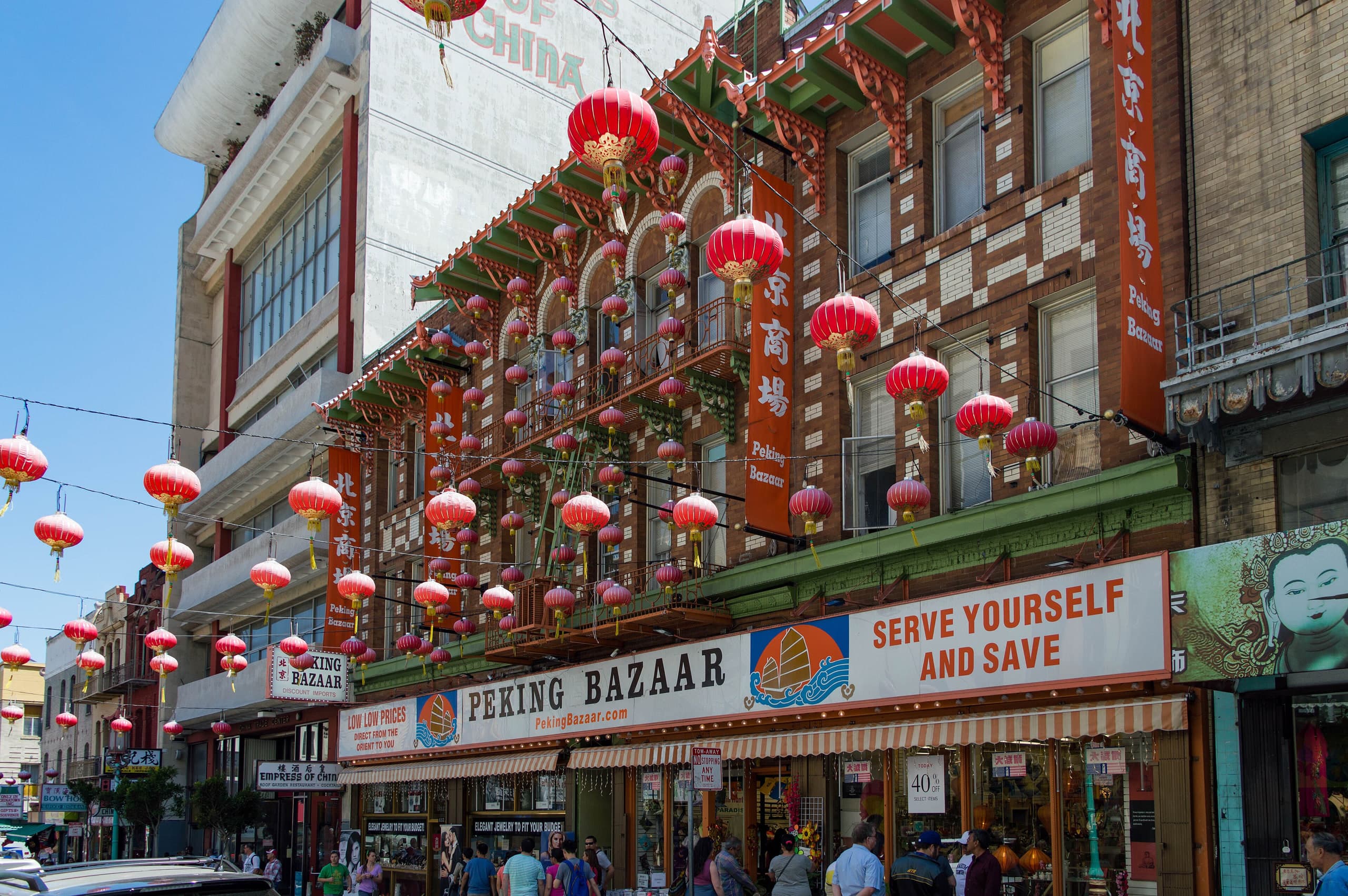
Walk Grant Avenue before you draft the guest list. KIM+ONO, the silk kimono robe house run by sisters Renee and Tiffany Tam at 729 Grant Avenue, is a contemporary Chinatown retail fact, not nostalgia. Under the lanterns you still feel the older grammar: factories, import counters, families who treated fabric as work rather than a mood board.
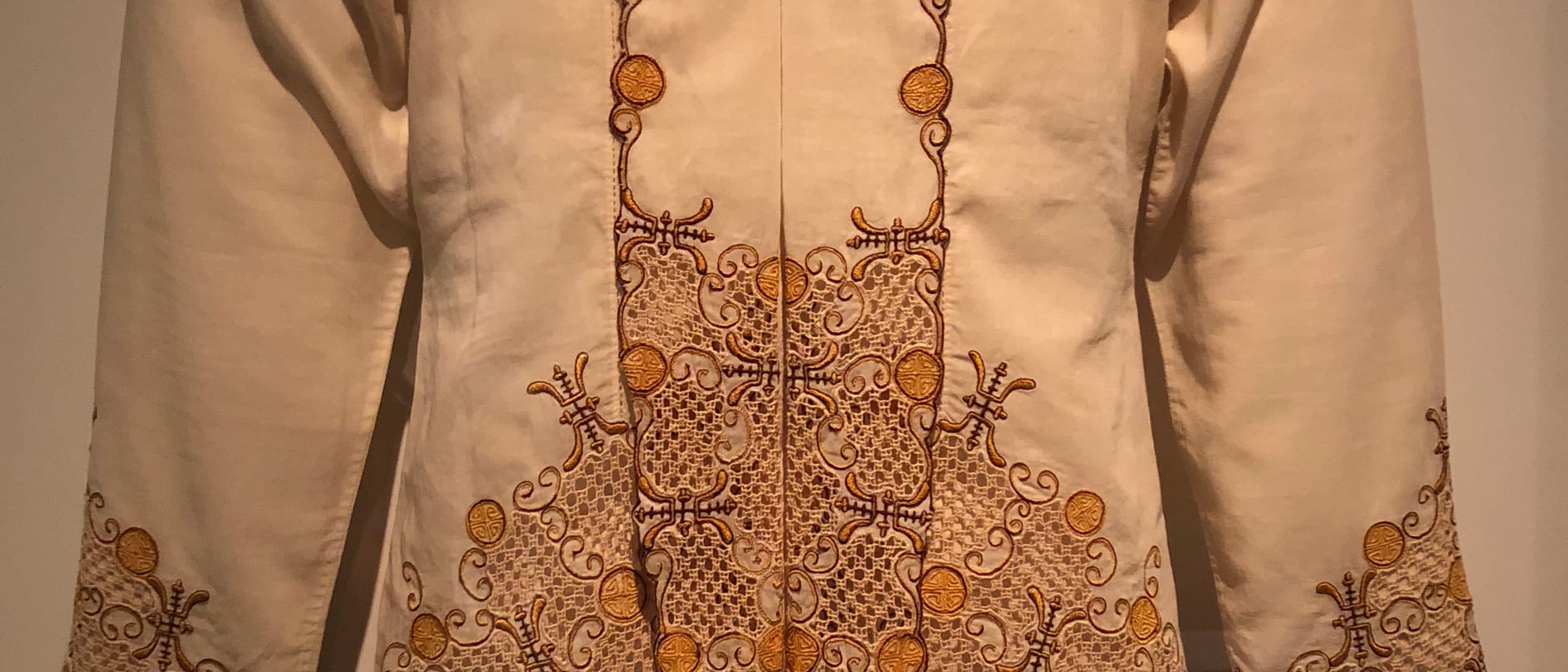
Kaisik Wong is the clearest local cast argument. Born in Chinatown in 1950, he silk-screened young, studied at the Pacific Fashion Institute, and made ceremonial, cosmic clothes that San Francisco’s counterculture actually wore. The de Young gave him a hometown retrospective, True Couture, across late 1995 into early 1996. In 2002, Nicolas Ghesquière admitted Balenciaga’s spring patchwork vest had copied Wong’s 1973 design from Native Funk & Flash. If Vogue wants rebelliousness with receipts, start there.
Then name the commercial diaspora track without pretending either man is a mascot. Derek Lam, born in San Francisco in 1967, grew up inside a Chinese American merchant family steeped in Chinatown retail and a grandparents’ bridal factory. Peter Som, another Bay Area Chinese American designer, came up through Parsons and New York houses. American luxury sportswear and evening polish with an origin story east of Union Square: that is already a San Francisco fashion export. Neither needs to be the only Asian name on the bill. They prove the city produced global Chinese American fashion without waiting for a livestream.
Institutions already did the quieter homework. The de Young’s Fashioning San Francisco (20 January to 11 August 2024) put roughly a century of local wardrobes on view, including more than 500 ensembles gifted by Peninsula collector Christine Suppes. Japanese avant-garde houses sit in that collection as San Francisco taste, not imported novelty. Years earlier, the Asian Art Museum’s Kimono Refashioned (2019), drawn from the Kyoto Costume Institute, made the Pacific Rim fashion argument in Civic Center. Independent retail keeps it live: Modern Appealing Clothing in Hayes Valley has sold Belgian and Japanese radicals since 1980.
Levi Strauss belongs in a footnote of origin, not the title card. Gap’s Embarcadero shows and GQ Bowl at the Legion of Honor (6 February 2026, with Thom Browne) prove the city can stage a fashion night. They do not prove Vogue has found San Francisco’s Asian fashion story. We'll be blunt: a Gap creative-director cameo and a bridge backdrop are easier to book than a Kaisik Wong chapter with loans and craftspeople.
For how a regional fashion week earns seriousness without waiting for European permission, see Kuala Lumpur Fashion Week Has Outgrown the “Emerging Market” Compliment. San Francisco’s ask is different. Inclusion with authorship, not an emerging-market compliment aimed at California.
Tech Can Pay for Depth. It Can Also Buy a Flat Map.
Bay Area sponsorship will almost certainly appear. Former Vogue editor Emily Holt, now of Marin’s Hero Shop, told the Chronicle that technology partnerships could give the edition a local identity. Hollywood’s presenting sponsors were Chase Sapphire Reserve, eBay, and Eli Lilly, not a single Big Tech house. San Francisco will tempt a louder stack anyway. During the June scouting trip, Wintour was linked with Gap’s Zac Posen and designer Jony Ive. Those are already the city’s two loudest fashion-adjacent stories for outsiders. Hardware that wants to look like an accessory, AI firms hunting cultural legitimacy, platforms that already buy Met tables: all of that money can buy production. It cannot invent a cast list.
Spend it on craft chapters, museum loans, a livestream that actually shows Chinatown garment history, and tickets that leave room for local students and independent retailers. Do not spend it on innovation as vibe: LED runways, founder front rows, and a diversity reel with no Wong, no Suppes collecting culture, no Grant Avenue retail. Milan’s craft-versus-machine theme is already the smarter version of that tension. San Francisco should not reverse it.
The New Asian Luxury Buyer Doesn’t Need You to Recognize the Brand is still the useful filter. Ask who cut the silk, who kept the boutique open through boom-and-bust cycles, and who the diaspora already trusts. Confirm dates, venues, and tickets on Vogue’s channels when they land. Until then, treat every venue rumor as fog.
Vogue World will still get its photographs of the bridge. The Banquet ask is narrower. Put Asia on the cast list, walk Grant Avenue into the research deck, and let San Francisco’s Chinese American fashion history do more work than a values montage. Early autumn 2027 is soon enough to get that wrong. It is also soon enough to get it right.