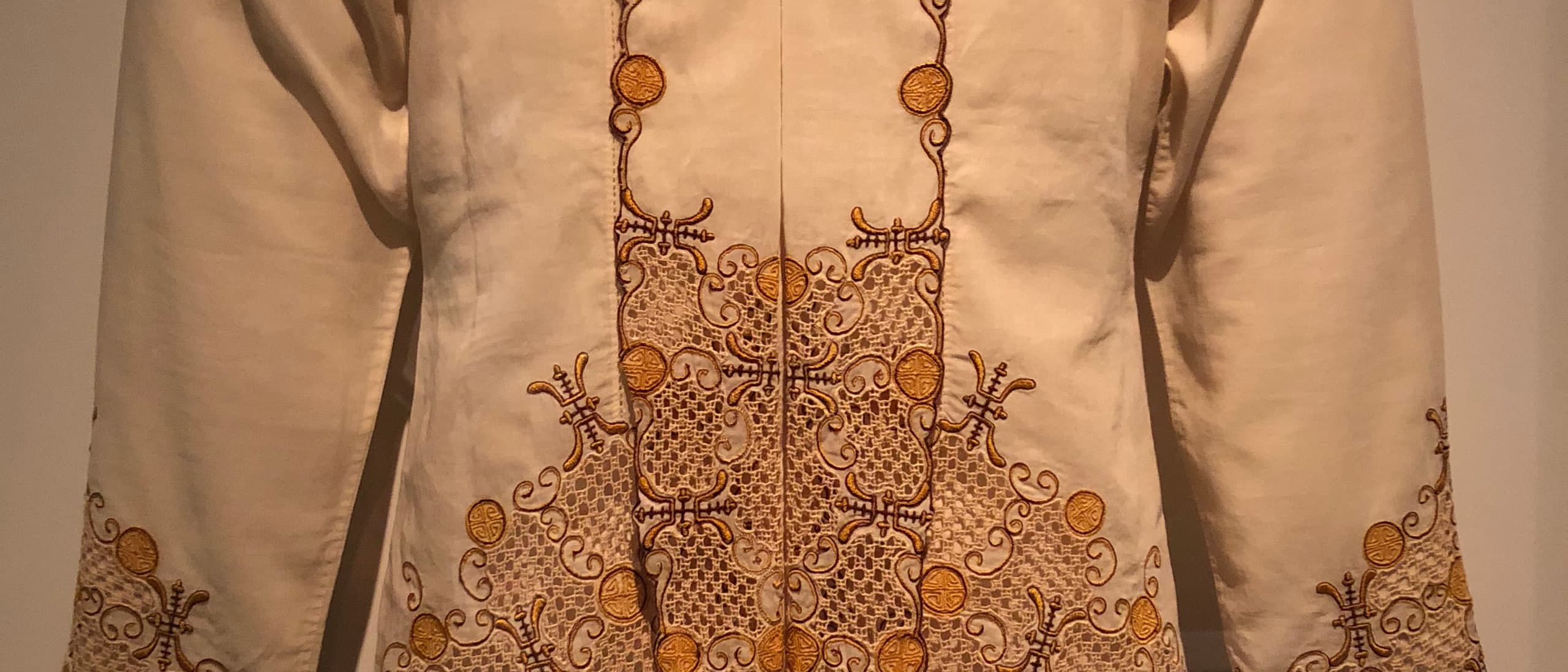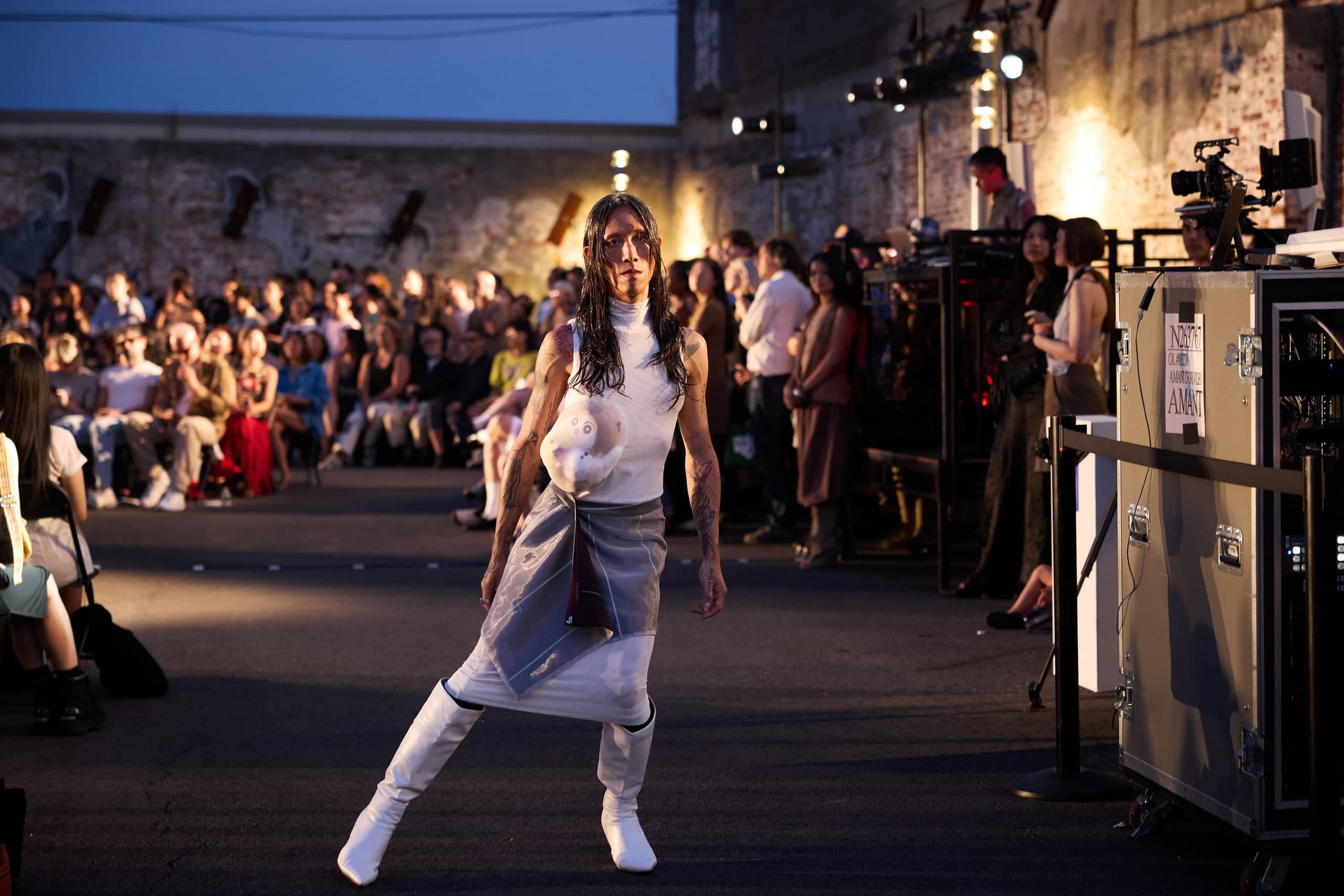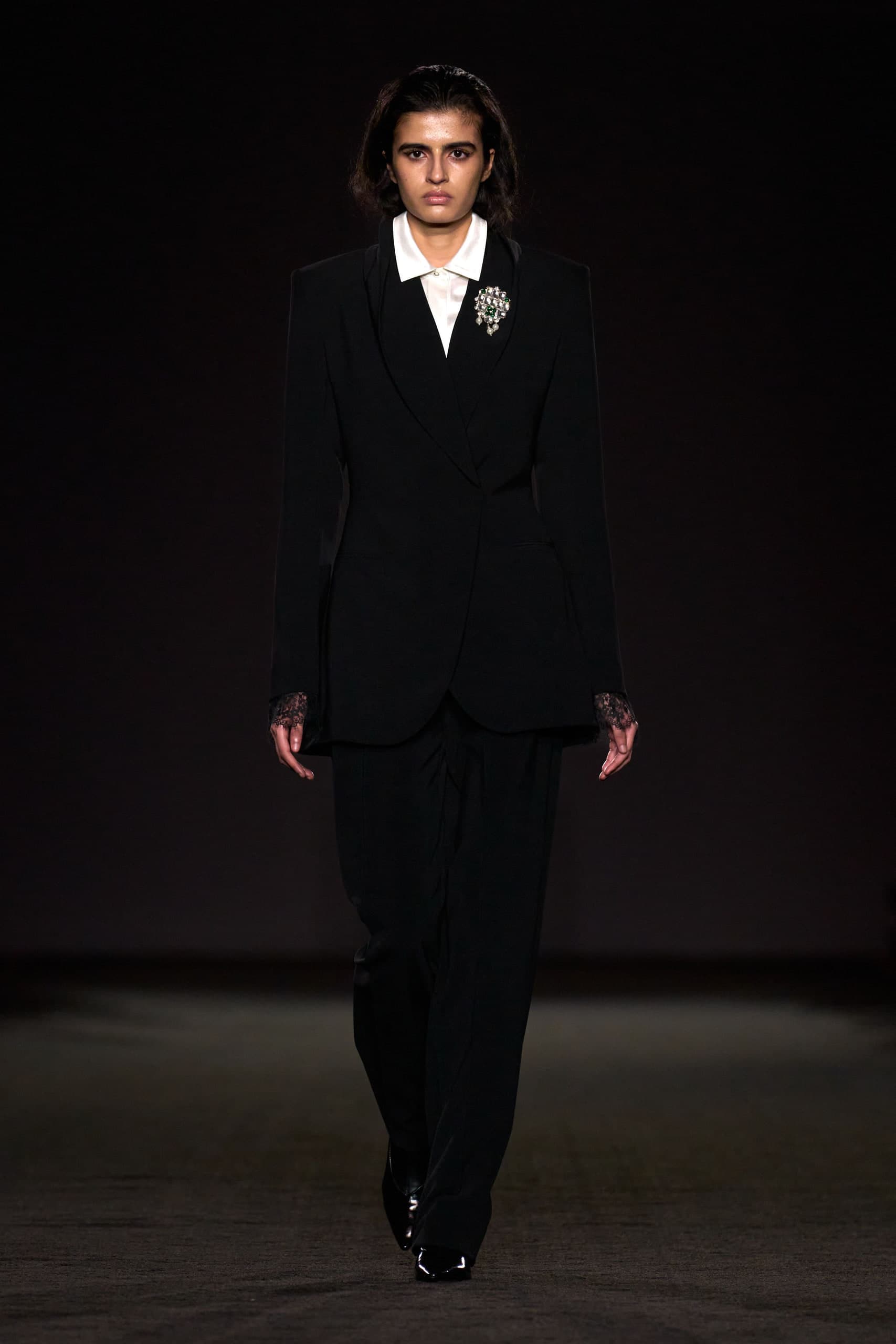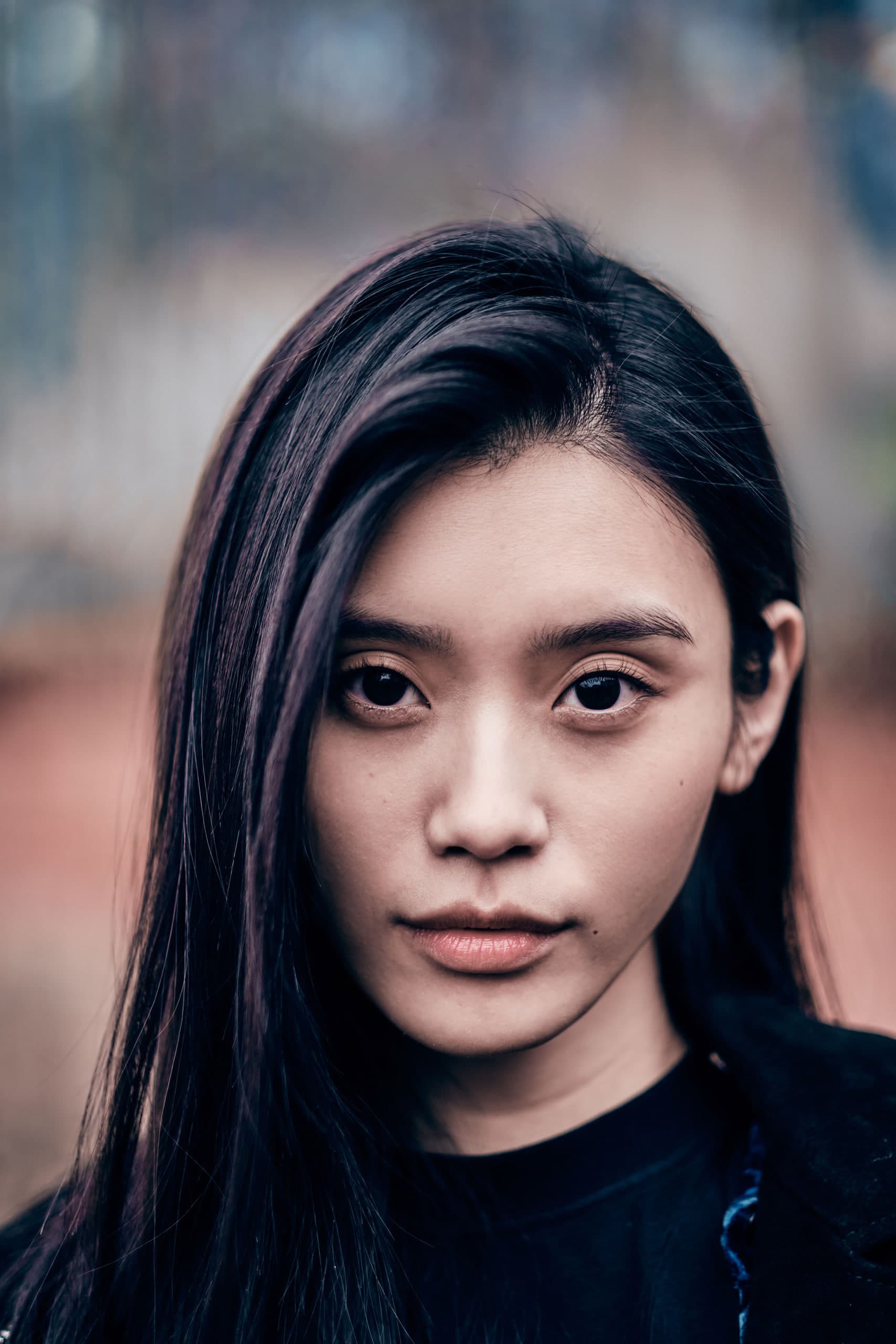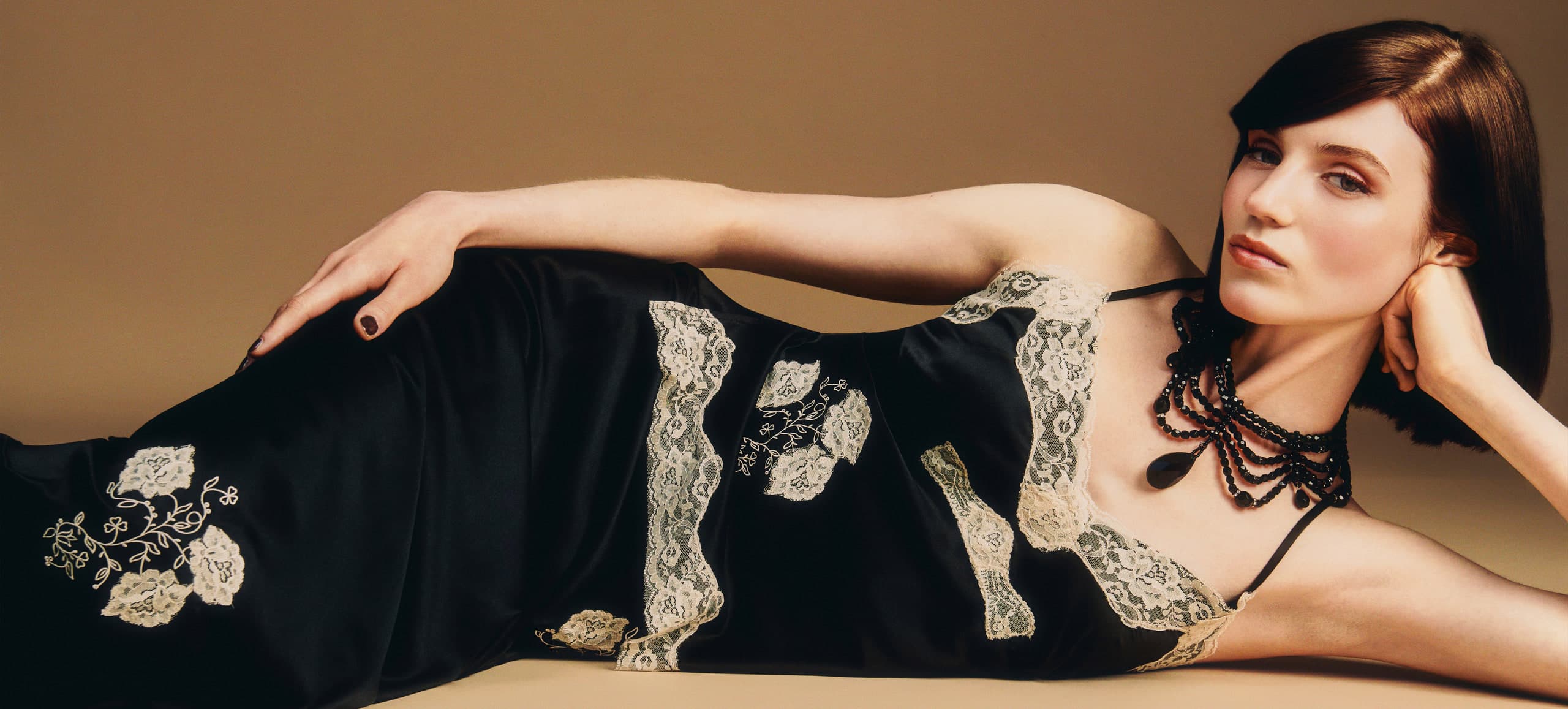
Hollywood gets the close-up. Seventh Avenue gets the invoice.
For decades, Asian Americans have been cutting the grammar of American fashion from the fitting room outward: the minimalist coat that reads expensive in a taxi, the downtown uniform that makes a party look effortless, the bridal salon that turned a white dress into a fashion decision, the makeup chair that decides how a face reads under flash. The influence is off-screen as much as on it, and it has been building quietly since the 1990s before turning loud enough that the CFDA started counting.
Some of these people changed what a coat costs. Some changed who gets photographed in one. One of them changed how the country gets married. What they share is a position slightly off camera, close enough to the decision to make it and far enough from the credit to keep working. Patrick Ta belongs here as much as any designer. A face is styled before a dress is ever seen.
"I hope that my contribution made a slight difference in terms of representation in the fashion space."
Phillip Lim, on stepping down from 3.1 Phillip Lim after twenty years, to Vogue Singapore
The Minimalists
The first cluster to matter on the rack was restraint.
Derek Lam grew up in San Francisco in a family that had been in clothes for four generations; his grandparents ran a garment factory there that specialized in wedding dresses. He trained under Michael Kors and launched his label in 2003, coming up with a cohort of New York names that included Proenza Schouler, Thakoon, and Phillip Lim. His sportswear grammar was American in the useful sense: sharp tailoring, leather, fur when the room called for it, nothing theatrical for its own sake. He dressed Michelle Obama more than once, ran women's ready-to-wear at Tod's from 2005 to 2010, and in 2024 became creative director of the Italian coat house Câllas Milano, debuting a capsule at New York Fashion Week that February. The label has since moved on without him: Robert Rodriguez took over as creative director in November 2025 and showed his first collection for the house in February 2026. Lam's minimalism outlived the name on the label.
Peter Som, raised in the Bay Area by architect parents, took the same Parsons-to-Bill Blass route a generation of American houses still recognize. Of the early 2000s wave he came up in, he told Asia Society: "We were an example of the American dream, in that we were encouraged to be creative." That sentence carries more weight than it looks. Being allowed to choose design over medicine was, for a lot of diaspora households then, the actual permission being granted.
Phillip Lim and Wen Zhou called their label 3.1 Phillip Lim because they were both thirty-one when they founded it in 2005. For twenty years they sold what fashion writers kept calling "classic with a twist": uptown/downtown New York in a single rack, aspirational but wearable, the Pashli bag carried by people who actually take the subway. Lim stepped down as creative director in November 2024; the grammar he exported is already in the American closet.
Jason Wu, Taiwan-born and Vancouver-raised, trained with Narciso Rodriguez before launching his own line. He had been in business three years when Michelle Obama wore his one-shoulder white chiffon gown to the 2009 inaugural ball and made him a household name overnight. He dressed her again in 2013, turned down the reality-TV offers, and kept working as a behind-the-scenes designer: classical feminine silhouettes, handwork, a spring 2025 collection called "Ink" built with the calligrapher Tong Yang-Tze after a Met curator introduced them on Zoom. That collaboration is the useful demonstration: American minimalism can carry Chinese brush logic without dressing up as it.
The Downtown Vanguard
If the minimalists dressed the office, the downtown vanguard dressed the afterparty and made it look like culture.
Anna Sui, a Detroit rock kid who landed at Parsons in the 1970s, spent a decade styling and designing for sportswear houses before her friends Naomi Campbell and Linda Evangelista persuaded her to show in 1991. With Marc Jacobs, Todd Oldham, and Isaac Mizrahi, she helped kill the 1980s power shoulder and replace it with vintage research, grunge, and music-scene attitude. Fifty boutiques later, she is still independent, still in the Garment District, still proof that an Asian American woman can own a full lifestyle brand without selling the company to survive.
Alexander Wang grew up in San Francisco, dropped out of Parsons, and by 2008 had won the CFDA/Vogue Fashion Fund with what Vogue later called the de facto uniform of model-off-duty New York: black, ease, legs, nothing trying too hard. He ran Balenciaga from 2012 to 2015 and left to grow his own house.
His record carries an asterisk worth stating plainly. Accusations of sexual misconduct at New York parties surfaced in late 2020; Wang initially called them baseless, then met eleven accusers in March 2021 and said he regretted causing them pain and would do better. Their attorney said the group acknowledged the apology and was moving forward. He showed again in Los Angeles's Chinatown in 2022, and in September 2025 he returned to New York Fashion Week with a twentieth-anniversary show called The Matriarch, staged in a century-old Chinatown building he had bought from HSBC and plans to run partly as a community space. The clothes have shifted with him, from party uniform toward heritage and neighborhood.
Humberto Leon and Carol Lim met at UC Berkeley and opened Opening Ceremony on Howard Street in 2002, naming the store after the Olympic ceremony because they wanted fashion to feel like countries visiting each other. The shop was a clubhouse: Acne before most Americans had heard of Stockholm denim, Alexander Wang when he was still the cool kid with model friends, Telfar before the bag became a meme. From 2011 to 2019 they were co-creative directors at Kenzo, described at the time as the first Asian American artistic directors installed at an LVMH house. The retail doors closed in 2020 after New Guards Group bought the brand. The taste network outlived the lease.
Sandy Liang is the vanguard's youngest useful name. She grew up in Flushing, spent her after-school hours at Congee Village, the Manhattan Chinatown restaurant her father opened in 1996, studied at Parsons, and launched her label in 2014 with oversized coats modeled by her grandmother. Bows, ballet flats, pink, and "princess energy" followed, worn by Jennie Kim and Bella Hadid until the industry caught up to what the clothes had been saying all along: autobiography from a Chinatown childhood, cut for a city that walks. Her spring 2025 collection imagined a secret-agent girl who still matches her lip gloss to her windbreaker.
The Bridal Empire
One designer rewrote an entire American institution, and only got to it on her third career. Vera Wang wanted to be an Olympic figure skater, missed the cut, and became the youngest fashion editor at Vogue at twenty-three instead. She spent nearly two decades there as a sittings editor, building the magazine's imagery with Irving Penn, Richard Avedon, and Patrick Demarchelier, then moved to Ralph Lauren for two years designing women's accessories, everything from eyewear to pantyhose. At forty, unable to find a wedding dress she wanted to wear to her own wedding, she opened a salon at the Carlyle Hotel in 1990 and brought fashion to bridal: color, proportion, movement, the idea that a bride could look like herself rather than a cake topper.
The empire that followed spans ready-to-wear, fragrance, home, licensing, and couture bridal still cut in the United States. Her first customer through the door was a Kennedy. Mariah Carey followed in 1993 with a twenty-seven-foot train, then Victoria Beckham in 1999, Chelsea Clinton in 2010, and Ariana Grande in 2021, which is roughly thirty years of American weddings running through one Manhattan salon. The CFDA named her Womenswear Designer of the Year in 2005 and gave her its lifetime achievement award in 2013. WHP Global announced its acquisition of the brand's intellectual property in December 2024 and closed the following month; Wang stayed on as founder, chief creative officer, and shareholder. David's Bridal now produces the Vera Wang Bride line for a broader market while the haute salon continues in the couture and red-carpet register.
Treat bridal as the strategy, because that is what it was. Wang worked out before anyone else that the most photographed day in American life had no fashion editor assigned to it, and then gave herself the job.
The New Establishment
Somewhere in the 2010s the hyphen started to drop.
Jason Wu and Prabal Gurung became names you cited the way you cited Oscar de la Renta: for gowns at the state dinner, for the cut of a sleeve, for the way a hem moves on marble. Gurung, born in Singapore and raised in Kathmandu, launched his label in February 2009, dressed Michelle Obama and Kamala Harris, serves as CFDA vice chairman, and published the memoir Walk Like a Girl in May 2025. Read How Prabal Gurung Dresses the Diaspora Idea of Home for the Nepal-to-New York arc behind that.
Laura Kim skipped the citation step. For nine years she was Oscar de la Renta. Born in Seoul, schooled in Canada from the age of nine, sent to Pratt at eighteen, she joined the house in 2003 and worked up to design director. When the founder died in 2014 and the top job went to Peter Copping instead, Kim told her colleague Fernando Garcia they were leaving; the two launched Monse in 2015 on deconstructed menswear that Kim has said looks more like Korean streetwear than anything else in her résumé. Oscar de la Renta hired them back as co-creative directors a year later. In 2017 they showed both labels back to back on one runway, which is a fairly cheeky way to announce that the heritage house and the upstart now share a brain. They stepped down in September 2025 to run Monse full time, delivered a final collection in February 2026, and kept their shares and board seats. A Korean-born designer spent most of a decade deciding what the most establishment house in American fashion looked like, and it never became a heritage-month talking point.
Kim, Gurung, and Lim also founded House of Slay in 2021 with the stylist Tina Leung and the restaurateur Ezra J. William, five friends who turned themselves into a comic-book superhero team in response to the surge in anti-Asian attacks. The CFDA gave them its Positive Social Influence Award the following year. Note how small the room is: the same handful of names recur as designer, mentor, and advocate, which is why influence here compounds faster than headcount suggests.
Bibhu Mohapatra, born in Odisha and trained at FIT, built an eveningwear practice on red-carpet discipline: Michelle Obama, Lupita Nyong'o, Taraji P. Henson. His fall 2025 collection, The Pilgrimage, followed a trip to scatter his parents' and brother's ashes at holy sites along the Ganges, and it is the first of his collections where memory rather than a borrowed muse drives the cloth.
Anna Sui and Phillip Lim belong here too, no longer "Asian American designers" in the trade-press sense, simply designers whose sales and stockists shape what American women buy. The Museum at FIT's 2022 exhibition Asian Americans in New York Fashion made the argument in objects: the Thakoon dress Michelle Obama wore to the 2008 Democratic National Convention, a Prabal Gurung gown, a Vivienne Tam jacket, and Ruben Toledo's 1997 illustration of Sui, Tam, and Zang Toi holding one another up. The curators gave equal room to garment workers and seamstress labels, which was the honest choice. Taste in New York has always been a factory story too.
Off the Runway
The pipeline does not end at the clothes rail. Patrick Ta, a Vietnamese American makeup artist raised in San Diego, built his client list on the red-carpet circuit, Gigi Hadid and Camila Cabello among the regulars. He launched Patrick Ta Beauty in 2019 and reportedly crossed thirty million dollars in sales within three years, then made his runway debut doing the makeup for Monse's spring 2025 show at New York Fashion Week. Monse, of course, is Laura Kim's.
He casts Asian models for eyeshadow campaigns deliberately, he has said, because monolid and hooded eyes so rarely lead American beauty art direction. That is off-screen influence in the most literal sense: the face the camera reads before the dress registers. Stylists, casting directors, and beauty founders work the same economy. Designers write the sentence; this crew decides how it gets read aloud.
Who Comes Next
The current bench is markedly less interested in explaining itself, which is its own kind of arrival.
Peter Do, Vietnamese American, won the LVMH Graduate Prize at FIT, cut his teeth in Phoebe Philo's Celine atelier and at Derek Lam, then founded his own label in 2018 on a precision that pulled in Zendaya and Beyoncé. He ran Helmut Lang as creative director from 2023 until late 2024 and launched PD-168, a machine-washable line built from three fabrics, in September 2025. The Vilcek Foundation, which exists to recognize immigrant contributions to American life, named him a 2026 prizewinner in fashion and design.
Private Policy, founded in 2016 by Haoran Li and Siying Qu, builds genderless New York collections around one social subject per season: AI and the gold rush, corporate cubicle culture, AAPI women in leadership. They were CFDA/Vogue Fashion Fund finalists in 2019 and finalists for the CFDA's Genesis House AAPI grant. The clothes are party clothes; the season briefs read like journalism.
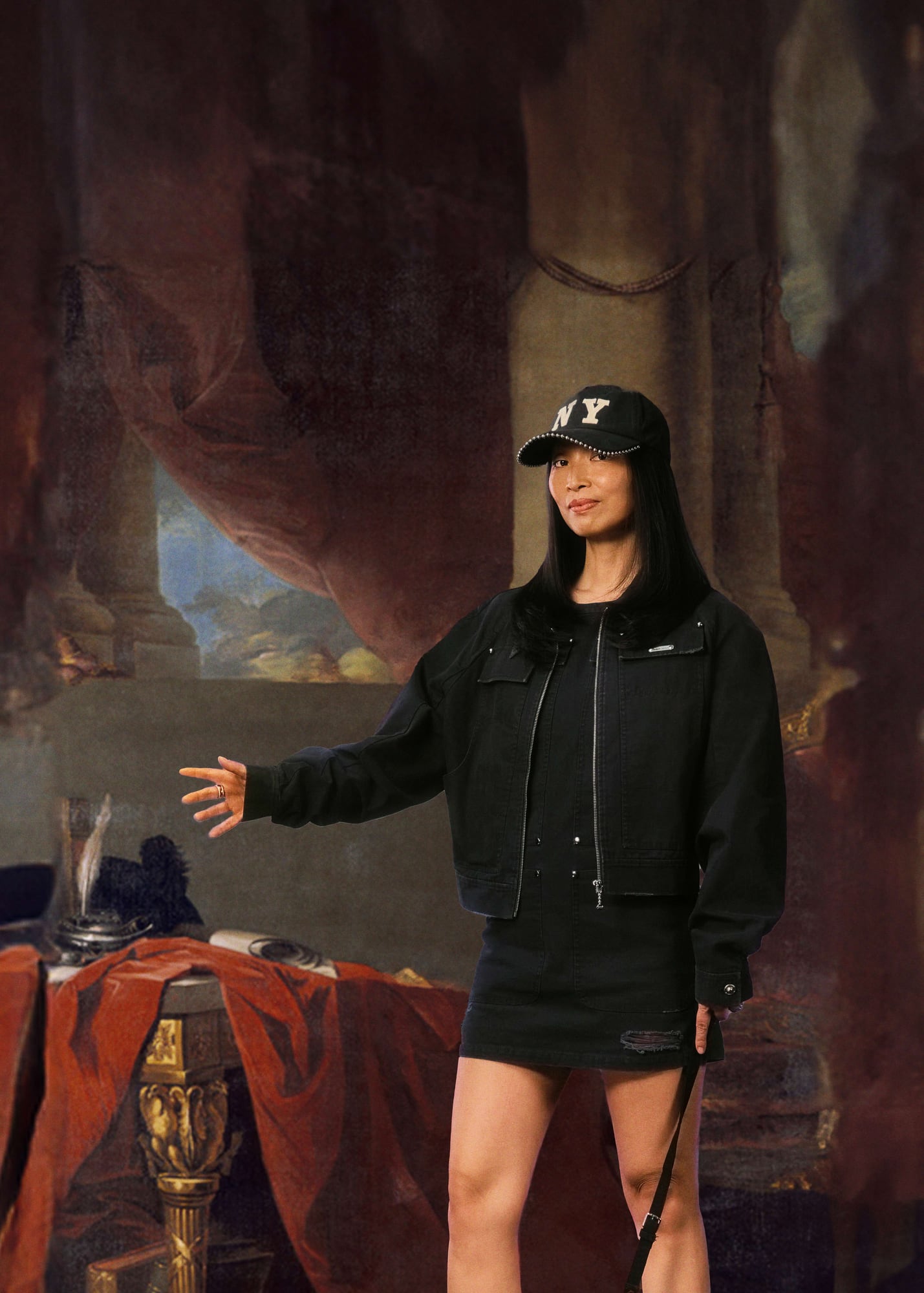
Grace Ling won that grant outright, the first recipient, in February 2024. Singapore-born and New York-based, she trained at Parsons and Central Saint Martins, interned at The Row and Thom Browne, and launched her label in 2020 on 3D printing and CGI. The signature is a sculpted aluminum breastplate, worn by Jennifer Lopez and Kim Kardashian, made by a process that wastes almost nothing because nothing gets built until the digital version is approved. She thinks in sculpture, she says. The CFDA is now writing checks for a future that does not run on the European couture calendar.
CFGNY works the same territory from the gallery and the supper club instead of the showroom; read CFGNY Turns Asian-American Ambiguity Into Fashion for that version of the argument.
How to Read the Room
Walk Soho and Chinatown before you walk the flagship mall. Notice which designers get cited for the cut of a shoulder. Ask who did the makeup, who bought the coat, who stocked the store before the influencer arrived. The country's media capital still runs on off-screen taste: the salon appointment, the buying office, the bridal fitting, the beauty counter that finally stocks foundation undertones that work on Asian skin.
The billboard face is still real. The fitting-room mirror has been running the city longer.
This is the United States chapter of The Tastemakers. Next: Canada, where Vancouver and Toronto dress the Pacific in a quieter register.