Diaspora wardrobes already know the logistics of home: which city holds the parents, which closet holds the gala dress, which passport queue gets the longer stamp. What they rarely get from New York runway coverage is a designer who treats that split as the design brief rather than a biography footnote.
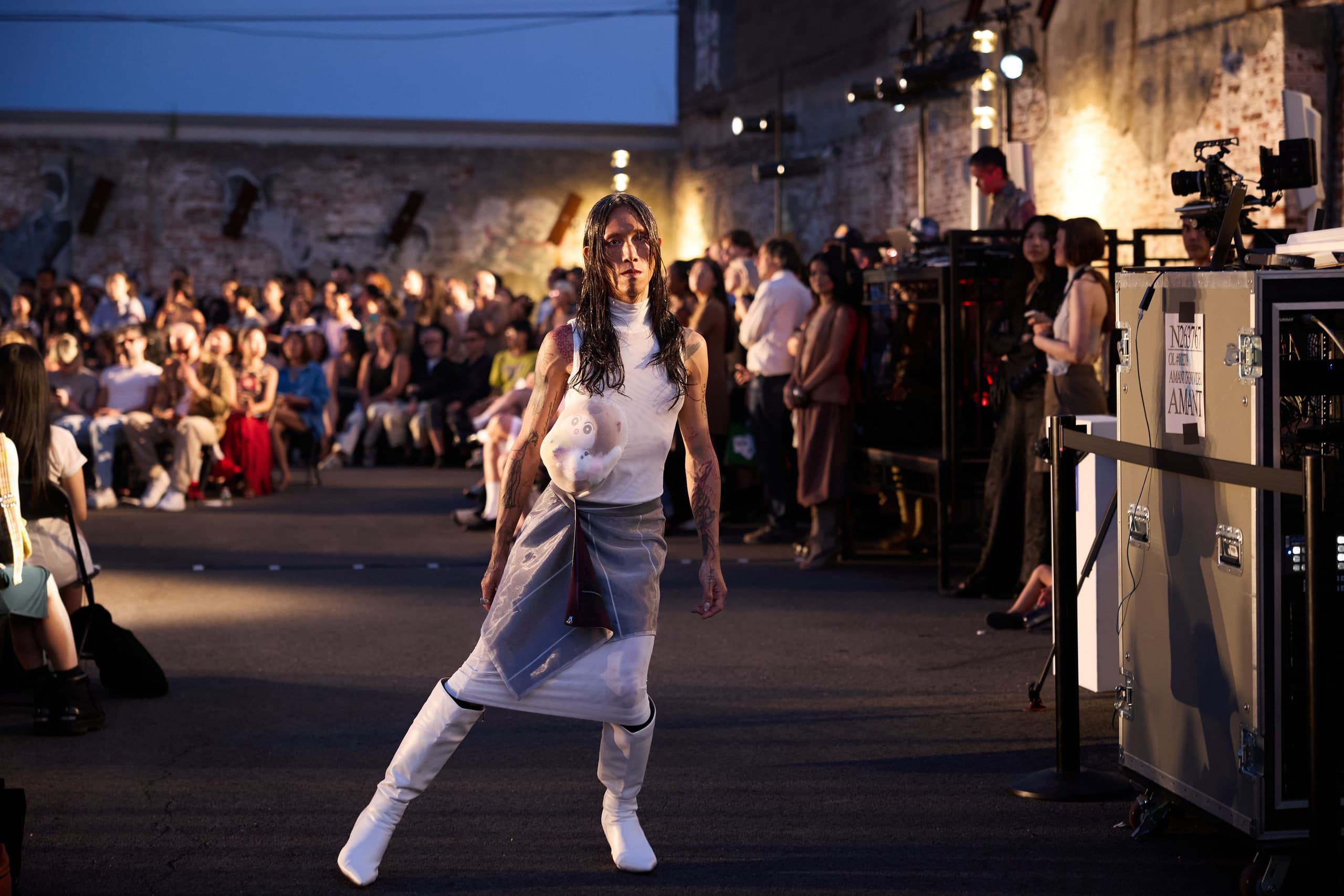
Prabal Gurung does. Born in Singapore, raised in Kathmandu, trained in New Delhi and New York, he has run his eponymous label since February 2009. His Fall/Winter 2026 collection, shown at New York Fashion Week on 14 February 2026, is titled Home Sweet Home? The question mark is the point. For readers who measure the year in flights between Hong Kong, Singapore, London, and the Northeast Corridor, the clothes answer a practical question: what does “home” look like when it has to survive a cold dinner, a warm lobby, and a mother who still notices your shoes?
Read Tropical Formal for the Diaspora Wardrobe for climate logistics. This piece stays with Gurung’s grammar: uniform, lace, jewel tones, and evening drape that still reads as American luxury without erasing Nepal.
“It’s more about, ‘Where did I learn my endurance and resilience?’” Prabal Gurung, on Home Sweet Home?, to Vogue Runway, February 2026
What Home Sweet Home? Actually Puts on the Body
Gurung’s own journal for the season opens in Nepal’s sacred geography, where temples, monasteries, Catholic hymns, and Sufi music share the air. On the runway, that coexistence becomes wearable codes rather than costume.
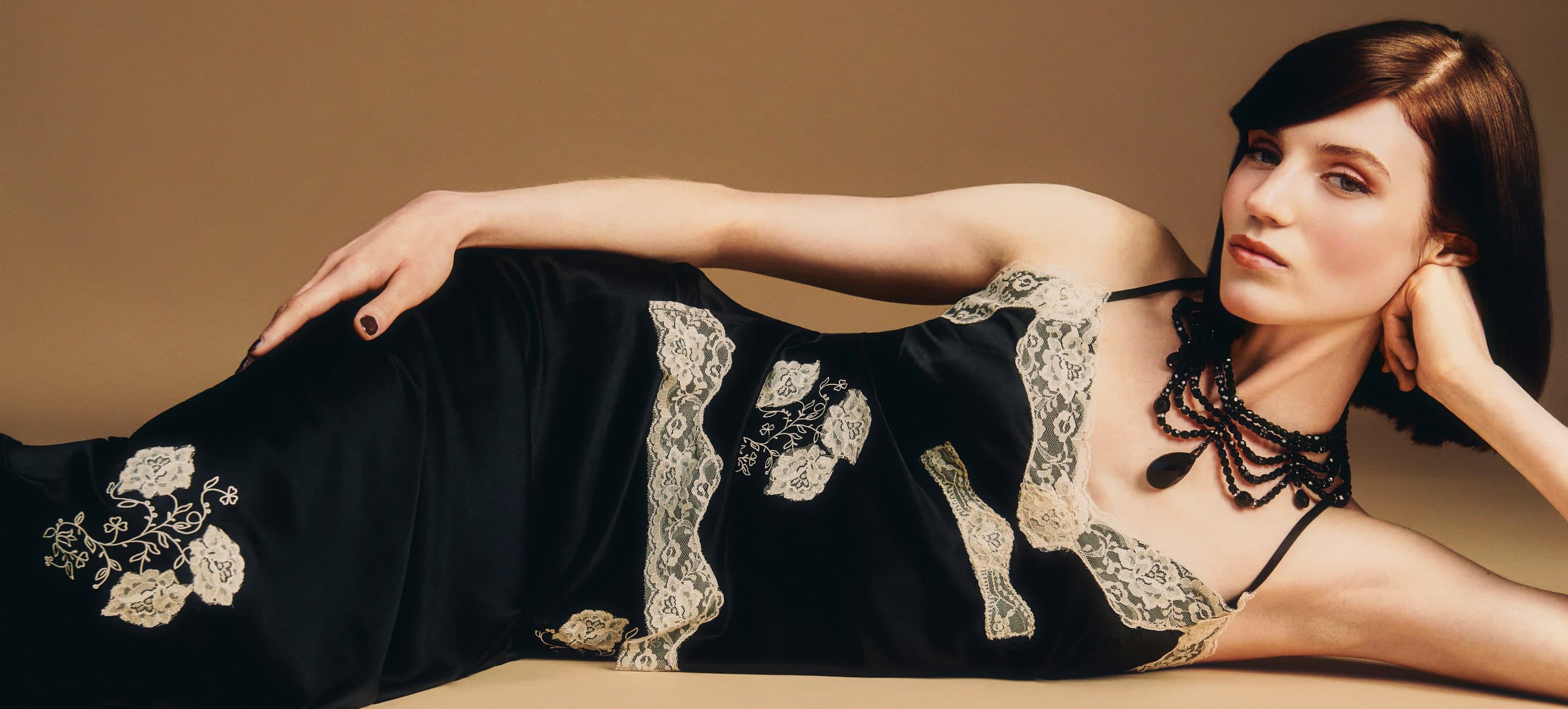
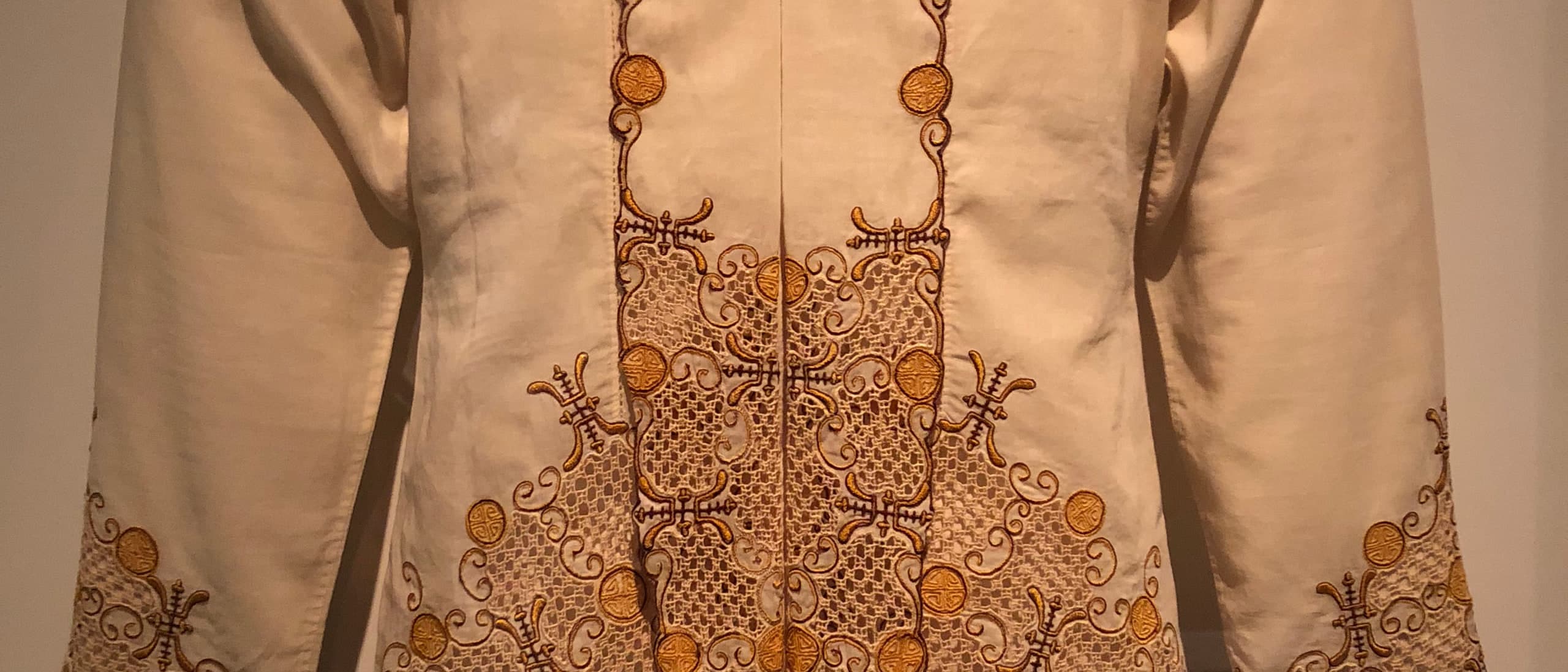
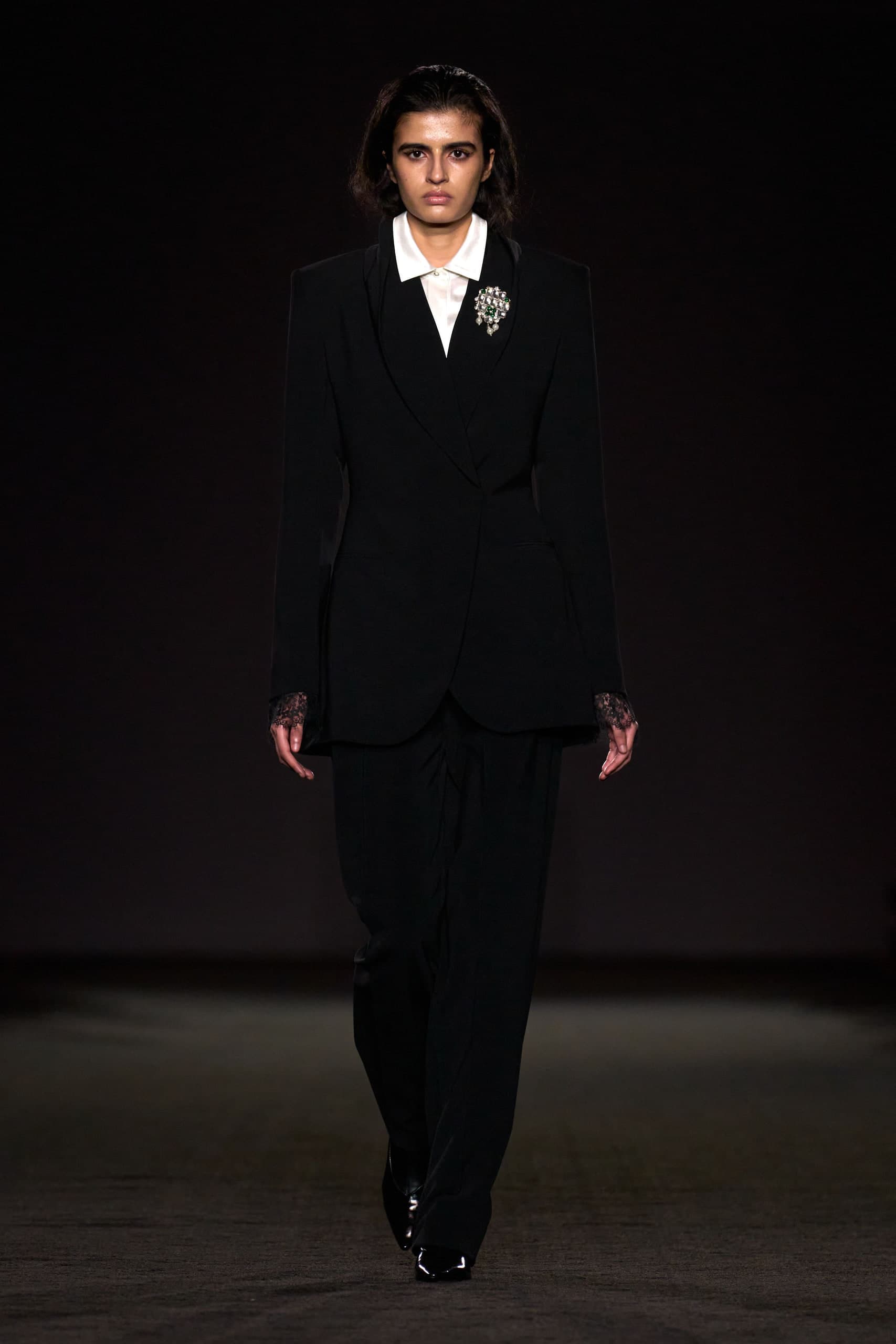
Suiting first. The show opened in black and white: structured jackets with soft drape, stitching along lapels and hems, lace spilling from cuffs. Vogue noted the lace as a nod to nuns who embroidered at his Catholic boarding school; the jackets also rework the idea of a personal uniform. For a diaspora calendar, that is the usable front half of the collection. A black or ivory suit with a white shirt and one emphatic brooch will clear most museum dinners and bank-side receptions without requiring a lecture on heritage.
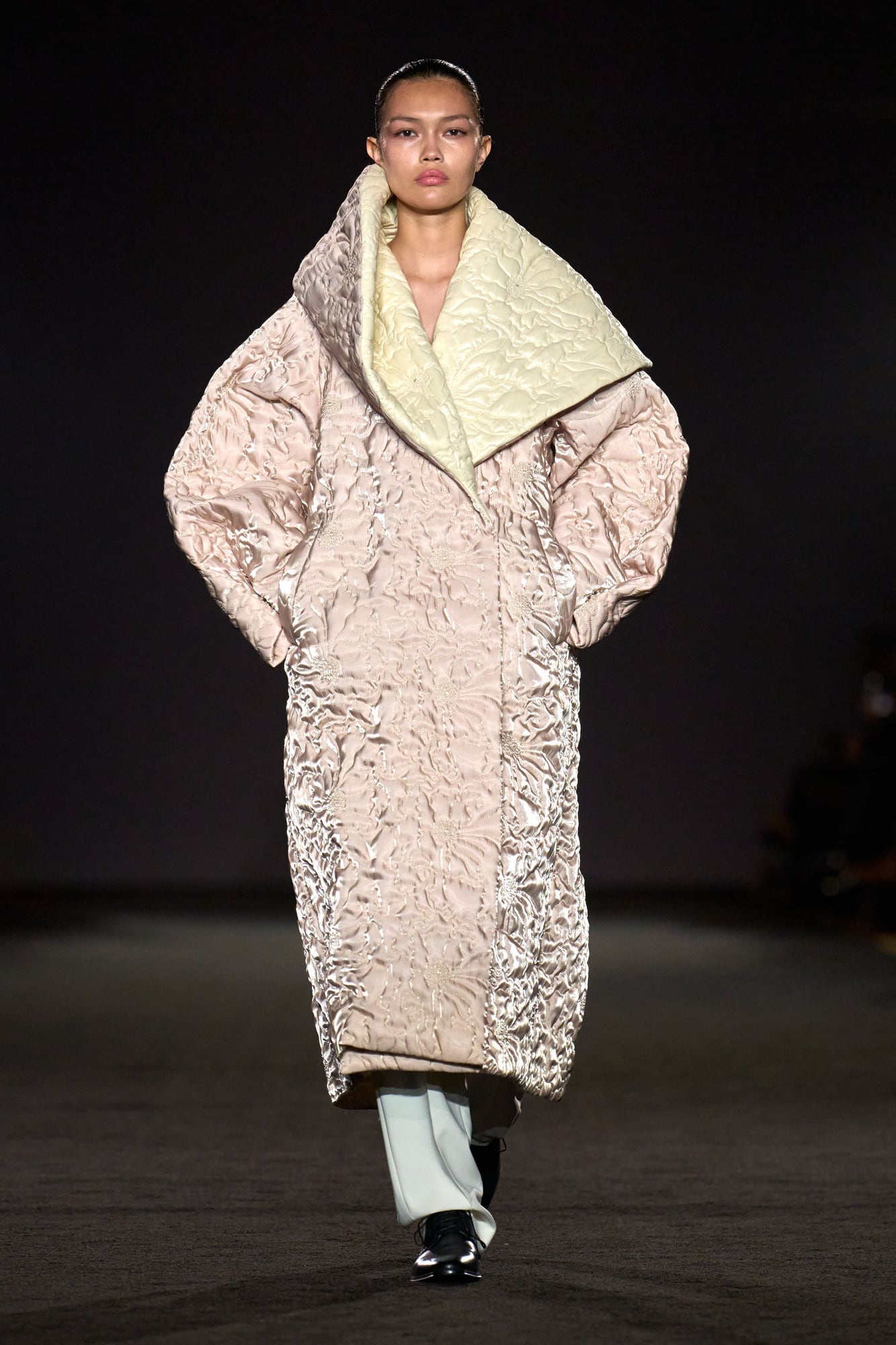
Then the protective outerwear. Quilted coats recall boarding-school duvets and nuns’ habits at once: volume as shelter, not novelty. Embroidered anemones appear on coats; Gurung has linked the flower to Matisse at the Metropolitan Museum, his New York sanctuary. Wear the quilted coat when the evening starts outdoors and ends under hotel air conditioning.
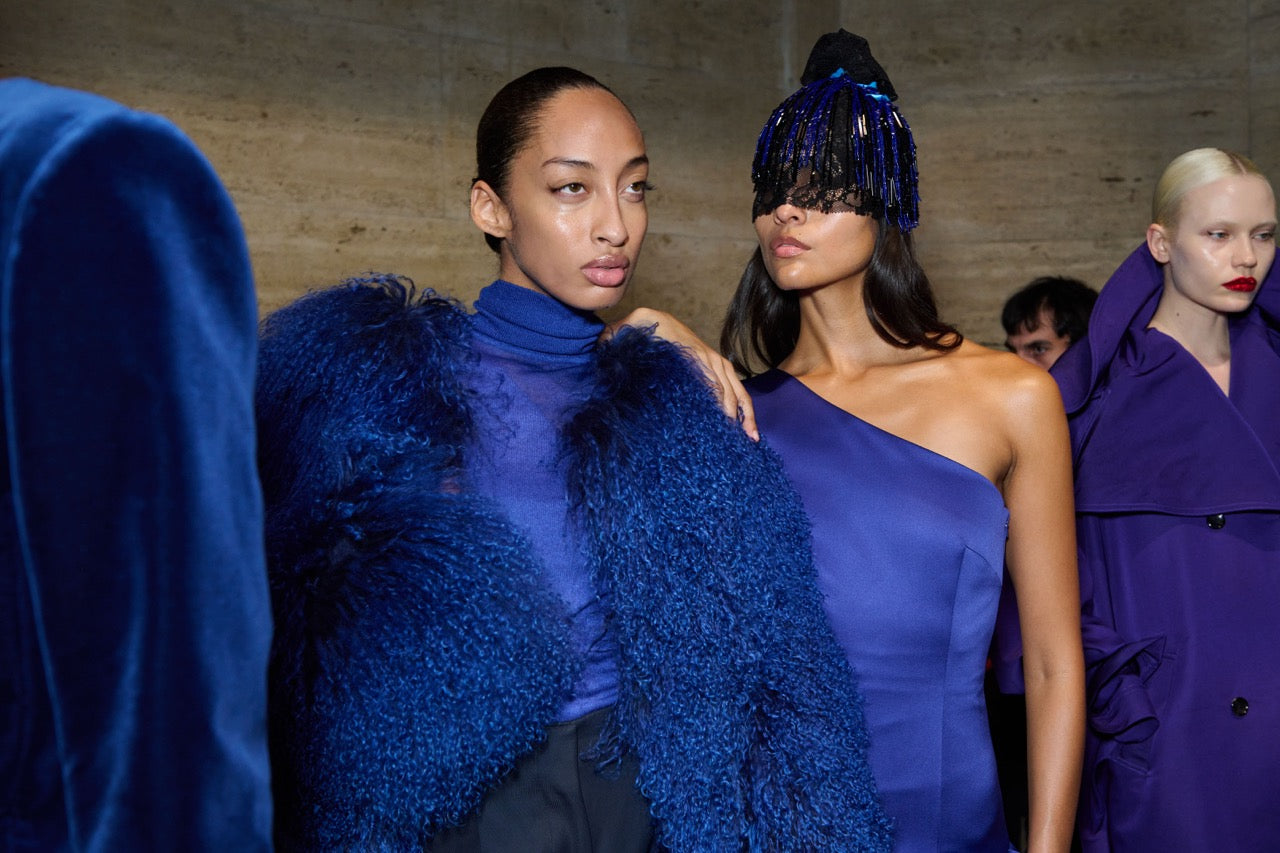
Evening stays the house language. Draped silks that echo chiffon saris hiked for dancing; lace caps that cover the eyes, some fringed with beads, drawn from shamanic dress; feathers and velvet in sapphire, midnight, and violet. Pearls and emeralds appear as stones Gurung has called personal and protective. Soften the headpieces for real life. Keep the drape, the jewel depth, and the idea that eveningwear can carry ritual without becoming a theme party.
The palette matters. Gurung has said he once attached hope to primary colors, then turned toward charcoal, midnight, amber, and ink when those brighter symbols felt shaken. For wardrobe building, that is permission to buy one deep emerald or plum column instead of chasing seasonal neons that photograph well once and retire.
Craft, per the brand’s own note, spans continents: French lace, Italian wools, Japanese textiles, Indian embroidery, Nepali knits, assembled in New York. The house has long claimed that a large majority of the collection is made in New York City. Confirm current stock and sizing on prabalgurung.com; Bergdorf Goodman and Neiman Marcus remain the reliable U.S. specialty doors, and Lane Crawford lists the brand in Hong Kong.
The Designer Who Had to Leave Home to Define It
Gurung’s mother, Durga Rana, a former boutique owner, raised him and his siblings with a working woman’s schedule and an unusual permission slip: he could play with makeup and his sister’s clothes. In an ELLE Singapore interview tied to this collection, he still credits her Singapore-and-Nepal years for teaching grace under pressure. That is the emotional spine of the brand, not a press-kit flourish.
The professional spine is straighter. After design school at the National Institute of Fashion Technology in New Delhi and time with Manish Arora, he moved to New York in 1999 for Parsons, interned with Donna Karan, worked at Cynthia Rowley, then spent five years as design director at Bill Blass. The eponymous label launched in 2009. Since 2017 he has also been creative director at Japanese pearl house Tasaki. He serves as a vice chairman of the Council of Fashion Designers of America. In 2011, with his siblings, he co-founded Shikshya Foundation Nepal, focused on education. His memoir, Walk Like a Girl (Viking, 13 May 2025), puts the outsider years in Kathmandu, New Delhi, and New York on the record without asking the clothes to do that work alone.
We'll be blunt: you do not need the memoir to wear the suit. You do need it if you want to understand why his idea of home keeps returning to resilience rather than postcard mountains. Spring 2026’s Angels in America, shown at St. Bartholomew’s Church with silhouettes drawn from Nepal’s angel’s trumpet flower, already framed hope as structure. Fall’s question mark continues the sentence.
“The idea of home for me, from being a single point on the map, became much deeper. Home for me is where your heart and soul are. It is a space of resilience.” Prabal Gurung, to ELLE Singapore, March 2026
How to Wear It on a Diaspora Calendar
Treat Gurung as three wardrobe moves, not a full closet takeover. The black suit on the hero is the template for move one.
1. The uniform suit for rooms that default Western. Black or ivory, wide-leg trousers, lace left as a private detail at the wrist if the invitation is conservative. Swap the runway brooch for a quieter pin if you are seated next to elders who dislike spectacle. This is the look for Asia Society evenings, CFDA-adjacent dinners in New York, or a Lane Crawford try-on before a Central fundraiser.
2. The quilted coat as transit armor. Hotel to car to lobby. It reads intentional under museum lights and forgiving over a simple column. Pair with pale trousers or a dark slip, not with competing embroidery.
3. One jewel-tone evening piece per season. Emerald, plum, or midnight in fluid silk. Skip the full lace veil unless the room is fashion-literate and you enjoy the conversation. Gurung’s Holi-bright seasons taught the house how to do celebration color; this darker chapter is better for dinners where you want presence without announcing a festival.
Cross-check jewelry with his Tasaki work if pearls are your language. Cross-check climate with Tropical Formal for the Diaspora Wardrobe if the same dress has to survive Singapore humidity the week after a New York freeze. For South Asian color literacy in jewelry rather than cloth, Paris Learned Color from India remains the Place Vendôme half of the story.
What not to do: do not buy a “Nepali-inspired” piece from a lesser house that pastes temples onto polyester. Gurung’s useful trick is translation: sari drape into evening silk, habit into quilting, shaman fringe into a headpiece you can omit. The culture stays in the cut and the craft map, not in a slogan.
The Banquet Verdict
Gurung matters to this desk because he designs for women who already know multiple homes, and he refuses to flatten that knowledge into either quiet luxury beige or costume ethnic. Home Sweet Home? asks where endurance was learned. The answer, for him, is Nepal’s layered sacred everyday, a mother’s boutique discipline, Catholic-school lace, and a New York atelier staffed by immigrant hands. For you, the answer is more concrete: a suit that clears the room, a coat that forgives the weather, and one deep color that still photographs as hope when the primaries feel exhausted.
Shop the current season through the brand and your nearest verified specialty store. Confirm what has arrived from Fall 2026 before you plan a look around a runway number. Then dress as if home is a practice, which, for diaspora calendars, it always was.