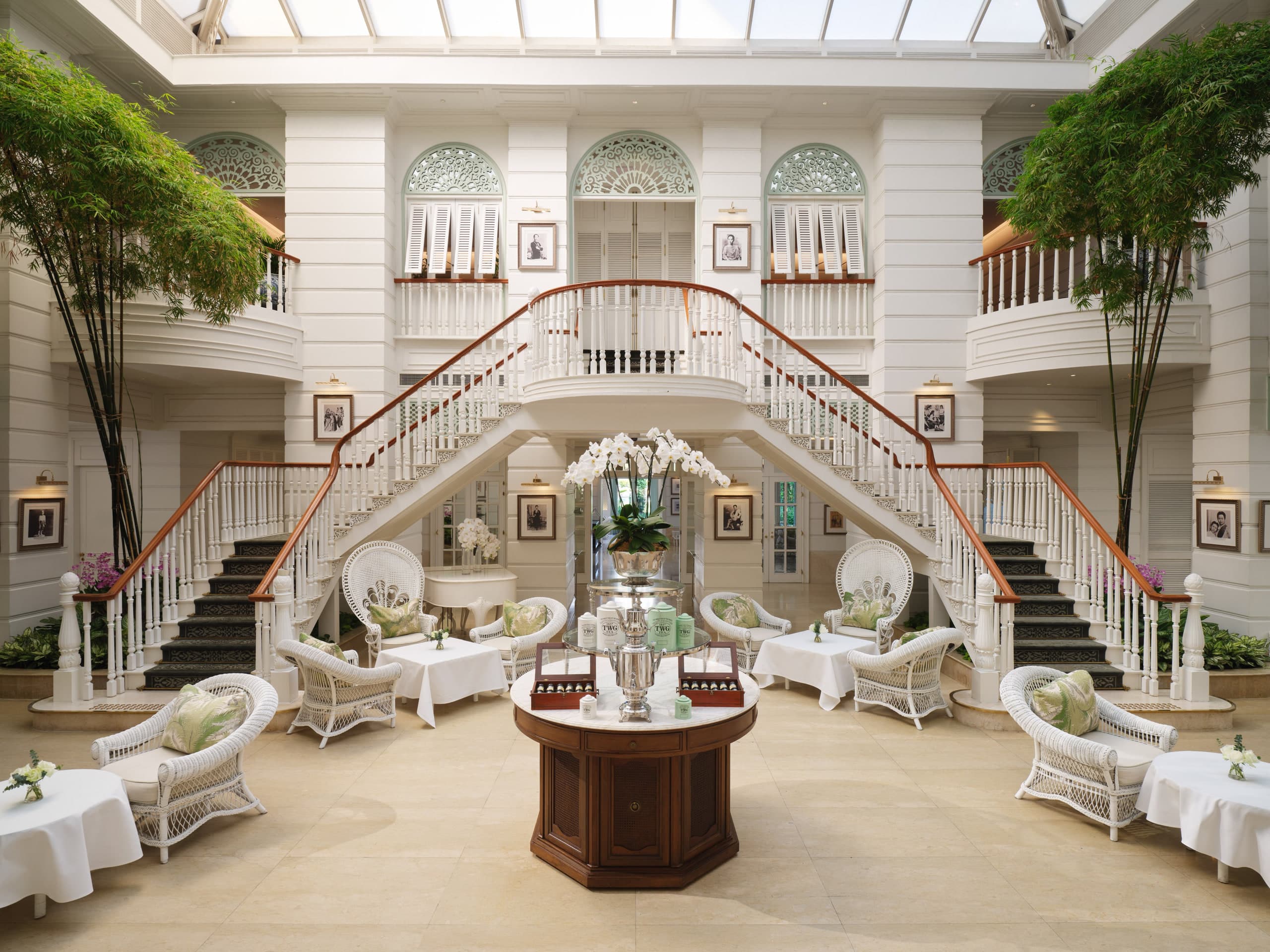
Authors’ Lounge, Mandarin Oriental Bangkok: white staircase, wicker, bamboo under the skylight. Photograph courtesy Mandarin Oriental.
The room earns its name before you order tea.
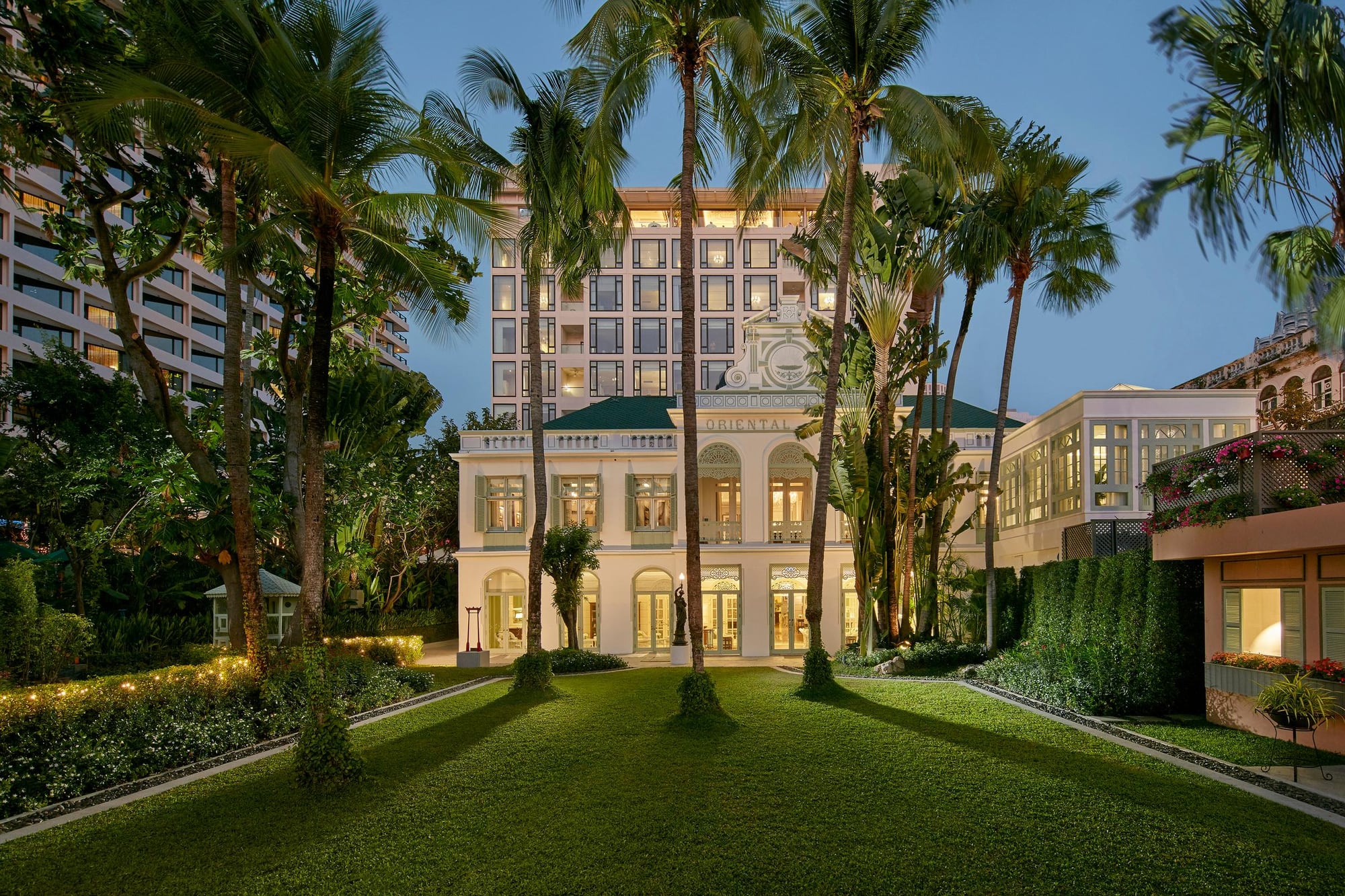
On the ground floor of the Authors’ Wing at 48 Oriental Avenue, Bang Rak, The Authors’ Lounge sits inside what began as The Oriental, Thailand’s first serious luxury hotel on the Chao Phraya. The house marks 1876 as its founding year; the white Italian-designed wing that still holds this salon opened in May 1887 under H.N. Andersen, with architects Cardu & Rossi. Today the lounge is a bookable afternoon: white wicker, hand-painted fabrics, framed writer photographs, and a skylight that turns the atrium into indoor garden. Cultural authority here is literary hospitality made practical. You reserve a table, dress for the room, and sit where the hotel has been staging writers for more than a century.
“It is a lovely place and I am fonder of it than ever.”
Noël Coward, on The Oriental, Bangkok, quoted in Mandarin Oriental’s property history
A Salon That Keeps the Names
The staircase splits like a ballroom cue. Bamboo rises toward the upper galleries. Brass lights sit above small black-and-white portraits. Four private lounges open off the main floor for tighter gatherings; writer-named rooms and terraces in the same wing keep Conrad, Maugham, Coward, Michener, and house legends in circulation without turning tea into a museum ticket. Soften overnight myths. Joseph Conrad drank at the Oriental bar in early 1888 while preparing the Otago; he is better treated as a river visitor than as a registered guest. Somerset Maugham did check in, then wrote fever and mosquitoes into The Gentleman in the Parlour. The lounge’s soft power is that it makes those stories visible without requiring you to believe every postcard claim.
Since 1979 the hotel has hosted the S.E.A. Write Award, honouring ASEAN writers with a ceremony that keeps the literary brief current rather than only colonial. In 2016, a restoration of the Authors’ and Garden Wings returned the lounge toward its late-nineteenth-century register and opened it more cleanly toward terrace and garden. The River Wing’s later work is another story; this room’s argument is older and lower to the lawn.
This is the ninth chapter of The Great Asian Room, after Tianjin, Ginza, Kanazawa, Nezu, Singapore, Yeouido, Yongsan, and Aman Tokyo’s lantern: another interior that manufactures culture by how it receives a guest.
How to Sit for Tea
Book ahead. Weekends fill with locals and travellers who treat this as a Bangkok rite. Afternoon tea runs roughly noon to 6:00 p.m.; the lounge itself lists wider hours, commonly 11:00 a.m. to 7:00 p.m. Confirm on the day. Recent seasonal sets have listed around THB 1,980++ per person with tea or coffee, and higher with Champagne; prices move with the pastry calendar, so check the current menu before you plan a celebration budget. Western, Thai, and restricted-diet sets appear in recent guest notes; ask when you reserve. Call +66 (0) 2 659 9000 or book through the hotel’s dining channel.
Dress is smart for everyone, including children: elegant attire and proper shoes for women; long trousers and closed shoes for men; no sleeveless shirts for gentlemen at any hour. Bangkok heat is not an excuse the door accepts. Arrive via Oriental Avenue or the hotel’s river boats if you are coming from the west bank; Saphan Taksin and Bang Rak taxis both work if you leave buffer for Charoenkrung traffic. Pair the stop with Three Nights on the Chao Phraya for stay pacing, and with The Banquet Guide to Bangkok for the wider river map.
How to Use the Room
Give the atrium ten quiet minutes before the tiered stand arrives. Walk the lower floor, look up through the skylight, and notice how the writer photographs behave as wallpaper rather than as a quiz. Order the set you actually want to eat; the Thai tea, when offered, is the clearer local counterweight to scones and clotted cream. Live piano or guitar often softens late afternoon on published days; treat that as atmosphere, not a concert you must schedule around.
Diaspora travellers who know Bangkok through malls and rooftop bars often find the Authors’ Lounge clarifying: the river hotel’s oldest wing still sells literary calm as a table, not only as a suite name. Stay until the wicker stops reading as colonial set dressing and starts reading as the room’s working furniture. Then walk the lawn toward the river, or go upstairs to Le Normandie if dinner is the next argument, knowing the salon already did the cultural work before dark.
Continue the series from A Lantern Above Otemachi, or stay on the Chao Phraya with the hotel’s longer stay brief.