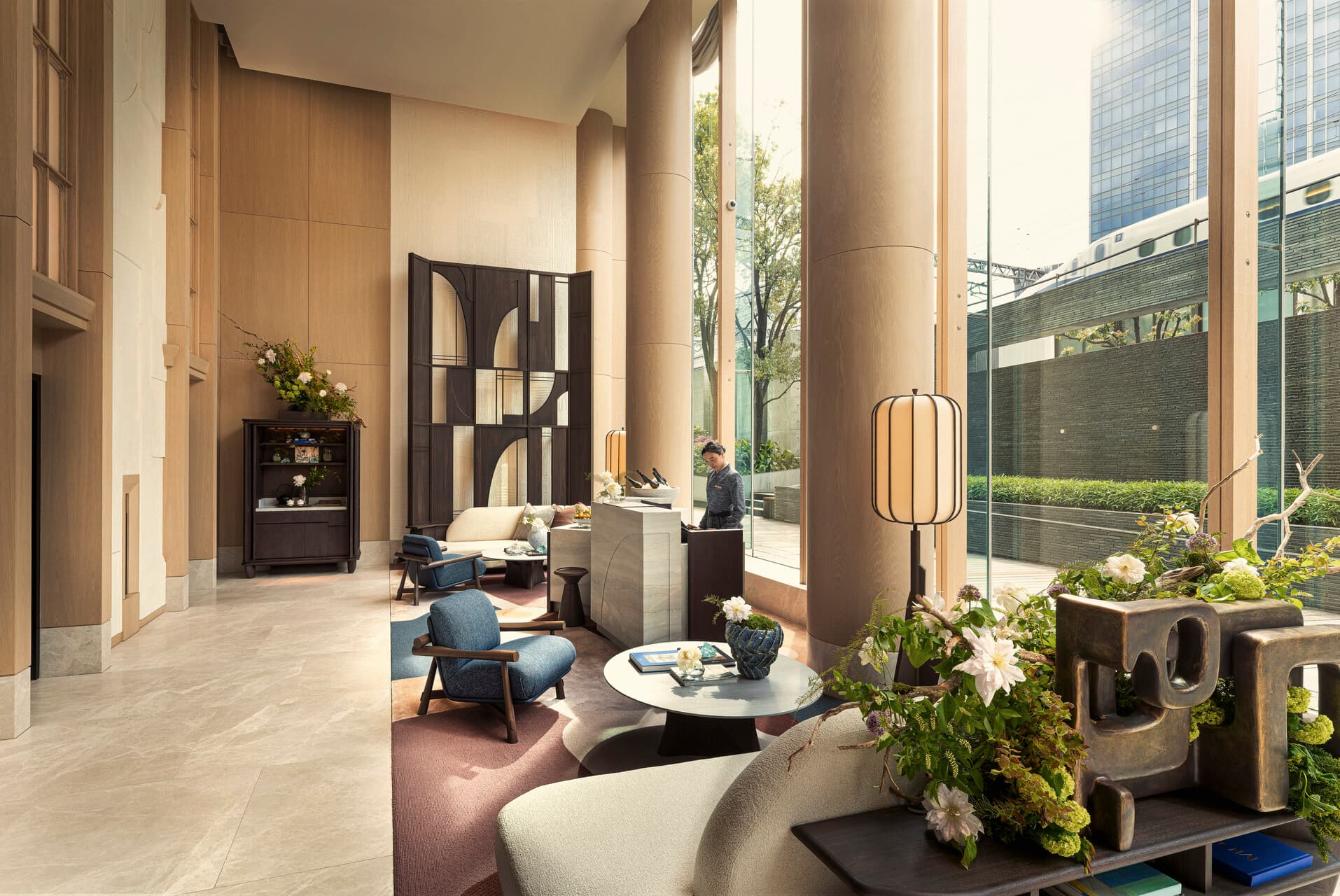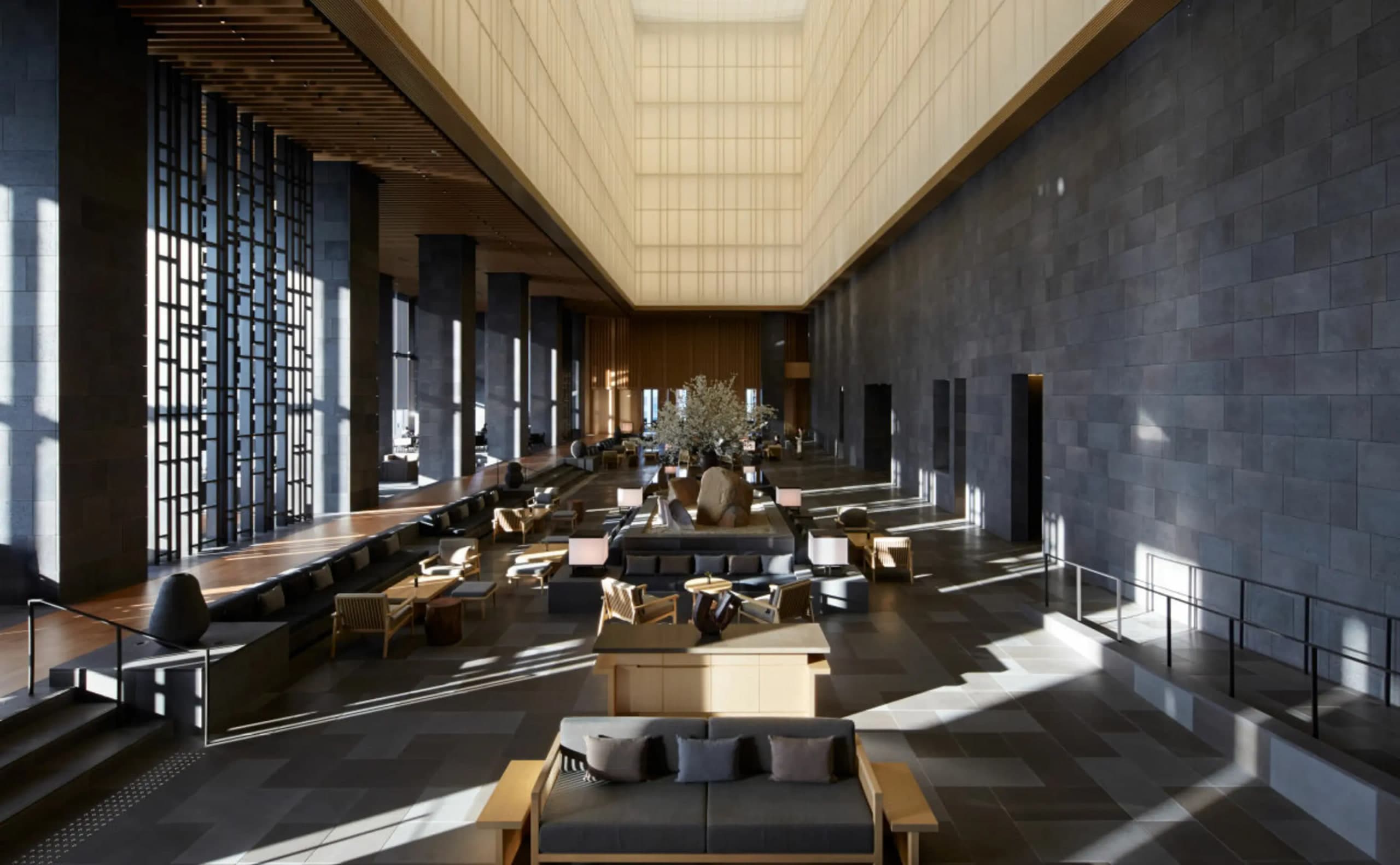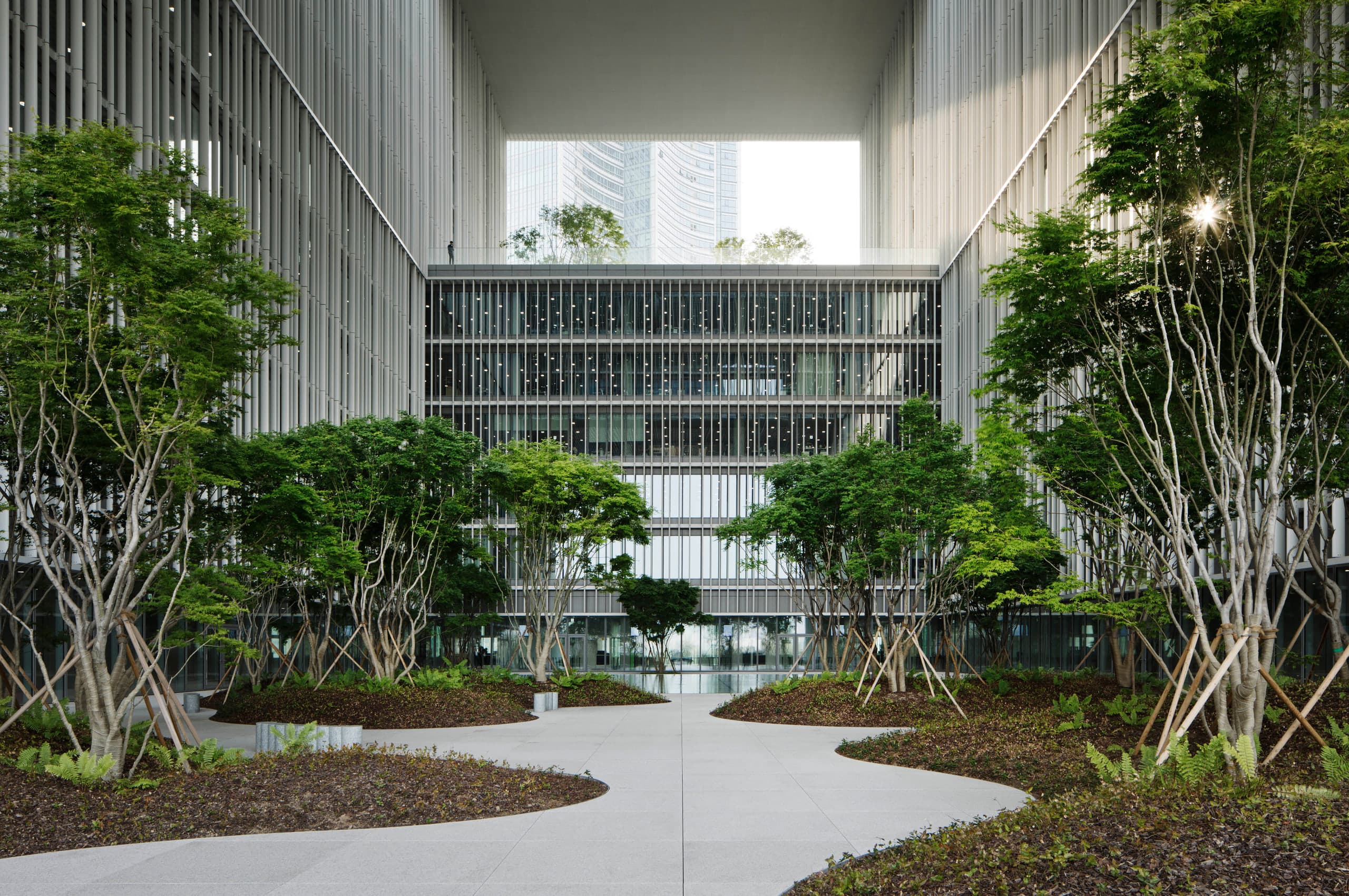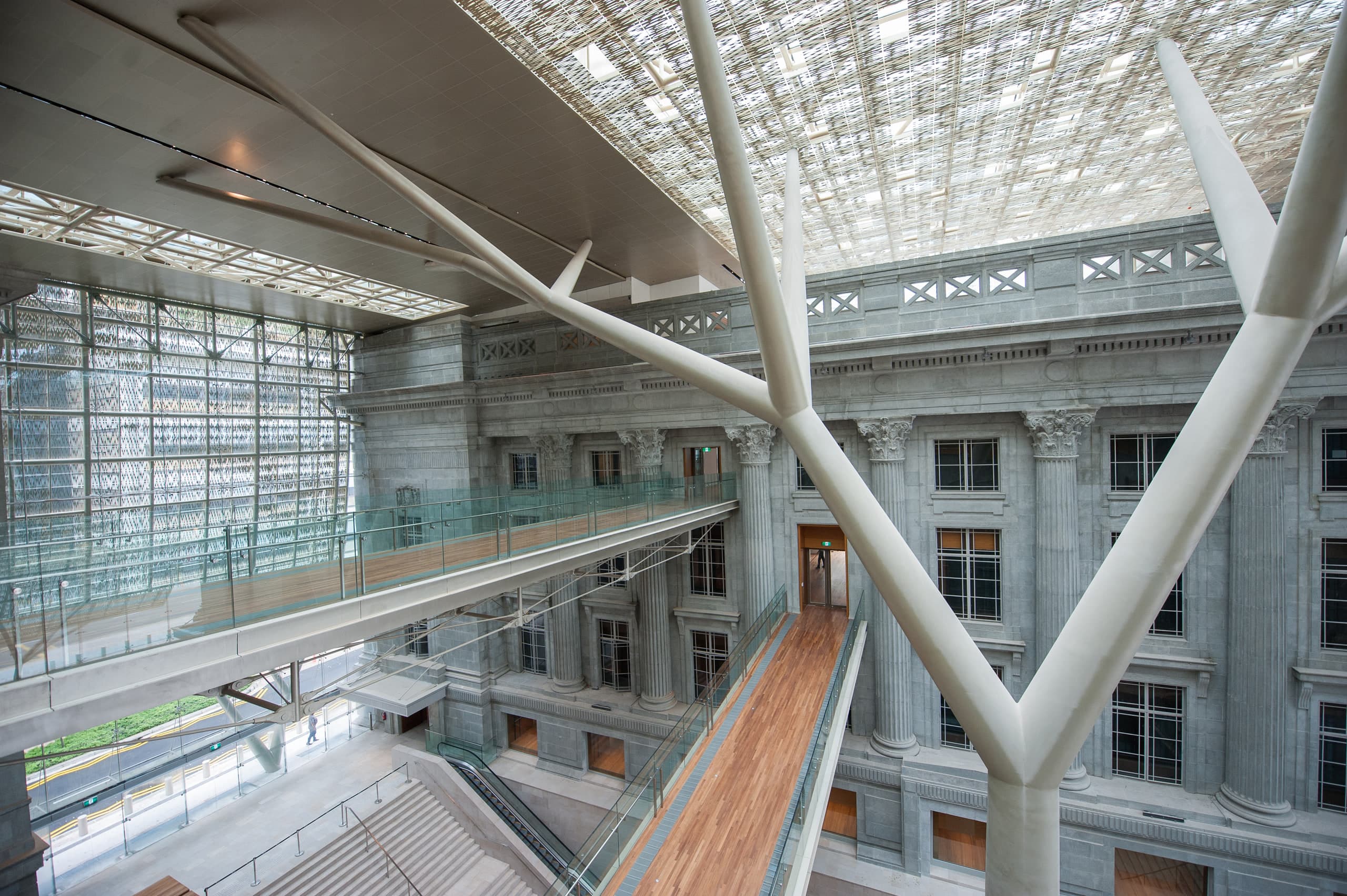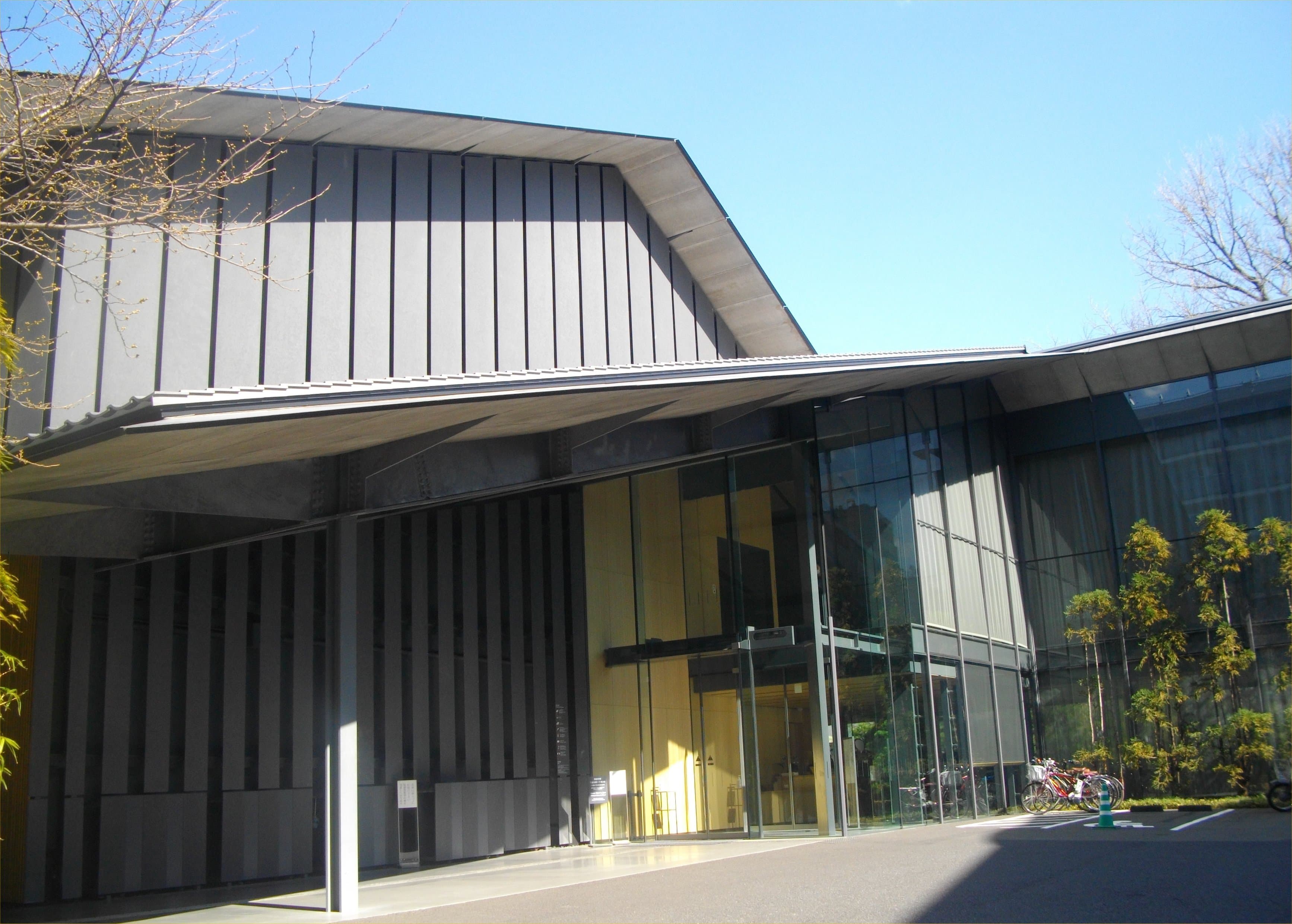
Nezu Museum entrance under Kengo Kuma’s deep eaves, 6-5-1 Minami-Aoyama. Photograph © Kentin.
Omotesandō ends in shade.
At 6-5-1 Minami-Aoyama, a bamboo-lined approach slips under the deep tiled eaves of the Nezu Museum. You leave Prada and Comme behind in roughly a hundred and fifty feet of dim gravel and green. Inside, a glass entrance hall opens the 17,000-square-metre garden and a line of Buddhist sculpture into one continuous picture. Kengo Kuma completed the rebuild in 2009. Cultural authority here arrives as a frame before it arrives as a wall label.
“A pitched roof harmonizes the ground and architecture.”
Kengo Kuma, on the Nezu Museum, speaking to Architectural Record
A Collector’s Threshold
Nezu Kaichirō (1860–1940), Tobu Railway president and tea practitioner under the name Seizan, bought this hill-and-dale land in 1906 and filled a residence with pre-modern Japanese and East Asian art. After his death, his son established a foundation in 1940 and opened the museum in 1941. Wartime fire destroyed galleries, garden buildings, and a teahouse in 1945; the evacuated collection largely survived. Under director Nezu Kōichi, the site was rebuilt from 2006, with Kuma’s main building opening in 2009.
The museum now holds about 7,600 works, including multiple National Treasures. The famous Irises screens by Ogata Kōrin still appear for a short spring window when the garden’s kakitsubata bloom. That seasonal logic belongs to a collector who treated art as hospitality. Kuma’s job was to give the same hospitality a contemporary door: not a temple gate, not a white-cube lobby, but a roji that resets the visitor the way a tea path does.
This is the fourth chapter of The Great Asian Room, after Tianjin’s civic atrium, Ginza’s bamboo tea grove, and Kanazawa’s water mirror: another interior that teaches culture by how you arrive.
Glass, Sculpture, Garden
Kuma’s project text is blunt. A unique roof was meant to blend interior and garden; large glass openings were meant to merge garden, building, and artwork. The museum’s own About page says the entrance hall brings “the magnificent garden and the Buddhist statues inside the museum into the same picture frame.” That sentence is the room.
The materials keep the argument quiet. Charcoal tiles and phosphoric-acid-treated steel eaves thin the roof edge so it reads as shade rather than theme-park craft. Coral-gray Qingdao sandstone wraps floors and walls in a tone that behaves like bamboo without costume. Inside, neritsuke bamboo layers the ceilings: thin shaved stalks on plywood, a detail that rewards looking up after you have looked out.
The hall sits under an angled ceiling that echoes the pitched roof, with a clear span contemporary accounts place near fifteen metres. Stone figures from roughly the sixth to eighth centuries stand on pedestals designed with seismic springs. Daylight and the garden do the curating before you choose a gallery. Photography is barred in exhibition rooms; the lobby sculpture area is the usual exception, which is why the room can be discussed as a public interior rather than a sealed vault.
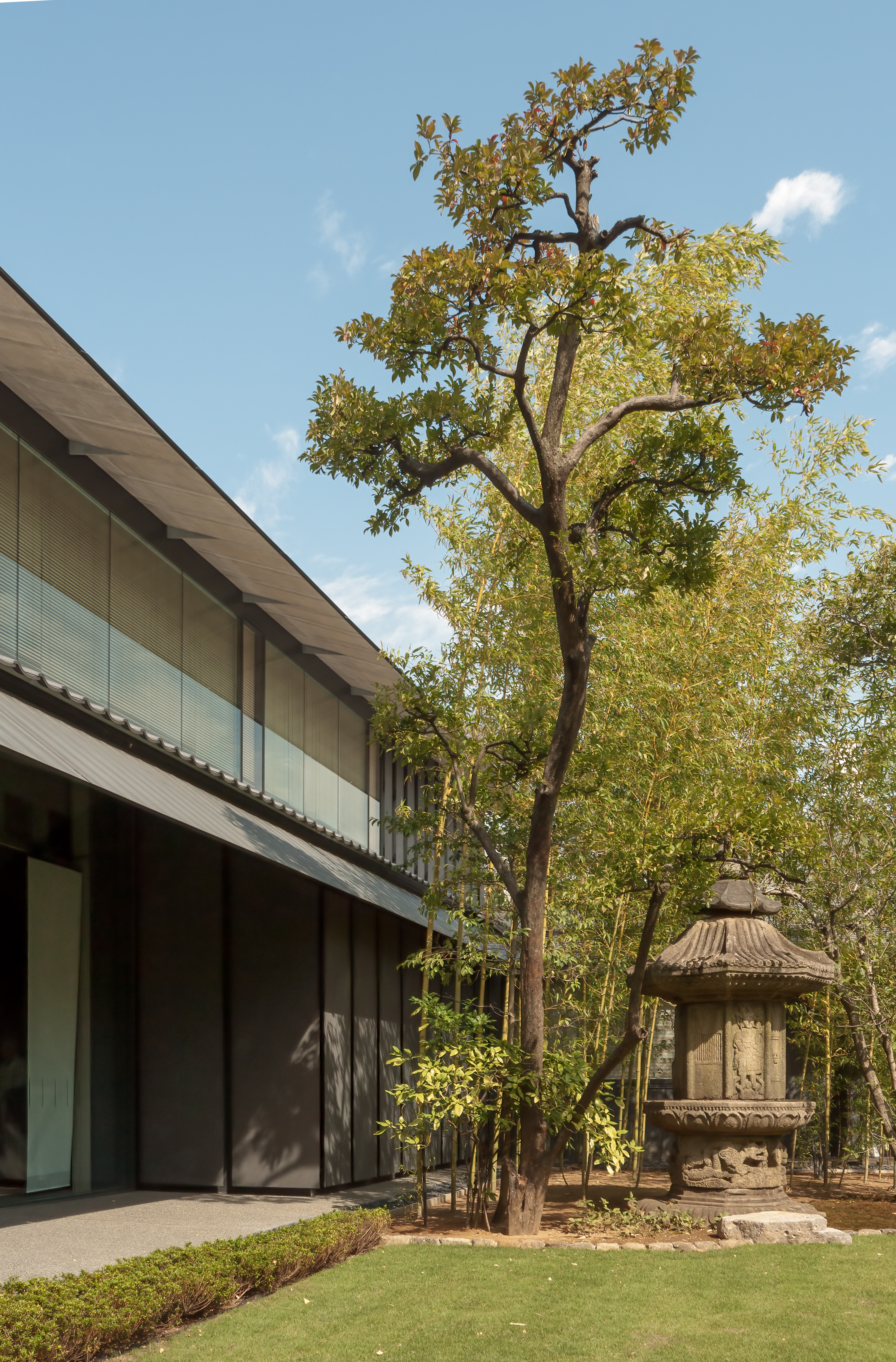
Outside, the garden still follows the old shinzan-yūkoku idea of deep mountains and mysterious valleys. Tea houses appear as outdoor architecture; NEZUCAFÉ, also by Kuma, keeps a stone wall and fireplace from the Nezu residence. Admission is required for garden and café alike. The Banquet Guide to Tokyo already marks Nezu as a peaceful Aoyama hour; this chapter is about the room that makes that hour feel earned.
How to Enter the Frame
From Omotesandō Station, Exit A5 is about an eight-minute walk; Exit B3 (elevator) is about ten. Hours run 10 a.m. to 5 p.m., last entry 4:30 p.m. Closed Mondays (open when Monday is a national holiday, then closed Tuesday), between exhibitions, and over the New Year. Buy timed tickets online; collection exhibitions have recently listed online adult tickets around 1,400 yen, with special exhibitions higher. Confirm current fees and closures on nezu-muse.or.jp before you go.
NEZUCAFÉ typically follows museum hours with earlier last orders for food than for drinks; confirm on the day. High-school students and younger often enter free with ID; disability certificates carry a published discount. The garden paths have been improved for smoother walking in recent years, though stone routes still reward sensible shoes.
Walk the bamboo approach without rushing. Pause in the glass hall long enough for garden and sculpture to share one view. Then choose galleries or the garden path, not both at a sprint. Pair with Omotesandō shopping if you must; keep Nezu as the quiet end of the avenue rather than a ten-minute checkbox between flagships.
Kuma’s second Tokyo chapter in this series is not another bamboo café. Jugetsudo softens Kabukiza into a grove. Nezu slows Omotesandō into a picture frame. Same architect, different authority: one commercial tea room, one collector’s threshold still doing the work of a private residence for the public.
Stand until the garden and the statues feel like one sentence. Then step into whichever gallery the day has opened.
Continue with The Padang Atrium Filters the Day for the series’ Singapore chapter.