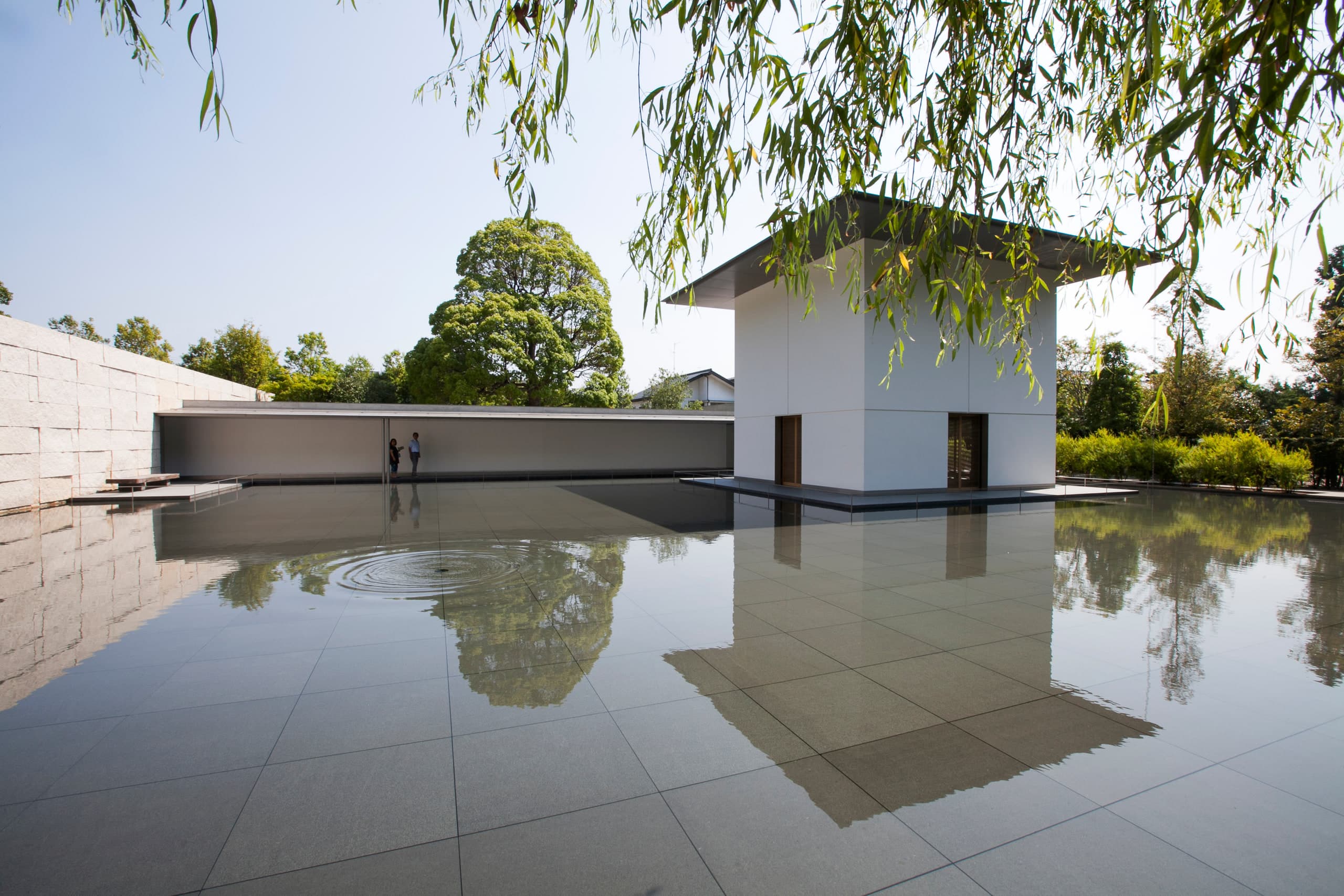
Contemplative Space and Water Mirror Garden, D.T. Suzuki Museum, Kanazawa. Photograph © Kanazawa City.
The room floats.
In Kanazawa’s Honda district, at 3-4-20 Honda-machi, the Contemplative Space of the D.T. Suzuki Museum sits in a shallow pool called the Water Mirror Garden. White walls, a thin dark eave, openings on four sides, and almost nothing else. Designed by Yoshio Taniguchi and opened on 18 October 2011, the pavilion is where the museum stops explaining and starts asking you to stay still. Cultural authority here is manufactured by withholding: few labels, low voices, water that returns your own attention.
“The design is aimed at creating an environment appropriate to the pursuit of tranquility, nature, and freedom and a place for contemplation, relaxation, and conversation… I divided the museum into three structures to avoid monumentality and to give this facility an appearance appropriate to Suzuki’s unassuming character.”
Yoshio Taniguchi, on the D.T. Suzuki Museum
Three Wings, Three Gardens
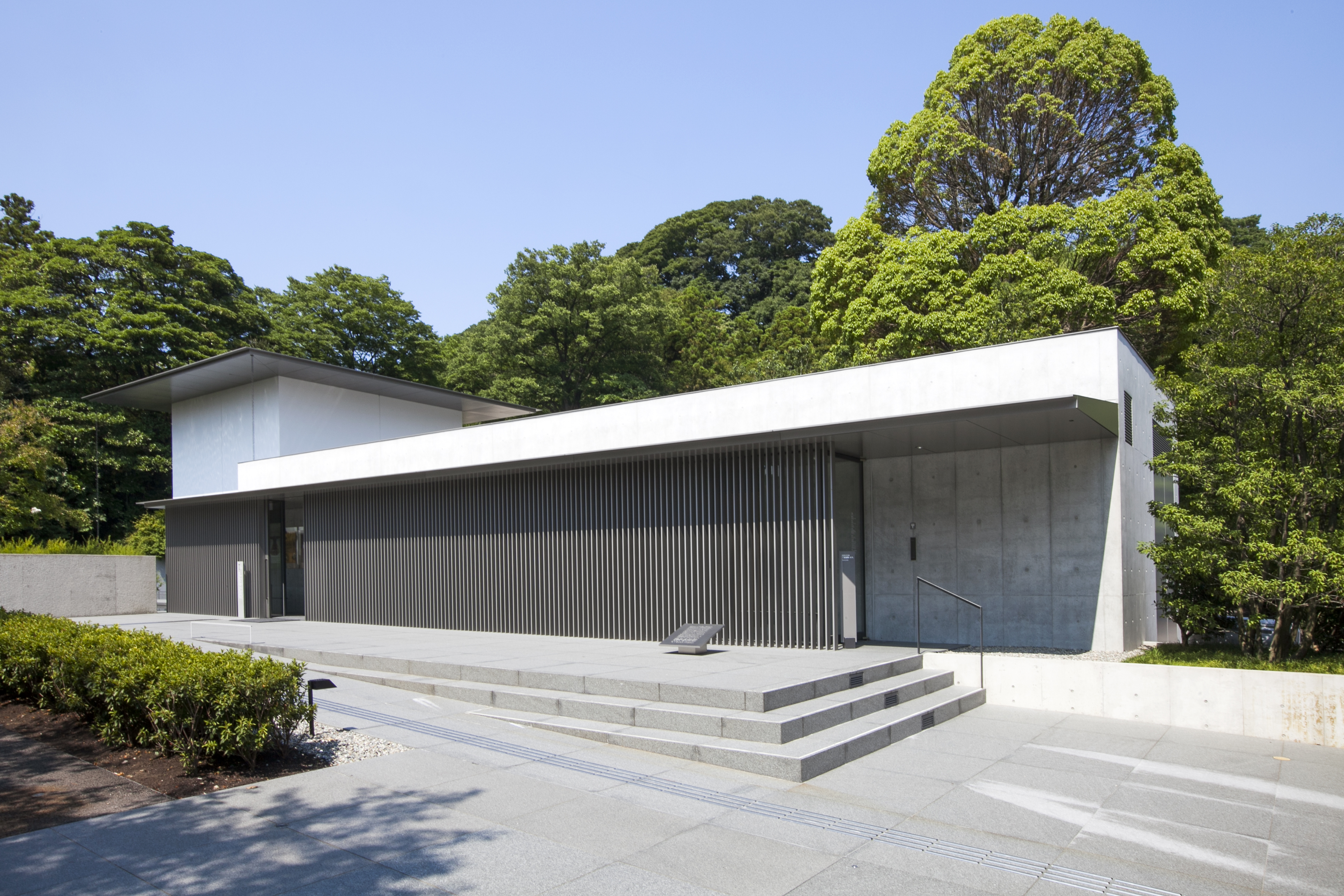
Daisetz Teitaro Suzuki (1870–1966), born in Kanazawa, spent decades making Zen and Japanese Buddhist thought readable in English. For many diaspora households, his books were the first serious door into a tradition grandparents practiced without footnotes. The museum is small by civic standards: roughly 632 square metres, three wings linked by corridors, three gardens that do as much work as the galleries. You move from the Entrance Wing through a faintly lit passage into the Exhibition Wing, then outdoors again toward the Contemplative Space. Taniguchi planned that contrast on purpose: enclosed learning, then open air, then a square room that behaves like a tokonoma you can enter.
Mihoko Okamura, Suzuki’s companion and later the museum’s honorary director, imagined a high ceiling as a building that could stand for Daisetz himself. Taniguchi answered with an interior about seven metres high under a still higher roof. The Contemplative Space borrows the scale of a temple hōjō without costume drama. Lower walls darken; tatami-faced benches line the room. You sit facing water, stone walls cast as castle geology, and the green slope of Honda no Mori beyond. Exhibition cases nearby keep labels spare on purpose. The museum wants encounter before taxonomy.
This is the third chapter of The Great Asian Room, after Tianjin’s civic atrium and Ginza’s bamboo tea grove: another interior that teaches culture before anyone delivers a lecture.
The Design of Nothingness
Taniguchi, who redesigned New York’s Museum of Modern Art and later built Kyoto’s Heisei Chishinkan, called his goal here a “design of nothingness.” Seasonal change does the decorating. Spring leaves, summer glare, autumn colour, winter snow on the mirror: the architecture stays still while the garden rewrites the view. The Water Mirror is only centimetres deep, about fourteen centimetres in contemporary accounts of the opening, yet it reads as infinity when the surface holds. Ripples appear without warning when a spring or breeze disturbs the sheet. Guests often mistake that small motion for an event. It is simply water reminding you that stillness is temporary.
Photography is barred inside the Contemplative Wing. That rule is part of the room’s argument. The pavilion’s exterior is the public face; the interior is for sitting. Staff keep the space quiet. Fifteen or twenty minutes is the minimum useful visit; many guests stay longer once the impulse to document has nowhere to go.
How to Sit Here
From Kanazawa Station, take the Kanazawa Loop Bus or a Hokutetsu local bus to Hondamachi, then walk about four minutes. There is no visitor parking; plan on foot or taxi for the last stretch. Official hours are 9:30 a.m. to 5:00 p.m., last entry 4:30 p.m.; closed Mondays (or the following weekday when Monday is a holiday) and 29 December to 3 January. Adult admission is 310 yen; seniors sixty-five and over and visitors with disability certificates pay 210 yen; high-school students and younger enter free. Confirm current fees and closures before you go.
Walk the gardens before you rush the Contemplative Space. Let the corridor sequence reset your pace. Inside the pavilion, face the water rather than the architecture. The room rewards attention the way a good counter rewards appetite: by removing options. Pair the visit with Kenrokuen and the 21st Century Museum if you want civic Kanazawa in one afternoon; keep this stop short on agenda and long on sitting. On selected early Sundays the museum has run “An Encouragement of Morning Contemplation” (Asa · Shisaku no Susume), opening the Contemplative Space and exterior corridor from 7:30 a.m. for about forty minutes of silence; capacity is limited and booking is by telephone. Check the museum’s event page for the current year’s dates.
Taniguchi died in December 2024. The pavilion remains a clear argument for why his understatement travels. Diaspora readers who first met Zen through Suzuki’s English books can meet the same temperament as architecture, a short walk from Kenrokuen, without needing a monastery gate.
Sit until the water moves. Then leave before you spoil it with commentary.
Continue with The Garden in the Picture Frame for the series’ Nezu Museum chapter in Aoyama.