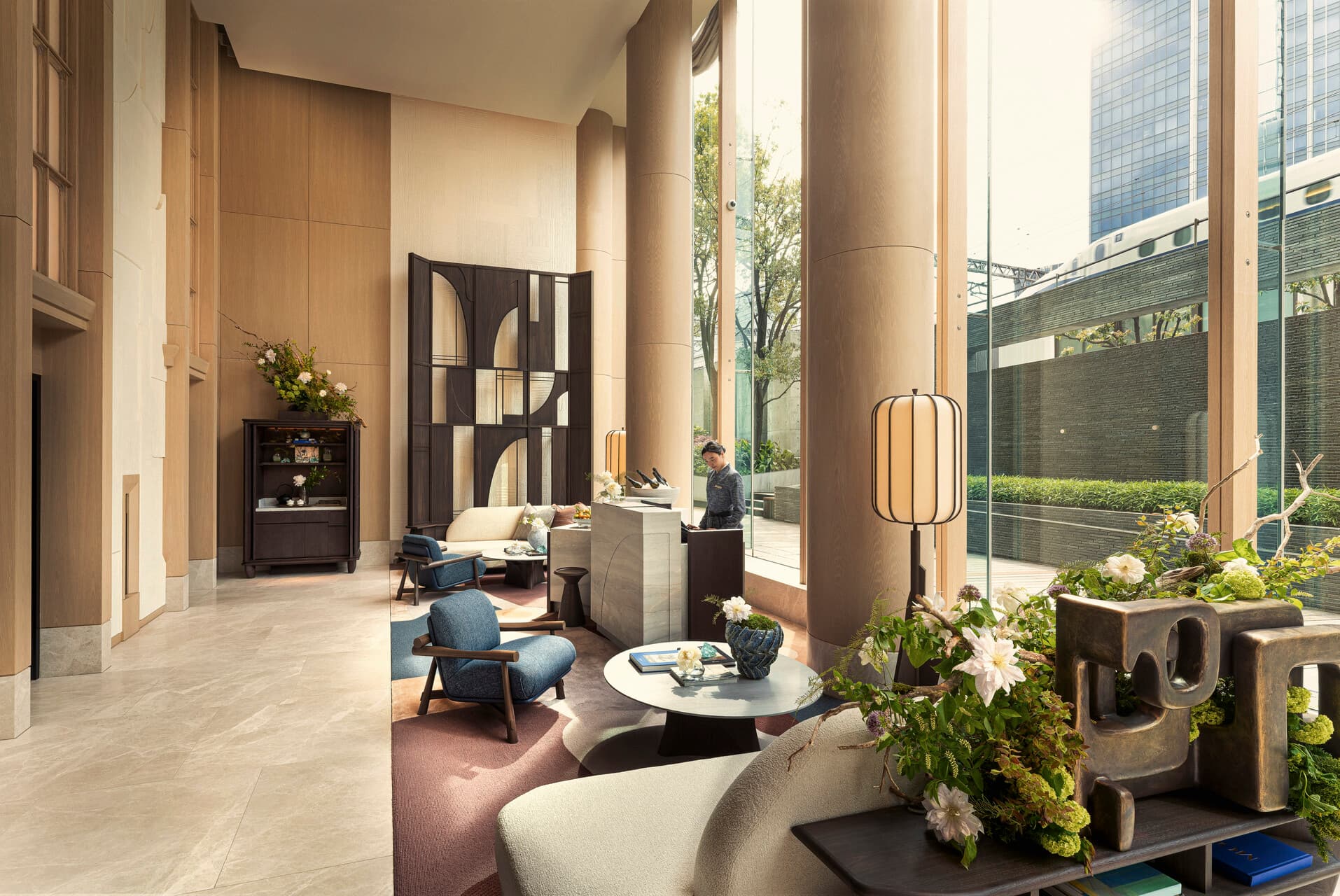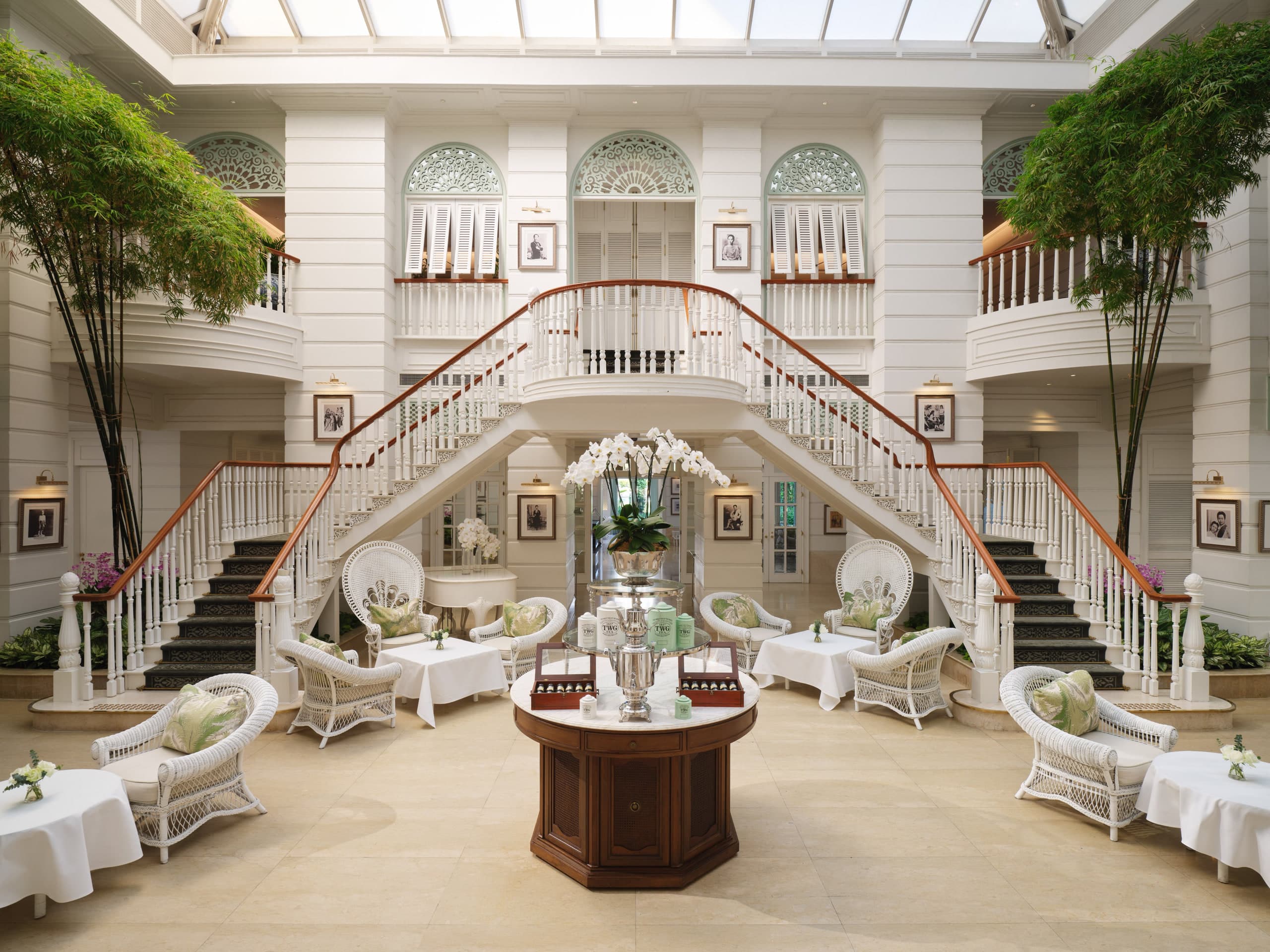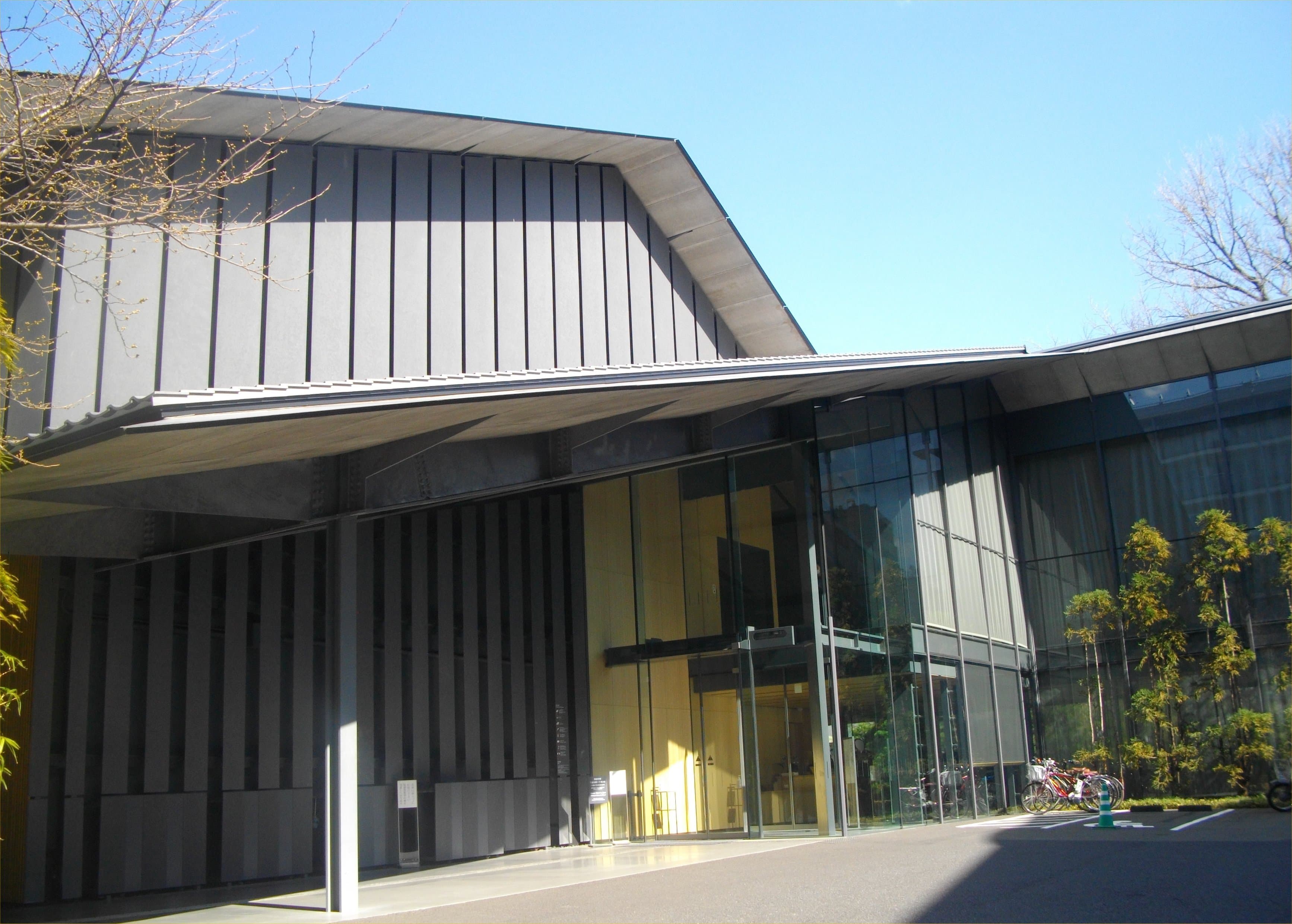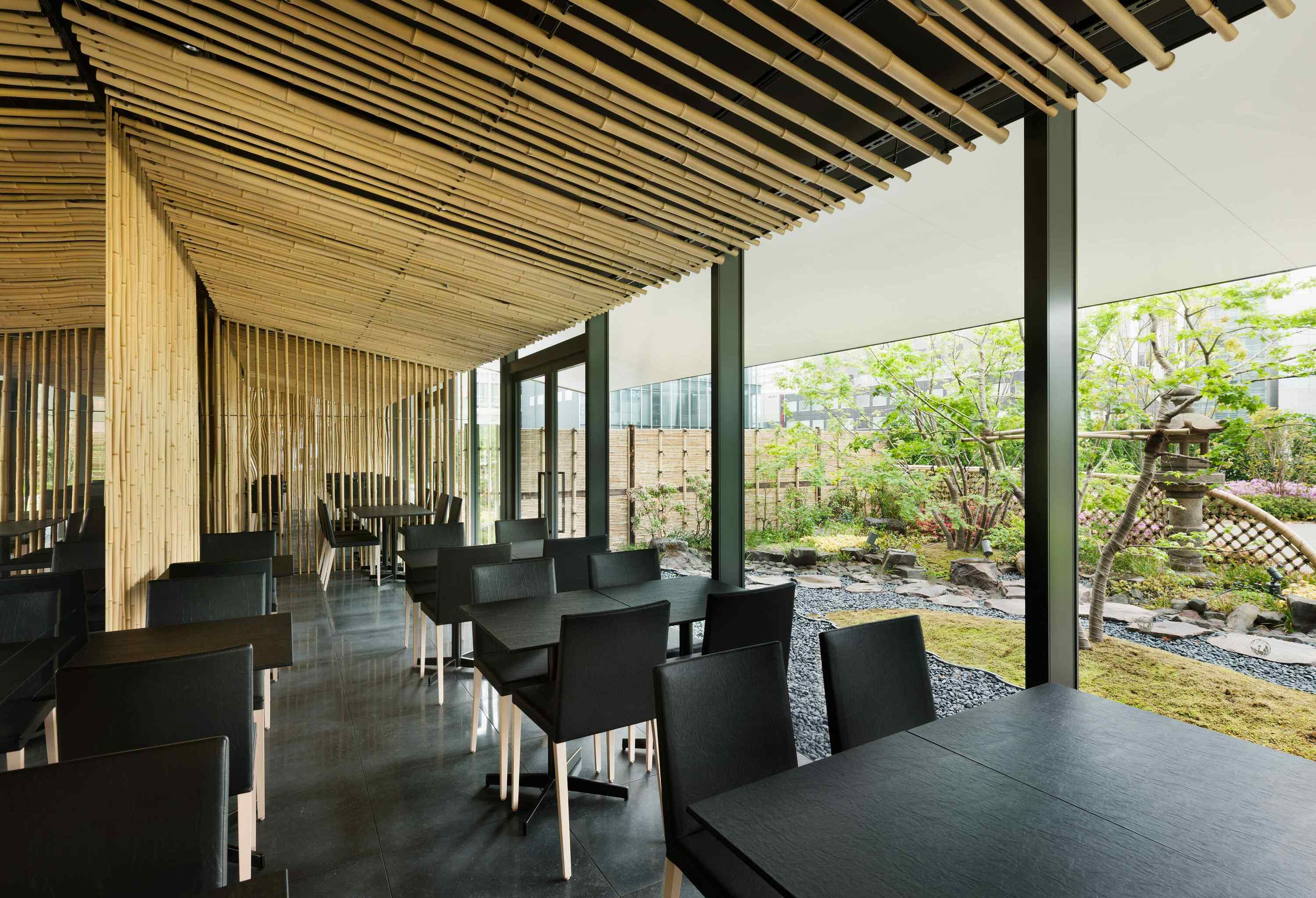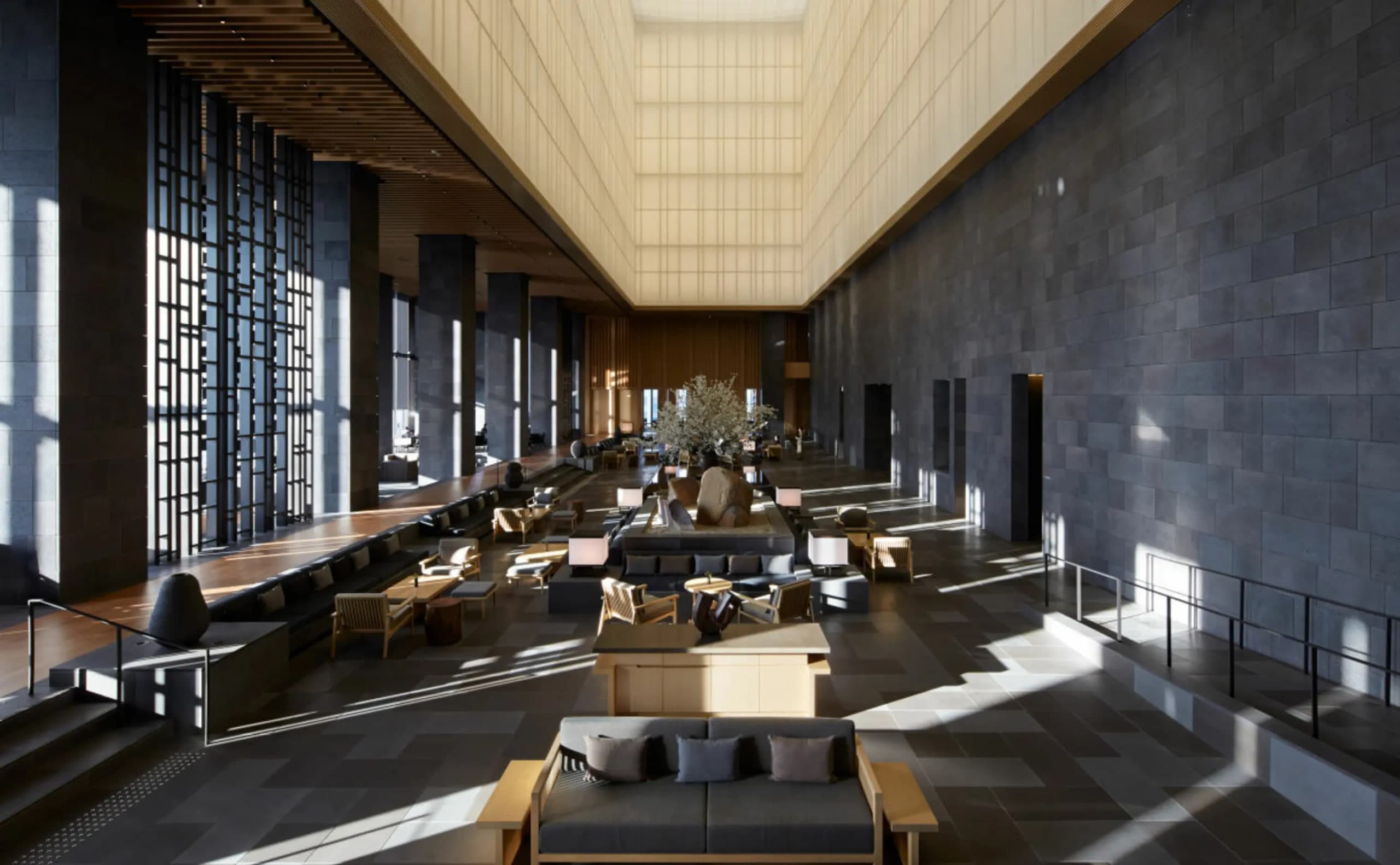
Washi-paper lantern atrium, Aman Tokyo lobby, 33rd floor, Otemachi Tower. Photograph courtesy Aman.
The lift is small on purpose.
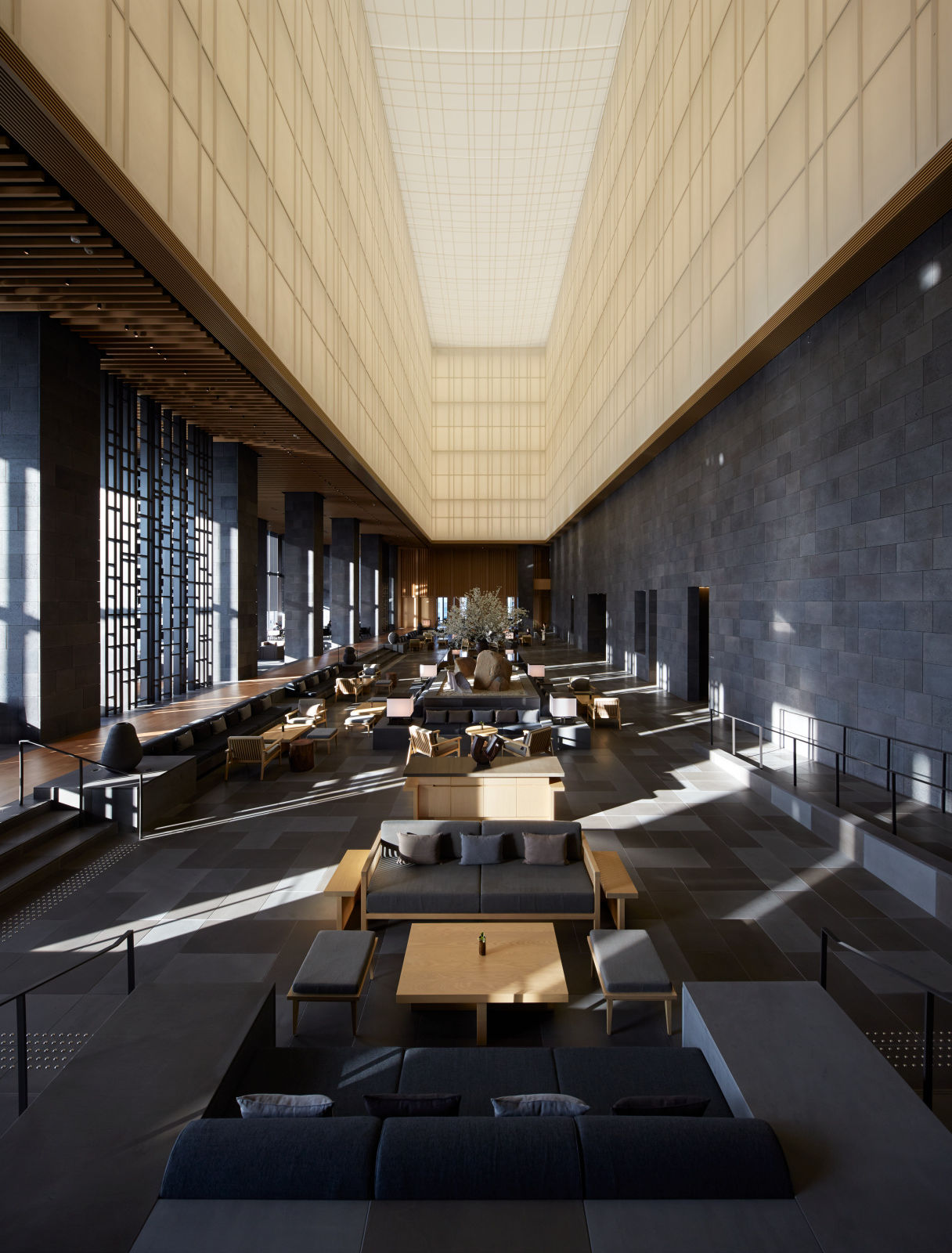
At 1-5-6 Otemachi, Chiyoda-ku, Aman Tokyo occupies the top six floors of Otemachi Tower, the Kohn Pedersen Fox envelope developed with Tokyo Tatemono and completed as a mixed tower for Mizuho offices below and hotel life above. You enter at street level with almost no signage, then ride a soft, dim cabin to the 33rd floor. The doors open into a compressed reception pocket before the volume breaks: a washi-paper lantern soaring nearly thirty metres, roughly forty metres long by eleven wide, rising through six storeys like an andon scaled to a financial tower. Kerry Hill Architects opened the hotel on 22 December 2014 as Aman’s first urban property. Hill died in August 2018. The lobby remains the argument he left standing in paper and light.
“envisaged as a contemporary Japanese garden, centered on a water feature and a seasonal ikebana arrangement”
Kerry Hill Architects, on the Washi Lantern lobby, Australian Institute of Architects International Award submission, 2015
Paper, Stone, Engawa
Hill’s team (design architects Kerry Hill and Justin Hill, project architect Yvette Adams) treated the atrium as garden before it was lobby. Dark basalt walls and floors ground the paper. A wooden engawa walks the perimeter. Rock gardens and a shallow water plane hold a seasonal ikebana that changes with the house calendar. There is no conventional registration desk as the first gesture; arrivals are commonly seated at low tables over tea, with the hard counter kept out of the theatrical sightline. Soften that as house practice rather than a brochure promise.
Daylight filters through the washi during hours when the city is bright; evenings shift through orchestrated scenes by Kaoru Mende and Lighting Planners Associates, work later recognised with an IALD Award of Merit in 2016. The Australian Institute of Architects gave the interiors an International Award the year after opening. Under the lantern sit the public rooms that ring the void: The Lounge by Aman and Italian Arva on the reception floor, with Musashi by Aman’s Edomae counter on the spa level above. The spa and thirty-metre pool occupy two floors of the hotel stack; the eighty-four rooms and suites sit higher still, each with a deep furo. Cultural authority here is vertical: paper light first, then garden, then city through glass.
This is the eighth chapter of The Great Asian Room, after Tianjin, Ginza’s bamboo tea room, Kanazawa, Nezu, Singapore’s Padang, Yeouido, and Yongsan’s courtyard: another interior that earns trust by how it meters scale.
How to Reach the Lantern
Treat the atrium as a hotel room you borrow with a booking, not a free public plaza. Guests arrive via the ground-floor hotel entrance on the tower’s east side and ride dedicated lifts. Non-staying visitors reach the 33rd floor through dining: reserve The Lounge by Aman or Arva on TableCheck or through the restaurant desk (+81 3-5224-3339), and confirm current hours before you go. Musashi is a tighter dinner ritual on the floor above, closed Sundays and Mondays in recent listings, with a firm cancellation window. Breakfast in the sky rooms is generally held for in-house guests; do not plan a lobby breakfast as a walk-up tourist stop.
At the foot of the tower, Otemachi Forest spreads roughly 3,600 square metres of planted public ground. The Café by Aman sits in that forest register and books separately; it is a ground-level French pause with trees in the window, not a shortcut into the washi atrium. Use Otemachi Station (five Tokyo Metro lines under the building) or a short covered walk from Tokyo Station’s Marunouchi side. Pair the stop with The Banquet Guide to Tokyo for the wider hotel map, and with Bamboo Grove Above the Kabukiza if you are collecting Tokyo rooms that filter light through craft rather than neon.
How to Sit in the Void
If you are staying, give the lobby fifteen quiet minutes after check-in before you chase the spa or the room view. Walk the engawa. Watch how the lantern’s glow holds when cloud cover softens the city. Rates move hard by season; confirm current published bands on aman.com rather than any single secondary quote. Ask at booking whether spa and pool access ride with your category. For a dining-only visit, book lunch or afternoon tea at The Lounge when you want the Imperial Palace line in the window and the lantern as the room you cross, not as a photograph from the corridor.
Diaspora travellers who know Tokyo through Ginza counters or Shinjuku towers often find Otemachi clarifying: the financial district’s glass stack is forced to host a paper interior that behaves like a lantern and a garden at once. Stay until the height stops reading as hotel atrium and starts reading as andon. Then go up to your furo, or downstairs to the forest café, knowing the cultural work was already done on the thirty-third floor.
Continue the series from A Courtyard Above Hangang-daero, or return to The Asian Grand Tour when Tokyo is one hinge on a longer route.