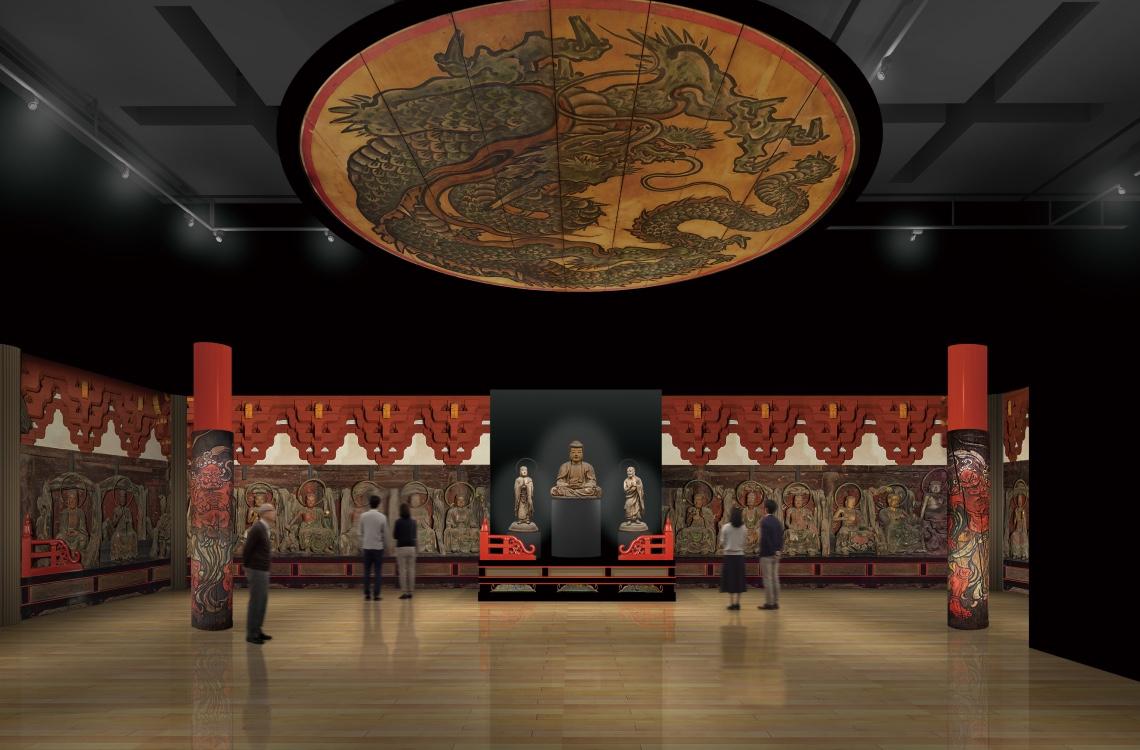
Adorned in Gold: Japanese Lacquer from the Jacqueline Avant Collection opened Saturday in Gallery 25 at the National Museum of Asian Art. Gold powder sits in wet black lacquer until dragons, plants, and family crests catch the light. Japan calls that craft maki-e, or sprinkled picture, and makers have used it since the tenth century to finish objects people actually carried, wrote on, and rode in. The free hang runs through early 2028. Give three pieces the longer look: a pepper blower, a plum-shaped writing box, and Princess Atsuhime’s bridal palanquin.
Banquet’s Hosts & Hostesses profile of Jacqueline Avant covers the collector who assembled most of the smaller works, and how flat gold, raised gold, and flecked grounds differ on the same wall. The objects below answer a simpler question. How was each one built, and what did it do?
The Pepper Blower
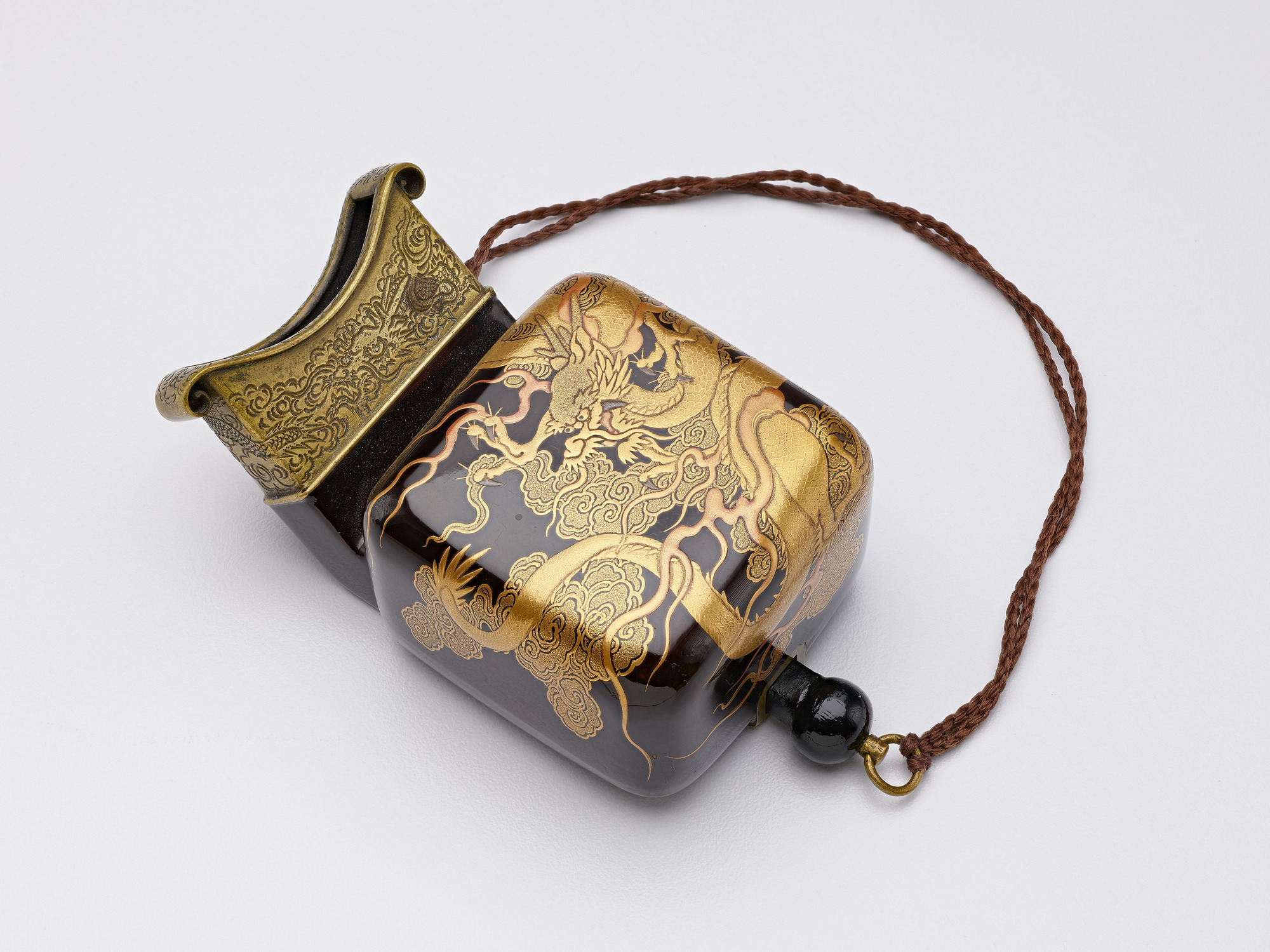
Accession S2023.2.36 is small enough for a palm. A black lacquer body carries a coiled dragon in gold maki-e among clouds. One end opens into a wide, engraved metal mouthpiece; a cord loops from the other so the piece could hang at the waist. Under the decoration, urushi was brushed on in thin coats, dried in controlled humidity, and polished until the shell was hard enough for daily wear. The dragon’s gold began as powder sprinkled into wet lacquer, then sealed under more coats, the same process the gallery explains for larger boxes.
The chamber was filled with ground pepper or another irritant. Metsubushi, eye closers, let the carrier blow that powder toward an opponent’s face at close range: mouth to the flared metal, aim through the far aperture, empty the box. The gold makes the object look ceremonial until the mouthpiece registers as a tool sized for breath. Durability and display arrive in the same shell.
“Lacquer was valued for its durability, but the maki-e style transformed the practicality of lacquer into visually stunning and highly desirable objects.”
Sol Jung, curator of Adorned in Gold
The Plum Writing Box
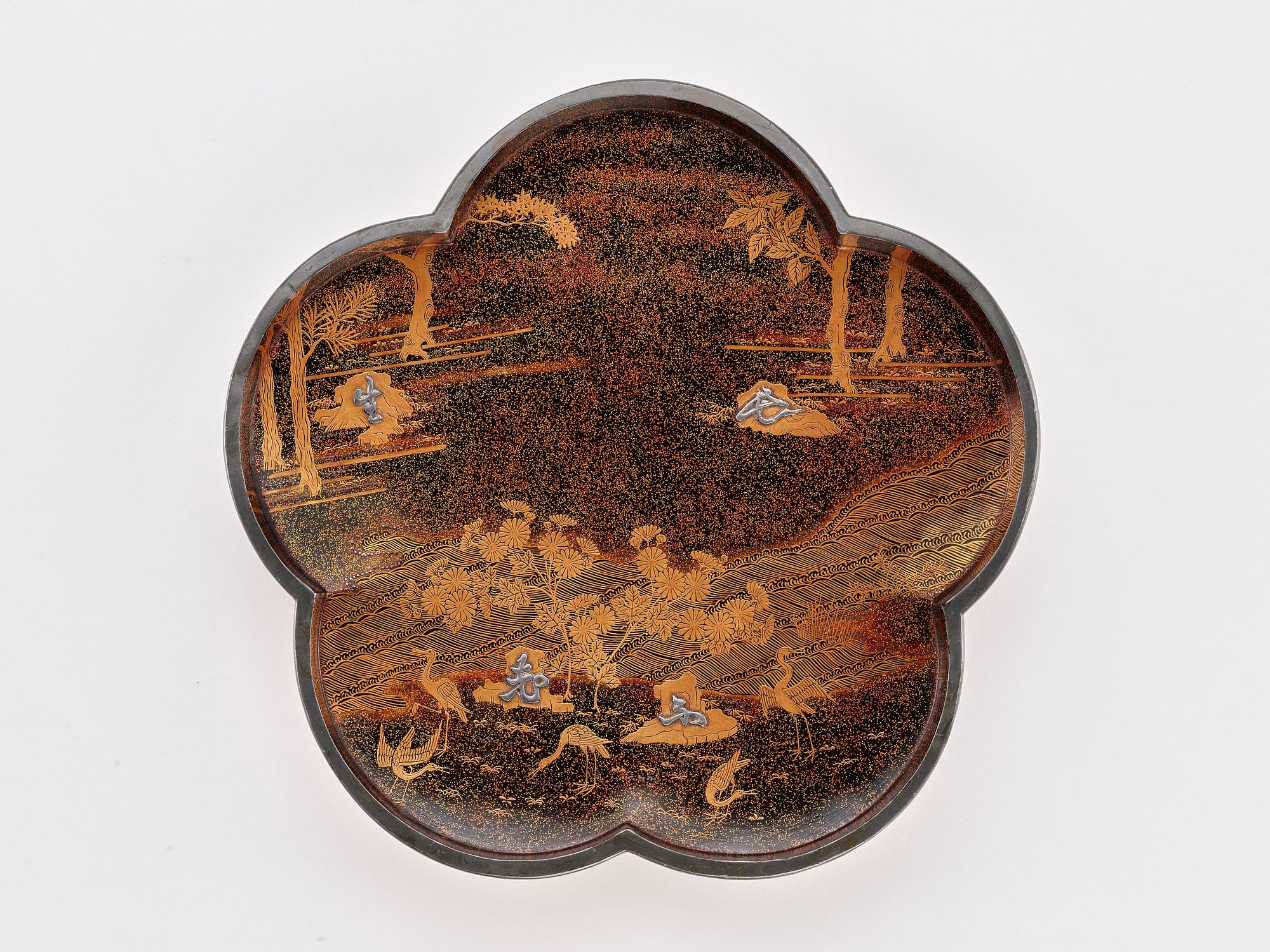
Open, S2023.2.12 is a writing set. The five-lobed tray had to hold an inkstone, water dropper, and brushes without sliding across a floor or a journey. The field is dense nashiji, gold particles set until the surface reads like pear skin, with cranes, pines, and waterlines in gold and silver characters cut into the landscape. Closed, the same wood is a plum blossom whose petals switch among flat sprinkle, raised relief, and flecked grounds, with tin-alloy rims and silver inlays. Visitors who want that technique ladder can take it from the Avant profile; the open tray is where the desk use shows.
The sequence of making follows the use. Wood was carved into a lobed vessel first. Lacquer sealed and leveled it. Powder and inlays turned the working surface into a picture the owner saw every time ink was ground. Fashion hairpins and literary boxes share Gallery 25 because objects like this already lived between dressing rooms and writing tables.
Atsuhime’s Palanquin
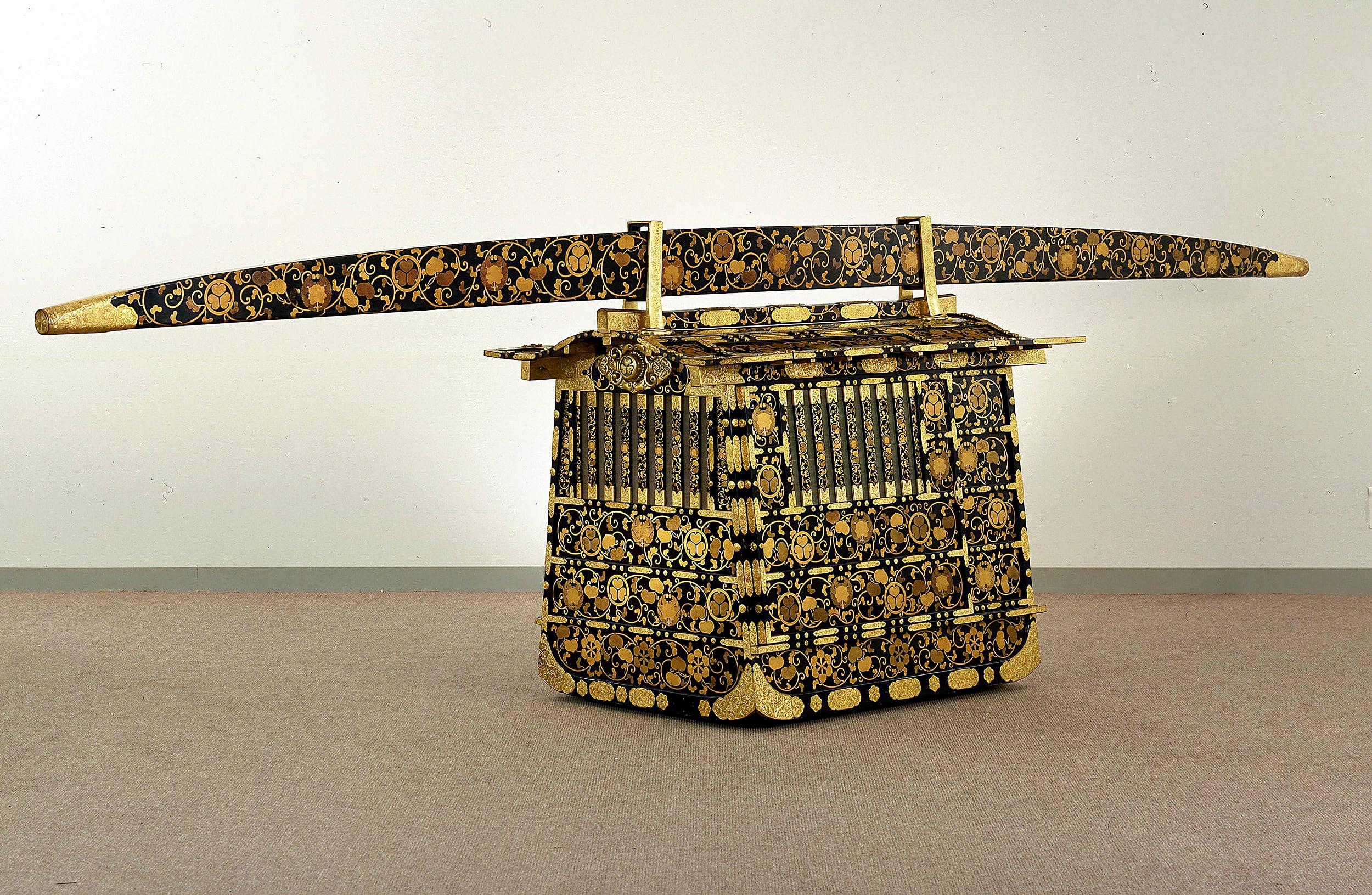
The largest lacquer in the room comes from the museum’s own collection. The ceremonial norimono, S1985.1a-h, was made in 1856 for the wedding procession of Princess Atsuhime to Tokugawa Iesada, the thirteenth shogun. Ann Yonemura bought it for the Sackler in 1985; Japanese archival research later matched it to the bridal inventory. The exterior is black lacquer dense with gold maki-e scrolling vines and circular aoi crests of the Tokugawa house, with the Konoe peony crest also present. Gilt-copper fittings reinforce corners, hinges, and the long carrying beam. Museum notes put that beam near five meters, work for three bearers in front and three behind. Sliding doors, silk-covered lattice windows, and bamboo blinds managed light and privacy while the cabin moved through streets that were meant to see the gold.
Inside, the passenger faced a different surface. Three paintings on gold-leafed paper show scenes from The Tale of Genji; the rear panel turns to Mount Hōrai and other longevity emblems. The bride sat on a silk cushion with literature and auspice for company while the outside advertised the marriage alliance. Months of lacquer and metalwork supported a procession measured in hours. The interior picture gallery was sized for one rider who never needed the curb view of the crests.
The pepper blower empties as a weapon. The plum box opens as a desk. The palanquin still reads as a vehicle with a private room. Gold finishes each surface. Mouthpiece, tray, beam, and painted panels are what made the finish useful.
Gallery 25 is free daily from 10:00 to 17:30 except Christmas Day, through 2 January 2028, at 1050 Independence Avenue SW in the East Building. Forty-five quiet minutes cover the three cases; the museum’s pepper-blower and plum-box 3D models add another angle on the same construction. Adorned in Gold stays on the Banquet calendar for the long run. If From the Louvre is still up through mid-January 2027, see those Islamic loans on the same Mall day, then come back for lacquer.