The blue worth collecting in a Japanese wardrobe begins as leaves on a Tokushima field.
Not as a hangtag that says Japan Blue. Not as a pair of jeans that fades on schedule. Awa indigo (阿波藍) is agricultural chemistry: Persicaria tinctoria grown along the Yoshino River basin, composted for months into sukumo, then kept alive in a vat that has to be read every day. If you cannot smell the vat, you are buying a color story, not the craft.
We'll be blunt. Most of what diaspora wardrobes call Japanese indigo is excellent synthetic denim, decorative stitching sold as heritage, or both. That can still be a good purchase. It is not the same object.
"They're completely different. It's an entirely different product from denim made with synthetic indigo."
Yoshiharu Okamoto, aizome artisan for Momotaro Jeans, on natural leaf dyeing versus industrial blue
What the Vat Actually Is
Tokushima still produces the majority of Japan's traditional sukumo, the fermented indigo leaf cake that feeds a living dye bath. Masters called aishi turn dried tadeai leaves for roughly 100 to 120 days, watering and aerating the heap until temperature and smell tell them the compost is ready. Only a handful of those masters remain. Osamu Nii of Nii Seiaisyo in Kamiita is among them: sixth-generation work, the kind of address you visit with a plan, not a taxi whim.
The vat that follows is not a pot of pigment. Ash lye, bran, shell lime, and daily stirring keep the indigo in a reduced state so cloth can take color. Dip, lift, oxidize in air, watch the greenish wet cloth turn blue. Repeat. Pale kamenozoki after a glance in the tub; deeper hanada and aiiro with patience; near-black kachi-iro, the old "victory" shade, only after many rounds. The names are not mood boards. They are dip counts.
BUAISOU, a small Tokushima collective that grows, ferments, dyes, and sews under one roof, has made that farm-to-closet loop visible to outsiders through workshops and collaborations. Their open sessions run on the third Saturday of the month, booked online, first come first served. They do not take email inquiries for visits. That friction is information: the vat is not a photo opportunity first.
Denim Hangtags and the Word "Indigo"
Synthetic indigo and plant indigo share the same core molecule, indigotin. Industry prefers the lab version because it is pure, cheap, and consistent. Trade writing aimed at denim buyers is unusually honest here: nearly all commercial jeans, including most premium Japanese selvedge, are dyed with synthetic indigo. Natural leaf dye shows up in limited editions and specialist lines. Pure Blue Japan and Momotaro's natural-indigo programs are the exceptions that prove the rule, not the closet default.
Okamoto, speaking for Momotaro's aizome work in Kojima, draws a sharper line than marketing usually allows. Synthetic denim fades in high-contrast maps. Proper leaf dyeing penetrates differently; he talks about the cloth "burning" under light rather than fading in the Instagram sense. You do not need to become a fade chaser. You do need to stop treating "indigo" on a tag as proof of Awa process.
Quiet navy from a European mill and Awa blue from a Tokushima vat can live in the same wardrobe. They answer different questions. One is a reliable dark. The other is a living dye history you wear until the color tells on you.
For the broader Tokyo shopping grammar around fabric and floor logic, keep Tokyo Department Store Dressing open. For Seoul's quieter label register, see The Return of Quiet Luxury in Seoul.
Sashiko Is Reinforcement, Then Decoration
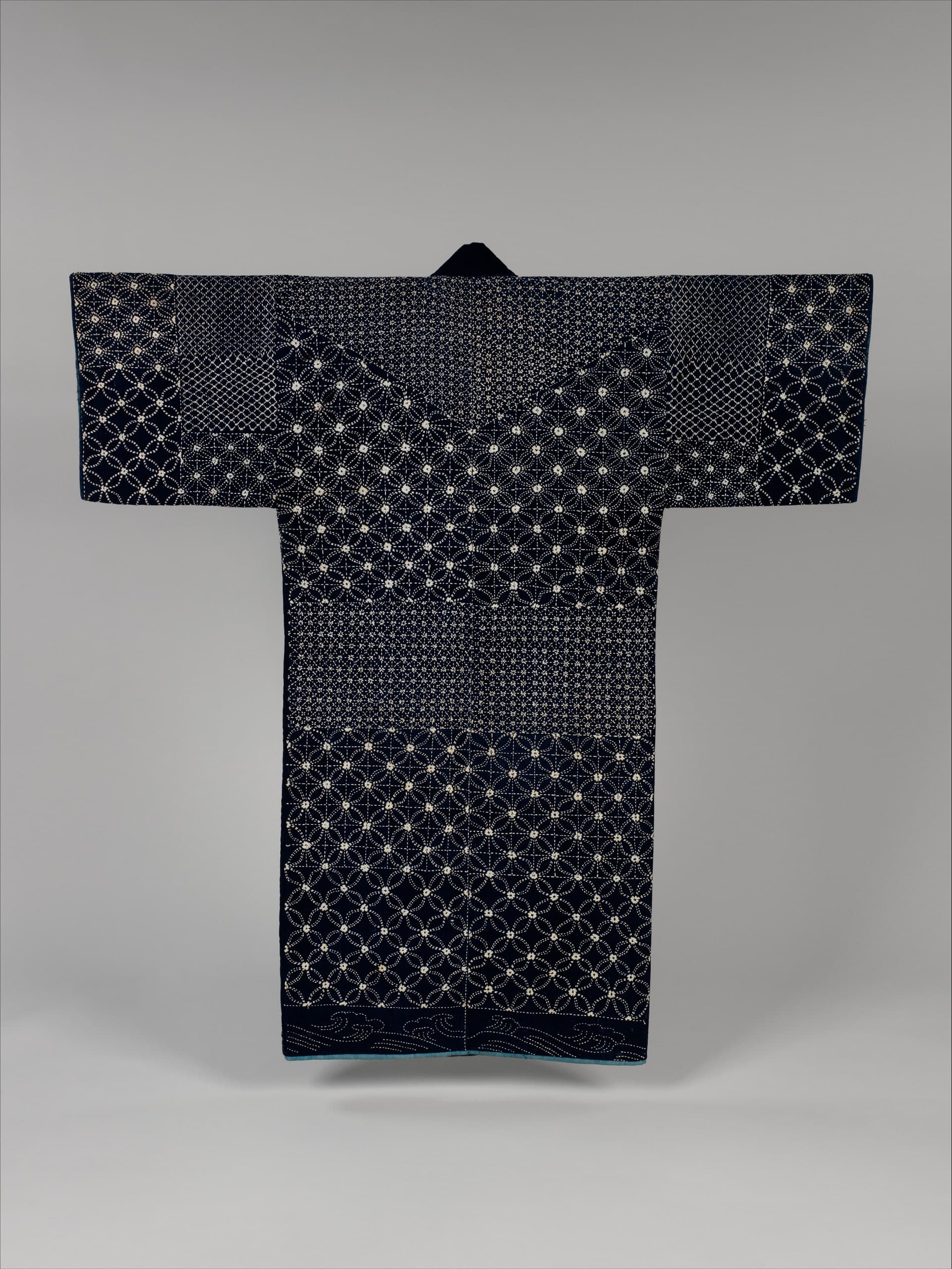
Sashiko means little stabs: running stitch that thickens cloth, joins scraps, and holds warmth. Farmers and firefighters used it because fabric was expensive. The Meiji jacket above, now in the Metropolitan Museum of Art, shows interlocking shippō-tsunagi circles and a wave band at the hem. Beautiful, yes. First of all, engineering.
The contemporary boom that treats sashiko as visible-mending embroidery for slow-fashion mood boards is not wrong. It is incomplete. Stitching to delay the tear is older than stitching to announce the tear. Brands such as KUON, founded in 2016 by Arata Fujiwara and designer Shinichiro Ishibashi, have put boro and sashiko into modern tailored shapes, including work with Sashiko Gals artisans in Otsuchi, Iwate. Soft mention only: look at construction and who stitched it, not at the word "boro" alone.
If a jacket costs like art and the stitch is only surface decoration on new cloth, you are buying a motif. If the stitch is doing structural work on indigo cloth that has already been through a vat, you are closer to the original problem the needle was invented to solve.
Kurume Kasuri: Where Pattern Is Dyed Before the Loom
Indigo is not only solid blue. Kurume kasuri, from Fukuoka's Chikugo region, is cotton ikat: threads bound and dyed before weaving so the pattern arrives slightly blurred. The craft was designated an Important Intangible Cultural Property in 1957. Geometric fields, floral mid-patterns, checks that never look machine-perfect.
For a Tokyo stop that is actually stocked, Giemon (Okamoto Shoten) opened on the third floor of Keio Department Store Shinjuku, in Madam's Closet, in February 2024. Bags and ready-to-wear in kasuri cotton travel better than a romantic plan to "find indigo somewhere in Japan." Confirm floor hours on the day; department stores reshuffle.
How to Buy Without Collecting Slogans
Ask what entered the vat. Plant sukumo from Tokushima or Hiroshima studios is a different claim from "indigo-inspired." If the seller cannot say, pay for the cut and the mill, not for the myth.
One garment beats a blue wardrobe. A noragi, a kasuri jacket, a stole, a properly dyed shirt. Wear it until the color shifts. That is the point of living dye.
Separate sashiko from indigo. White stitch on new navy chino is a look. White stitch on vat-dyed cotton that has already worked is a lineage.
Book Tokushima like a workshop, not a drive-by. BUAISOU's monthly sessions and Nii-adjacent visits reward planning. Shikoku is not a same-day errand from Ginza.
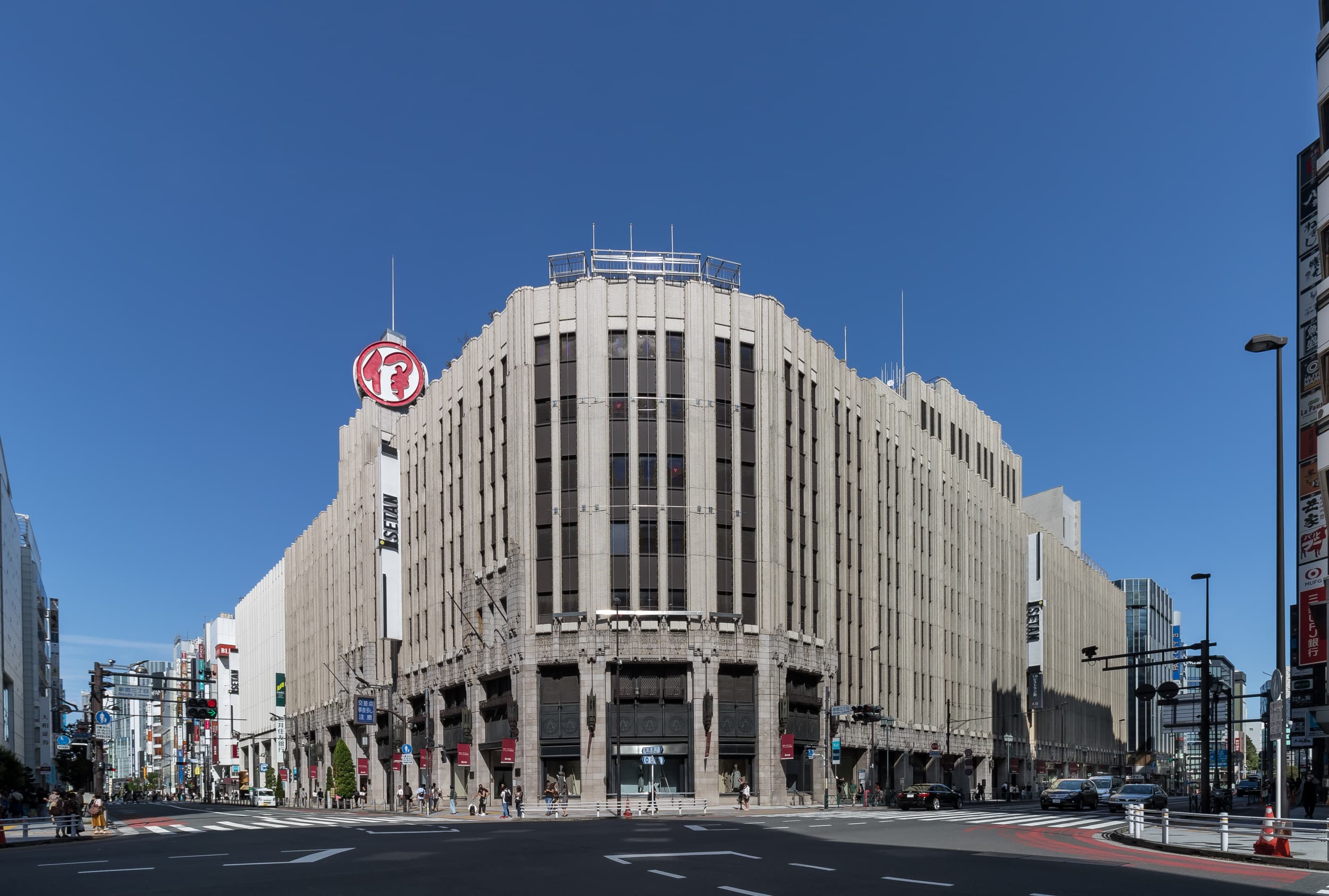
Department-store floors still matter. The same logic that makes Isetan and Mitsukoshi useful for quiet Japanese labels applies to craft cotton when a maker like Giemon takes space in Shinjuku. Read the fabric. Ignore the word cloud on the tag.
For daily objects that age on purpose, pair this with What Quiet Carry Actually Looks Like. For staying and moving in the city, use The Banquet Guide to Tokyo.
The Verdict
Japanese indigo is a supply chain you can still visit: field, compost, vat, cloth, stitch.
The diaspora wardrobe already owns enough synthetic blue that photographs well. What it usually lacks is one piece that remembers Tokushima. Buy that. Wear it hard. Let the hangtags stay in the denim aisle where they belong.