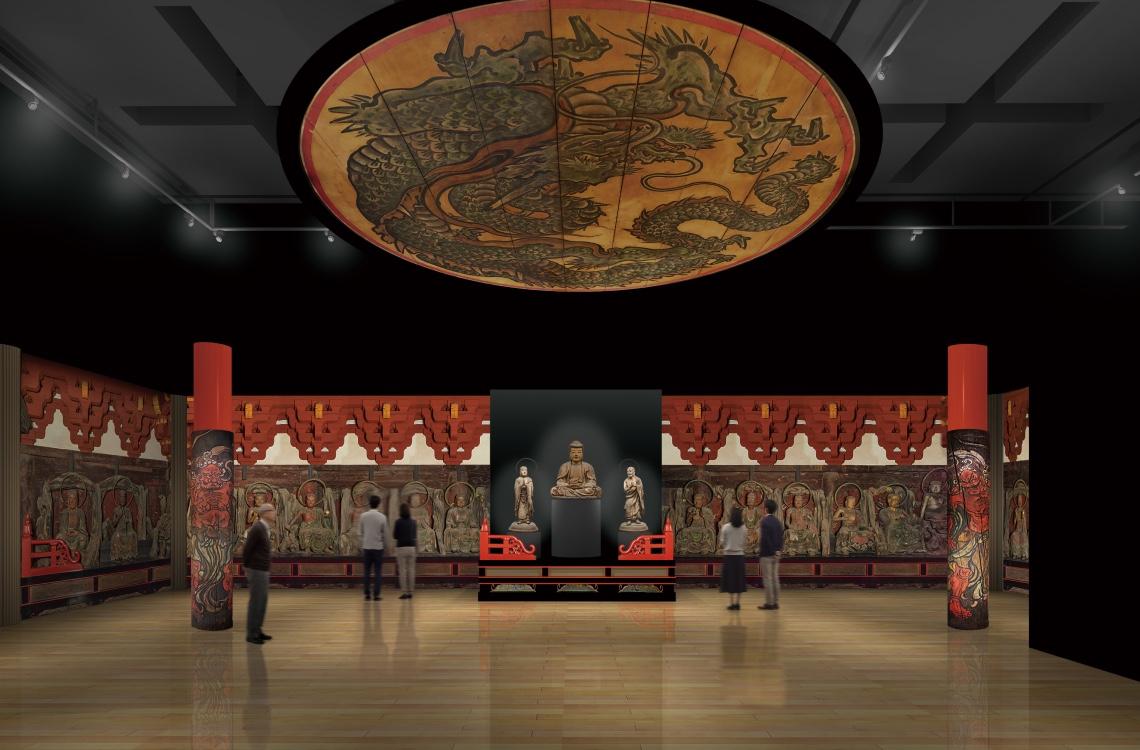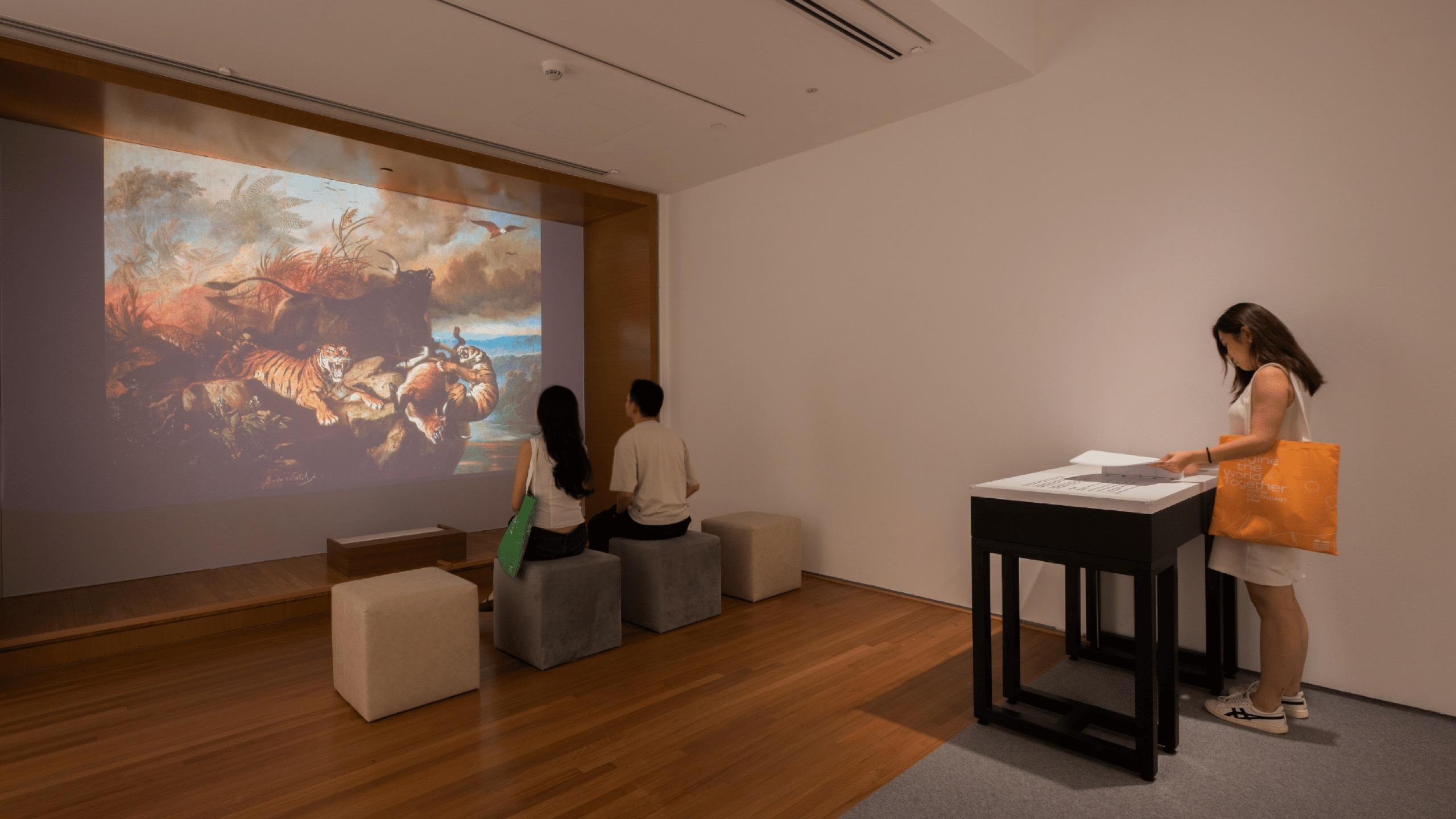
On Level 4 of the City Hall Wing, Raden Saleh’s Boschbrand (Forest Fire) fills a recessed wall as a projection you can sit with. Beside it, a black console holds raised plates of the same jungle scene. Run a finger across a tiger’s stripe and a button plays the audio for that layer. The oil painting stays behind glass elsewhere in the care of the collection. Here the drama is meant to be handled.
That station sits at the centre of Let’s Imagine the World Together: Art in Southeast Asia, which opened on 5 November 2026 and runs through 26 September 2027 at National Gallery Singapore. The Gallery’s learning and access teams built the hang so visitors can look, listen, and touch instead of skating past wall text. The rooms follow three themes: People, Stories, and Places. The clearer lesson arrives at the stations where sound and touch change what you notice. Three of them are worth the detour.
Trace the Fire From Animals to Smoke
Saleh finished Boschbrand in 1849 on a canvas about three metres by four, with animals fleeing a forest fire. In this show the Gallery presents it through the Tactile-Audio Interaction System, or TAIS, made with Beyond Vision International and adapted from the Hands-On Learning and Development (HOLD) Collection. According to the Gallery, this is the first time a HOLD resource has been built into an exhibition display.
The painting has been broken into tactile layers that move from the animals in the foreground to the burning forest behind them. Each layer has a button that plays an audio description of that part. One HOLD audio stop is named for the two tigers and a banteng, the animals that disappear into smoke if you only glance from a metre away. Touch asks for a different order: foreground first, then the fire behind. You feel how Saleh stages the panic in layers of space, with beasts, rock, and blaze arriving in turn rather than as one orange blur.
“This allows me to see the artwork not only through sound, but also through touch.”
Melissa Yeo, vision-impaired visitor, on the HOLD Collection’s tactile-audio system (MuseumNext)
Let Audio Rebuild a Face From Shapes
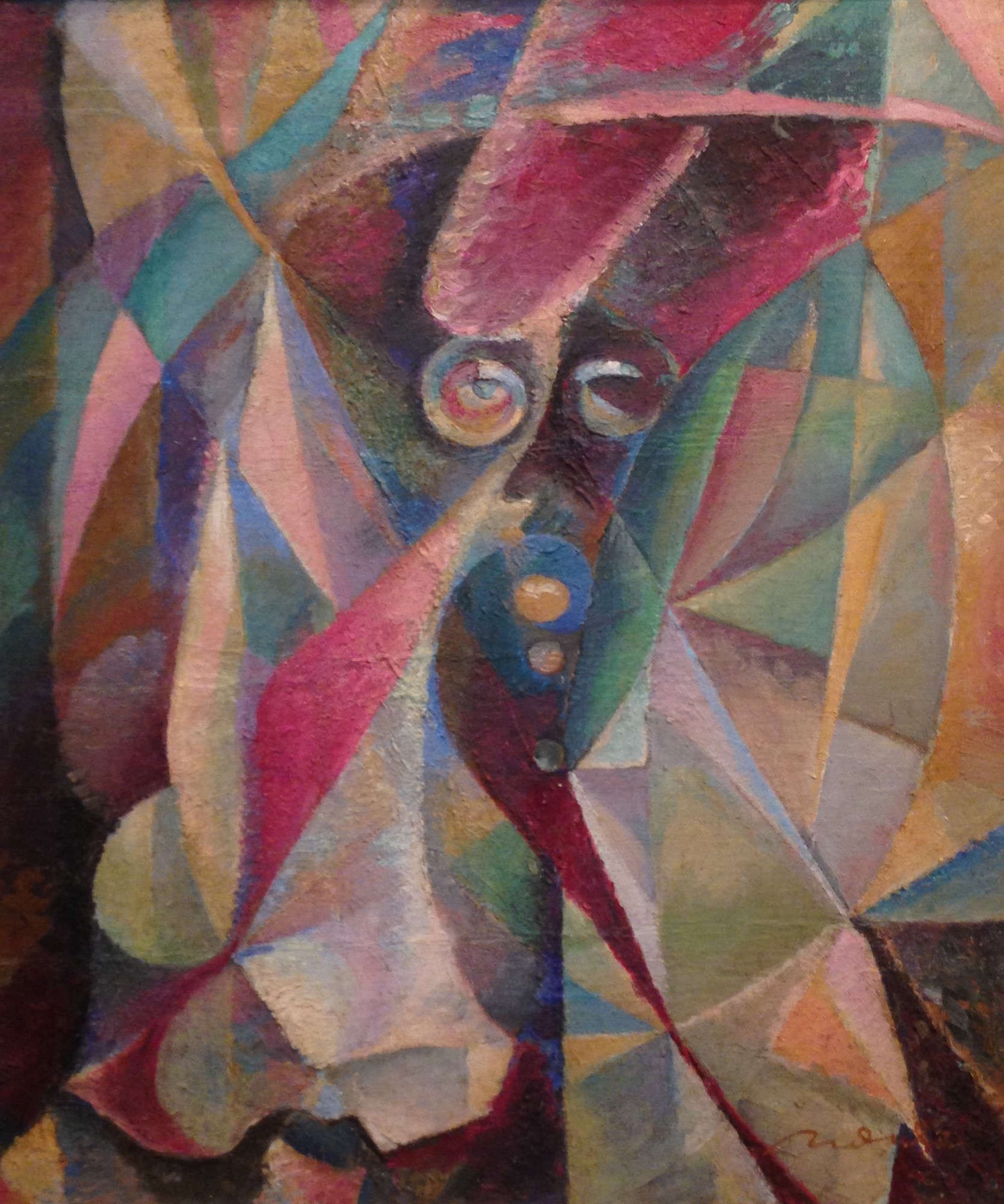
Later in the route, three Slow Art Guide stations offer a headset and a guided stretch with a single work: Fua Haribhitak’s Face, Galo B. Ocampo’s Moro Dance, or Sulaiman Esa’s The Mystical Reality Reinvented: Hua. The scripts lean on slow looking and mindfulness, shaped with advice from Dr Mabel Yap and Dr Felicia Low. Recordings and transcripts run in English, Malay, Tamil, and Chinese.
Face dates from around 1956, when the Thai modernist was studying at the Accademia di Belle Arti in Rome. Eyes, nose, and lips sit among fractured colour planes; Cubism had shown him how to hold more than one angle in a single canvas. The Gallery asks what features you might add if the face still feels unfinished. With headphones on, that question has time to work. One shape settles as an eye, a violet plane turns into cheek, and a portrait appears without a continuous outline. In the People section you may pass the painting as one portrait among others. At the Slow Art station you stay long enough for the geometry to cohere.
Stay With the Cage Until the Rose Matters
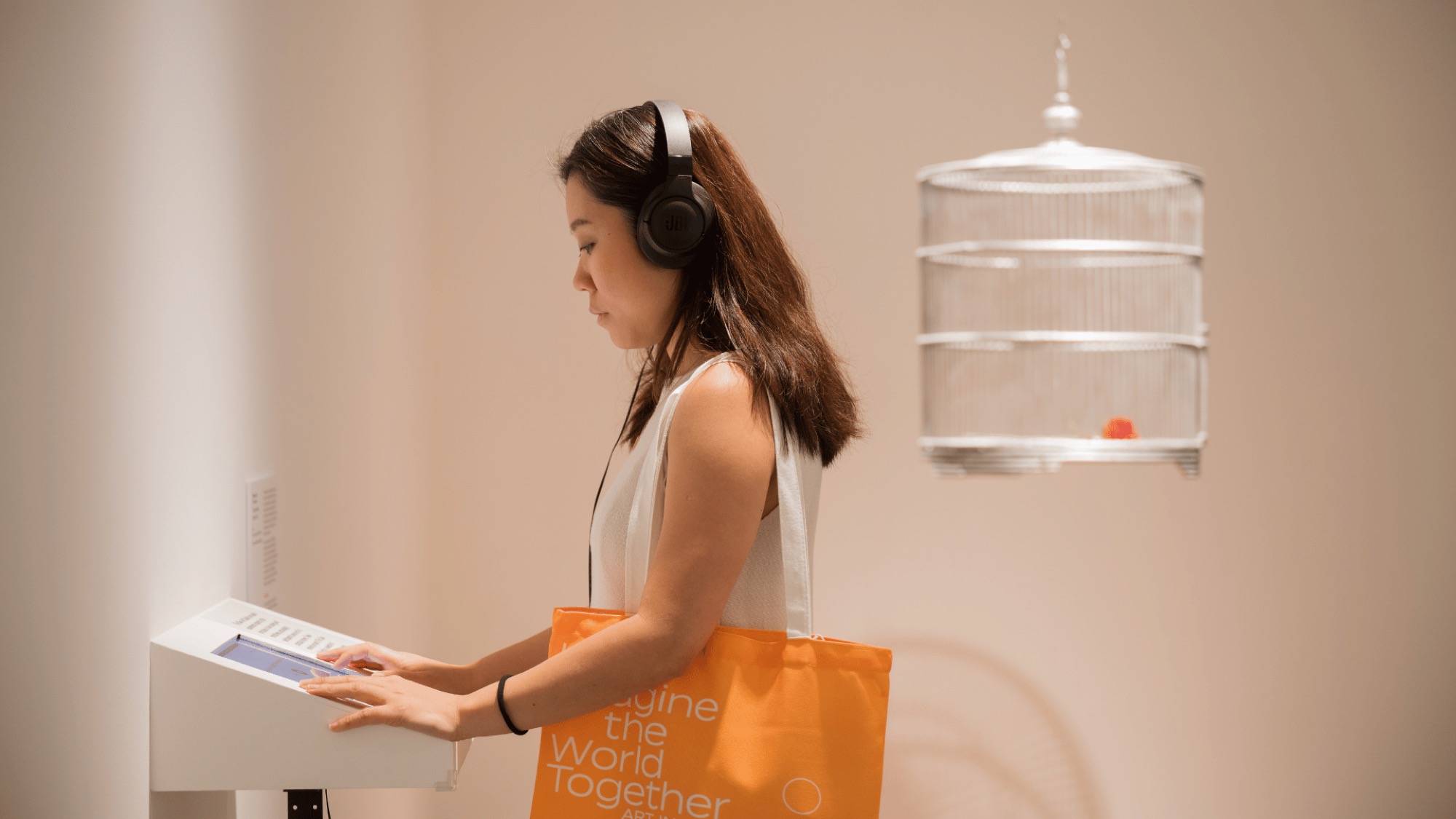
Hua looks almost too spare for a museum stop: a painted rattan cage and a single artificial rose, hung so air can move through the wire. Esa showed in Malaysia’s 1974 Towards a Mystical Reality exhibition and returns here to the birdcage as a conceptual object. The Gallery’s prompt is simple. Look from a distance, then move closer. What is missing, and what story can an empty cage still hold?
The headset makes that second look feel natural. From across the room you get the silhouette; at arm’s length the rose’s bright colour sits against the cage’s craft. Those two distances are the work. Esa and his peers were already testing that kind of attention in the mid-1970s. If you take the Moro Dance headset instead, Ocampo’s 1946 dancer gets the same patience: hands, arms, and pose hold the floor until the flat patterns around her read as rhythm.
Pick up an Imagination Bag at the entrance for prompts and props tied to the three themes, and leave a few minutes for the Co-creation wall and the Imagination Lounge at the end. General Admission covers the Level 4 Gallery: free for Singapore citizens and permanent residents, S$20 for other nationalities, with concessions on the visitor page. Hours run daily 10:00 to 19:00, last admission 18:30. City Hall MRT is the clean arrival. For the building that frames the visit, read The Padang Atrium Filters the Day. For a wider Civic District plan, keep The Banquet Guide to Singapore open.
The show runs into September 2027. Give Level 4 an afternoon: the forest fire under your fingertips, then a portrait and a cage you are willing to meet slowly.