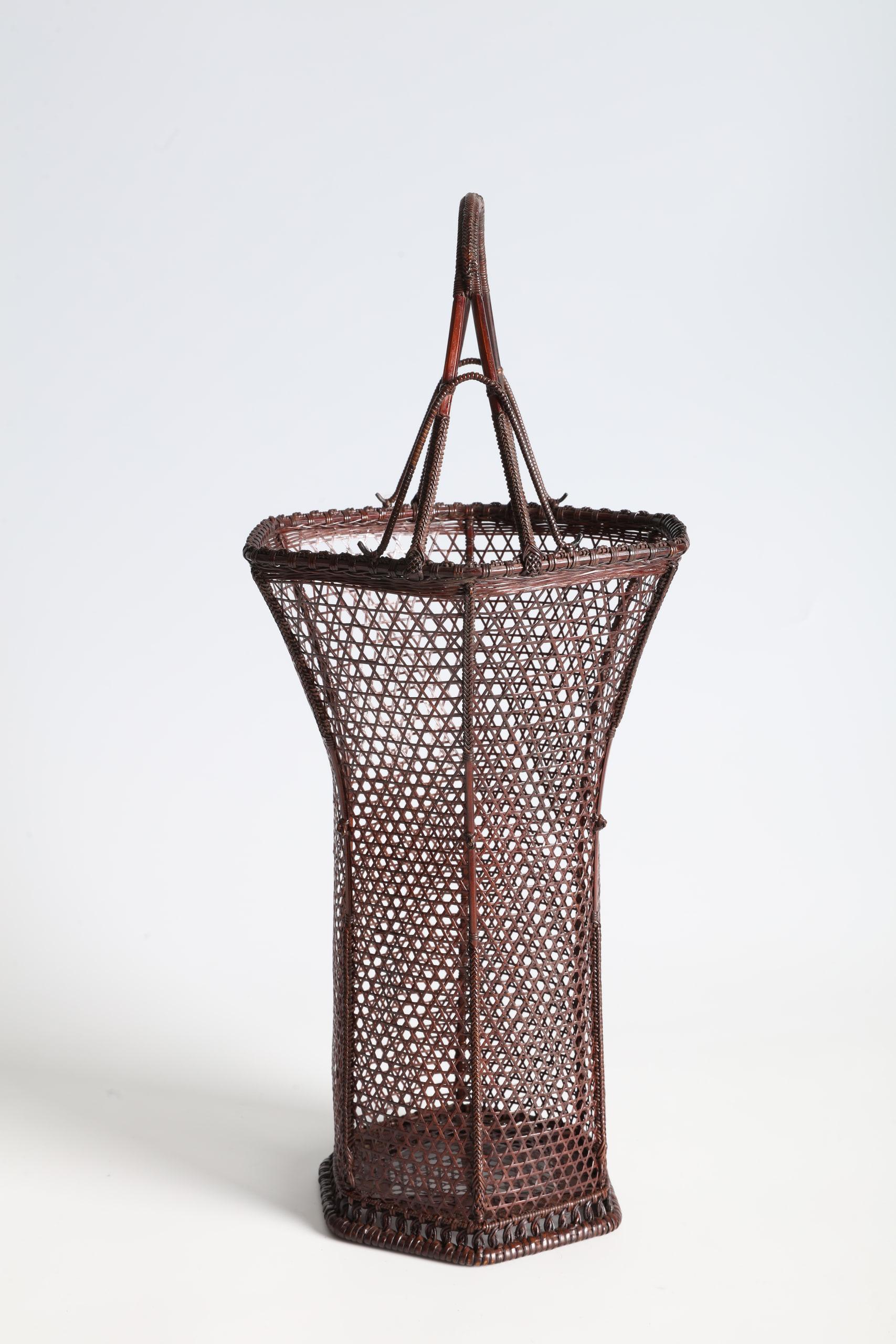
A Japanese bamboo flower basket can look, from across a Design Miami aisle, like a handsome vessel for stems. Stand closer and the plaiting takes over: who split the culm, which lineage taught the hand, whether the storage box still belongs to this object. Thomsen Gallery's presentation at the 2026 fair is one of the clearer places on the Miami Beach map to practice that looking before money changes hands.
Design Miami returns to Pride Park, at Convention Center Drive and 19th Street beside the Miami Beach Convention Center, from 1 to 6 December. Preview hours open Tuesday; public days run Wednesday through Sunday on a ticket separate from Art Basel Miami Beach. Curatorial director Charlene Prempeh has framed the twenty-second edition under Unveiling, with an emphasis on craft and process rather than furniture fame alone. Thomsen has announced an overview of Japanese bamboo baskets by leading modern and contemporary makers, shown with ceramics, bronze, gold lacquer boxes, and folding screens. That mix is the point of the booth. It is not a substitute for walking the whole fair.
Erik and Cornelia Thomsen's townhouse gallery at 8 East 67th Street has specialized in Japanese screens, tea ceramics, ikebana baskets, and lacquer since Erik began dealing in the early 1980s and opened publicly in New York in 2006. The Miami stand is the same eye under tent light. Why Design Miami Basel Matters maps the wider collectible-design calendar. This stop is narrower: how bamboo earns a place beside furniture sold as art.
"Among these is madake. It is a larger diameter bamboo with a very straight grain that lends itself to splitting into fine strands for plaiting."
Erik Thomsen, speaking to The Magazine Antiques on materials that make art basketry possible
Three names that train the eye
Early fair coverage has already named baskets from the 1930s through the 1970s by Iizuka Rōkansai, Ueda Shōunsai, and Maeda Chikubōsai II. Start with those three. They are case studies, not a roster of every lineage that may appear on the floor.
Iizuka Rōkansai (1890-1958) worked from the Kantō side of Japan and remains the modernizer museums reach for when they explain how basketry left anonymous craft. He trained in calligraphy and painting as well as plaiting, gave many works poetic titles, and sorted his output into shin, gyō, and sō registers adapted from painting and calligraphy: formal, semiformal, and freestyle. The Metropolitan Museum's Abbey Collection exhibition in 2017 and 2018 put that vocabulary in public view for New York collectors, including a tall coarse-weave hanakago from about 1932 that shows his freestyle mode clearly. When a dealer says Rōkansai, ask which register you are looking at, and whether the title on the box matches the form in front of you.
Ueda Shōunsai (1897-1990) studied under Tanabe Chikuunsai I in Osaka and often worked smoked dwarf bamboo, hobichiku, taken from old farmhouse interiors where hearth smoke had darkened the culm over decades. Hexagonal plaiting, boat forms, and tray-style flower baskets turn up from the Asian Art Museum's Cotsen holdings to LACMA. The material is part of what you are buying. Smoked bamboo is not a dye job, and a serious dealer should talk about surface, nodes, and repair without using "patina" as a catch-all for age.
Maeda Chikubōsai II (1917-2003), based in Sakai, was named a Living National Treasure for bamboo craft in 1995, the third bamboo artist to receive that designation. He is known for layered structures and complex surfaces, and for keeping Osaka's sencha-related basketry tradition alive beside more sculptural flower baskets. His name on a Design Miami wall signals museum-level work without a catalogue essay attached. The designation itself is a Japanese government recognition of technique. It does not make every attributed piece equal.
Kansai lineages such as Tanabe Chikuunsai and the older Hayakawa Shōkosai line fill in the longer history around those three: Chinese-inspired karamono formality giving way to a Japanese preference for irregular tension. You do not need every dynasty memorized for Miami week. You need enough names to tell when a booth is explaining the field and when it is only filling a vitrine.
What the craft asks of a room
Bamboo art baskets began as vessels for ikebana and tea culture. The best modern examples still do two jobs at once: light enough to lift, strong enough to hold a water liner, articulate enough that empty they read as architecture on a shelf. That is why they belong at Design Miami as well as in Asia Week townhouses. Thomsen's Madison-adjacent rooms remain the New York place to continue the conversation; Asia Week Still Opens on Madison already flags the gallery among the March appointments.
Look at the plaiting before you fall for the silhouette. Hexagonal kikkō-ami, the bundled tabane-ami associated with Rōkansai, coarse ara-ami, and armor-like yoroi-gumi make different decisions about density, light, and strength. Handle and rim bindings are where haste shows. Then ask what bamboo you are seeing: madake for fine split strands, hobichiku for smoked brown depth, arrow shafts or lacquered accents when a Kansai workshop wants historical quotation. Thomsen has described how Japanese taste often prizes irregularity where Chinese karamono baskets chase symmetry. Miami week will be full of immaculate European cabinets. A slightly unruly handle can be the smarter, costlier object in the aisle.
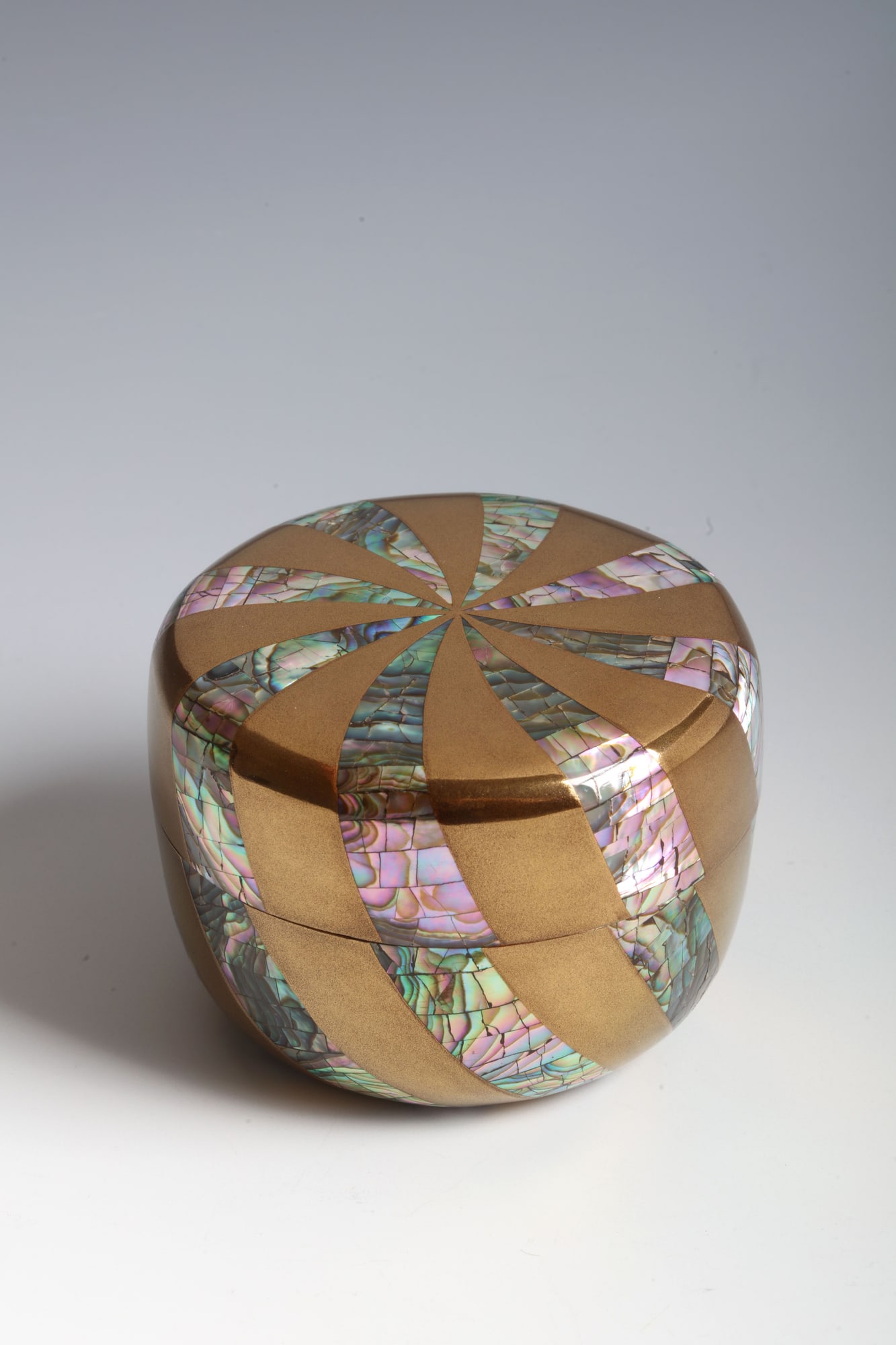
Lacquer boxes, ceramics, bronze, and screens in the same presentation do real work. They set scale and finish so a basket reads as part of a domestic ensemble rather than a solitary craft display. Gold lacquer raises related questions of surface, box, and workshop. A folding screen changes how tall a basket can sit without looking stranded. What COLLECTIBLE New York Reveals About Buying Furniture as Art argued that furniture sold as art needs clear invoice logic. Bamboo needs the same honesty about use, insurance, and whether flowers will ever go in it.
What to ask before you buy
Fine baskets traditionally travel with a fitted wooden tomobako whose hakogaki inscription, written by the artist, names the work and carries signature and seal. An aibako or awase-bako made later can still matter if a respected authority wrote it, but it is not the same as a matching artist box. Ask whether the inscription agrees with the object in title, size, and period, and whether the box has always traveled with this basket. Keep every paper the gallery gives you.
Ask for the maker's full art name, approximate date, plaiting technique, and bamboo type in plain language. Ask about repairs, replaced liners, and whether the piece has been used for ikebana or kept as sculpture. Condition on bamboo is tactile: crushed rims, loose bindings, and over-cleaned surfaces change both beauty and value. In The Magazine Antiques, Thomsen sketched a market that still orients collectors: unsigned baskets in good condition can sit in the hundreds to low thousands of dollars; most signed works land in four figures; rare masterworks with original boxes have cleared forty thousand and more. Treat those bands as orientation, not a 2026 price list. Confirm what you are looking at on the day.
Then ask how the gallery would place the piece in a room you actually live in. A hanakago that wants a tokonoma logic will fight a glass console. A screen that wants low light will argue with a Miami Beach window. The hour that matters at Design Miami is the one where the dealer answers those questions without hurrying you toward the next hall.
Public days close 6 December. Buy Design Miami on its own ticket, give Thomsen's bamboo time before the Convention Center drains your attention, and leave knowing the maker, the technique, and the status of the box. The rest of Art Week is easier once that is settled.