

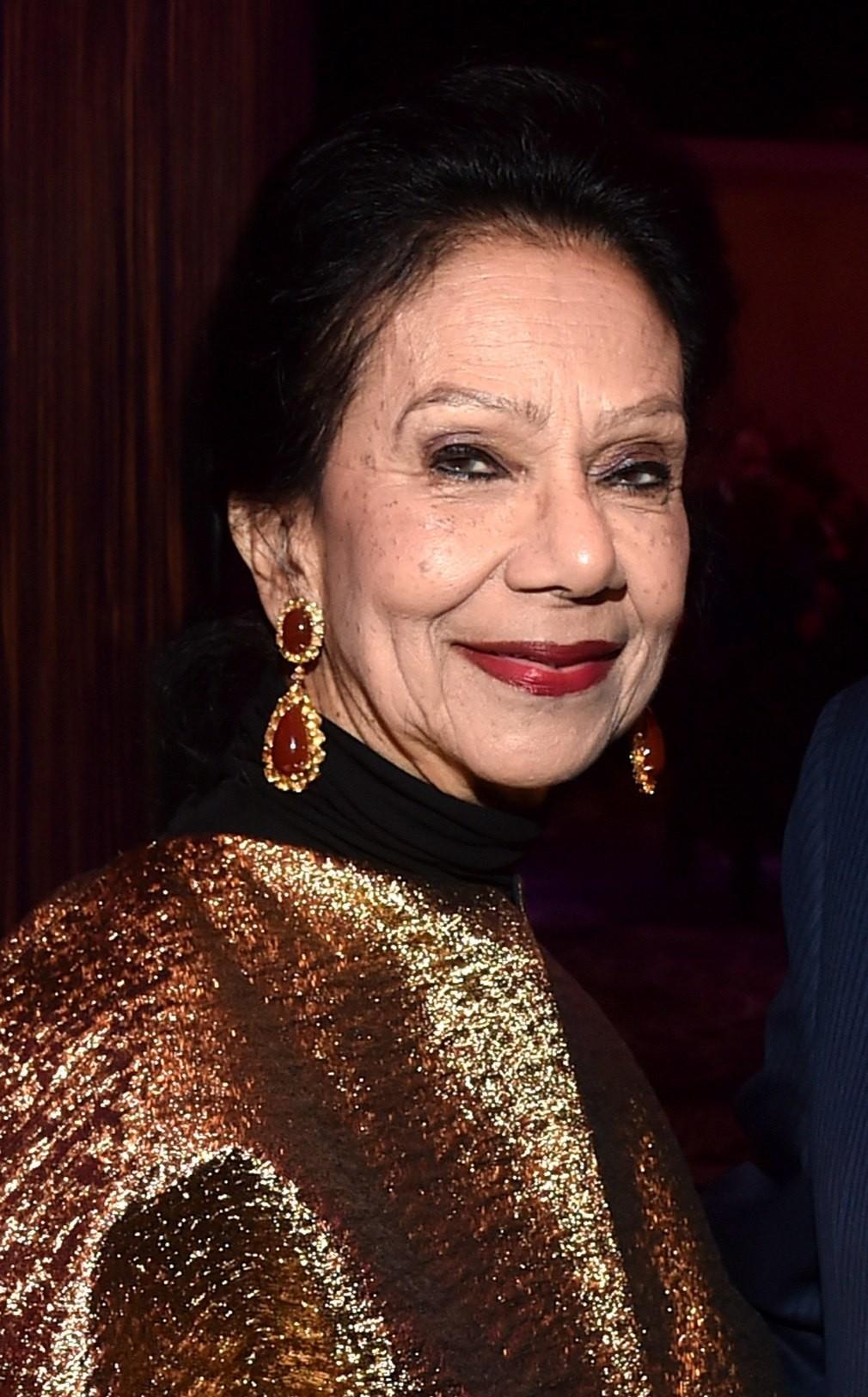
On Saturday, Gallery 25 at the Smithsonian’s National Museum of Asian Art opens Adorned in Gold: Japanese Lacquer from the Jacqueline Avant Collection. The hang is Edo-period lacquer with gold powder set into wet black surfaces, the craft Japan calls maki-e, or sprinkled picture, drawn from what Jacqueline Avant collected and the Avant family later gave. She began buying in 1995, after college years spent with The Tale of Genji left her interested in how courtly stories and courtly objects shared a gold-on-black look. By the time the museum chose from her holdings, curators were calling it one of the most extensive private maki-e collections in the United States. The free gallery is where that taste becomes public.
Avant was born Jacqueline Alberta Gray in Jamaica, Queens, in 1940. She modeled for the Ebony Fashion Fair, married music executive Clarence Avant in 1967, and spent decades in Los Angeles as a philanthropist who also worked as a docent in LACMA’s Pavilion for Japanese Art. She underwrote lacquer lectures, opened her Beverly Hills rooms to specialists, and lent forty works to the Crow Museum of Asian Art in Dallas for Gold on Black in 2013. The Smithsonian hang is the first public reveal of the gifted pieces. Three of them show how the gold actually differs.
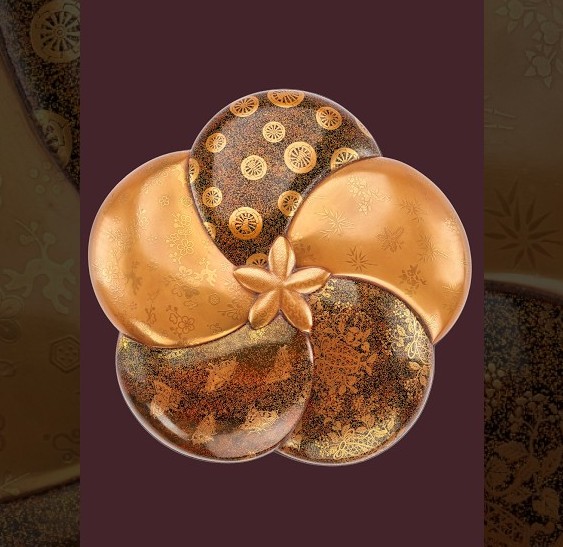
Writing Box (Suzuribako) in the Form of a Plum Blossom, Japan, Edo period, 18th century. National Museum of Asian Art, Gift of the Jacqueline Avant Estate, S2023.2.12. Image: National Museum of Asian Art / Smithsonian.
Start with the plum-blossom writing box. Shaped as five petals around a bellflower center, with tin-alloy rims and silver inlays, it is also the object the museum digitized for a 3D interactive. Some petals carry gold hira maki-e, the flat sprinkle: lacquer lines take powder so the design sits almost level with the surface. Those flat drawings rest on nashiji, a flecked ground of gold particles scattered on black and named for the speckled look of pear skin. Other petals switch to taka maki-e, the tall sprinkle, built up in relief on a smooth gold field. The lid lets you compare those three finishes without leaving one case.
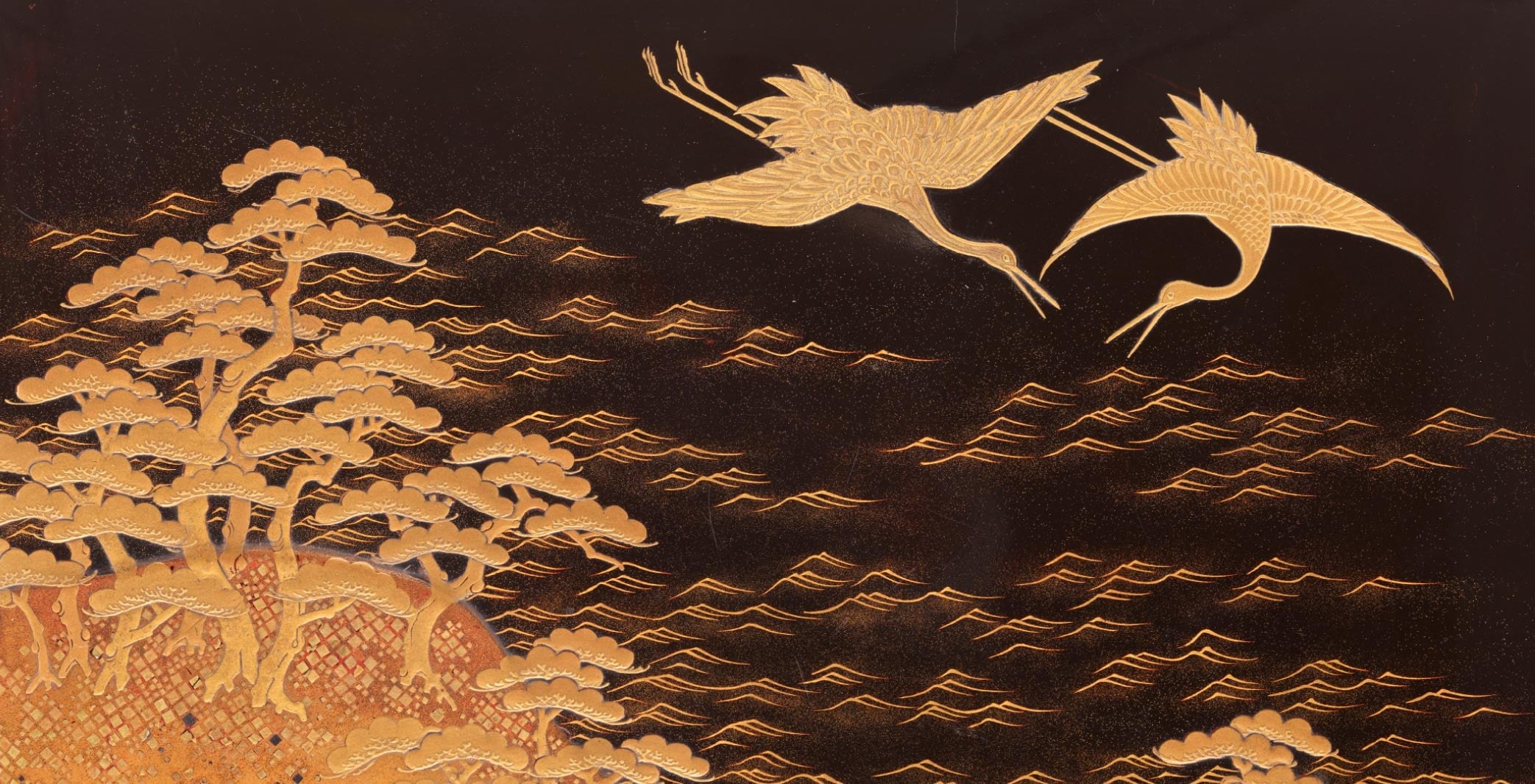
Document Box (Ryōshibako) with Cranes and Landscape, Japan, Edo period, 18th–19th century. National Museum of Asian Art, Gift of the Jacqueline Avant Estate, S2024.3.22. Image courtesy National Museum of Asian Art.
The crane document box changes the problem. A landscape of shore, pines, water, and flying birds wraps the lid and sides. Fine gold powder draws the rocks and trees. Tiny diamond-shaped pieces of gold foil, a cut-leaf method related to kirikane, texture the ground underfoot. Embossing lifts the crane feathers so light catches them as low relief. Stand close and the powder looks soft, the foil looks faceted, and the birds look carved. That range is what Avant kept buying for: gold that works in more than one register on the same object.
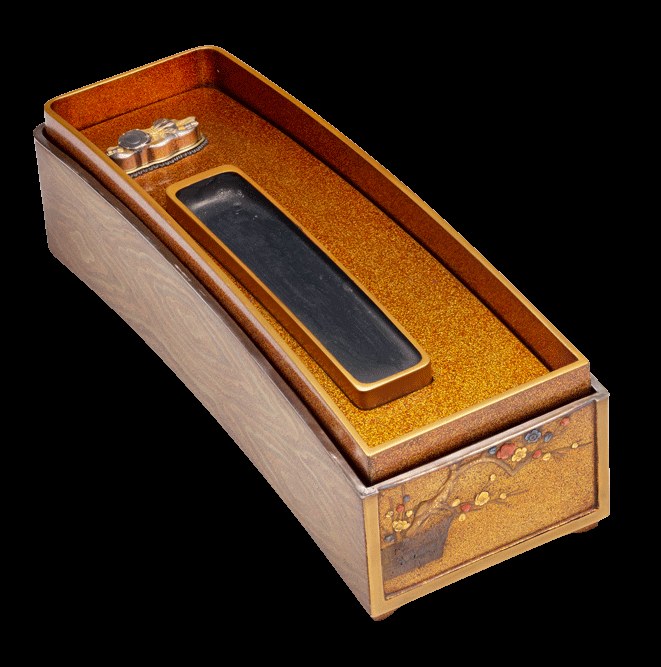
Writing Box (Suzuribako) with Verse from Kin’yō Wakashū, Japan, Edo period, 18th century, interior view. Freer Gallery of Art Collection, Gift of the Jacqueline Avant Estate, F2024.3.7. Photograph: Robert Harrell / National Museum of Asian Art.
Open a third writing box and the flecks take the whole tray. The Kin’yō Wakashū verse box is a field of nashiji: irregular gold particles set in lacquer until the surface reads like pear skin under light. An inkstone and a metal water dropper sit in that shimmer. Here the sprinkle itself is the design, not a background waiting for birds or petals. After the plum lid and the crane foil, the dense ground is easier to recognize when it shows up again down the wall.
Avant’s collection leaned toward objects people used: writing boxes, incense and medicine containers, hairpins, even a pepper blower with a dragon in layered gold tones. The gallery also places a life-sized 1856 bridal palanquin already owned by the museum beside her smaller pieces, so ceremonial lacquer and desk lacquer share a room. The contribution remains the collecting. She kept going until a national museum could hang the gold-on-black work with enough range for a visitor to learn it.
Gallery 25 is free, open daily from 10:00 to 17:30 except Christmas Day, through 2 January 2028. Enter the National Museum of Asian Art at 1050 Independence Avenue SW and go to the East Building before the permanent rooms. Adorned in Gold is already on the Banquet calendar; if the Louvre Islamic loans are still up through mid-January 2027, see those first, then return for lacquer. Japanese Bamboo Is Collectible Design. Thomsen's Design Miami Presentation Shows Why. follows another craft path where material technique decides what collectors keep. Avant’s boxes reward the same slow look.