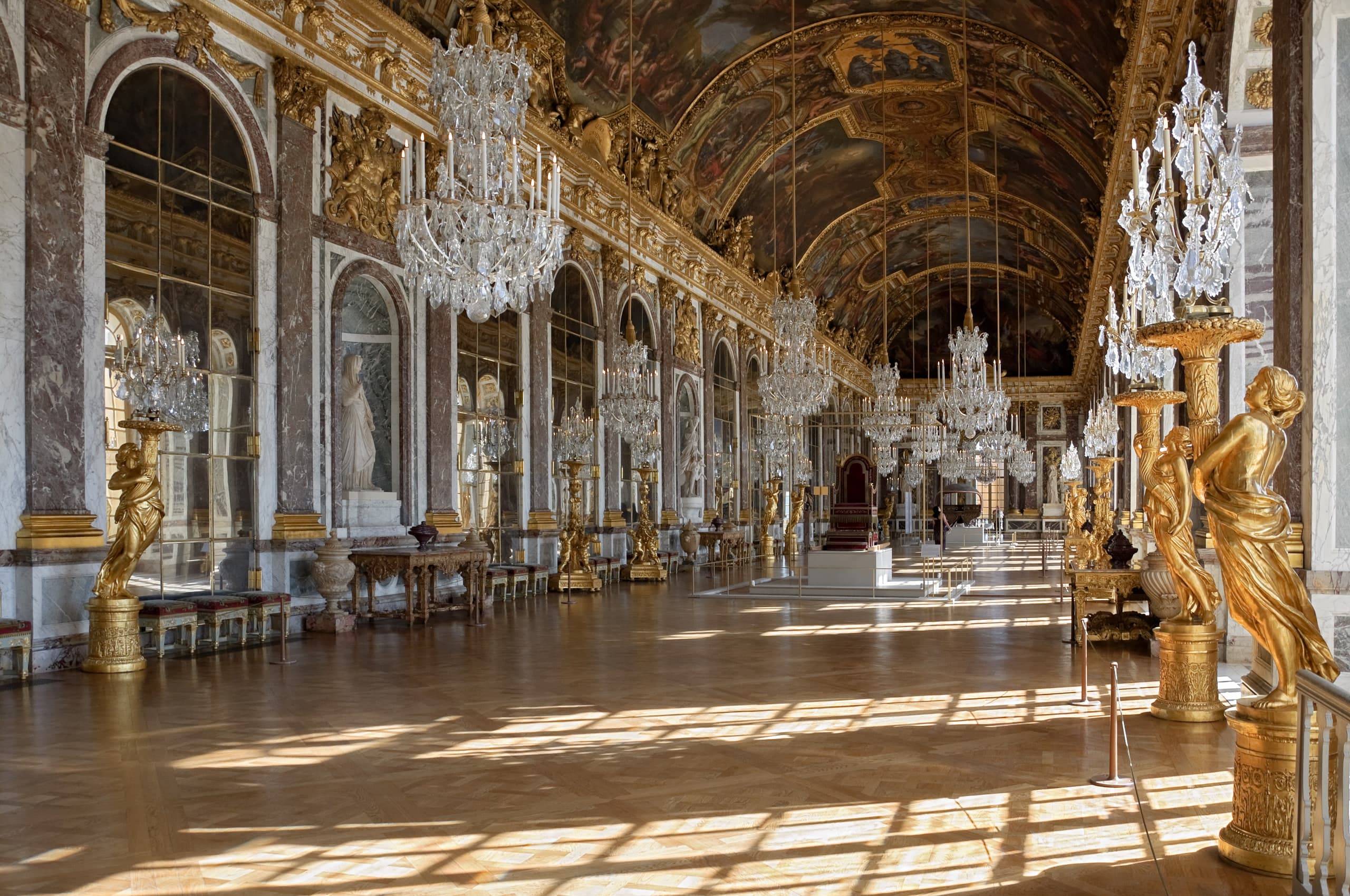
Hall of Mirrors, Palace of Versailles: the gallery where Louis XIV received King Narai’s ambassadors on 1 September 1686. Photograph by Myrabella.
Start in the Hall of Mirrors.
For Banquet readers, the Ambassadors stop at Versailles is soft power you can still walk: a diplomatic audience staged in a finished gallery, a pleasure pavilion that once dressed itself as porcelain, then outdoor chapters in Brighton, Kew, and Potsdam where European courts kept performing Asia in gardens and tea houses.
“After the three grandeurs of the world, he now knew a fourth: Versailles.”
Remark attributed to a member of the 1686 Siamese embassy, recorded in French court accounts of the visit
The Audience That Still Names the Room
On 1 September 1686, Louis XIV received the ambassadors of King Narai of Siam in the Hall of Mirrors, completed only two years earlier by Jules Hardouin-Mansart with decoration directed by Charles Le Brun. The lead envoy was Kosa Pan, with Ok-luang Kanlaya Ratchamaitri and Ok-khun Si Wisan Wacha. They had landed at Brest on 18 June. The letter from Ayutthaya arrived on a gilded butsabok, carried like sacred machinery. Trumpets imitated Siamese ceremonial music. Contemporary almanacs turned the audience into one of the most reproduced diplomatic images of the reign.
The political alliance France wanted did not last. The literacy lesson did. European majesty was already negotiating Asian protocol, Asian gifts, and Asian appetite for spectacle in a room you can still enter on a timed Palace ticket. Secondary accounts even have the embassy ordering thousands of French mirrors, through Colbert’s glass manufactory, for Narai’s palaces: soft power moving both ways across the same reflective surface.
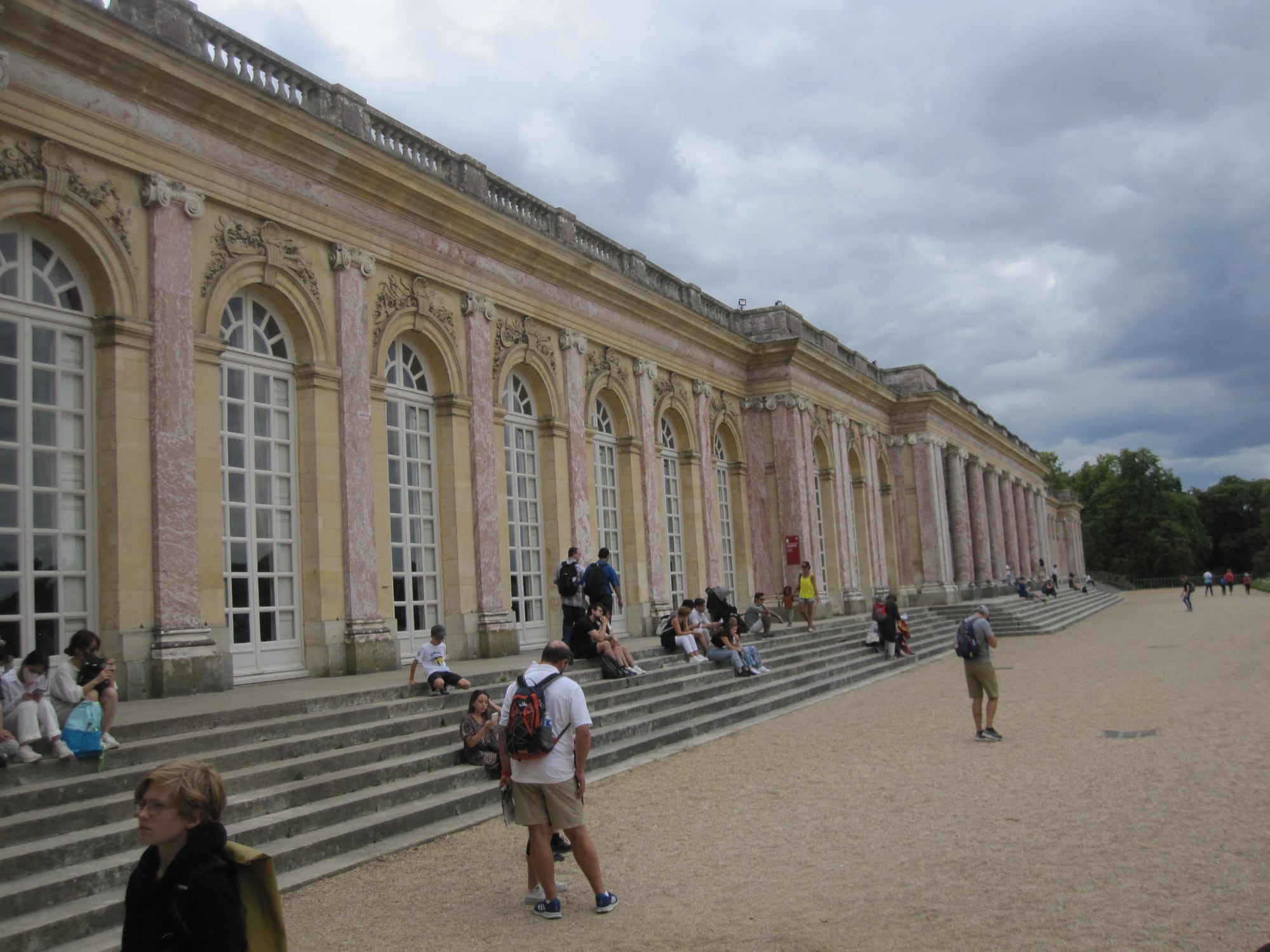
Porcelain sat beside diplomacy. Louis’s household bought Chinese and “Indies” wares through the 1660s and 1670s; his son, the Grand Dauphin, left a 1689 inventory of roughly 381 Chinese pieces, including gifts from the Siamese missions. True European hard-paste came later. In 1670, Louis ordered the short-lived Trianon de Porcelaine, a pleasure pavilion finished in blue-and-white French faience meant to evoke Chinese porcelain while Jingdezhen’s secret still belonged to Asia. Weather and fashion ended the experiment. From 1687, Hardouin-Mansart’s stone Grand Trianon, pink Languedoc marble, rose on the same ground. Walk the Trianon estate after noon with a Passport or Trianon ticket: you are standing on the site where Europe first tried to build porcelain into architecture, then settled for marble that could survive a French winter.
Lacquer followed the same hybrid logic. Chinese Coromandel screens (kuan cai, “incised colors”) arrived via the Coromandel coast and European company networks. Cabinetmakers cut panels apart for furniture and wall rooms; Berlin, Munich, and Dresden built lacquer cabinets in the late seventeenth century. The V&A’s furniture history is blunt: Asia supplied the surface; Paris and London supplied the joins and the gilt bronze. Meissen, founded 23 January 1710 under Augustus the Strong after work by Ehrenfried Walther von Tschirnhaus and Johann Friedrich Böttger, finally gave European courts hard-paste porcelain they could manufacture at home, then decorate with chinoiserie that still confessed the debt.
Three Outdoor Chapters After Versailles
Once the Hall of Mirrors and Trianon have done their work, the genealogy continues outdoors. Treat these as optional same-trip or later-week appointments, not a checklist to finish in one exhausted day.
Brighton Royal Pavilion, Pavilion Gardens, BN1 1EE, remains Britain’s clearest standing performance. For the Prince Regent who became George IV, John Nash wrapped the seaside retreat in onion domes and minarets between roughly 1815 and 1823, drawing on Indian sources as much as Chinese ones. Inside, Frederick Crace and Robert Jones staged chinoiserie rooms that still stop visitors: dragons, gasoliers, painted gardens. Brighton & Hove Museums keep the house open year-round (April through September roughly 9:30 to 17:45, last entry 17:00; October through March 10:00 to 17:15, last entry 16:30; confirm before you leave London). In 2026, the Dragons programme runs 28 March through 1 November, free with Pavilion admission, which is a useful excuse if you need one.
Kew’s Great Pagoda, completed 1762 for Princess Augusta and designed by Sir William Chambers after East India Company years in China and his 1757 Designs of Chinese Buildings, is the London garden climb. Historic Royal Palaces restored the tower in 2018, including eighty dragons. Access needs a Kew Gardens ticket plus a timed Pagoda slot when the climb is running (daily until 27 September 2026 as published on kew.org; 253 steps; children under five stay on the ground floor). Chambers had seen Chinese architecture; Kew still reads as European garden theater. That tension is the point.
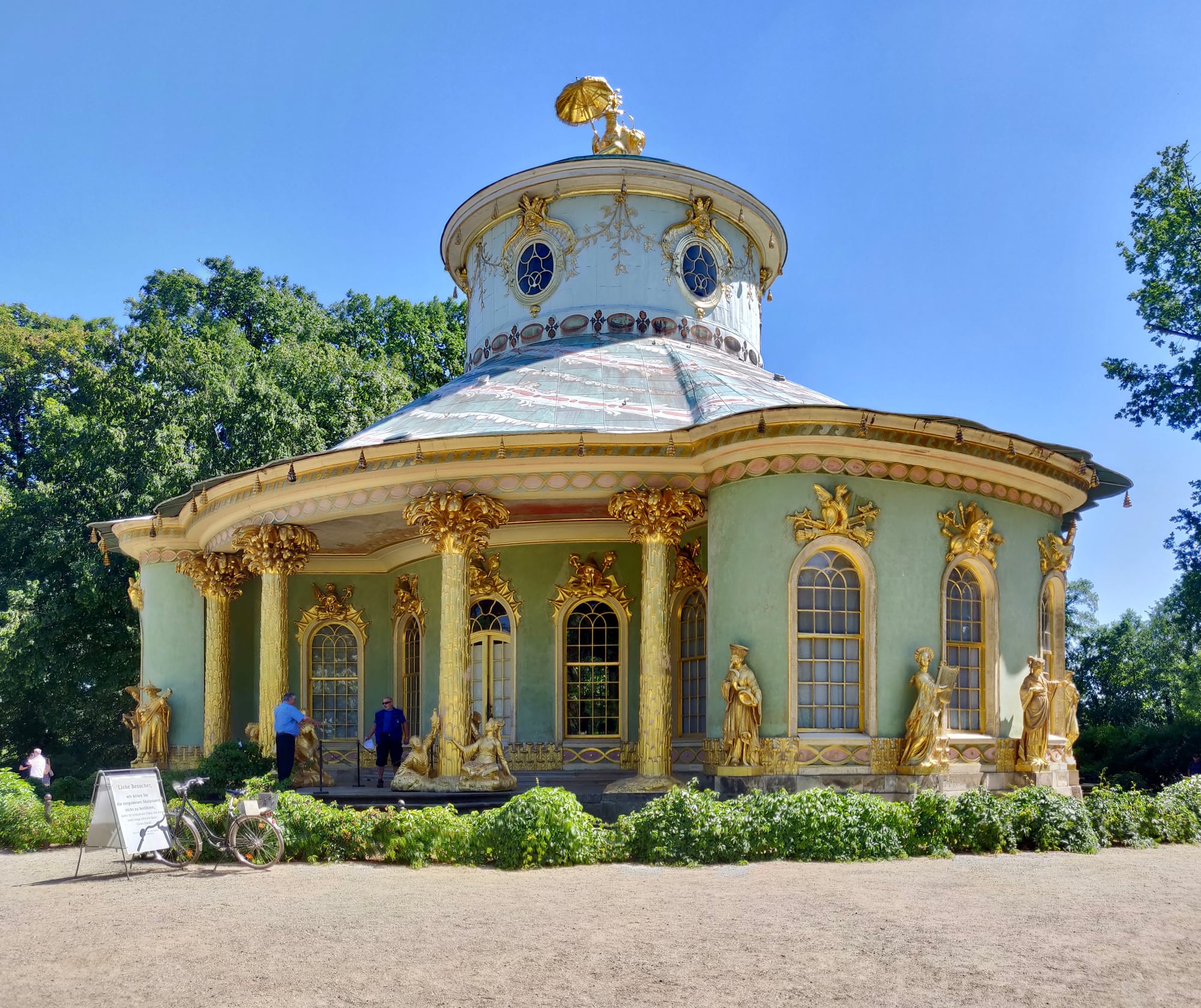
Sanssouci’s Chinese House in Potsdam, built 1755 to 1764 by Johann Gottfried Büring for Frederick the Great, is the Prussian garden version: gilded palm-tree columns, life-size figures “à la chinoise,” porcelain on interior consoles. SPSG opens it May through October, Tuesday to Sunday, about 10:00 to 17:30, last entry thirty minutes before closing; winter closure is real, and Mondays are closed in season. Address: Am Grünen Gitter, 14469 Potsdam. Do not plan a January pilgrimage without checking spsg.de.
How to Work a Versailles Day
Book the Palace timed ticket first. Admission to the Hall of Mirrors sits inside the Grand Apartments route. Online booking is the only reliable guarantee in high season; the Palace is closed Mondays (and usually 1 January, 1 May, 25 December). High season (April through October) typically runs about 9:00 to 18:30; low season closes earlier. Confirm on ticket.chateauversailles.fr before you lock trains.
Reach the estate by rail. Versailles Château-Rive Gauche on RER C is about a ten-minute walk to the main entrance when that line is running; buy a return to skip the evening ticket queue. If RER C is disrupted, Transilien L to Versailles Rive Droite or N to Versailles Chantiers are the usual alternatives. Check RATP/SNCF the morning you go.
Save Trianon for after noon. The Estate of Trianon (Grand Trianon, Petit Trianon, Queen’s Hamlet) generally opens from 12:00. A Passport covers Palace plus Trianon; a Trianon-only ticket works if you already know the Hall of Mirrors. Walk the Grand Trianon colonnade as the Porcelain Trianon’s successor, not as a random pink villa.
Add one outdoor chapter, not three. Same week: Brighton from London if you have a free morning. Same London stay: Kew Pagoda climb before late September. Berlin trip: Sanssouci in summer season only. The Ambassadors point is literacy, not mileage.
Keep the collector’s question soft. At a fair or auction preview later, ask which half you are buying: Jingdezhen export, Delft imitation, Meissen hard-paste performing an imagined East, or lacquer remounted in Paris. The court already practiced that hybrid. You are only learning to see it.
Continue the Ambassadors map with In Venice, Asian Pavilions Are Rehearsing History when the Biennale is the stage, and Seventy Years of Asia Society, Still on Park Avenue when the diaspora desk closes the route. For the jewel half of Europe learning from Asia, read Paris Learned Color from India.
This is the Versailles chapter of The Ambassadors, after Basel’s design week and before Venice’s pavilions: soft power you read in a named gallery, a marble Trianon, and the garden follies that followed.