Most Biennale checklists treat national pavilions as flags with doors.
That habit fails you in Venice this summer. At the 61st International Art Exhibition, titled In Minor Keys after the late curator Koyo Kouoh, the Asian rooms that matter most are practicing something quieter and harder: unfinished history, diaspora care, and the politics of slowing down. The show runs 9 May through 22 November 2026 at the Giardini, the Arsenale, and venues across the city. You still have months. The useful question is which Asian presentations repay a Castello morning rather than a photograph from the vaporetto.
For dated logistics, keep Biennale Arte on the calendar. For how Asian collectors already move between fair weeks, read The Collectors Buying Beyond the Auction Room.
"Liberation, in the Korean context, cannot be separated from its historical relationship with Japan."
Binna Choi, artistic director of the Korean Pavilion, on the first Korea–Japan pavilion collaboration in the Giardini
The Hedge Between Korea and Japan
Korea and Japan sit beside each other in the Giardini, the only two Asian national pavilions with permanent houses in that park. For thirty years they behaved like neighbours who shared a fence. This year they share a work.
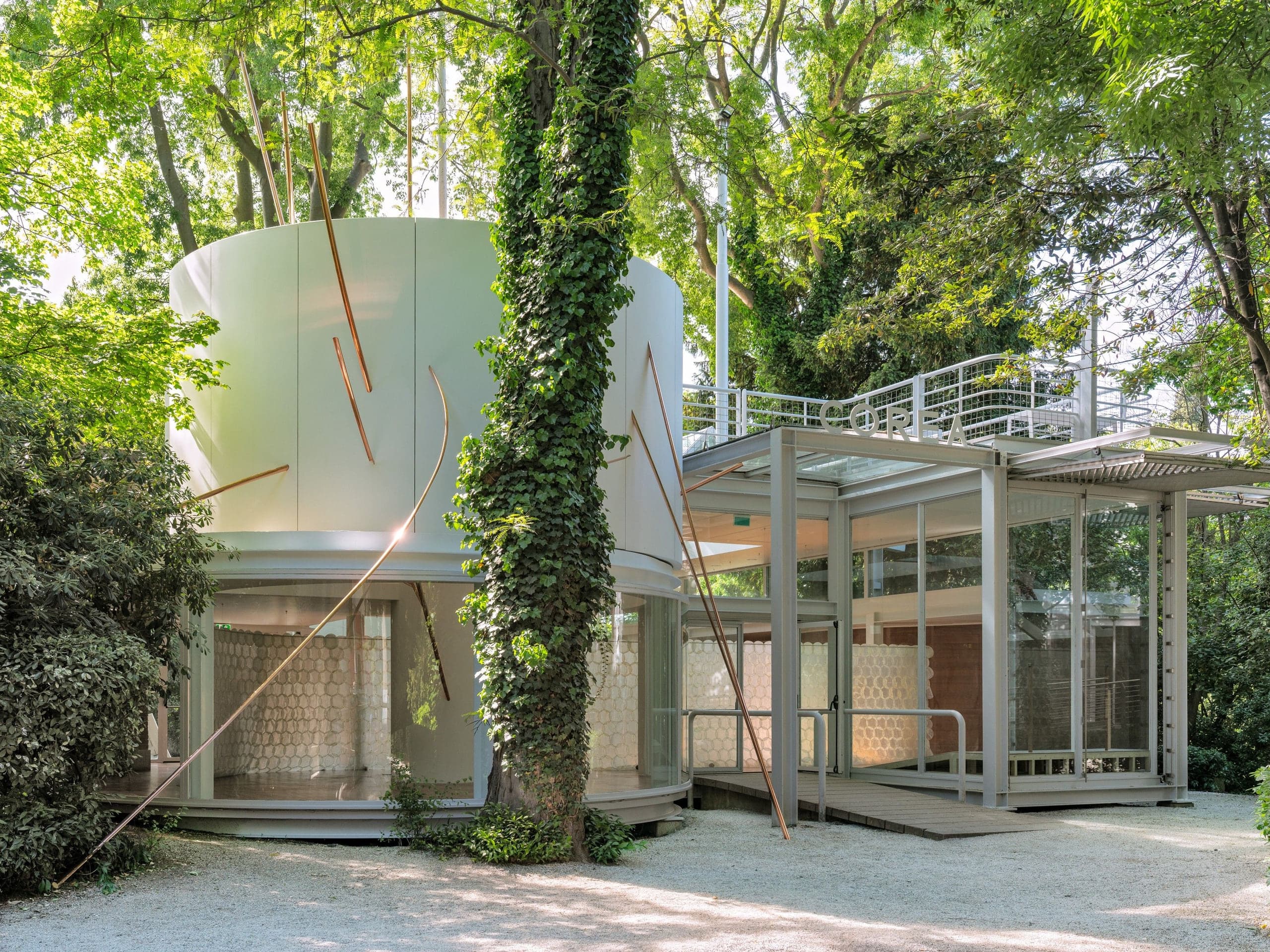
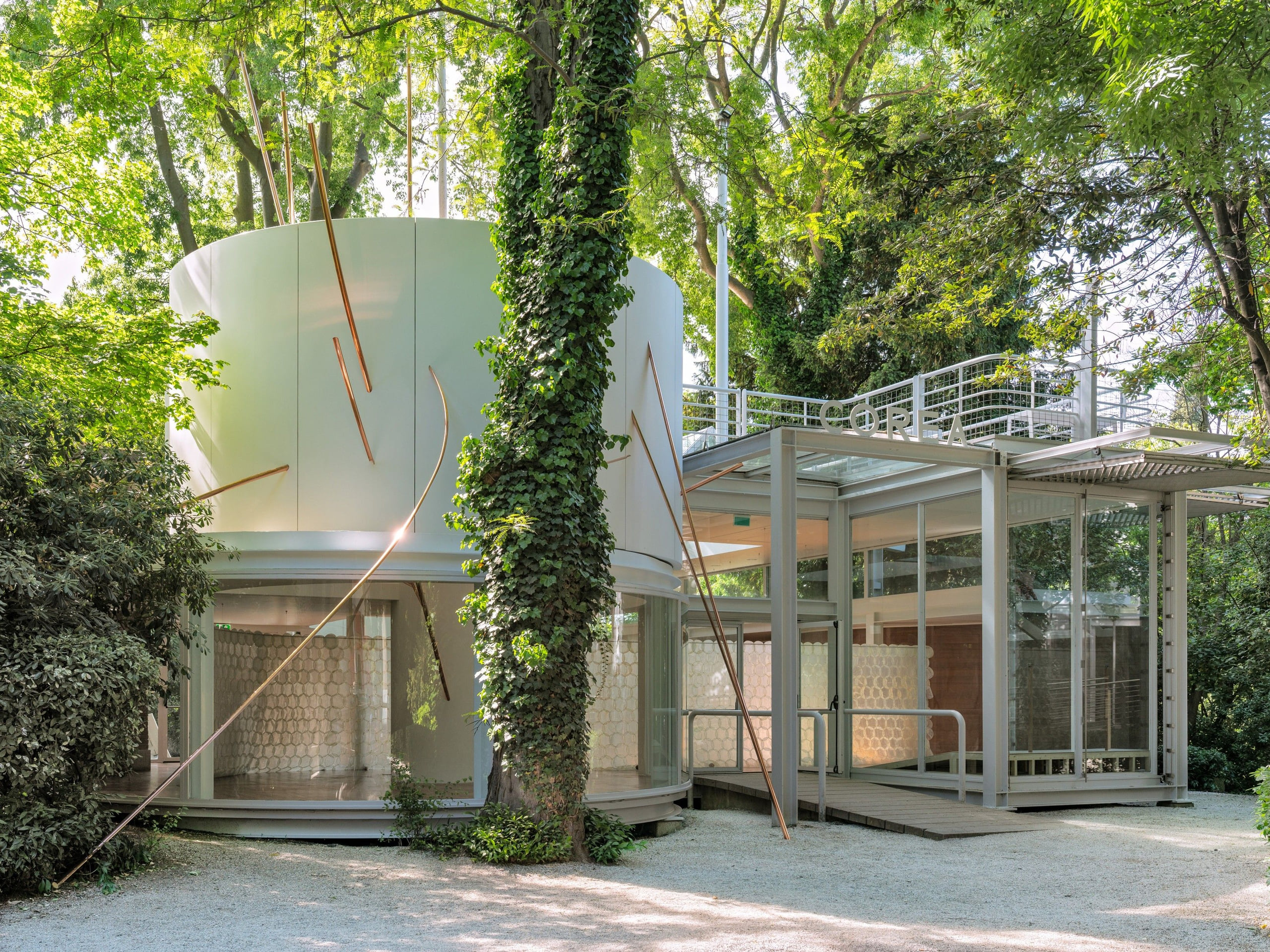
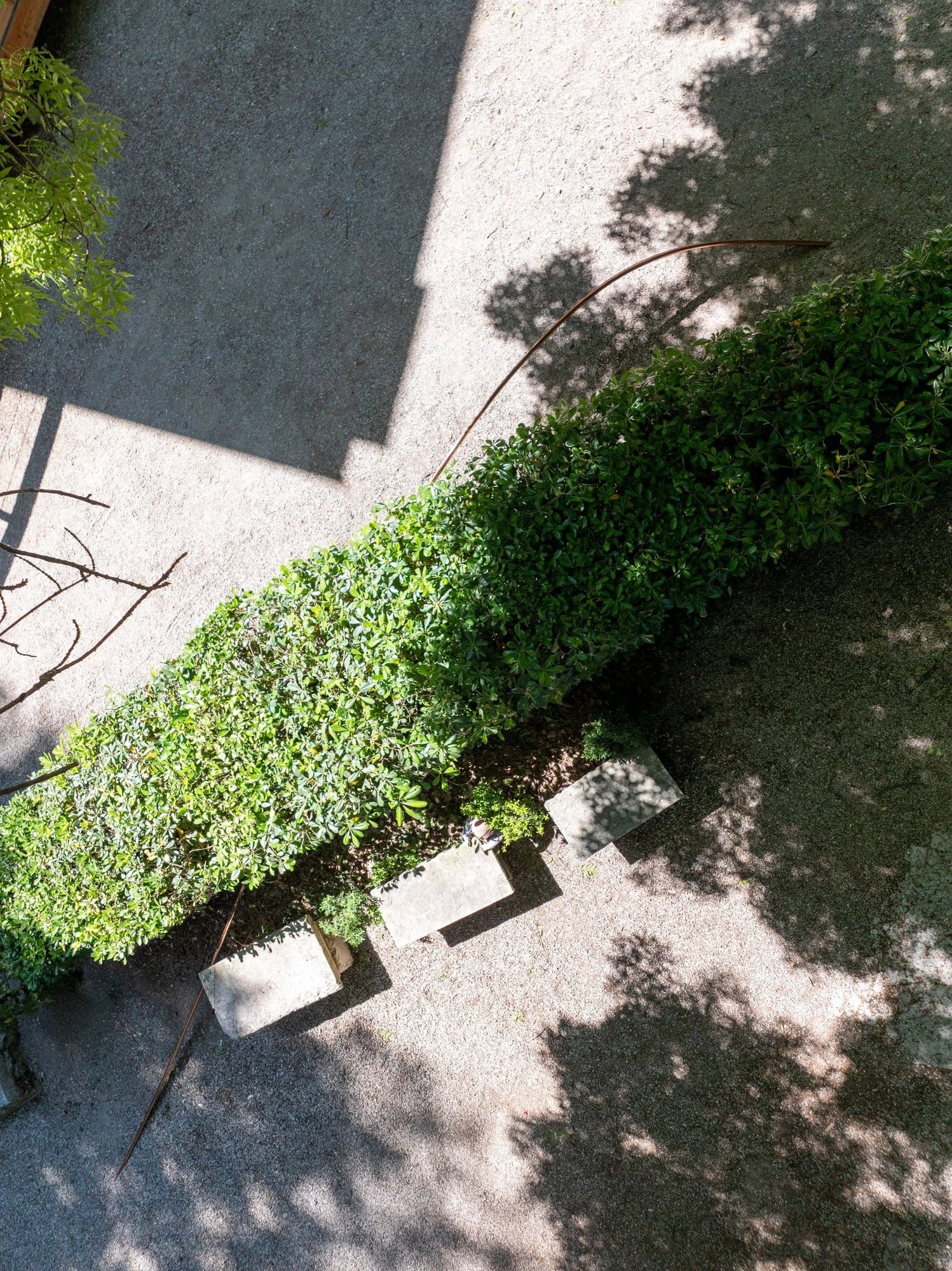
Liberation Space: Fortress/Nest, curated by Binna Choi for Arts Council Korea, reframes the Korean Pavilion as a temporary monument to "liberation space": the unsettled interval after 1945, when colonial rule ended and separate governments had not yet hardened. Artists Goen Choi and Hyeree Ro treat the building as both fortress and nest. Choi's Meridian cuts copper pipes through walls and courtyard; Ro's Bearing wraps the interior in thousands of wax-coated organza circles and eight stations for mourning, mending, waiting, and shared work.
The pipes do not stop at the property line. They cross the hedge into the Japan Pavilion courtyard as a co-commissioned gesture. Japan Pavilion dolls with birthdays tied to Korean commemorative dates walk into the Korean rooms on a daily rhythm. Opening week included a joint reception that treated the hedge as something you step over, not as scenery.
Inside Bearing, fellows expand the monument beyond two sculptors. Nobel laureate Han Kang returns Funeral, first shown at the 2018 Carnegie International: blackened trees on salt mounds that stand in for snow, a dream image that later fed her novel We Do Not Part and its attention to the Jeju trauma of 1948. Visitors lean or kneel to see it. The posture is part of the argument.
If you only have one Giardini hour for Asia, start here. The collaboration is the story the rest of the season keeps quoting.
Care as National Practice
Next door, Grass Babies, Moon Babies marks seventy years of the Japan Pavilion, the 1956 building by Yoshizaka Takamasa, with a commission from the Japan Foundation. Artist Ei Arakawa-Nash, a Japanese American queer performance artist based in Los Angeles, works with co-curators Lisa Horikawa of the National Gallery Singapore and Mizuki Takahashi of CHAT in Hong Kong. The three stand, as Horikawa has written, on the periphery of Japan while representing it.
Visitors pick up one of roughly two hundred weighted baby dolls in the pilotis, carry them through garden and interior, then change a diaper to unlock a short poem tied to each doll's assigned birthday. Those dates draw on entangled twentieth-century histories across Japan, the United States, and Asia. Arakawa-Nash has said the pavilion has rarely addressed diaspora so directly, and that care is labour often carried by women and people of colour. The dolls make that labour physical. You feel the weight before you read the wall text.
This is where Venice stops being a trophy case. Parenting, reparation, and pavilion architecture share one circuit. Soften any claim that the work "solves" history; Arakawa-Nash is clearer than that. The pavilion asks how a new generation of babies enters a world whose amends remain unfinished.
Across Campo della Tana from the Arsenale entrance, Hong Kong answers in a different register. Fermata: Hong Kong in Venice, a collateral event curated by the Hong Kong Museum of Art with the Hong Kong Arts Development Council, presents Kingsley Ng and Angel Hui at Castello 2126. Free entry. A fermata prolongs a note at the performer's discretion. Ng turns urban rituals into meditative installations; Hui sets Suzhou embroidery on ordinary plastic bags and pairs Hong Kong and Venetian iron window grilles so light throws both cities onto an old house wall. Five installations occupy a courtyard and four rooms. HKMoA is curating Hong Kong's Venice presentation for the first time. The show runs with the Biennale through 22 November, which makes it one of the easiest Asian stops to add without another ticket.
At the Arsenale's Sale d'Armi, Singapore's pavilion A Pause, by Amanda Heng with curator Selene Yap, builds platforms for sitting, waiting, and watching. After a larger 2024 contingent, this edition is deliberately quieter: rest as practice rather than spectacle. A return hang is planned for Singapore Art Week in 2027. Taiwan's collateral Screen Melancholy, with Li Yi-Fan at Palazzo delle Prigioni, stays on the digital-melancholy track if you have a third afternoon. China presents Dream Stream at the Arsenale; treat it as a separate institutional visit rather than collapsing it into the Giardini neighbour story.
What ties the strongest Asian rooms together is Kouoh's key. Her team realised In Minor Keys after her death in May 2025. The curatorial invitation was to listen for quieter frequencies: repair, rest, beauty made under pressure. If, in music, the minor keys often signal melancholy, she wrote, here their joy, solace, hope, and transcendence show as well. Korea, Japan, Hong Kong, and Singapore are testing whether national display can still hold that frequency without turning it into branding.
How to Walk It Before November
Give Giardini and Arsenale separate days. The official one-access ticket covers one entry to each venue and currently lists at €30 full price, with multi-day options at €40 for three consecutive days and €50 for a week. Confirm current tiers on labiennale.org before you buy. Both venues are closed Mondays except listed exceptions; autumn hours tighten to 10:00 a.m. to 6:00 p.m. from 29 September. Arsenale keeps Friday and Saturday evenings longer into late September.
A practical Castello sequence for this essay's spine: morning Giardini for Korea and Japan while the park is still cool; vaporetto or a Via Garibaldi walk to the Arsenale; Fermata on Campo della Tana before or after the Arsenale gate, since the collateral sits in the same campo as a main public entrance. Stay in Castello if morning access matters more than a Grand Canal lobby. Monday closures punish improvisation.
This is a long-season appointment, closer to a museum residency than to Art Basel Hong Kong week. Opening-week gossip fades. What remains is whether you can still feel the hedge crossing in October, when the dolls have been carried by thousands of strangers and the organza stations have absorbed a season of footsteps.
Practical Notes
Dates: 9 May to 22 November 2026; awards ceremony scheduled for closing day.
Tickets: Buy online via labiennale.org; one-access covers Giardini and Arsenale once each.
Closures: Mondays closed except 11 May, 1 June, 7 September, and 16 November.
Fermata: Free; Castello 2126, Campo della Tana; confirm hours on hk.art.museum (summer evenings extend on some days).
Pace: Two half-days beat one exhausted loop. Leave China, Taiwan, and Singapore for a second or third visit if the Korea–Japan rooms run long.
Venice still sells nationality as architecture. This year's Asian pavilions worth planning around are selling something else: the unfinished work of living next door.
Cross the hedge. Hold the doll. Stay for the fermata. Then walk back to the lagoon before the light goes.
This is the Venice chapter of The Ambassadors, after Europe’s court rooms and before New York’s Park Avenue desk. For the wider collecting calendar that frames Venice as one stop among many, read Why Frieze Seoul Owns September and How the Sigg Collection Built M+.