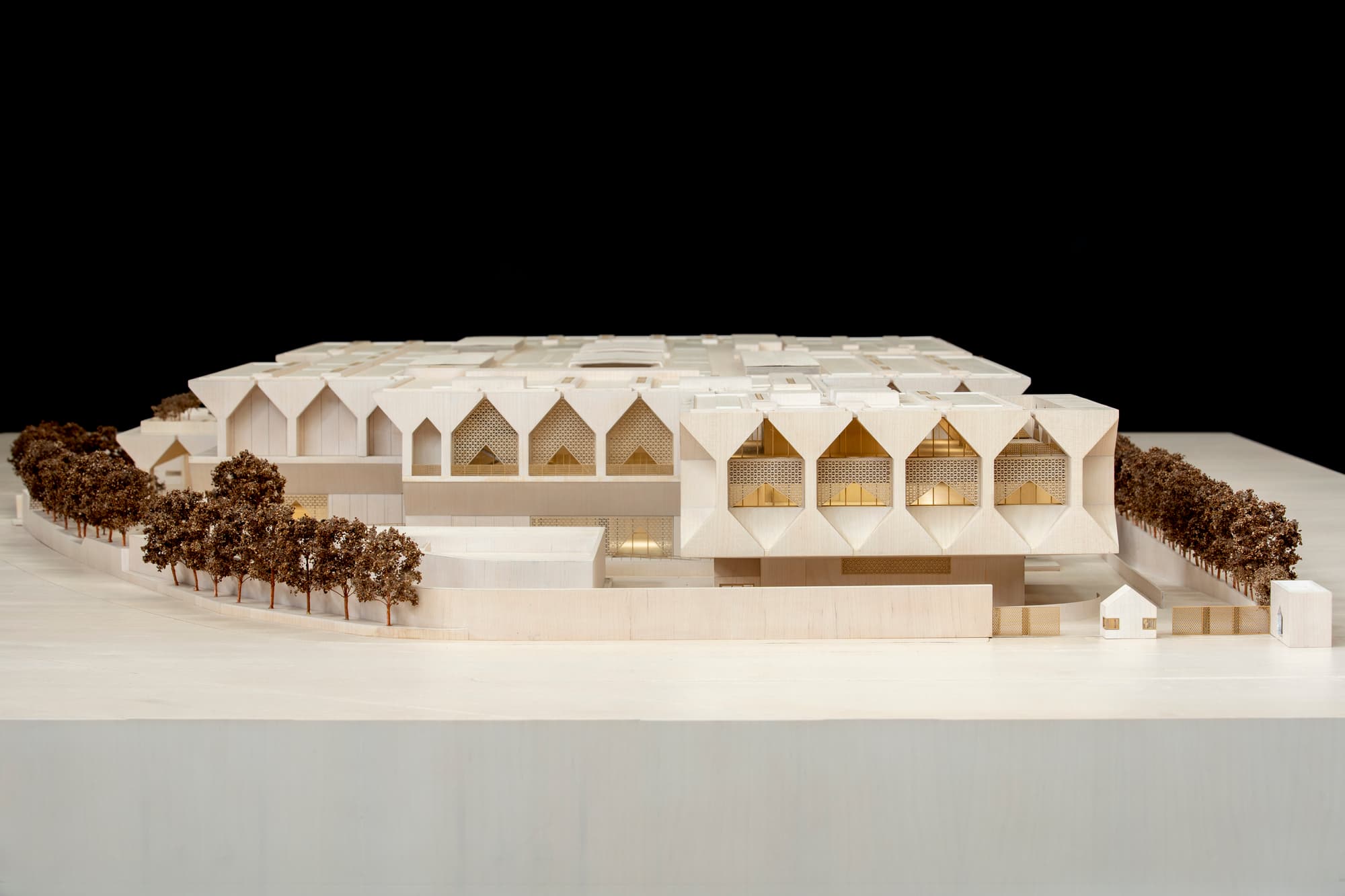
Architectural model of the planned Kiran Nadar Museum of Art campus, New Delhi, designed by Adjaye Associates with S. Ghosh & Associates. Courtesy Adjaye Associates / KNMA.
The mall was never the endgame.
On 2 February 2026, the Kiran Nadar Museum of Art announced that Manuel Rabaté, founding director of Louvre Abu Dhabi, would become its first chief executive and director. He left the Abu Dhabi post in early March and took up the Delhi role in spring 2026. The appointment lands as KNMA prepares a David Adjaye-designed campus near Indira Gandhi International Airport, among the most closely watched cultural complexes planned for South Asia. Opening calendars will slip; the durable news is the hire.
Private Indian collecting has long been serious. What changes here is institutional scaffolding: a museum that began in 2010 inside a Saket mall now wants Louvre-scale operating discipline before the new building opens.
“It is both a great honor and an exciting opportunity to join the Kiran Nadar Museum of Art at a pivotal moment in its journey. KNMA is not only shaping the story of Indian and South Asian art today but is also defining what a 21st-century museum can be.”
Manuel Rabaté, on joining KNMA, February 2026
From Saket Mall to Aerocity Road
Kiran Nadar founded KNMA as a private, non-profit museum for modern and contemporary art from India and the subcontinent. In December 2011 it opened inside DLF South Court Mall in Saket, New Delhi, with the exhibition Time Unfolded. The address remains 145, DLF South Court Mall, next to Select Citywalk: free admission, Tuesday–Friday roughly 10:30 a.m. to 7:00 p.m., weekends later to 9:00 p.m., Mondays closed. Confirm on knma.org before you go.
The collection now runs past 16,000 works in museum language, spanning modernists such as M.F. Husain, Tyeb Mehta, and S.H. Raza alongside contemporary and expanding classical and folk holdings. Recent international programmes (including a 2026 Christie’s London presentation drawn from the collection) show a museum already behaving beyond the shopping-centre floor plate.
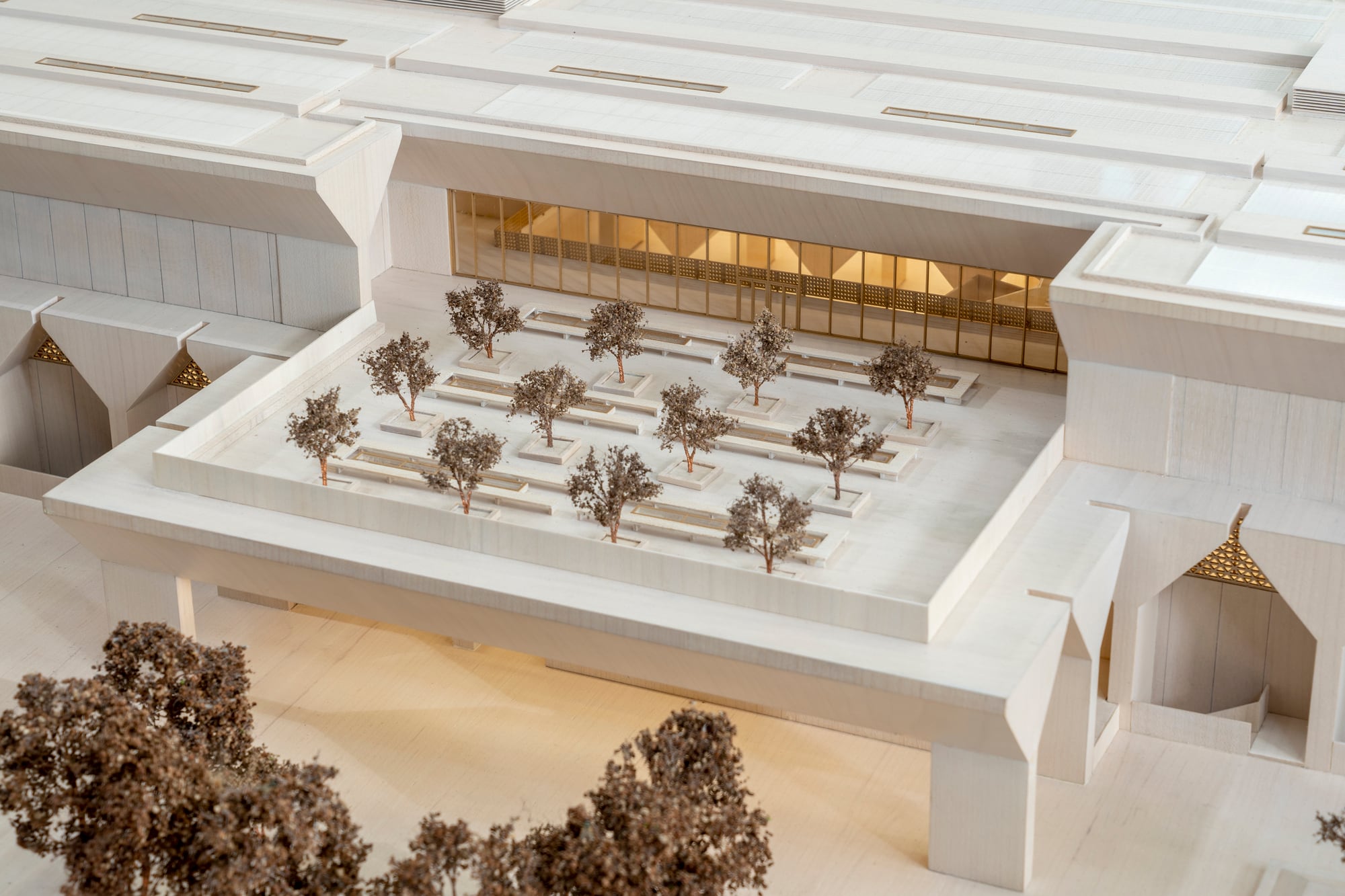
The next chapter sits on Plots 3, 4 and 5 along NH-8, opposite Aerocity: a multidisciplinary campus designed by Adjaye Associates with S. Ghosh & Associates as architect of record. The design was unveiled as a model at the 2023 Venice Architecture Biennale. Press materials describe galleries, performance spaces, education, archive, and library across a site often cited near 100,000 square metres. Treat completion language carefully; spokespeople have spoken of a two-to-three-year horizon from early 2026, and construction calendars slip.
Why Rabaté Matters
Rabaté spent a decade building Louvre Abu Dhabi after years at Agence France-Muséums, the French vehicle created to deliver the UAE museum under the intergovernmental agreement with France. He became director in 2016; the Jean Nouvel building opened in 2017. Museum statements credit more than six million visitors across his tenure, alongside collection growth, education programmes, and Emirati professional training. Treat that attendance figure as museum language rather than an audited ledger.
For Nadar, the hire is a readiness signal. Her February statement framed Rabaté as the operator who can take a private South Asian collection into “highest aspirations” as the expanded campus approaches. For diaspora readers, the parallel is closer to how Uli Sigg’s gift reshaped M+ than to a vanity wing with a donor’s name on the door and no director of consequence.
Rabaté’s first private-museum posting also marks a Gulf-to-South-Asia institutional handoff. Louvre Abu Dhabi proved a universal museum could be built outside Europe’s historic capitals. KNMA asks whether India’s densest private modern-and-contemporary holding can professionalise at similar scale without waiting for a state museum to lead.
What Collectors Should Watch
Watch three practical moves, not the render alone.
First, exhibitions and loans under Rabaté’s first seasons at Saket and any interim spaces. The mall museum remains the public room until Aerocity opens; programming quality there is the early scorecard.
Second, staffing and education. Louvre Abu Dhabi’s capacity-building brief was part of the job; KNMA’s press language already leans on learners and “next generation of cultural leaders.” Diaspora families who fund scholarships and advisory boards will notice whether that becomes budget and hire lines.
Third, the campus opening itself. Adjaye’s courtyard cluster and triangular façade language were sold as climate and cultural response for Delhi. Care less about the ribbon-cutting than about whether the building behaves like a public cultural centre once tickets, school groups, and touring shows arrive. Skip the “largest in South Asia” scorekeeping; ask whether the visitor experience matches the ambition.
Pair a Saket morning with The Collectors Buying Beyond the Auction Room for patronage context, and with Seventy Years of Asia Society, Still on Park Avenue if you want the American institutional counterpart. For Venice as a unveil stage, see In Venice, Asian Pavilions Are Rehearsing History.
How to Visit Now
Until the NH-8 campus opens, plan KNMA as a Saket museum stop. Enter DLF South Court on the ground floor; allow ninety quiet minutes; check Monday closures and public holidays. Free admission removes the ticket friction that makes diaspora visitors postpone private museums. Leave Aerocity hotel mornings for the future building; do not taxi to the highway plots expecting a finished Adjaye atrium.
What matters is simpler: a collector who already built the country’s most watched private modern-and-contemporary museum has imported Louvre Abu Dhabi’s founding director to run the next scale. Patronage without professional leadership remains a room with good pictures. Leadership without a building plan remains a press release. Nadar has now put both on the same Delhi calendar.
Stay until the Saket galleries feel too small for the collection you just walked. That slightly impatient feeling is the point of the hire.