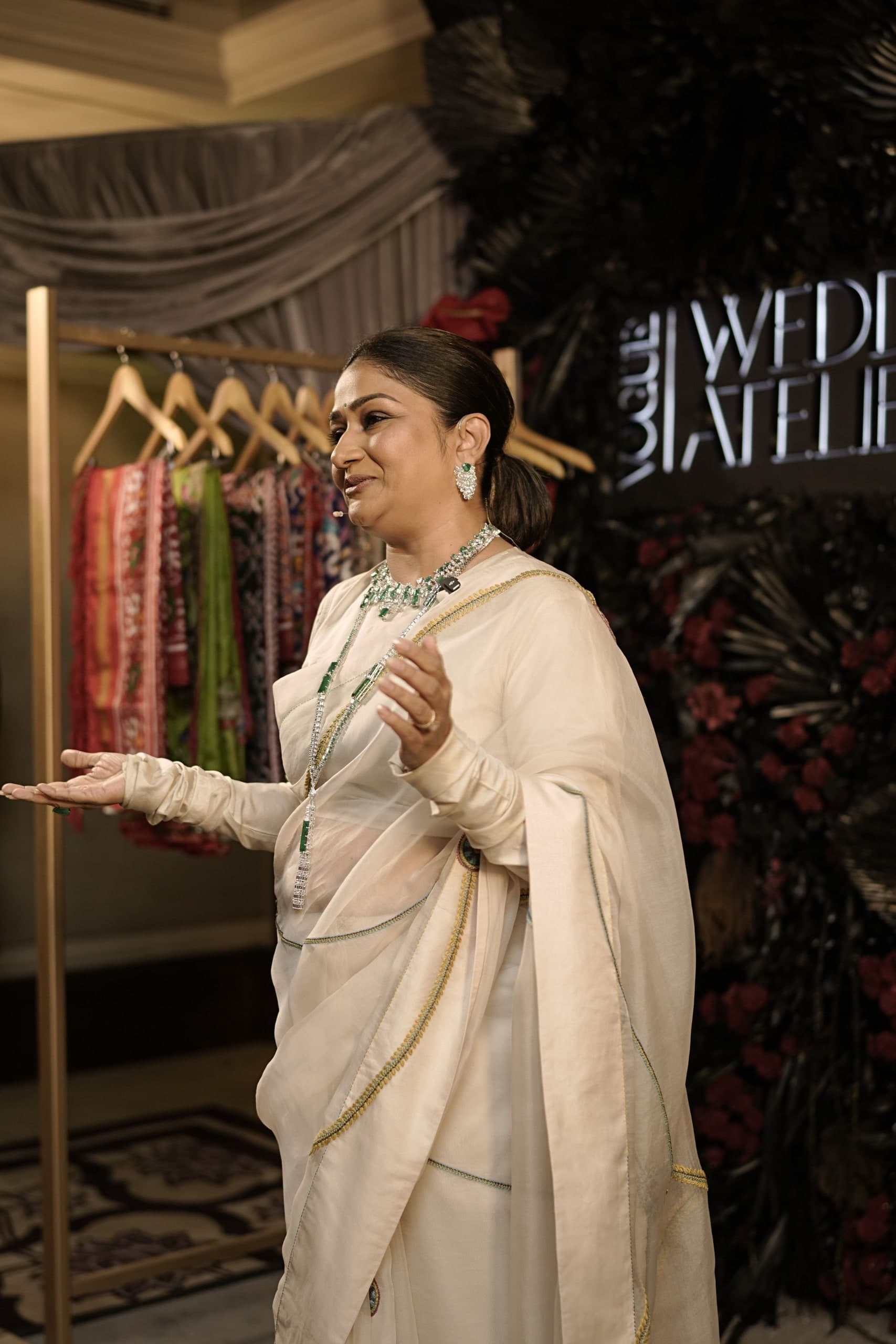
The useful story in New Delhi this week is not another bridal lookbook. It is a floor plan.
Vogue Wedding Atelier returns to the Taj Palace in Chanakyapuri from 7 to 9 August 2026, invite-only, with more than sixty couture, high-jewellery, beauty and lifestyle brands under one roof. Associate partner De Beers Group, mobility partner BMW and celebration partner Diageo sit on the masthead. Vogue Café makes its India debut inside the hotel. Lebanese house Elie Saab returns with Pre-Fall 2026 and Bridal Spring/Summer 2027. Read the weekend as evidence: what used to move through family jewellers, couturiers, planners and private referrals is increasingly being assembled as a curated, branded marketplace.
“With the Vogue Wedding Atelier, we’ve taken that legacy experience and turned it into an immersive one, crafted for the discerning bride.”
Rochelle Pinto, head of editorial content at Vogue India, announcing the inaugural edition, 2025
For Banquet readers who already know The Gem Palace and the Education of Stones, this is the institutional layer that sits beside the appointment culture of MI Road. Request the invite on events.vogue.in; walk-up entry is not the format.
From Referral Economy to Invitation Floor
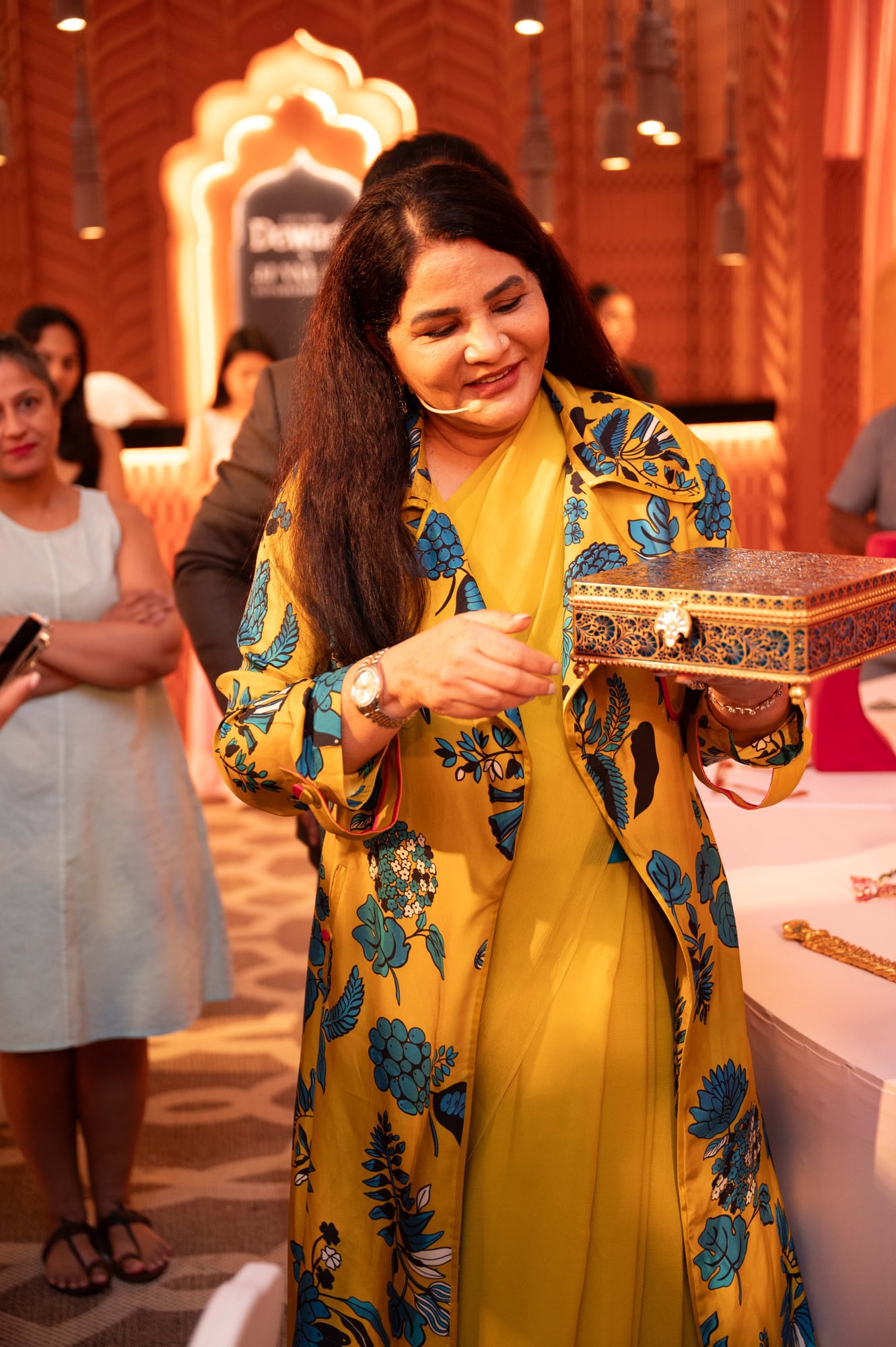
The first edition ran 8 to 10 August 2025 at the same Taj address, presented by HSBC, and drew more than 4,000 guests by Vogue India’s count. Designers such as Manish Malhotra, Gaurav Gupta and Abu Jani Sandeep Khosla shared space with jewellery houses, a sari pavilion, beauty counters and planners. Year two keeps the geography and widens the stack: more than twenty high-jewellery names on the published list, from Sunita Shekhawat and Hazoorilal Legacy to Raniwala 1881 and Raj Mahtani, plus beauty and gifting lanes that treat fragrance, hair tech and heirloom tableware as wedding infrastructure.
That combination matters commercially. Trade-body estimates of India’s wedding economy run into the tens of billions of dollars a year across roughly ten million ceremonies; jewellery often takes around a quarter of a family’s budget in the surveys that break spend down. Luxury weddings are a thin slice of volume and a thick slice of revenue. For houses that sell craft, stones, scent or service, the wedding is the rare moment when apparel, jewellery, hospitality and beauty clear the same decision table in the same week.
International brands still misread the table. They see a single bridal gown when the calendar asks for multiple ceremonies and guest wardrobes. They pitch a product when the client is a family unit with a jeweller relationship that may be older than the bride. They forget that gold and polki still do savings work as well as style work. The Atelier’s international pavilion (Saab, Judith Leiber, Baccarat, watch names treated as adornment) only works if it accepts those rules rather than importing a white-dress showroom fantasy.
Why the Taj Palace, and What Is Actually for Sale
The setting is part of the argument. Taj Palace, New Delhi, at 2 Sardar Patel Marg in the Diplomatic Enclave, has hosted state and society traffic since the early 1980s. Banquet halls and garden lawns already train Delhi families to treat the hotel as wedding infrastructure. Putting Vogue’s marketplace inside that building tells guests the weekend belongs to the same register as a reception, not a mall popup. Address notes for planning sit in the Banquet Address Book under Taj Palace, New Delhi.
What is for sale is three things at once. Products, obviously: lehengas, temple gold, diamond sets, oud, shawls. Access: private appointments with designers and jewellers, masterclasses with stylists such as Anaita Shroff Adajania, photographers such as Joseph Radhik, planners such as Devika Narain. Cultural authority: the Vogue invitation as a filter that tells a family this supplier list has been edited. India’s first Vogue Café inside the Taj is not a coffee errand. It is a social room where the marketplace can pause without leaving the brand.
The tension with the old system does not vanish. Deloitte’s jewellery research still finds store-first buying and trust built on heritage and relationships; advertising barely moves the needle. Younger brides may discover widely online and still close with a family jeweller. The Atelier does not replace that trust. It competes for the portion of the trousseau that wants a national stage, a Condé Nast edit, and a weekend when couture and jewellery can be tried in the same building.
Who Should Treat This as Useful News
Diaspora families flying into Delhi for fittings already know the city compresses shopping into a few frantic days. An invite-only floor that stacks Malhotra next to Hazoorilal next to a sari pavilion is efficient in the way a good art-week itinerary is efficient: fewer wrong addresses, more comparison under one light. Soften the fantasy that one weekend replaces Jaipur stones literacy or a long couture relationship. Use it as reconnaissance.
Houses that treat Indian weddings as a logo opportunity will leave with photographs. Houses that staff the booth for multi-day wardrobe logic, family decision-makers and jewellery that must survive decades of wear will leave with clients. The rest of Banquet’s India map (dining in The New Banquet: India, stones on MI Road, colour literacy in Paris Learned Color from India) still does the deeper work. The Atelier’s contribution is simpler and newer: it makes the luxury wedding supply chain visible as a marketplace.
Request the invitation if you are actually in planning mode. If you are not, watch who shows up on the partner list anyway. Formalization rarely announces itself with a press release about GDP. It looks like a Taj ballroom with sixty brand booths and a café that already has a global name.