On 2 October in Paris, at the Salon de l'Hôtel de Ville, Yohji Yamamoto sent out coats that looked as if the weft had left the cloth and only the warp was still swinging. Backstage he called the collection "just fringes." Lily Templeton, writing for Women's Wear Daily the next morning, watched those strands hold some garments together and undo others. When someone asked whether the process pleased him, he said process is suffering, all the time. Satisfaction in the result: never.
I keep coming back to that answer because it is the opposite of how most luxury seasons are sold. A house wants a finished photograph: shoulder, waist, heel, readable from across a room. Yamamoto keeps cutting so the body can keep something for itself. The fringes were only the latest way of saying so. He is still arguing with the same silhouette problem he brought to Paris in the early 1980s.
The British Fashion Council named him, on 28 October, for the Outstanding Achievement Award at The Fashion Awards 2026. The ceremony is 30 November at the Royal Albert Hall. Laura Weir, the council's chief executive, said few designers have changed the way we think about clothes as profoundly as he has. Look at who else sits on that list: Tom Ford, Mr. Valentino, Yvon Chouinard, Giorgio Armani, Miuccia Prada, Ralph Lauren, Karl Lagerfeld. Most of them taught luxury how to look expensive. Yamamoto is there for teaching it how to look unfinished on purpose. The useful part, for anyone who actually gets dressed, is smaller than the ovation.
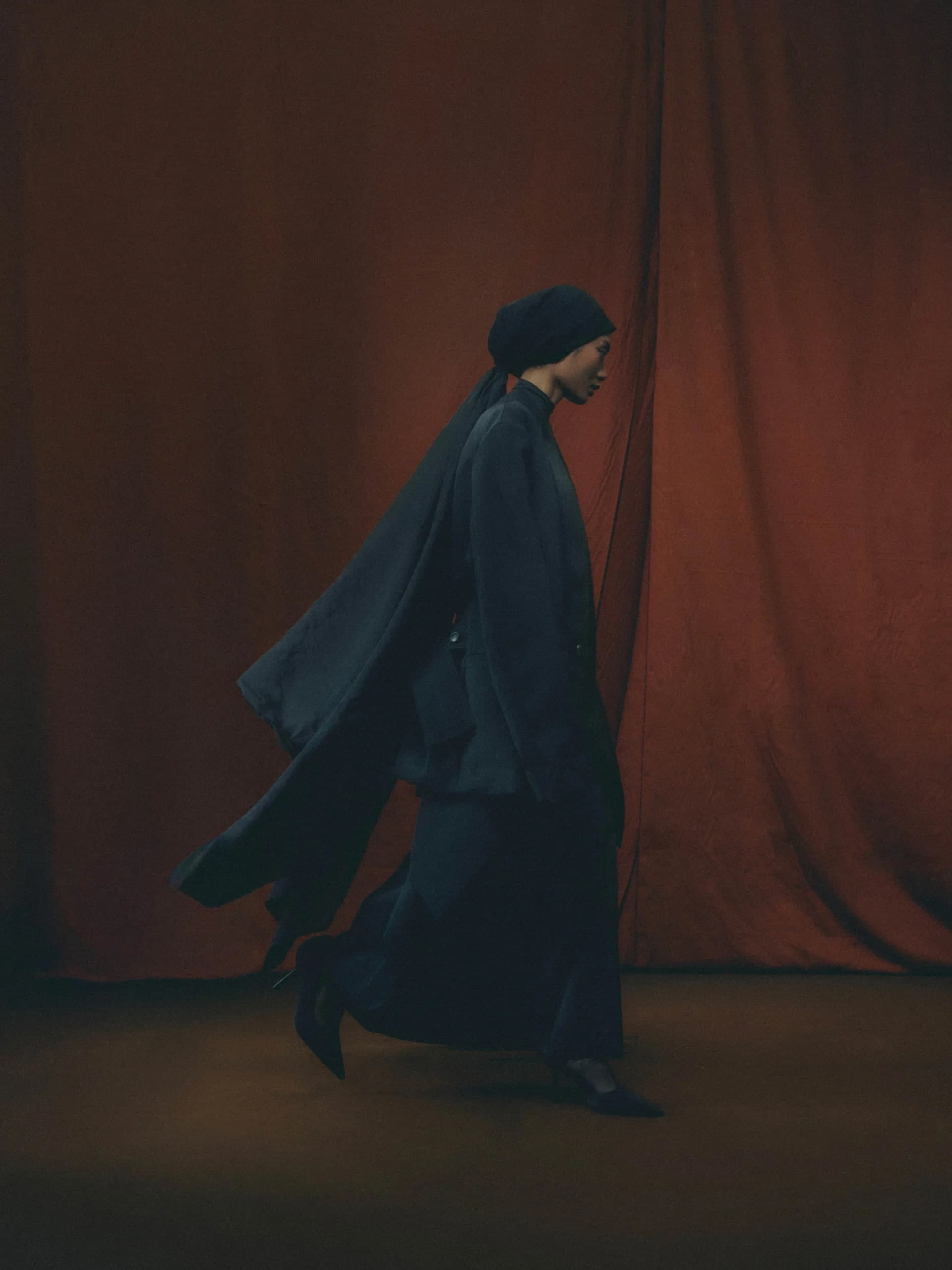
He told Noah Johnson of British GQ, in 2023, that he hated the traditional body-conscious line, and that he started from the idea of letting women wear men's outfits. Earlier, talking to The Talks, he put the same thought as a coat: something that guards and hides a woman's body. I like that image better than any manifesto. Nick Knight, who photographed him in the 1980s, told Johnson that Yamamoto's clothes were about a woman's emotions and intellect, not her shoulders or hips. Conventional luxury still makes a fortune treating exposure as confidence. His bet has always been the reverse. Cover can be the seduction. We'll be blunt: that is why a Yamamoto coat still feels like a private decision in a market that rewards logos you can clock from a taxi.
Black is how the cut gets heard. Suzy Menkes, writing for the International Herald Tribune in 2000, got the line everyone still quotes: black is modest and arrogant at the same time, lazy and easy but mysterious. You need black, Yamamoto told her, to have a silhouette. It can swallow light or make things look sharp. Above all it says, I don't bother you, don't bother me. He also told Johnson that black is challenging because the technique has to be perfect for the cut and the volume to show. Drop the color, and every mistake in the pattern becomes public. In Paris in 1981, when he showed with Rei Kawakubo of Comme des Garçons, Western editors heard mourning or worse. Strip away print, and the imbalance in a hem, the unfinished edge, the volume that refuses a waist, suddenly have nowhere to hide. Read Radical Form when you want the longer Tokyo laboratory around him. London's award is the institutional version of a lesson a lot of wardrobes already learned without waiting for a podium.
"I didn't approach the traditional body-conscious line, which I hated. So, I started from the idea to let women wear men's outfits."
Yohji Yamamoto, to British GQ, April 2023
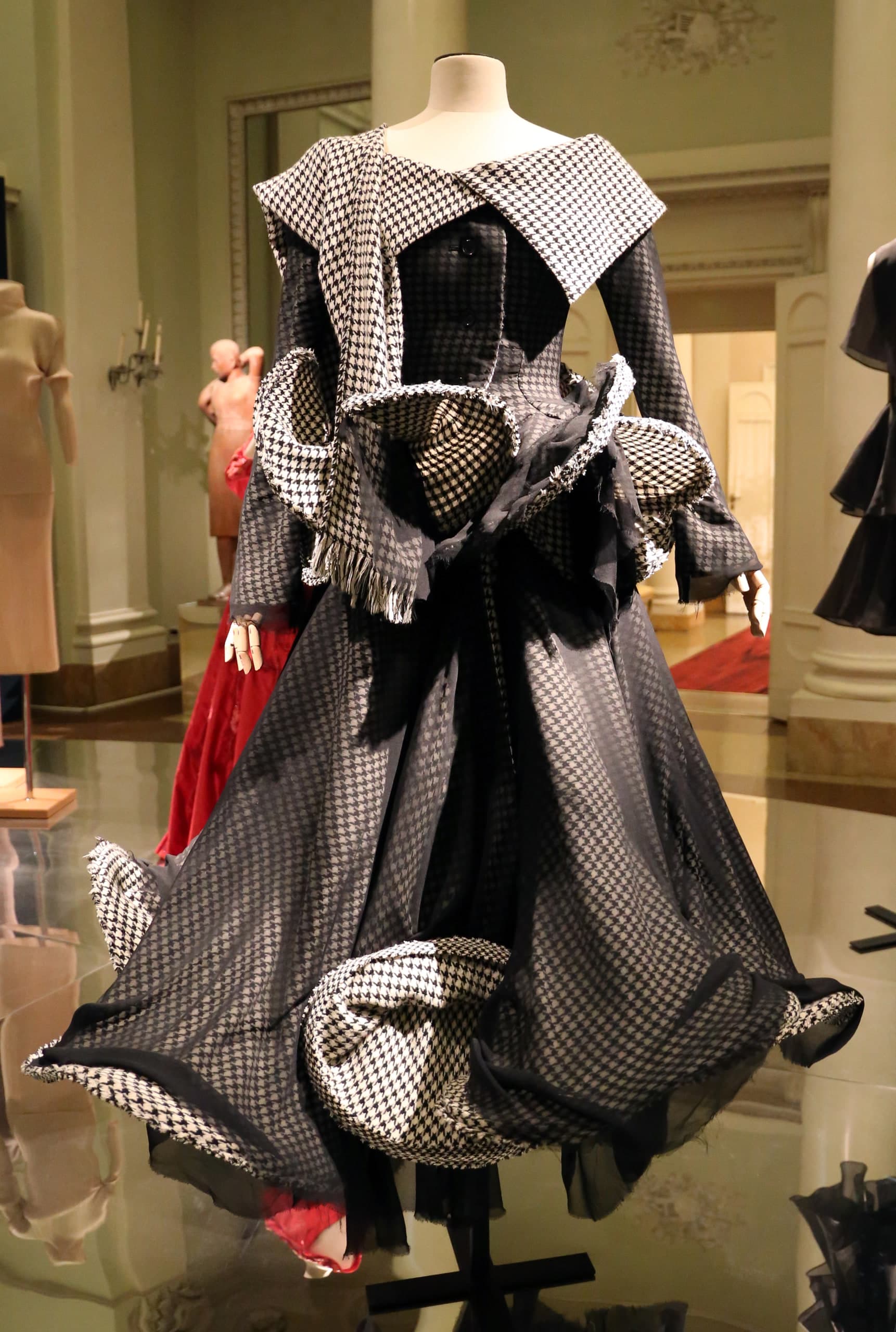
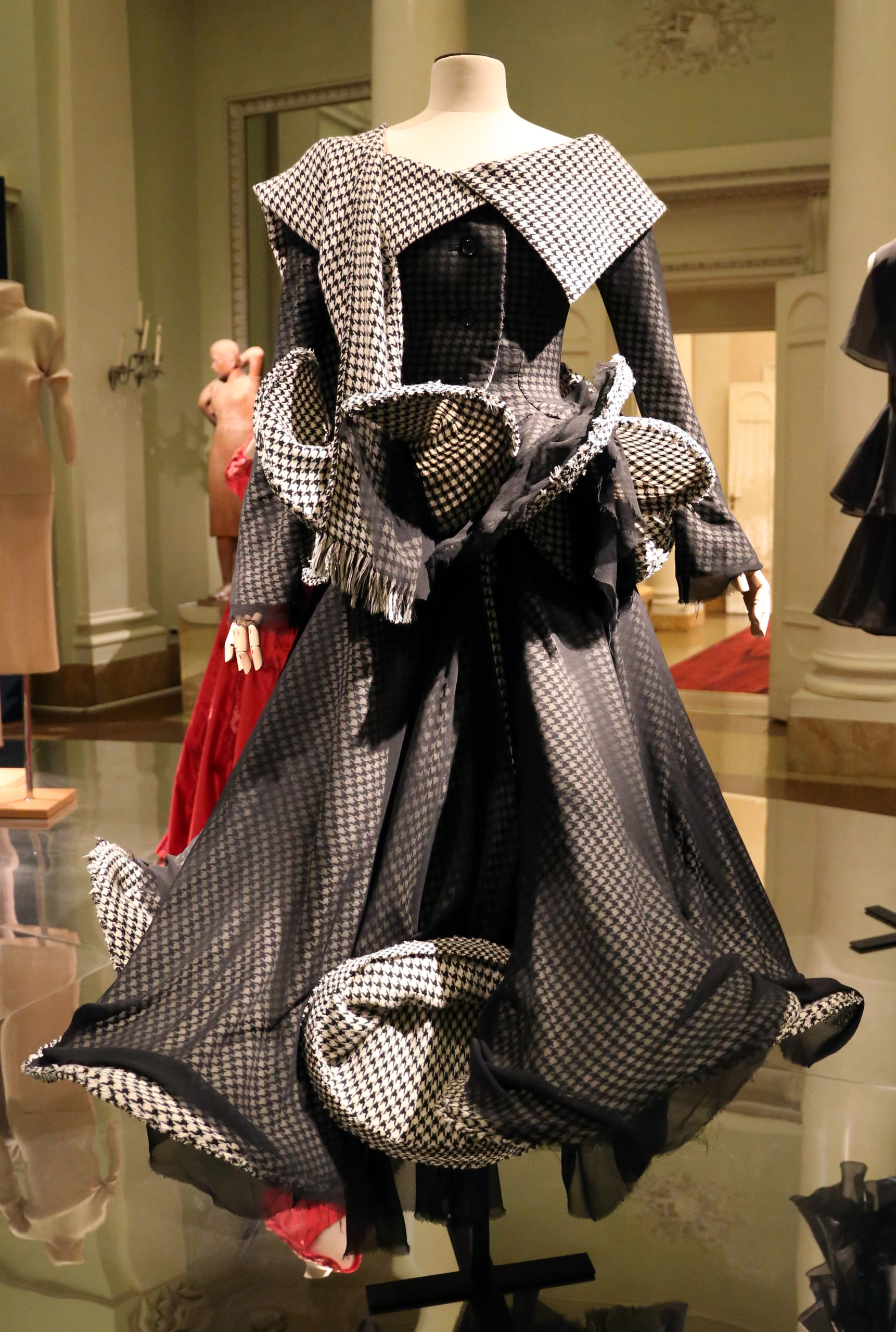
Asymmetry is what keeps that sentence from becoming a product still. In Talking to Myself, the 2002 book of conversations with the philosopher Kiyokazu Washida, Yamamoto said perfection is ugly, and that he wants to see scars, failure, disorder, distortion in the things people make. Look at the Florence mannequin above. The edges are raw. The hip has been built rather than found. The skirt will not behave for a mirror. More than twenty years later, the spring fringes in Paris were the same preference, only faster: threads left hanging so the garment never quite declares itself finished. If a campaign team wanted a clean "unfinished" look, they would have tied those ends. He left them loose. That stubbornness is exactly the influence the award is trying to name.
If you are in London on 30 November, the Albert Hall will do the institutional work. The quieter move is to look at the next coat the way he does. Does it ask the wearer to perform a body for the room, or does it give the wearer a wall? A younger Tokyo designer who spent years in his textile planning rooms, Yuka Kimura of Mukcyen, is proof the discipline still travels; Mukcyen Closes Tokyo With Buyable Antoinette is where that line continues. For the rest of us, the Outstanding Achievement is already hanging in the wardrobe problem he set: black that earns its silhouette, a hem that will not match, and cloth that guards before it displays.