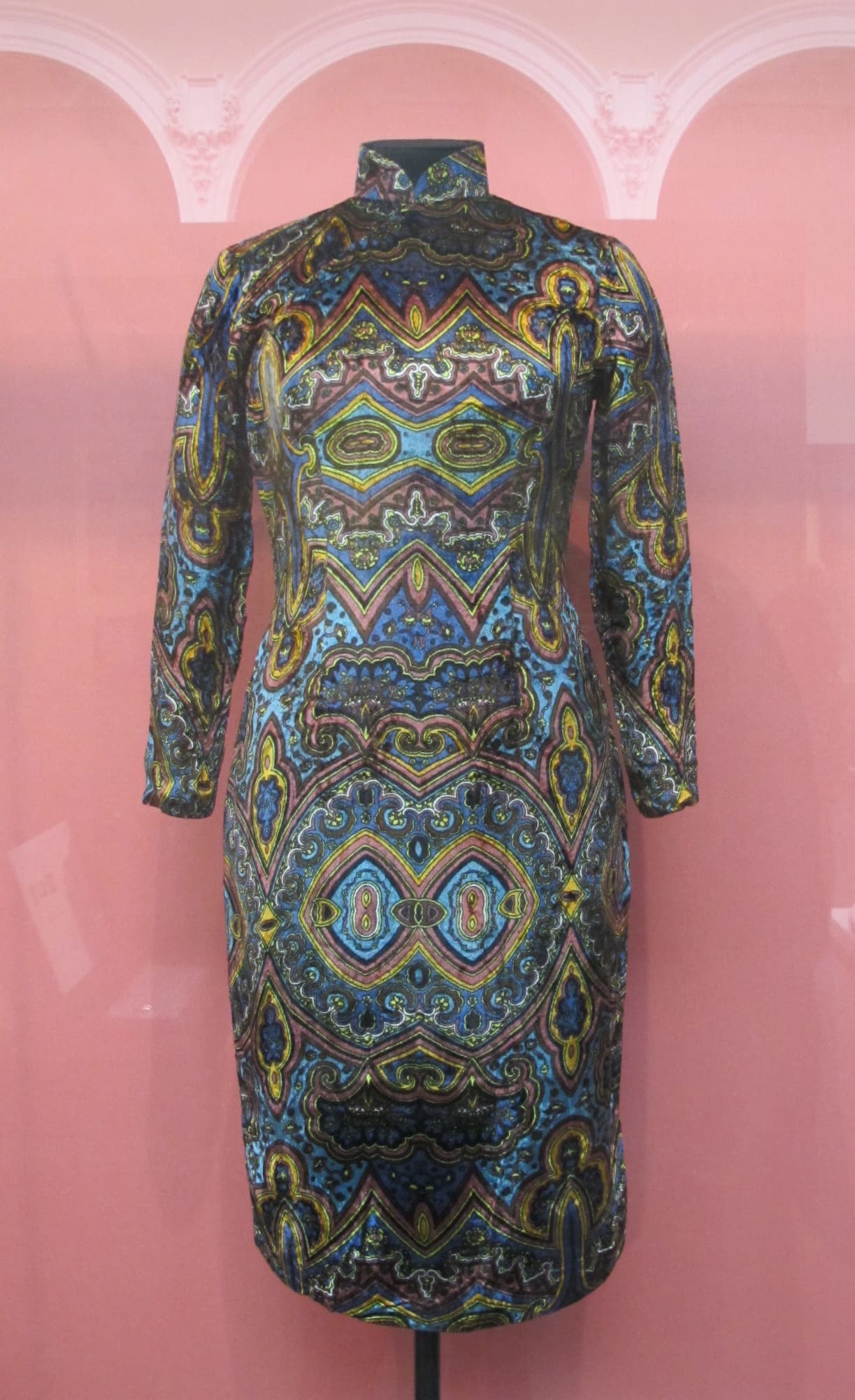
The cheongsam spent decades stuck between museum vitrine and party-rental cliché: stiff satin, dragon embroidery, fit that assumed a mannequin rather than your shoulder line. Diaspora women who inherited the garment's memory often skipped it in public life because the available versions did not match how they actually moved through Central, Richmond, or Mayfair.
That is changing. A new circuit of makers, stylists, and wearers is reclaiming the qipao as evening wear: tailored to modern bodies, updated in fabric and length, worn to weddings and galas and art dinners where "black tie optional" still defaults Western unless you bring something else.
By 1929, the Republic of China had codified the qipao in its national dress code; within a decade it defined Shanghai street fashion. After 1949, tailors carried the craft to Hong Kong, where the Cantonese term cheongsam (from chángshān, long robe) stuck while Mandarin speakers kept qipao. The garment you commission today descends from that 1930s Shanghai fit, not from costume-shop polyester.
Read Contemporary Jewelry from the Asian Diaspora for parallel questions of adornment without quotation. For Hong Kong occasion context, see What Hong Kong Art Week Dressing Actually Looks Like.
What Changed (and Why Now)
Three shifts explain the revival you are actually seeing on diaspora wedding calendars.
Measurement discipline. Serious houses now work like bespoke tailors: 20+ body points, posture at the fitting, side zip versus traditional frog closure chosen for your hip line, not for a photo reference from 1962.
Fabric that survives 10 p.m. Velvet, silk crepe, brocade, and cotton-silk blends replace rental satin that shines on camera and wilts at dinner.
Wardrobe logic. Wearers treat cheongsam as one evening option among several. Wool wrap in London, minimal jewelry at Art Basel Hong Kong, flat sandals at a Penang garden wedding. You are not performing an entire identity; you are dressing for one room.
The Historical Reference
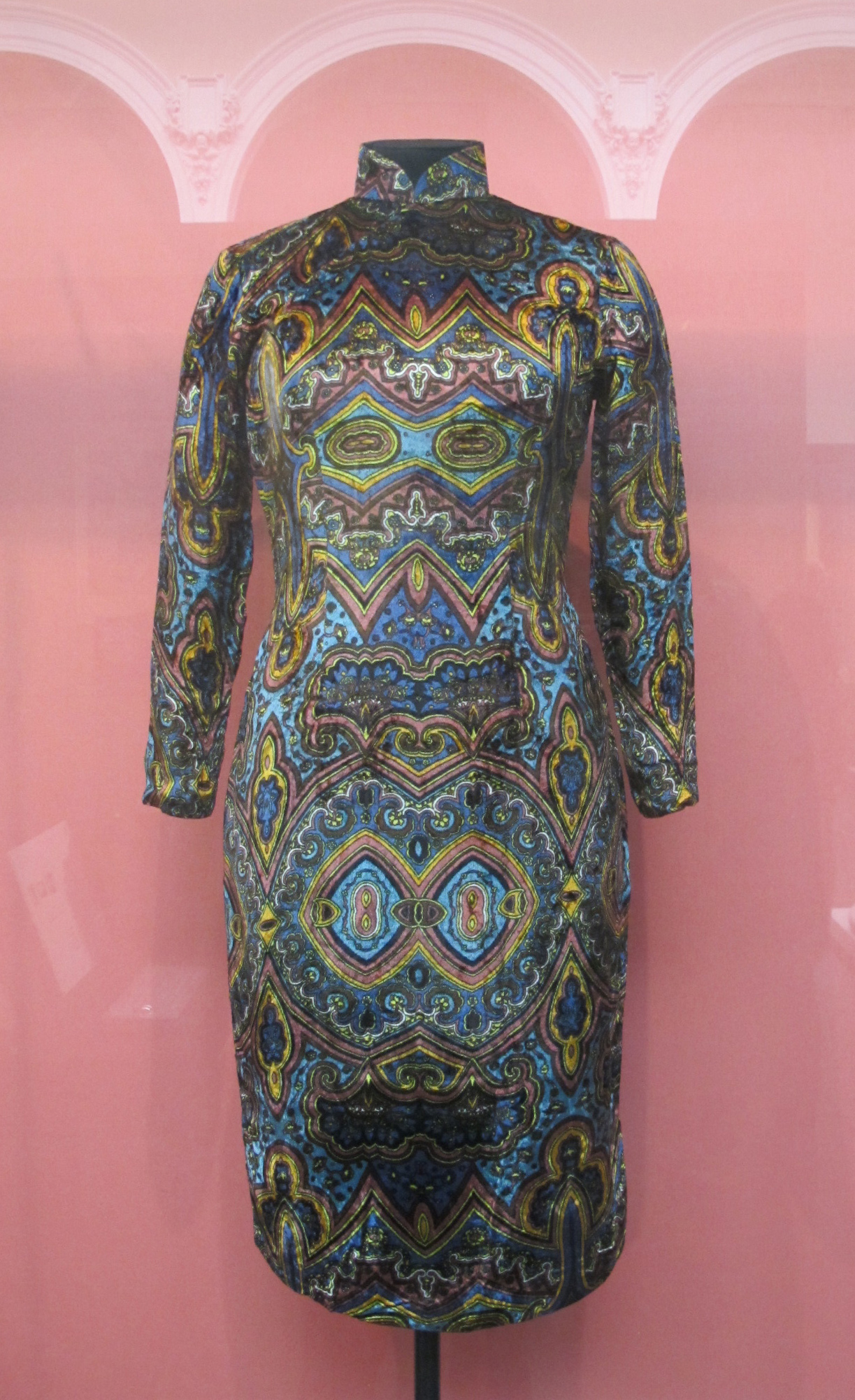
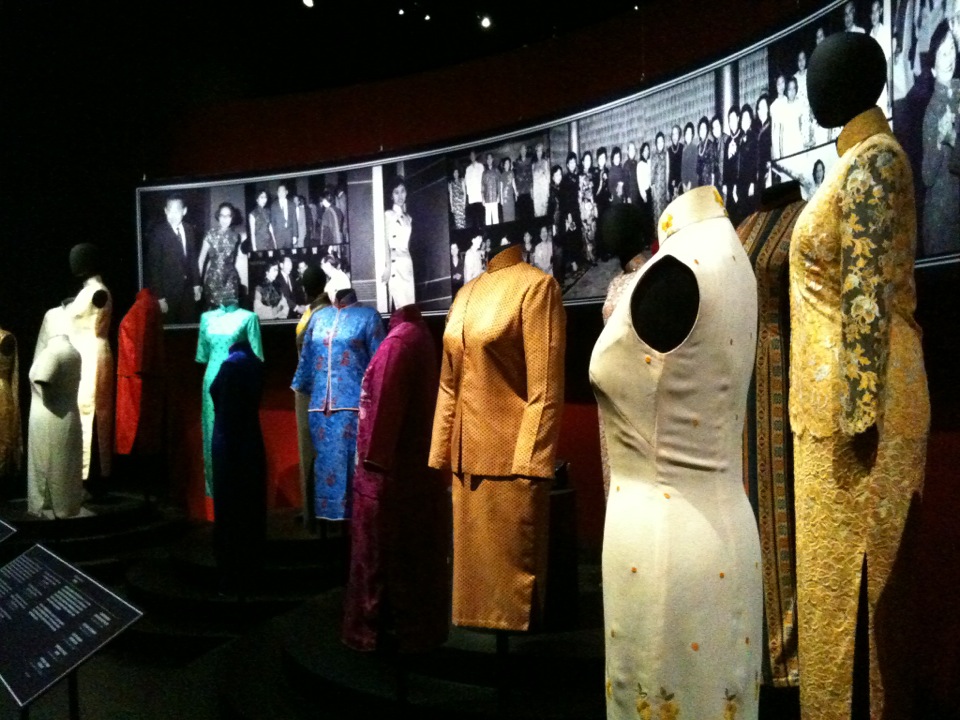
Mid-century Hong Kong and Shanghai cheongsam culture treated the garment as street dress that escalated to evening. Collar height, slit length, and sleeve varied by decade. Holdings at the V&A, Hong Kong Museum of History (100 Chatham Road South, Tsim Sha Tsui), and the National Museum of Singapore show how much experimentation existed before export boutiques froze the silhouette into dragon-embroidered stereotype.
Study the objects before you commission. You will spot bad copies faster.
Where to Look Now
Hong Kong
Linva Tailor, 38 Cochrane Street, Central (est. 1965; +852 2544 2456). Master Leung Ching-wah cut the Maggie Cheung qipaos for Wong Kar-wai's In the Mood for Love (2000). Expect at least two fittings, traditional frog closures, and honest timelines measured in weeks.
Mee Wah Qipao, 76 Queen's Road West, Sheung Wan (+852 2543 6889). Kan family house dating to the 1920s; hand cutting and hand finishing throughout. Strong for heritage collar and embroidery when you want it.
Qipology at PMQ, 35 Aberdeen Street, Central (+852 6061 4074). Designer Julie Liu's contemporary line: ready-to-wear plus bespoke for diaspora clients who want East-meets-West proportion (midi lengths, separable tops). Useful when traditional houses feel too ceremonial.
Book appointments. Walk-ins get walk-in results.
Shanghai
Changle Road between Shaanxi South Road and Maoming South Road remains the city's qipao street. Han Yi (瀚艺), 217–221 Changle Lu (+86 21 5404 4727), is the old-school reference; CNN has documented 93-year-old tailor Chu Hongsheng still measuring in-store. Budget ¥800–¥10,000+ depending on embroidery and cloth. Lead time commonly two to eight weeks with multiple fittings. Pair a commission with The Banquet Guide to Shanghai if you are routing through on The Asian Grand Tour.
Singapore
Peranakan colour and beadwork appear in contemporary houses; study the textile galleries at National Museum of Singapore (93 Stamford Road) before you choose collar height or palette.
London / Vancouver diaspora
Florence Bridal Boutique, Yaohan Centre, 3700 No. 3 Road, Richmond, BC (Suite 2345), customizes cheongsam alongside Western banquet dress for Lower Mainland wedding markets. In London, search makers through Chinese wedding directories in Chinatown and Newham; specify whether you want reusable separates (jacket overlay, midi) rather than one-off satin.
Confirm lead times before you buy a plane ticket for fitting two.
When It Works
Weddings where the invitation says "optional cheongsam" or elders expect cultural dress at the tea ceremony.
Lunar New Year formal dinners in Vancouver, Toronto, or Sydney with multi-generational tables.
Art and charity galas in Hong Kong and Singapore where a subset of women deliberately choose Asian formal over a Celine column.
Personal milestones (book launch, gallery opening, family portrait) where inheritance should read as choice, not explanation.
When It Fails
Corporate rooms that expect international business uniform unless you know the host welcomes cultural dress.
Rental satin for photography only. The garment reads as costume in motion.
Lazy hip and shoulder fit. Cheongsam punishes off-the-rack guessing more than almost any evening dress. Budget alteration or bespoke, not hope.
Theme-park jewelry. One jade bangle or none. Let the cut carry the reference.
For jewelry discipline, read The Gem Palace and the Education of Stones.
Styling the Modern Cheongsam
Coat: Structured wool or cashmere wrap in London or Vancouver winter. The qipao becomes the layer under something warm for the walk, removed indoors.
Shoes: Block heel or elegant flat for garden events; avoid platforms that fight the slit line.
Hair: Updo shows collar and frog detail; loose hair suits modern midi lengths.
Makeup: Red lip optional; many wearers choose neutral mouth to balance bold fabric.
Partner dress code: Coordinate formality, not ethnicity. Your cheongsam does not require his changshan unless the event asks.
Undergarments: Seamless briefs, correct bra for side opening. Ask the maker. This is fitting-room practical, not optional.
Commissioning Checklist
Bring: Reference photos of collar height and slit length you can live with; heels you will actually wear; timeline for every fitting.
Ask: Hand versus machine finishing on frogs; whether lining is silk or polyester; alteration policy after weight change.
Allow: Four to eight weeks minimum for Hong Kong bespoke; longer if embroidery is involved. Rush jobs produce the costume you are trying to avoid.
The Verdict
The new cheongsam circuit treats the garment as living dress with a 1920s–1930s Shanghai pedigree and a Hong Kong tailoring afterlife.
Commission carefully, wear it where the room understands ceremony, and demand fit that respects your actual body. Done well, a qipao holds the room like any serious column gown, with inheritance worn on your terms rather than borrowed from a rental rack.
Read What Hong Kong Art Week Dressing Actually Looks Like, The Banquet Guide to Hong Kong, and The Asian Grand Tour.