Fashion weeks multiply. Buyers do not. The useful question for 2 to 5 September in Wan Chai is whether CENTRESTAGE still earns the appointment book.
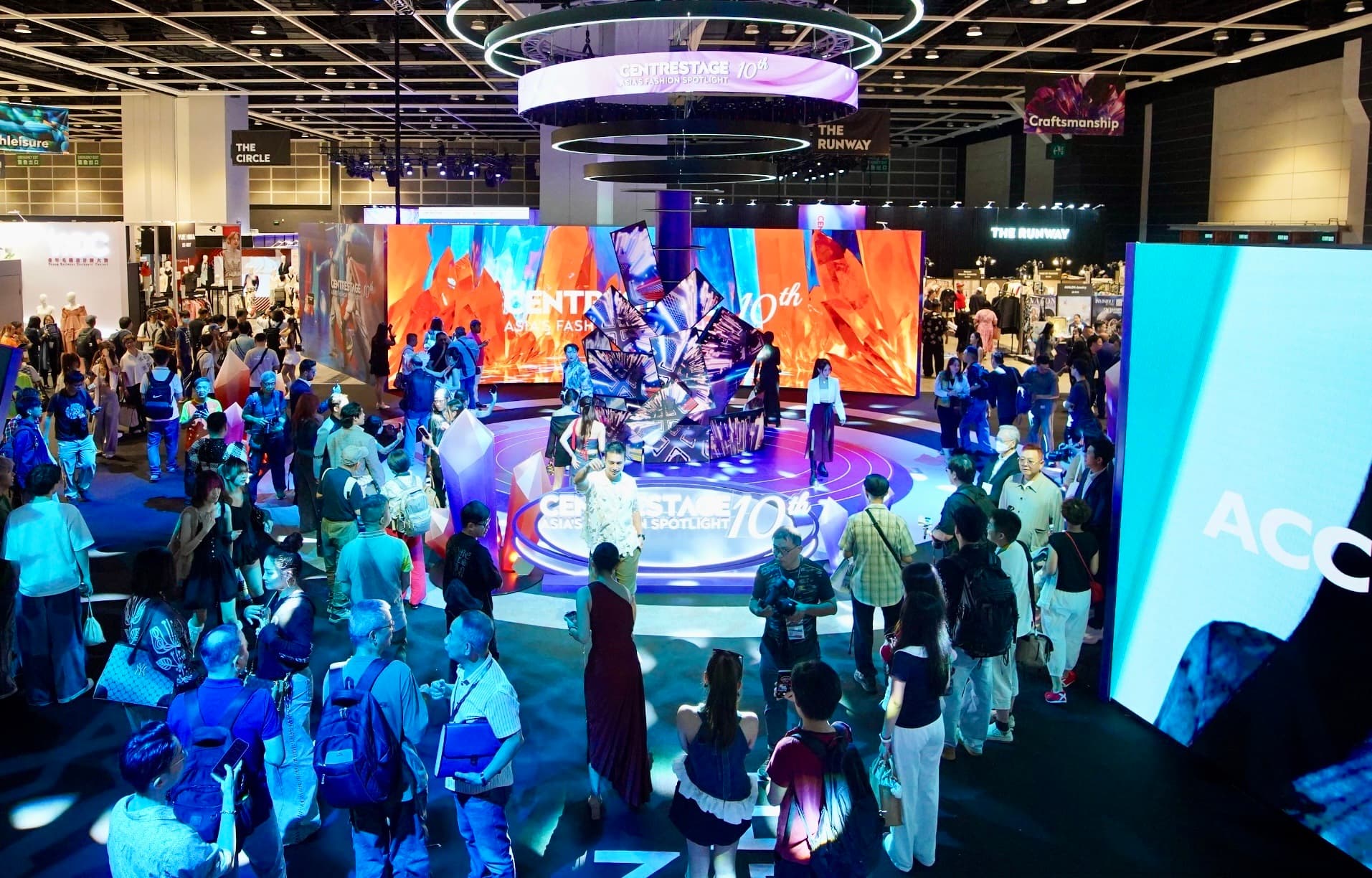
Organized by the Hong Kong Trade Development Council and sponsored by the government’s Cultural and Creative Industries Development Agency (the office that replaced Create Hong Kong in June 2024), the eleventh edition returns to the Hong Kong Convention and Exhibition Centre at 1 Expo Drive. HKTDC is already talking about roughly 270 brands on the floor. Last September’s tenth edition, the current benchmark, put more than 260 labels from 25 countries and regions in front of more than 10,000 trade buyers from 91 markets. Growth then showed up where it mattered: the United Kingdom, Mainland China, India, and Indonesia.
That is a marketplace story with lights attached. Read it that way.
“Over the past decade, CENTRESTAGE has become an essential trade and exchange platform for local, Asian and international fashion brands.”
Sophia Chong, then HKTDC Deputy Executive Director and, since October 2025, its Executive Director, closing last year’s edition
What the Floor Actually Is
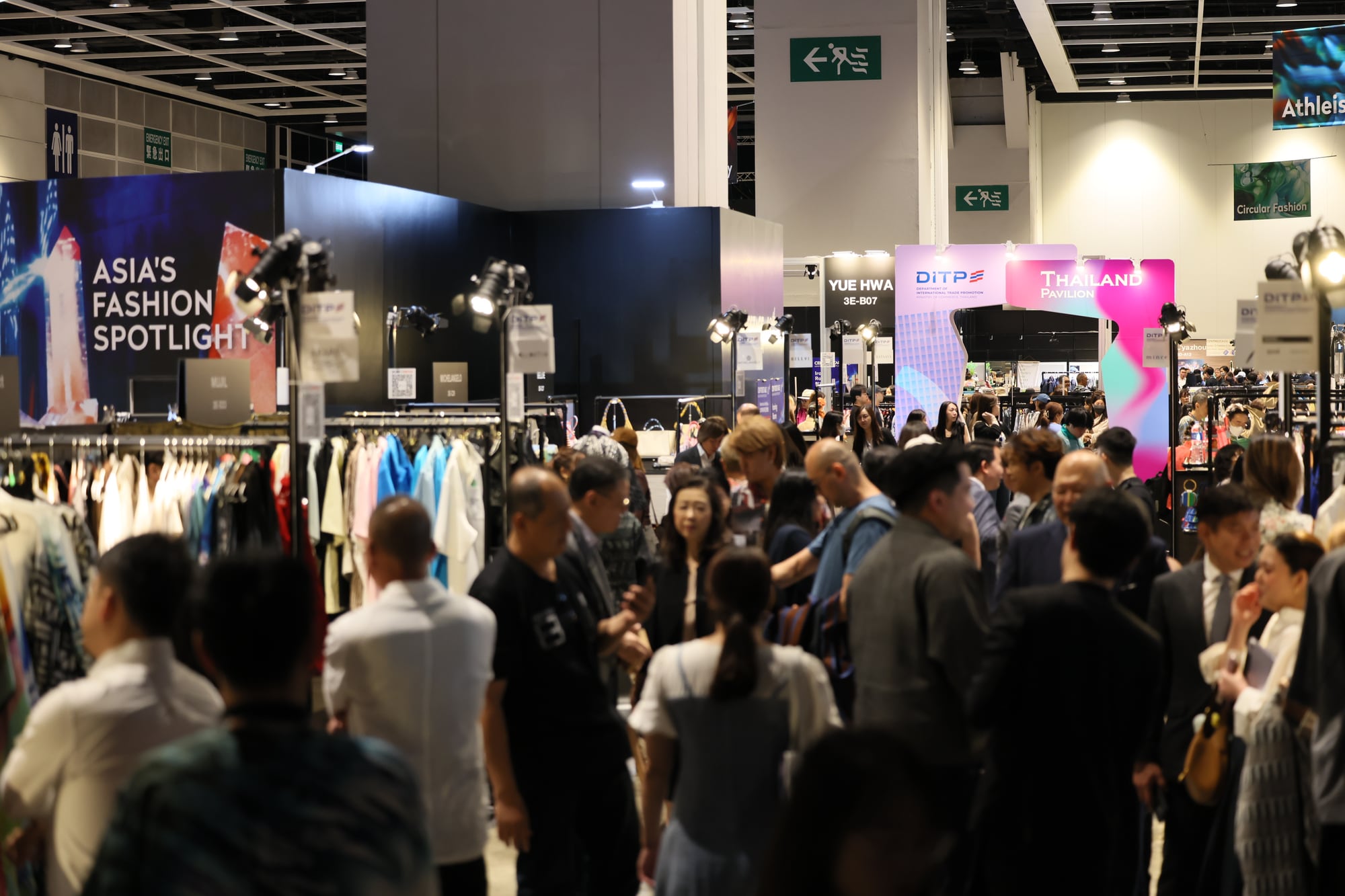
CENTRESTAGE launched in 2016 as HKTDC’s international fashion trade showcase. It still stages runway, but the grammar is exhibition: six thematic zones (Craftsmanship, Contemporary, Urban, Athleisure, Circular Fashion, Accessories), seminars, and buyer matching rather than a closed front-row calendar. Admission is free with registration for trade visitors and the public. Doors open at a civilized hour and close before dinner: roughly 10 a.m. to 7 p.m. on the first three days, earlier on 5 September. Confirm on the HKTDC site before you build the day.
This year the fair sits inside the third Hong Kong Fashion Fest (1 to 14 September, themed Rhythm of the Heart), the city-wide programme announced in the 2023 Policy Address and now, for the first time, formally combined with CENTRESTAGE. Next door on the same dates, the Hong Kong Watch & Clock Fair and Salon de TIME occupy the same building. Apparel buyers who also carry timepieces can treat Wan Chai as one errand.
Opening night is still theatre. CENTRESTAGE ELITES on 2 September gives the first solo Hong Kong fashion show to KIT WAN STUDIOS, the house of Hong Kong-born creative director Kit Wan. The collection, Mutant // Mythology, pulls sci-fi, manga vocabulary, and mechanical metalwork into garments that sit between stage costume and wearable object. Wan trained in knitwear at PolyU, finished an MA in Oslo, and became the first fashion designer to receive Norway’s Young Artist recognition; work from the studio sits in the permanent collection of the National Museum of Norway. Fashion Asia Hong Kong named the studio its sole local pick among 2025’s “10 Asian Designers to Watch.” The gala is the press magnet. The fair’s real product is what happens after breakfast the next morning.
Who Should Matter on the Appointment Sheet
Korea arrives as guest of honour for the first time. Seoul’s municipal Hi Seoul Showroom, marking its own tenth year, is bringing a 12-label pavilion under a sustainability-led theme that English coverage renders as SEOUListic, a pun on Seoul-ness. Names circulating include doucan, RE RHEE, and HOLYNUMBER7; broader Korean coverage puts the national presence nearer two dozen brands when industry associations are counted. For Banquet readers who already treat Seoul as a buying city, this is the test of whether Hong Kong still concentrates regional discovery in one hall. South Korea Is Luxury’s Bright Spot While the Rest of the Market Hesitates is the consumption backdrop; CENTRESTAGE is the wholesale room.
Last year’s floor already behaved like a regional atlas. Thailand’s pavilion topped 40 brands. The United Kingdom debuted as Partner Country with 16 labels. Buyers on the HKTDC closing list included London concept store Machine-A, Indonesia’s Zalora, Japan’s Daimaru Matsuzakaya, Italy’s Sugar Srl, and U.S. buyer ESSX. That mix is the point of Wan Chai: one trip for Southeast Asian retail, Japanese department stores, and European independents.
Closing night on 5 September still belongs to the Hong Kong Young Fashion Designers’ Contest, HKTDC’s talent pipeline since 1977, this year themed YOU. Ten finalists show at 7:30 p.m.; Rok Hwang, the London-based founder of ROKH who trained at Céline and Louis Vuitton, sits as VIP judge. Alumni who built labels after YDC (among them Charlotte Ng Studio, Kowloon City Boy, REDEMPTIVE) are the proof that the contest is a commercial rehearsal when it works.
Why Hong Kong Still Earns the Ticket
Asian labels do not lack runways. They lack rooms where a Seoul designer, a Bangkok pavilion, a Hong Kong milliner, and a London buyer share the same carpet without flying three continents. Hong Kong’s case remains boring and durable: English-language deal-making, Mainland adjacency without Mainland friction for many overseas buyers, and an exhibition machine that already knows how to host watches beside clothes. For packing the humid version of that week, What Hong Kong Art Week Dressing Actually Looks Like still holds; CENTRESTAGE is hotter fluorescent light and longer standing.
Compare calmly with the other August and September calendars. Kuala Lumpur Fashion Week Has Outgrown the “Emerging Market” Compliment argued for a national commercial platform that still needs overseas buyer ledgers. Seoul posts meeting counts. Shanghai stacks brands. CENTRESTAGE’s pitch is the bridge: Asian authorship meeting international wholesale in a city that sells itself as East-West logistics.
“CENTRESTAGE is proven to be an exciting platform for new talent, while providing international buyers with a valuable gateway to explore the pulse of Asia’s vibrant and diverse market.”
Stavros Karelis, founder and buying director of Machine-A, after his first visit in 2025
Karelis left with budget allocated to pieces he found on the floor, among them the Hong Kong labels WEN PAN and Genau Studio. A buyer naming names on the way out is the success metric HKTDC cannot print in a preview.
Fashion Week Versus Functioning Marketplace
A fashion week sells narrative and seating. A marketplace sells appointments, sample loans, and reorder emails. CENTRESTAGE will stage roughly 30 shows again if the previews hold; the lights are real. Judge the edition by whether Korean pavilion meetings turn into stockists, whether YDC finalists leave with production conversations, and whether buyer growth from India, Indonesia, and the UK continues after the tenth-anniversary spike. Public footfall and Instagram stills are secondary. The fair already lets visitors buy selected retail on site; that is atmosphere. Wholesale is the brief.
HKTDC has a further press conference scheduled for 20 August. Brand counts and pavilion lists will sharpen then. Until the post-show numbers land, treat “record” language as aspiration.
A genuinely successful eleventh edition would look quiet on closing day: fewer viral clips, more open notebooks, and a week later a handful of Asian labels able to name new doors in London, Jakarta, Tokyo, or Seoul that began as a booth conversation under an Athleisure banner. Hong Kong has hosted that kind of brokerage before. CENTRESTAGE is asking to do it again in September; keep the calendar note for hours, registration, and the same-building Watch Fair. Pre-register on the HKTDC site, build the Korea and Accessories hours first, and keep the Watch Fair pass in the same pocket.