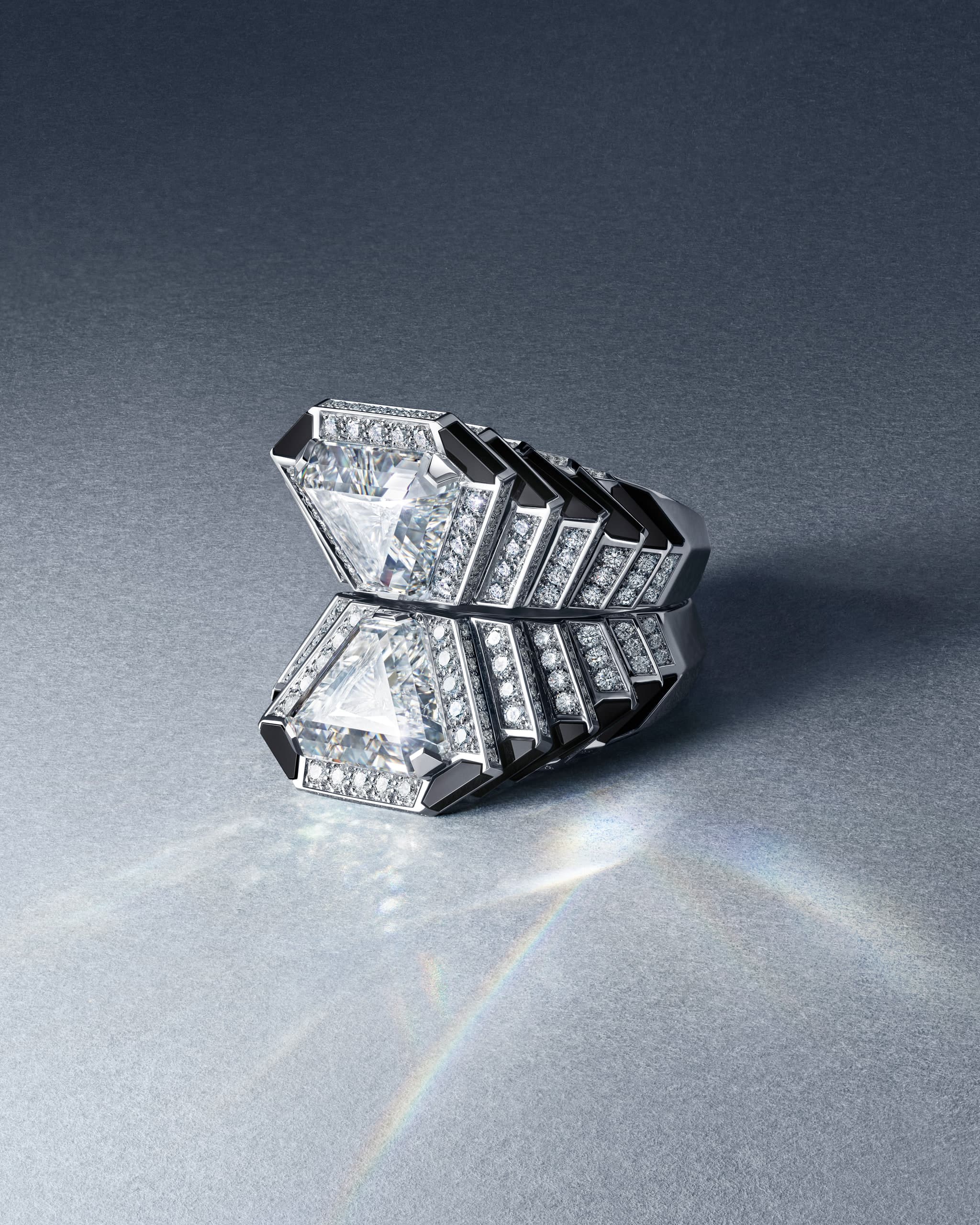
Jewelry has always been among the most personal of luxury categories.
Objects worn against skin, passed between generations, carrying memory in metal and stone: adornment is never merely decorative. A wedding band remembers a vow. A jade bangle remembers a grandmother's wrist. A pair of earrings bought on a first serious paycheck remembers the person you were becoming. Jewelry holds biography in a way that clothing, for all its intimacy, cannot quite match.
A new generation of designers from the Asian diaspora is bringing fresh perspectives to this ancient art, working in London, New York, Melbourne, Vancouver, and San Francisco with an understanding that heritage can inform without dictating. They are not repackaging tradition for Western buyers. They are expanding what precious adornment can mean in a global culture that no longer accepts a single center of taste.
"The best contemporary jewelry tells a story the wearer completes."
These designers share a conviction that luxury today is not about provenance alone. It is about intention. Each piece is conceived as a small sculpture, designed to live on the body rather than in a vault.
London and the Diaspora Ateliers

London has become the most visible hub for diaspora jewelry talent, not because the city invents the work, but because its gallery-and-fashion ecosystem gives small ateliers a platform that other cities struggle to replicate.
Eera, founded by designers Erica Yu and Nathan Hua, has built a following for bold, modular earrings that combine industrial hardware aesthetics with precious materials. Based in London, the brand reflects a generation comfortable quoting street culture and fine jewelry in the same breath. The pieces are not delicate in the conventional sense. They are architectural. They assume a wearer who treats jewelry as punctuation rather than background.
Completedworks, led by designer Anna Fan, creates pieces that feel archaeological and futuristic simultaneously: irregular pearls set in sculptural gold, forms that suggest erosion and growth. The work has appeared on red carpets and in museum shop collections, signaling how diaspora designers are moving between fashion and art without choosing sides. Fan's Chinese heritage informs the work indirectly, through an interest in material transformation rather than explicit motif.
WWAKE, founded by Wendy Nawara in New York but frequently stocked in London concept stores, deserves mention in this conversation because its sensibility travels. Nawara's Japanese-American background shows in a restraint that never reads as timid: opal slices set simply, chain proportions that sit correctly against the collarbone, a preference for stones that look chosen rather than decorated.
Alighieri, though Italian in name and founded by Rosh Mahtani, represents the London ecosystem where diaspora talent converges: storytelling through wearables, each collection anchored in literary reference and hand-cast bronze. It is not an Asian diaspora brand in the strict sense, but it demonstrates the creative environment that makes London fertile ground for designers who refuse category.
New York: Scale, Stones, and the Body
New York's jewelry scene rewards directness. The city produces work that is meant to be worn on the sidewalk, in the elevator, at the dinner table. Diaspora designers here tend toward pieces that survive daily contact without losing their intelligence.
Melissa Kaye, whose Indian heritage informs a deep relationship with colored stones, produces work that treats gems as protagonists rather than accents. Her pieces assume knowledge on the wearer's part: the difference between a well-cut sapphire and a merely large one, the way a setting should disappear behind the stone rather than compete with it.
Sandy Leong brings a sculptor's thinking to gold and diamond construction. The forms are clean but never simple. Negative space matters. A ring is designed as much by what is removed as by what remains.
Yvonne Léon and the broader New York fine jewelry scene have created a market where independent designers can sell direct, bypassing the traditional counter relationship. This matters for diaspora makers especially. When you buy from the designer's studio or website, you are entering a conversation about why a particular stone was chosen, why a particular proportion was set. The story is not marketing copy. It is the making.
Vancouver, San Francisco, and the Pacific Rim
On the Pacific coast, a quieter register prevails. Independent ateliers in Vancouver and San Francisco produce jade-and-diamond combinations, abstracted motifs drawn from Chinese and Japanese decorative traditions, and scale shifts from the delicate to the architectural.
Vancouver's position as a Pacific gateway gives its jewelry scene a particular character. Designers here often work for clients who move between Hong Kong, Taipei, and the North American west coast. The pieces must travel culturally as well as physically. A jade element that reads as heritage in one context must not become costume in another. The best Pacific Rim ateliers solve this through abstraction: forms that reference tradition without quoting it literally.
San Francisco's craft culture, rooted in metalsmithing education and studio practice, produces work that is often more artisanal than brand-driven. These makers sell through curated concept stores and appointment-only showrooms rather than traditional jewelry counters, which changes the relationship between maker and wearer. You are buying from someone who knows why a particular alloy was chosen, not from a salesperson reading a spec sheet.
Melbourne and the Southern Hemisphere
Melbourne's jewelry scene is smaller but increasingly influential. Designers with Asian heritage working here often engage with Australian material culture: South Sea pearls, locally sourced gold, a relaxed relationship to form that reflects the city's broader creative temperament.
The diaspora experience in Australia carries its own inflection. Distance from ancestral homelands can produce work that is more interpretive than referential. Motifs appear as memory rather than documentation. The result is jewelry that feels contemporary in a way that does not depend on any single cultural market's approval.
Material Intelligence
What distinguishes diaspora jewelry from generic contemporary design is material intelligence: the ability to choose stones, metals, and forms with cultural knowledge that is lived rather than researched.
Jade is the most obvious example. In diaspora hands, jade is not a generic green stone. It is a material with grades, histories, and personal associations that vary across Chinese, Korean, and Southeast Asian traditions. A designer who understands jade as material culture will specify type, origin, and cut differently from one who treats it as a color option.
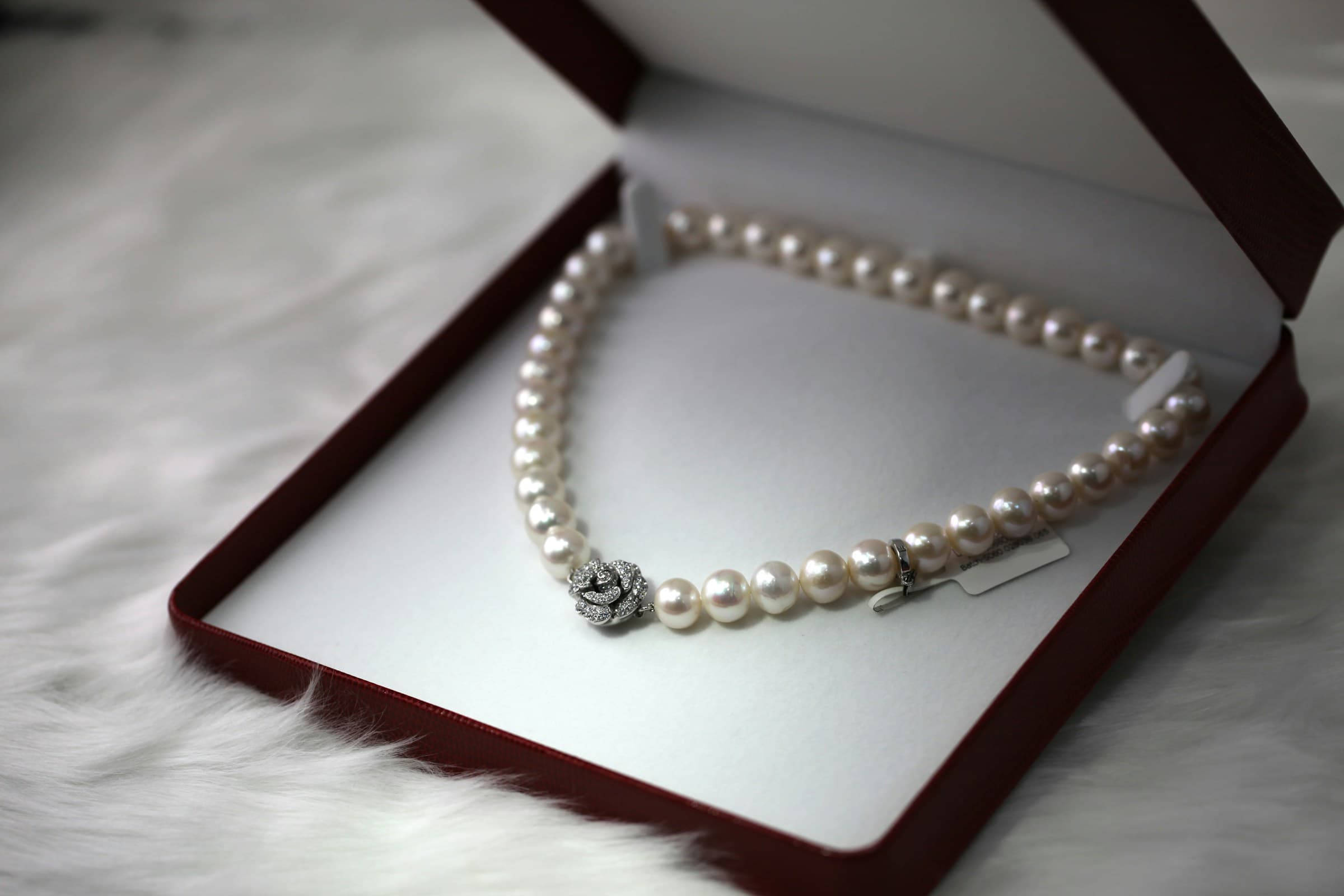
Pearls carry a parallel complexity. Baroque pearls, once considered inferior, have become central to contemporary diaspora design precisely because their irregularity resists mass production. A Completedworks pearl earring and a traditional strand occupy different worlds. The diaspora designer often prefers the former: the stone that looks like it was found, not manufactured.
Gold, too, is chosen with intention. Yellow gold's resurgence in contemporary jewelry is not merely cyclical. For many diaspora designers and wearers, it is a return to warmth after decades of platinum and white gold dominance in Western fine jewelry. The metal reads differently against skin tones that mainstream campaigns have historically ignored.
What Collectors Should Know

Ask about materials and sourcing. Diaspora designers often prioritize traceable stones and recycled metals. The story is part of the value. If a designer cannot explain where a stone came from and why it was chosen, that is information worth having.
Expect limited production. Many pieces are made to order or released in small batches. Waiting is normal. The alternative, mass production, is precisely what this category exists to resist.
Wear it. The best contemporary jewelry improves with contact: skin oils patina gold, daily use gives a piece personal history. Jewelry kept in a box communicates fear. Jewelry worn daily communicates conviction.
Build slowly. A collection of five exceptional pieces from five different makers will serve you better than a drawer of impulse purchases. Each piece should earn its place against skin, not against a mood board.
Consider commission. Many diaspora ateliers accept bespoke work. A commission is not vanity. It is how jewelry was historically made before counters standardized desire. If you have a stone inherited from family, a diaspora designer may be the right person to reset it for how you actually live.
Store with care, not obsession. Contemporary pieces with irregular stones or hand-finished surfaces need sensible storage. Soft pouches, separate compartments, occasional professional cleaning. They do not need bank-vault drama.
Beyond Heritage, Beyond Market
The Asian diaspora's contribution to contemporary jewelry is sometimes reduced to a narrative of cultural fusion. That framing is too small. What these designers are actually doing is more interesting: they are treating the body as a site for serious artistic decision-making in a market that has long preferred jewelry as asset or accessory.
The work is sculptural without being unwearable. Cultural without being literal. Personal without being sentimental. It assumes a wearer who knows the difference between a piece that decorates and a piece that belongs.
For collectors entering this world, the entry point is simple. Find one designer whose proportion matches yours. Buy one piece. Wear it for a month. Notice how it changes your posture, how it catches light at dinner, whether you reach for it automatically in the morning. If the answer is yes, you have found your conversation. The rest of the collection can build from there.
The best diaspora jewelry does not perform heritage for an audience. It completes a story that began in an atelier and continues on your skin: intimate, honest, and built to outlast trend cycles when the maker and wearer both treat it that way.
Continue Reading
Read The Gem Palace and the Education of Stones, The New Cheongsam Circuit, and The New Language of Accessories.