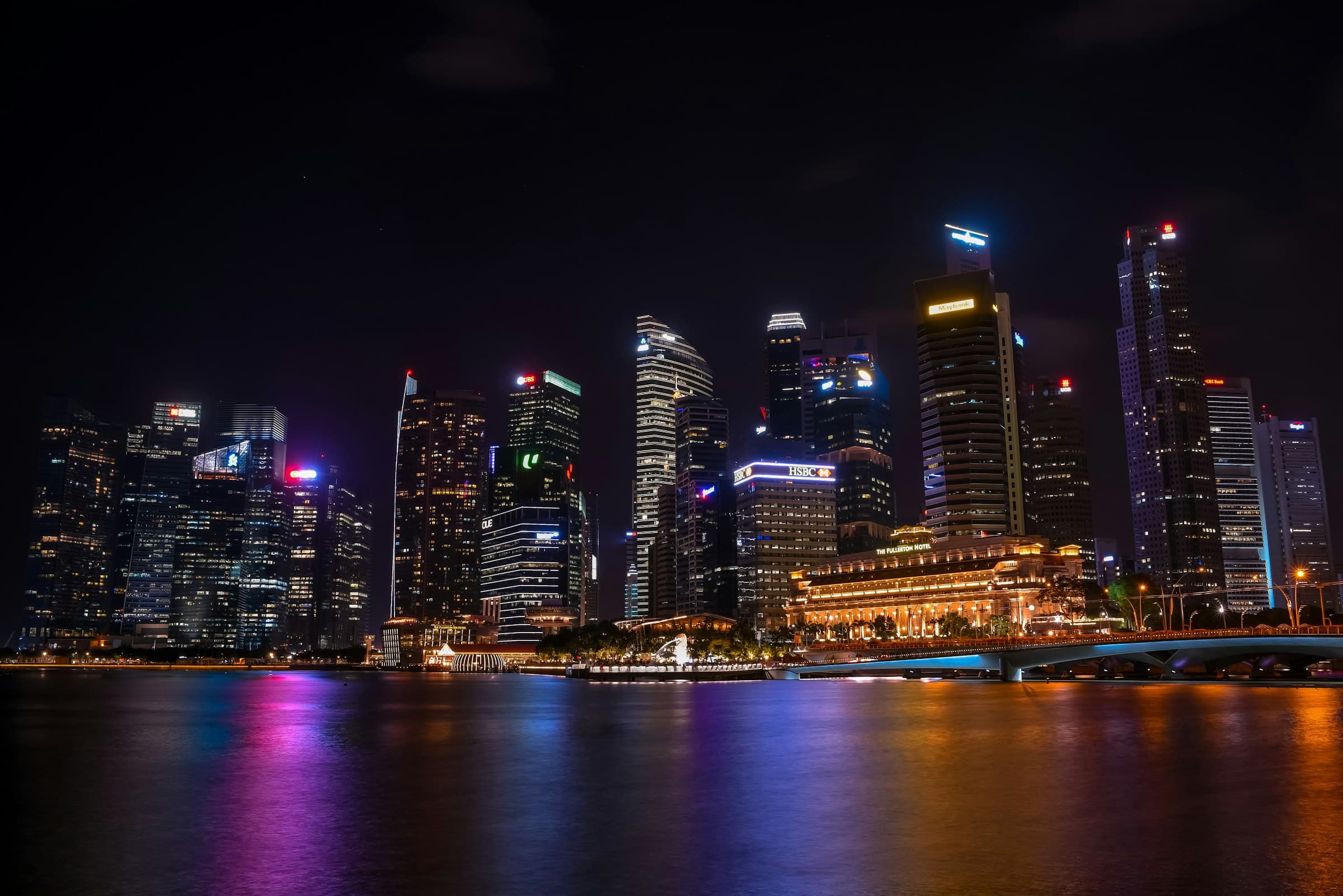
Singapore has never lacked for luxury hotels.
What it has lacked, until recently, is personality: properties that reflect the city's extraordinary cultural complexity rather than the homogenizing tendencies of global hospitality brands. The latest openings along Orchard Road and in emerging neighborhoods like Tanjong Pagar demonstrate a new confidence. Architecture that converses with heritage shophouses. Restaurants that treat Peranakan cuisine with the seriousness of French gastronomy. Lobbies designed as living rooms for the city rather than transient spaces.
"Singapore is finally building hotels for people who actually live here, not just people passing through."
For the traveler, the implication is clear: Singapore is no longer merely a stopover. It is a destination worth planning around. For diaspora visitors returning from London, Sydney, or Vancouver, the city now offers addresses that feel local in reference and international in execution.
The Singapore EDITION: Orchard Road Reimagined
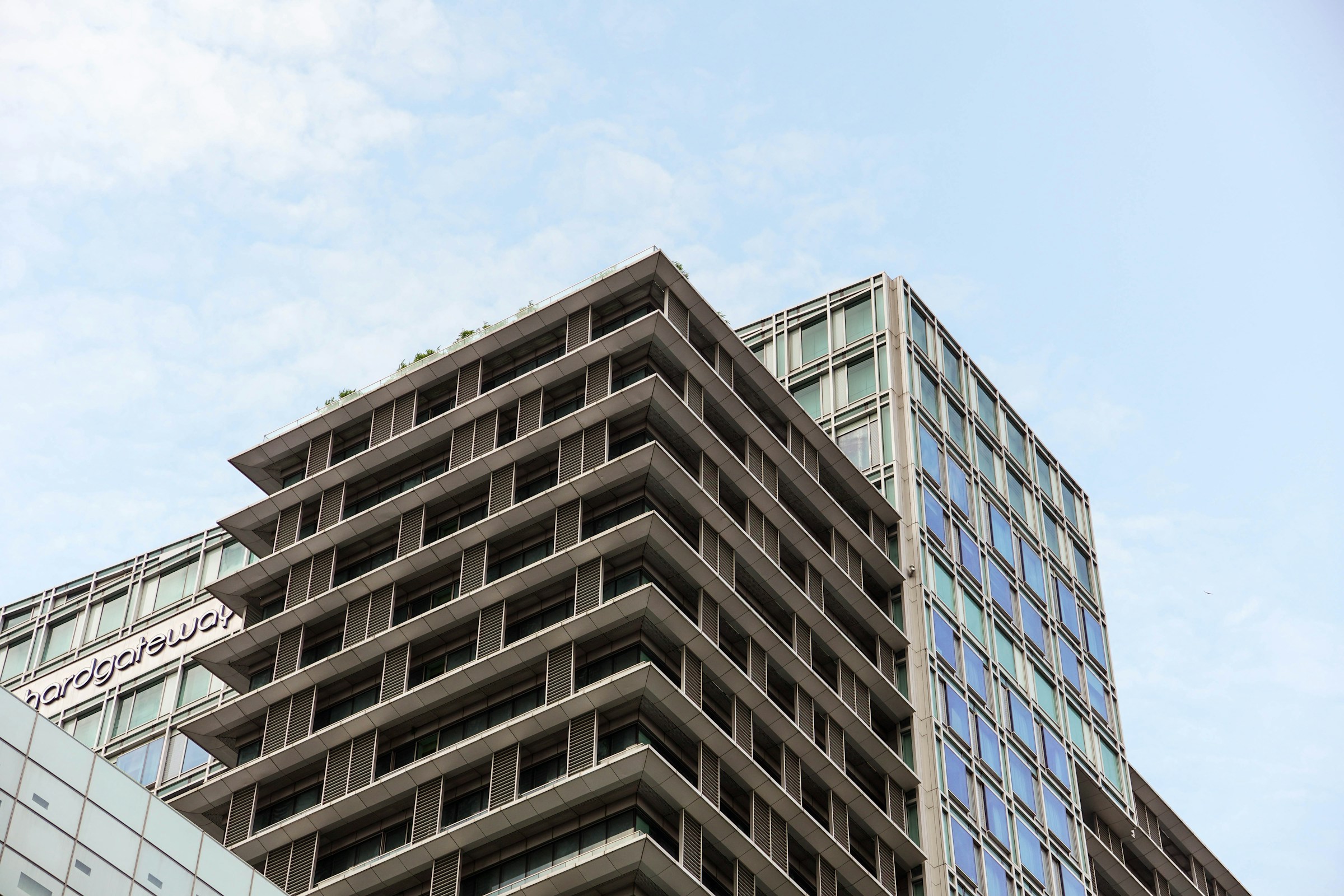
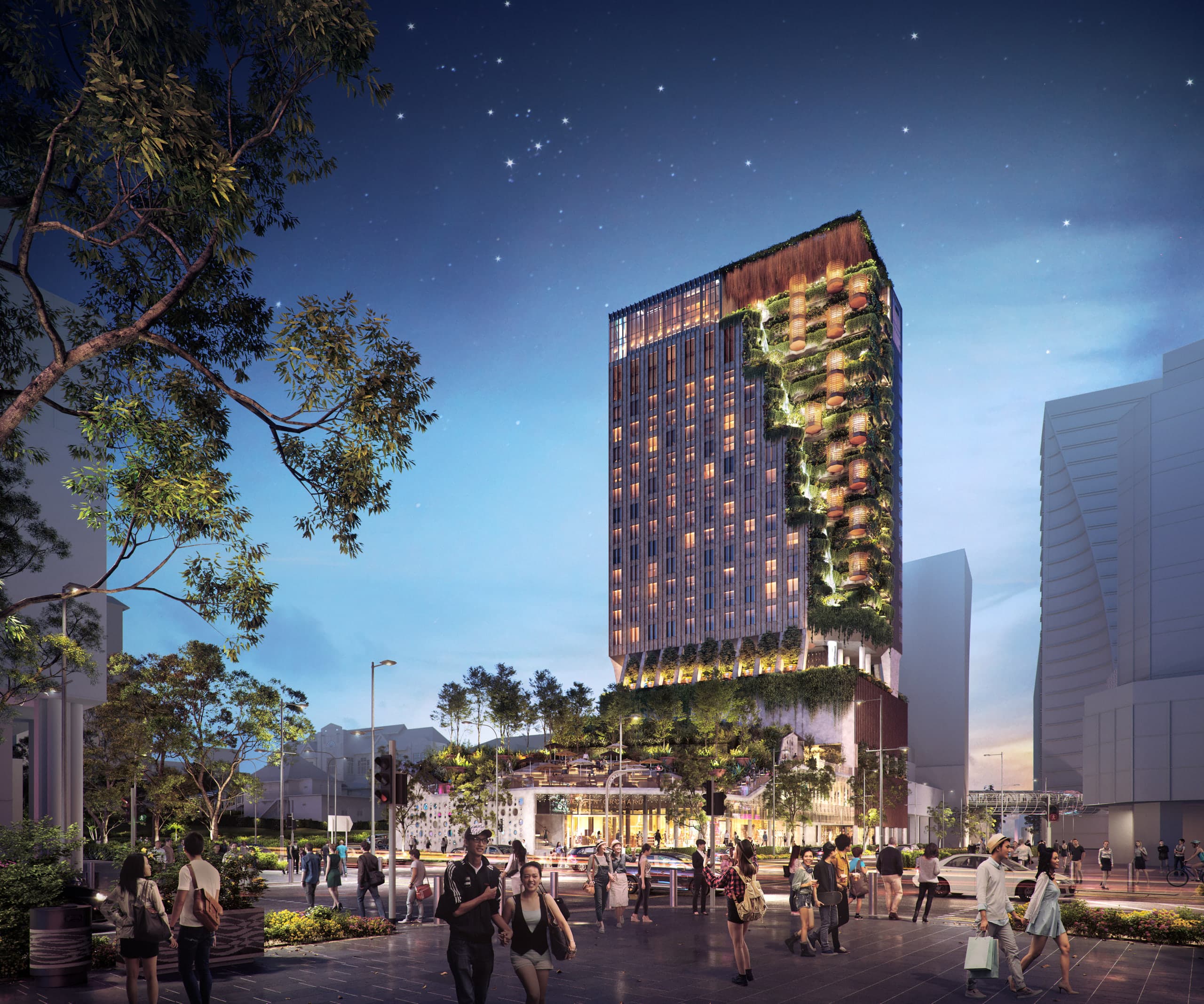
The Singapore EDITION opened in preview in November 2023 and held its official launch in May 2024 at 38 Cuscaden Road, at the western end of Orchard Road and a short walk from the UNESCO-listed Singapore Botanic Gardens. Designed by Safdie Architects with DP Architects, the property is Ian Schrager's first Southeast Asian EDITION and Marriott's bet that Singapore was ready for a hotel with more nightlife, more design edge, and less corporate formality than the traditional Orchard Road offering.
The hotel comprises 204 rooms and suites, a rooftop pool, spa, and a vertical stack of dining and bar concepts. FYSH, the signature restaurant, is led by Australian chef Josh Niland, whose approach to sustainable seafood has made him one of the most discussed chefs in the region. The Lobby Bar, Wonder Room, and lower-ground cocktail spaces function as a self-contained evening itinerary, which explains why the property's official launch party in May 2024 felt as much like a city event as a hotel opening.
Room rates at launch started from approximately SGD 680 per night before taxes and service. The hotel occupies a category of its own in Singapore: not the grand heritage formality of Raffles, not the business-tower efficiency of the Marina Bay cluster, but something closer to the EDITION ethos of taste-making design with consistent service.
Rooms favor natural materials and muted palettes, with balconies that overlook greenery rather than only glass towers. The spa, though compact by resort standards, follows the EDITION formula: social energy downstairs, calm recovery upstairs.
Raffles and the Heritage Counterpoint
No survey of Singapore hospitality is complete without acknowledging the counterweight to all this contemporary energy. Raffles Singapore, following its extensive 2019 restoration, remains the definitive heritage address: the Long Bar, the courtyard, the colonial grandeur that invented the Singapore Sling as a global cocktail.
The interesting tension in Singapore today is between properties like Raffles that sell history and properties like the EDITION that sell mood. The discerning traveler may want both: two nights at Raffles for the ritual, three nights at the EDITION for the city as it actually lives now.
Heritage is not static here. Raffles' restoration updated guest rooms and added contemporary dining while preserving the courtyard's scale and the Long Bar's mythology. Understanding both properties clarifies Singapore's hospitality spectrum: preservation as performance, and design as proposition.
Beyond Orchard: Tanjong Pagar and the Civic District

The Civic District and Tanjong Pagar offer a different register. Boutique properties in restored shophouses, hotels that front directly onto the preserved architecture of the colonial and Peranakan eras, and restaurants like Odette at the National Gallery (three MICHELIN stars in the Singapore MICHELIN Guide 2025) anchor a cultural corridor that rewards walking.
Hotel Indigo Singapore on Hong Kong Street and the Maxwell Reserve in Tanjong Pagar represent the boutique end of the spectrum: smaller room counts, stronger neighborhood identity, and lobbies that function as extensions of the surrounding street life rather than sealed sanctuaries.
Six Senses Maxwell, in a conserved building on Maxwell Road, pairs wellness programming with a location steps from Maxwell Food Centre, where hawker culture remains fiercely local. The contrast is deliberate: spa silence upstairs, chili and queue discipline downstairs.
Marina Bay and the Established Icons
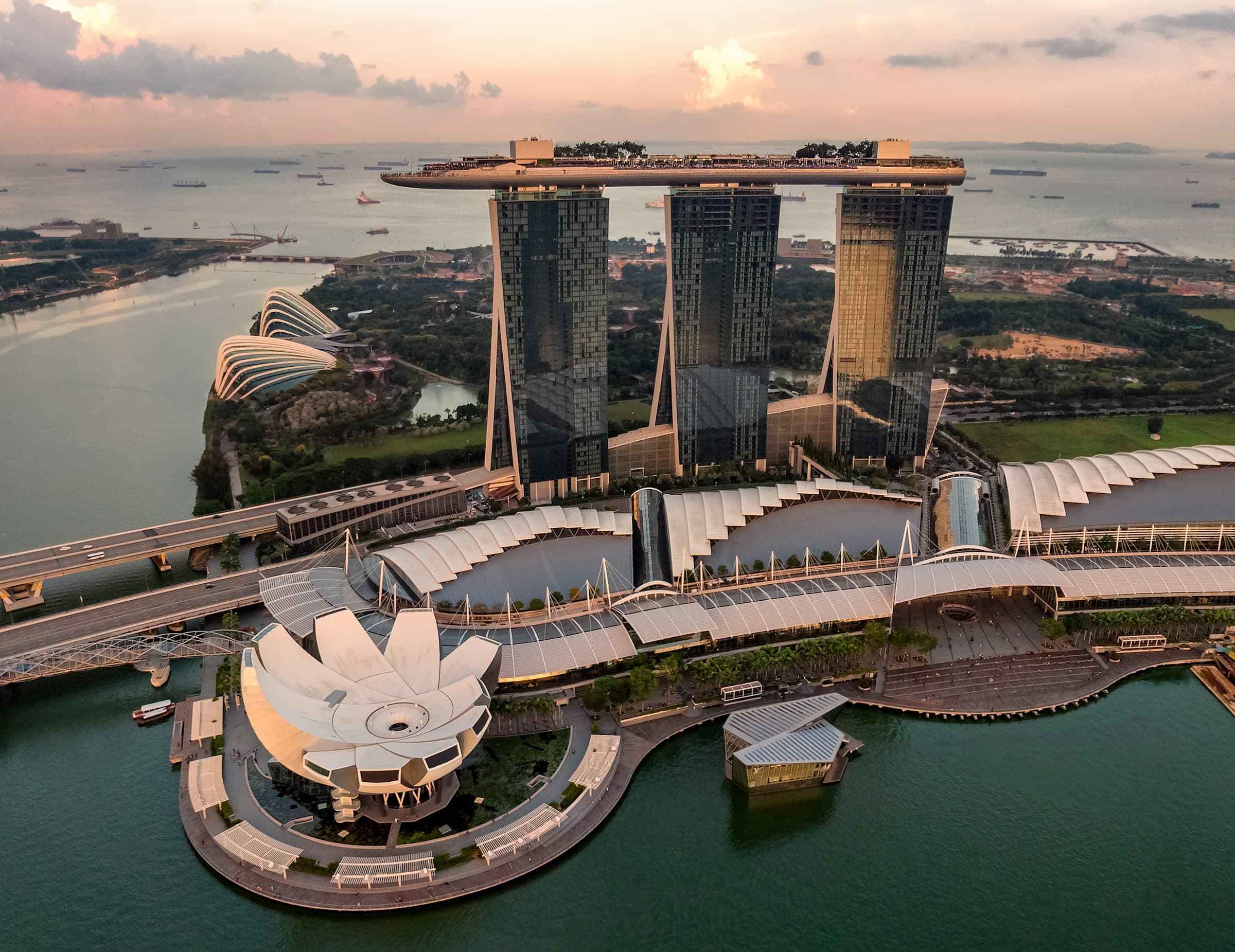
Marina Bay Sands and The Fullerton Bay Hotel remain essential references even for travelers seeking newer openings. Marina Bay Sands' SkyPark and theatre program still define Singapore spectacle. The Fullerton Bay offers harbour-front calm within walking distance of the Merlion and the Asian Civilisations Museum.
These properties are not the story of 2024 and 2025. They are the context. The new hotels assume you have seen the skyline from infinity edges. They offer something narrower and, for repeat visitors, more interesting: neighborhoods, kitchens, and lobbies that feel written for residents.
Dining Worth Building a Stay Around
Singapore's hotel dining no longer means buffet grandeur alone. FYSH at the EDITION, Odette at the National Gallery, and Labyrinth (one MICHELIN star, Singapore 2025) in the CBD demonstrate three distinct ambitions: seafood precision, French technique with Asian ingredients, and Singaporean identity expressed through tasting menus.
Hotel bars have matured similarly. The EDITION's cocktail program assumes you might stay for a second drink. Atlas, though independent, set the tone for grand bar architecture that hotel lobbies now emulate.
For diaspora travelers, hotel restaurants also function as neutral ground: family dinners without home cooking labor, business meetings with reliable service, and introductions to the city that do not require navigating hawker center etiquette on day one.
Design and the City-State's Identity
Singapore's hotel boom reflects a broader architectural ambition. Safdie's EDITION geometry, the restored shophouse facades of Tanjong Pagar, and the vertical gardens of Marina Bay Sands each propose a different relationship between building and tropical climate. The EDITION's white volumes, set back from Cuscaden Road, create a buffer of greenery between Orchard's commercial intensity and the Botanic Gardens' UNESCO landscape.
This matters for travelers who choose hotels as cultural statements. Staying at the EDITION signals interest in contemporary design and chef-driven dining. Staying at Raffles signals respect for colonial heritage and ritual. Staying in a shophouse boutique signals desire for neighborhood immersion. None of these choices is superior. Each reads a different chapter of the same city.
Peranakan culture, long underrepresented in the city's luxury hotel dining rooms, now appears on serious menus from Tanjong Pagar to Orchard. The EDITION's bar program and the Maxwell Reserve's neighborhood location reflect a broader shift: Singapore's hotels are no longer importing only European or Japanese templates. They are building from the city's Peranakan, Malay, and Cantonese foundations.
The stopover city is becoming a destination because the hotels have finally given travelers reasons to stay.
Capella Singapore on Sentosa and The Warehouse Hotel on Havelock Road represent additional registers: resort seclusion and adaptive reuse of a 1895 warehouse, respectively. Neither opened in 2024, but both clarify the city's range. The EDITION and Raffles headlines would mean less without this broader context.
Capella Singapore and the Sentosa Counterweight
Capella Singapore on Sentosa Island remains the resort answer for travelers who want Singapore without Orchard Road traffic. Foster + Partners and DP Architects integrated restored 1880s Tanah Merah military buildings with new wings across twelve hectares of rainforest grounds. The property opened in 2009 and remains the reference against which newer urban hotels define themselves as city-first.
A Practical Three-Night Frame
Night one: Check into the EDITION or a Civic District boutique. Walk Botanic Gardens at opening. Dinner at FYSH or book Odette if stars and budget align.
Night two: Tanjong Pagar shophouse lunch. National Gallery afternoon. EDITION Lobby Bar evening.
Night three: Heritage breakfast at a hawker centre (Maxwell or Lau Pa Sat), then depart or extend to Sentosa if resort calm is the point.
Confirm rates and restaurant availability directly. Singapore's hotel tax and service charge structure varies by booking channel. Peak weeks include Chinese New Year, Formula 1 in September, and major art fair dates when regional collectors pass through.
When to visit: Singapore is a year-round destination. Chinese New Year (January or February) and the Formula 1 weekend (September) compress availability and raise rates. Shoulder seasons in March and October offer good weather with lighter crowds.
Getting around: The MRT connects Orchard Road, Marina Bay, and Tanjong Pagar efficiently. Taxis and ride-hailing are inexpensive by global luxury-city standards. The EDITION sits near Orchard Boulevard MRT; Tanjong Pagar properties are walkable from their namesake station.
Reservations: Book FYSH and other signature restaurants well in advance. The EDITION's rooftop and bar spaces can be accessed by non-guests but expect queues on weekends.
Rates and taxes: Confirm whether quoted room rates include the 10 percent service charge and 9 percent GST. Singapore publishes rates both ways depending on the booking channel.
Length of stay: Three nights minimum allows one night for heritage (Raffles or Civic District), two for contemporary Orchard or Tanjong Pagar exploration, and at least one unscheduled evening for hawker or bar discovery.
Neighborhood rhythm: Orchard Road itself remains commercial. The EDITION's value is proximity to the Botanic Gardens and upper Orchard's quieter residential streets. Tanjong Pagar rewards evening walks through shophouse lanes after dinner at Odette or a hawker center lunch at Maxwell.
The city's hotel tax structure and service charges vary by booking channel. Confirm the total nightly cost before committing. Luxury properties rarely discount during Formula 1 week or Chinese New Year.
Singapore's hotel scene has matured from a question of "which five-star?" to a question of "which Singapore?" The answer depends on whether you want the city of heritage courtyards, the city of rooftop pools and chef-driven dining, or the city of shophouse neighborhoods that most visitors still drive past on the way to Orchard Road. The new hotels finally make that choice interesting.
Continue Reading
Read The Banquet Guide to Singapore, The Asian Grand Tour, and The Hotel Bar as Embassy.