For two decades, Vietnam’s luxury hotel brochure had a default costume: cream shutters, ceiling fans, teak that looked French, and a lobby painting of an áo dài by a river. Call it Indochine when you are selling it, or Indochic when you are diagnosing it. Either way, the room told guests they had arrived in a colonial postcard. That script still books. It is no longer the only script worth writing.
This month’s news from Spanish operator Palladium Hotel Group is a useful peg. The company is planting its Asia-Pacific headquarters in Ho Chi Minh City and bringing its Bless Collection brand into Vietnam with two projects: a redevelopment of L’Alya Ninh Van Bay, north of Nha Trang, as Bless L’Alya Ninh Van Bay for mid-2027, and a conversion of Hanoi’s century-old Hòa Bình Hotel into Bless Hotel Hanoi for 2028. CEO Jesús Sobrino told trade press that growth mattered, but so did a market shift toward “distinctiveness and experience over scale alone.” Distinctiveness, in this climate, increasingly means Vietnamese materials, Vietnamese architects, and sites that do the talking.
“Choosing where to begin in Asia was a deliberate decision, and Vietnam was clear. Its growth is remarkable, but what convinced us is the shift in what the market values: distinctiveness and experience over scale alone.”
Jesús Sobrino, CEO, Palladium Hotel Group, on the group’s Vietnam entry, August 2026
Bamboo, Granite, and the End of the Default Lobby
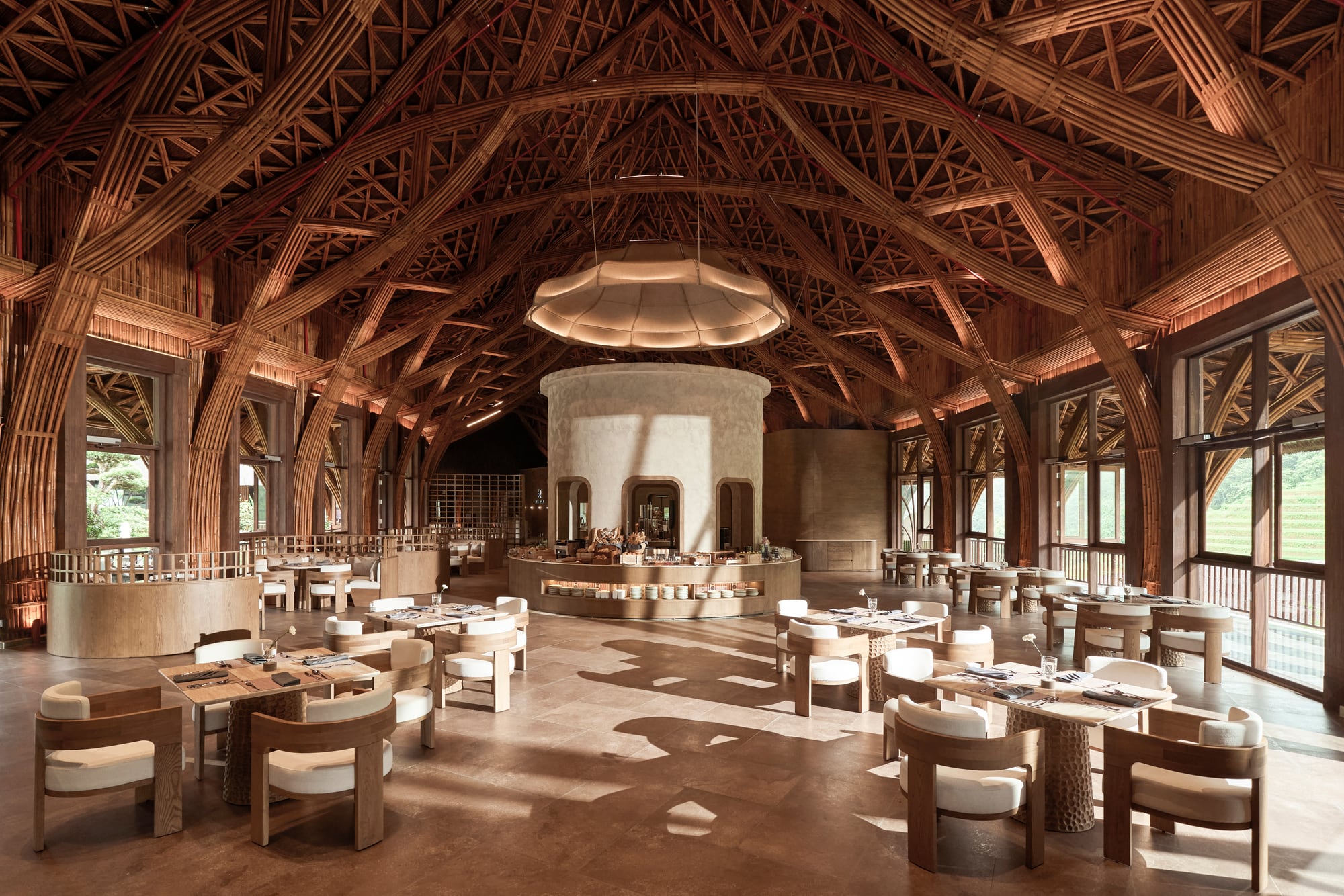
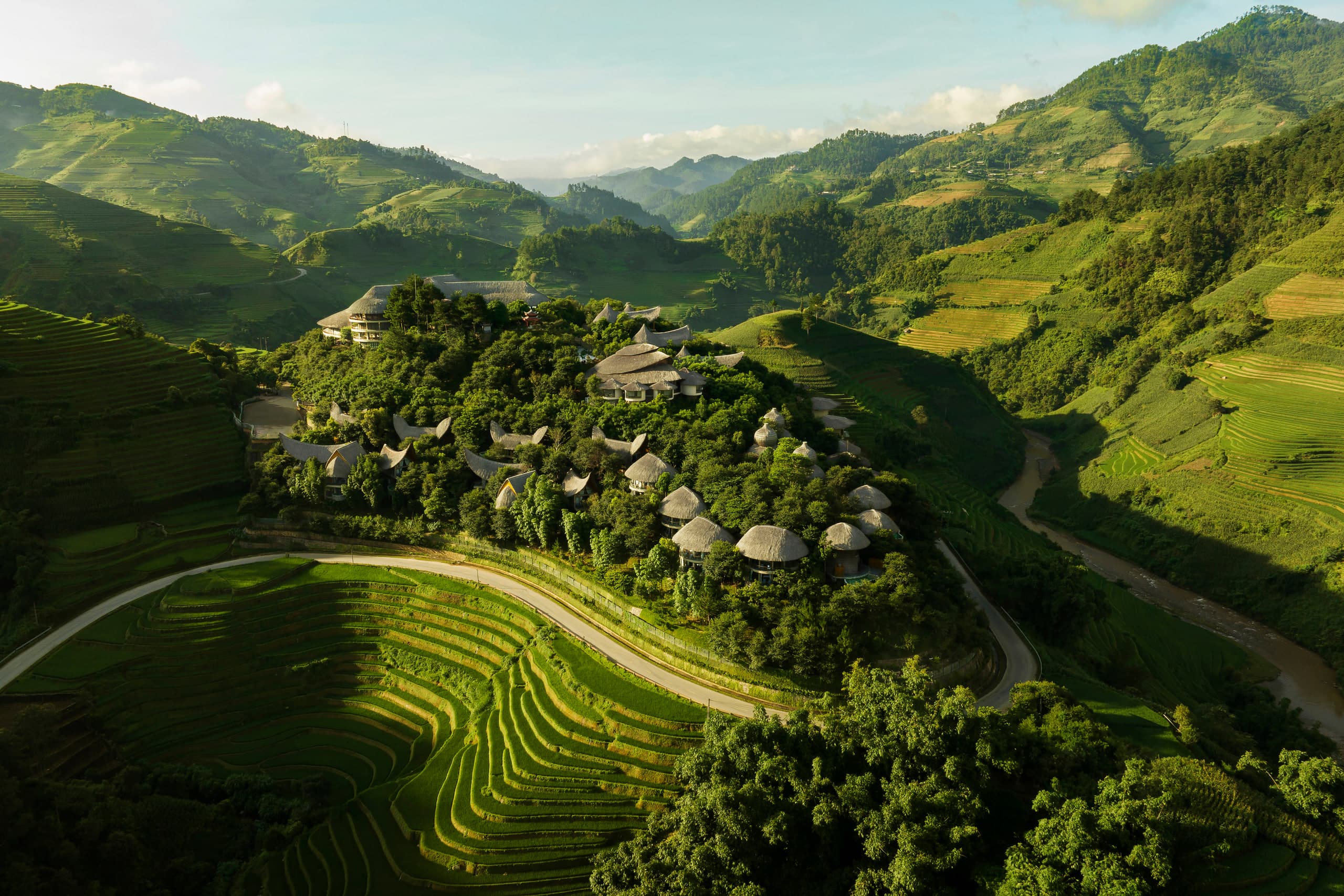
Start with what you can touch. Garrya Mu Cang Chai, Banyan Group’s first Garrya in Vietnam, opened in the rice-terrace highlands of Yen Bai as what the brand calls the world’s largest bamboo-structured resort: 110 rooms, suites, and villas across 6.5 hectares inside a national heritage landscape. Vietnamese studio LG Architects shaped the public rooms so bamboo reads as structure, not souvenir. Hmong brocade motifs sit in the design brief because the terraces themselves are a Hmong agricultural story, not a French one.
On the central coast, NHAAN Resort & Spa Hoi An, the first Tapestry Collection by Hilton address in Vietnam, began welcoming guests on 1 August 2026. Architect Vo Trong Nghia, whose practice has long treated tropical climate as a design brief rather than a problem to air-condition away, set 174 rooms into the nipa waterways of Vong Nhi, with interiors nodding to Kim Bong carpentry village. Local stone and timber do the work shutters used to do: tell you where you are.
L’Alya, the Palladium asset in waiting, already spoke that language before the Bless flag arrived. Its villas lean on coconut-leaf roofs, bamboo, wooden beams, and thick black granite floors from central Vietnam, a “semi-closed” pavilion grammar that faces jungle and bay rather than a colonnade. Expanding by 54 villas for the mid-2027 Bless relaunch will test whether the material story survives a brand refresh. It should. Guests who choose Ninh Van Bay are rarely shopping for a Hanoi Opera fantasy.
Landscape First, Then the Pipeline
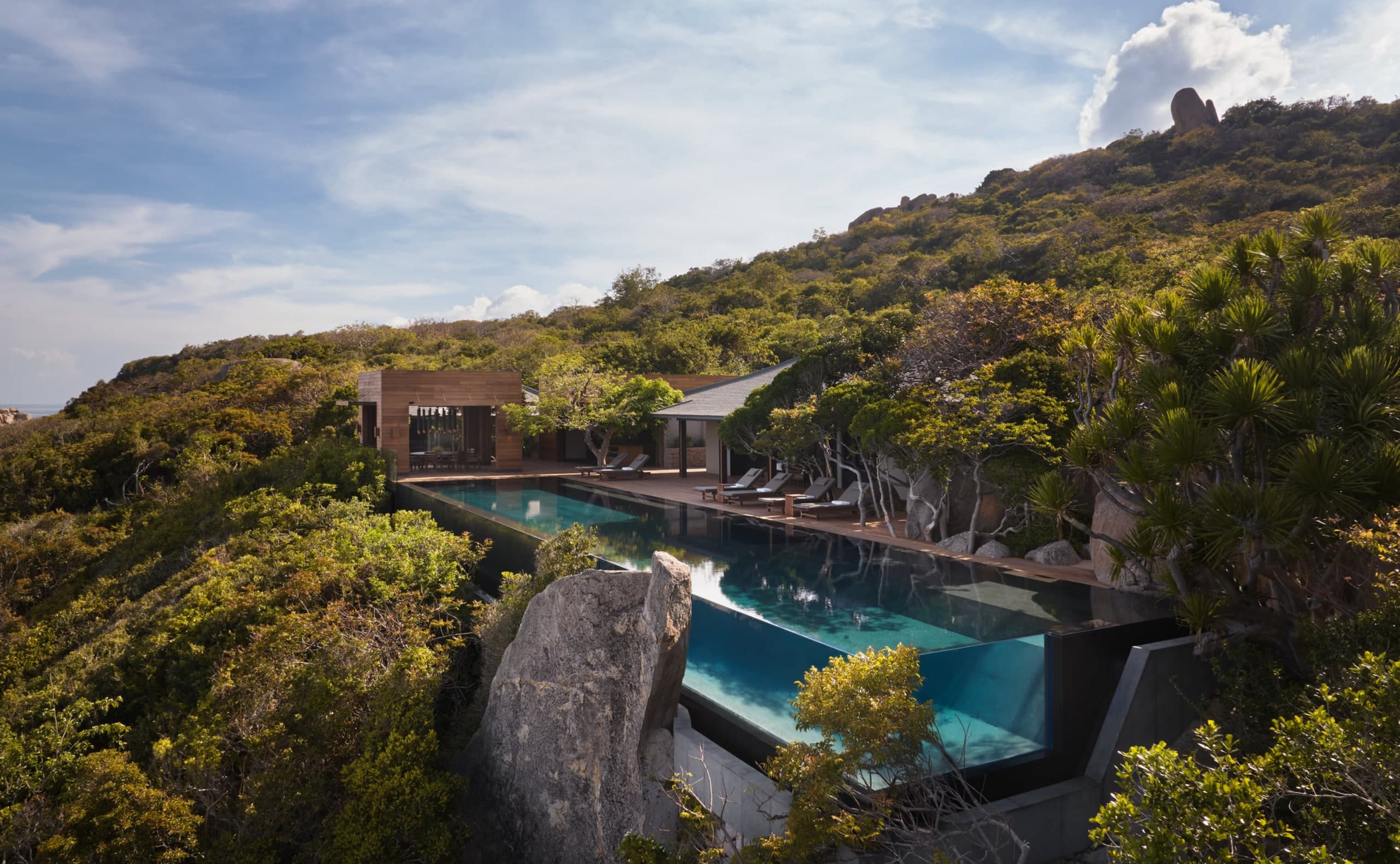
The sharper break with colonial nostalgia is geographical. Luxury is following rice terraces, biosphere coasts, and UNESCO water, not only the old French street grids. Garrya sits hours from Hanoi above Mu Cang Chai’s terraces. Three Nights at Amanoi remains the park-and-bay reference on the south-central coast, where Jean-Michel Gathy built pavilions for Núi Chúa, not for a boulevard. InterContinental Halong Bay Resort, opened in 2025 with architecture by WATG and interiors by P49Deesign, borrows wave silhouettes and bamboo basket-boat cues from the bay itself. Some of those cues will always risk brochure fluency. The useful test is whether the building still reads as Ha Long first.
The pipeline keeps feeding the same argument. Park Hyatt Phu Quoc is taking reservations from March 2027, Hyatt’s first resort in the country after Park Hyatt Saigon. Palladium’s Hanoi project will restore a real century-old shell while promising contemporary Vietnamese design rather than a theme-park Indochine floor. That distinction matters. Adaptive reuse of an existing Hanoi building is history you can date. A new lobby that cosplays 1930 is shopping.
Vietnam’s arrival numbers help explain the confidence: roughly 12.3 million international visitors in the first half of 2026, with a national target near 25 million for the year. Brands will keep arriving. The useful filter for Banquet readers is simpler. Ask whether the room is made of Vietnam, or merely decorated with it. Bamboo that holds up a roof, granite that cools a floor, and an architect who designed for the monsoon are better proof than another ceiling fan. For the table half of the trip, The New Banquet: Vietnam still maps Hanoi and Ho Chi Minh City kitchens that already made that same turn years ago. The hotels are catching up.