Fly into half a dozen Asian capitals and the five-star arrival starts to rhyme: valet canopy, stone atrium, chandelier you have already photographed in another city, a lounge with the same soft playlist. The room upstairs is excellent. The memory of the building is not.
The more interesting new hotels in Asia are answering a different question. How small can hospitality get while still delivering luxury service, and how much of the stay can be borrowed from a house that already knew how to welcome people? Merchant estates, machiya sequences, hanok compounds, and shophouse suites are doing that work now. The marble lobby has not disappeared. It has simply stopped being the only way to signal that you have arrived.
Adrian Zecha, the founder who taught a generation of travelers to read Aman silence, set the brief plainly when he launched the Azumi brand in December 2020: “At Azumi, our highest priority is to welcome people wholeheartedly so that they feel at home, no matter the location.” Start with the house. Let the brand follow.
Why the Grand Lobby Got Tired
Conventionally branded luxury spent two decades perfecting a language that travels well across ownership groups: atrium volume, art that can be insured, a lobby bar that photographs for the loyalty app. The problem is visual interchangeability. Once you have stood in enough of those atriums, the city outside becomes the only thing that changes.
Smaller Asian properties reverse the hierarchy. Architecture leads; the brand is secondary. You remember the tiled roof line, the lightwell, the private lift, the courtyard you crossed before anyone offered a welcome drink. For diaspora readers who already know Peninsula and Four Seasons lobbies by muscle memory, that specificity is the new status signal. The New Asian Luxury Buyer Doesn’t Need You to Recognize the Brand makes the wardrobe version of the same argument. Hotels are catching up.
Japan’s Merchant-House and Machiya Lesson
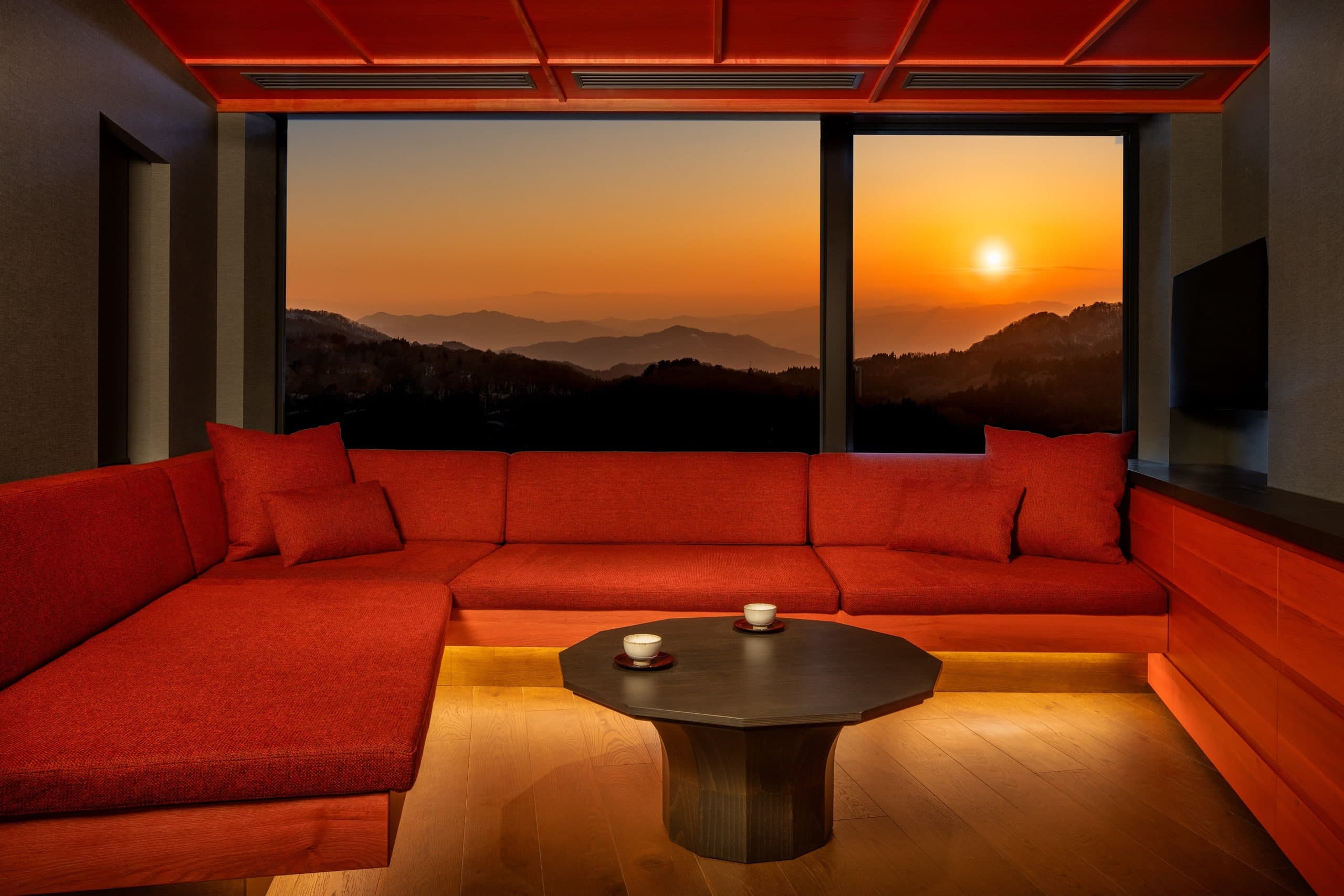
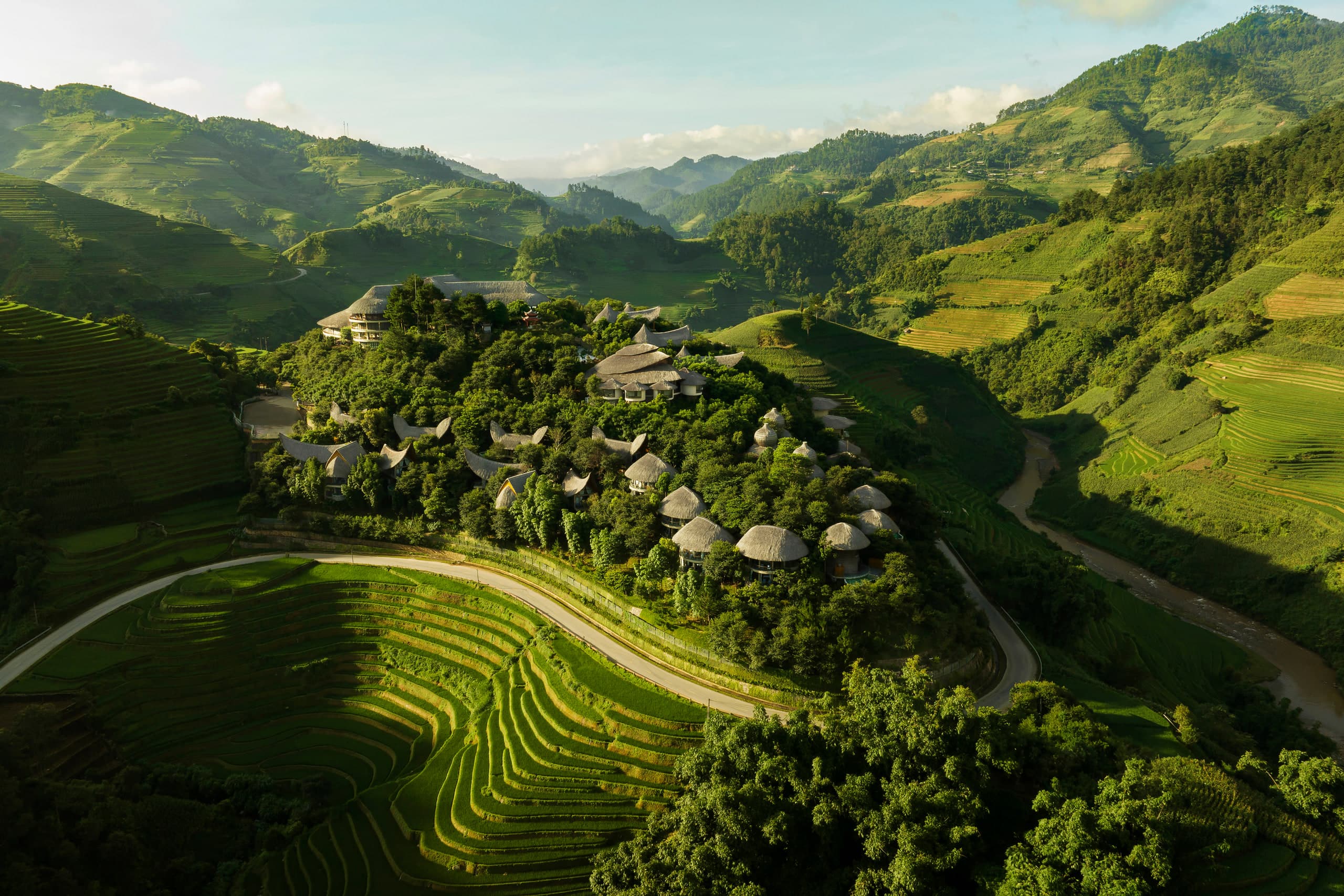
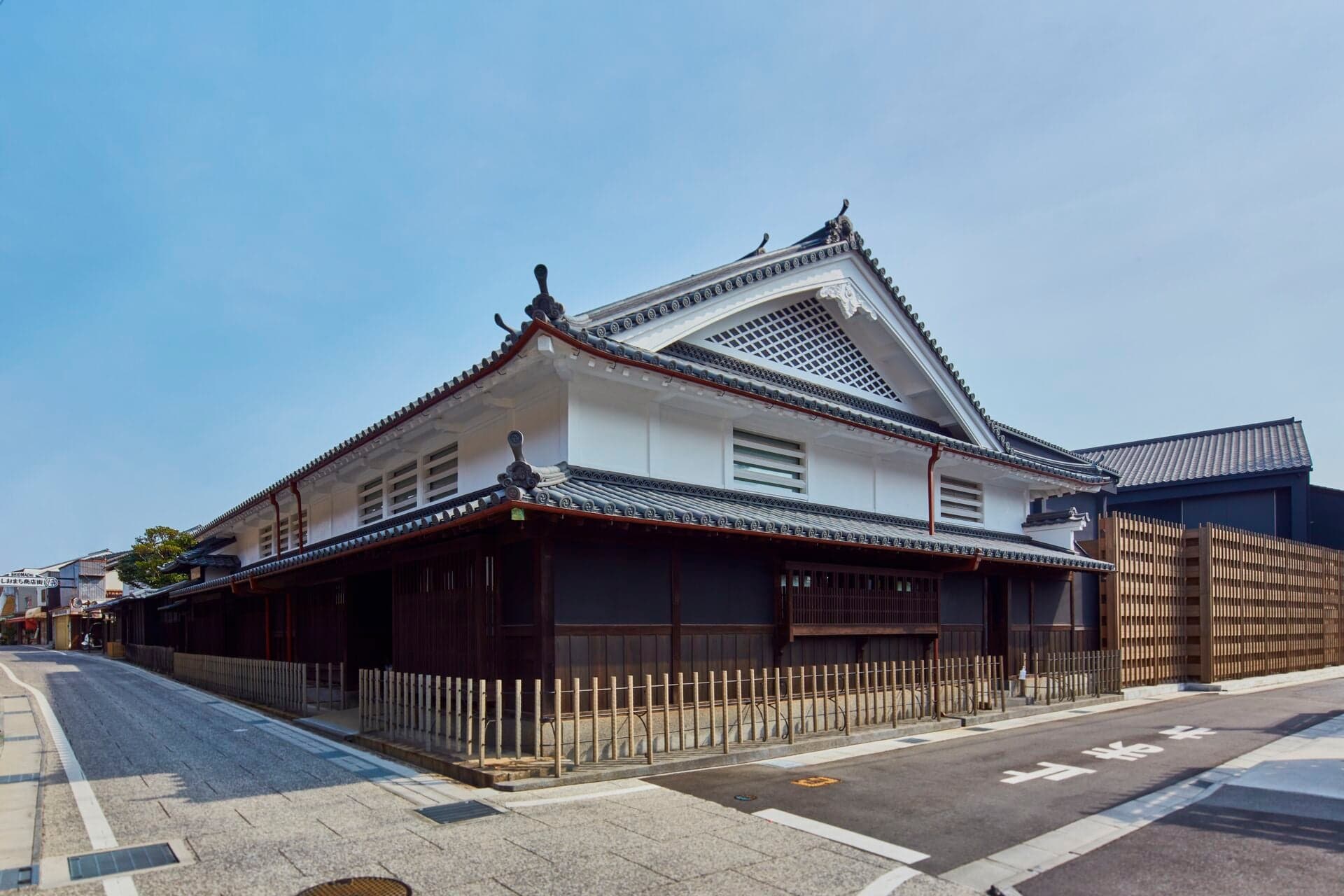
Stay at Azumi Setoda remains the clearest case study. On lemon island Ikuchijima, Adrian Zecha and Kyoto’s Naru Developments opened 22 rooms inside the restored 1876 Horiuchi salt-merchant estate on 1 March 2021. Architect Shiro Miura kept cedar, cypress, washi, and a courtyard the rooms wrap rather than a tower the rooms stack. Across the street, the yubune sento still serves locals. That shared bathhouse is the anti-lobby: infrastructure the village already used, not a spa wing invented for guests.
Kyoto has been running parallel experiments. SOWAKA, at 480 Kiyoi-cho beside Yasaka, rebuilt a Taisho-era ryotei (the old Minokou) into 23 rooms across a main house and annex, designed by Shigenori Uoya, with a grand opening in March 2019. You cross a stone threshold into courtyard quiet before you ever meet a reception desk theatrically sized for Instagram. Capella Kyoto Starts in the Alley takes the machiya idea further upscale: 89 keys from 50 square metres, opened 22 March 2026 in Miyagawa-cho, with Kengo Kuma and Brewin Design Office sequencing public to private space the way a townhouse once did. Capella is larger than Azumi. It still refuses the atrium as the story.
For the household version of that grammar, keep Kyoto’s Machiya Grammar for the Modern Household beside the hotel map. The same thresholds that make a residence feel Japanese are what these hotels are selling by the night.
Hanok Courtyards, Shophouse Rows, Private Lifts
Seoul’s answer is the hanok. Rakkojae Seoul, opened in 2003 in Bukchon after restoration by master carpenter Young Jin Chung, was among the first compounds to treat a traditional house as a hotel rather than a museum set. Newer Bukchon projects such as the Nostalgia houses (including Hillo Jae, renovated by design firm Kilyeon) rent entire detached hanok so the courtyard, not the corridor, organizes the stay. The Korean press has started asking the obvious question aloud: whether hanok lodging is multiplying faster than the carpentry and neighborhood life that justify it. That anxiety is useful to borrow. Book the house that still behaves like a house.
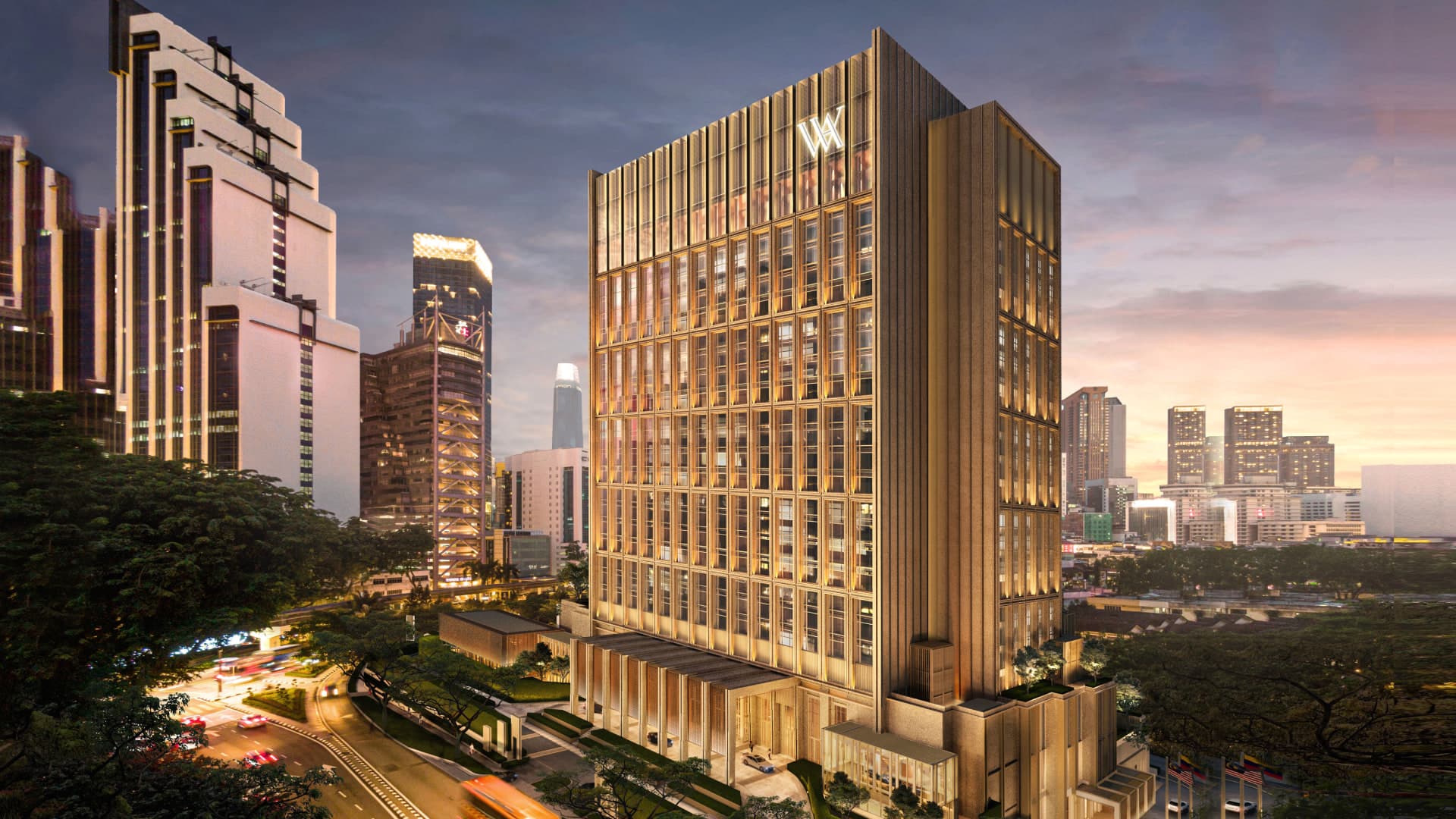
Bangkok’s riverside campus makes the scale argument in one plot. Capella Bangkok opened in October 2020 with 101 keys, all river-facing, beside a 299-key Four Seasons on the same Chao Phraya Estate. Capella is still a purpose-built luxury hotel, yet its intimacy is the product: butler ratios, villa inventory, no city-view leftovers. Further into the old town, shophouse hotels such as Sala Rattanakosin (about 17 rooms facing Wat Arun) prove the typology without needing a brand tower.
Hong Kong already practiced residential hospitality before the rest of Asia renamed it. The Jervois, at 89 Jervois Street in Sheung Wan, offers 49 Christian Liaigre suites with private lift lobbies and almost none of the public theatre of a five-star podium: no grand lobby bar, no restaurant floor show, just apartment logic above dried-seafood streets. The Putman, opened 2007 with Andrée Putman, wrote the same brief earlier. For packing that week, What Hong Kong Art Week Dressing Actually Looks Like still holds; these hotels simply remove the atrium as a costume change.
Singapore’s adaptive-reuse lane runs through spice warehouses and shophouses. The Warehouse Hotel compressed three late-nineteenth-century warehouses into 37 rooms on Robertson Quay, with original trusses kept in view. Duxton Reserve, Autograph Collection, occupies heritage trading houses in Tanjong Pagar conserved under Singapore’s Urban Redevelopment Authority, with an Anouska Hempel interiors layer on top. Neither needs a marble atrium to announce itself. The building already has a biography.
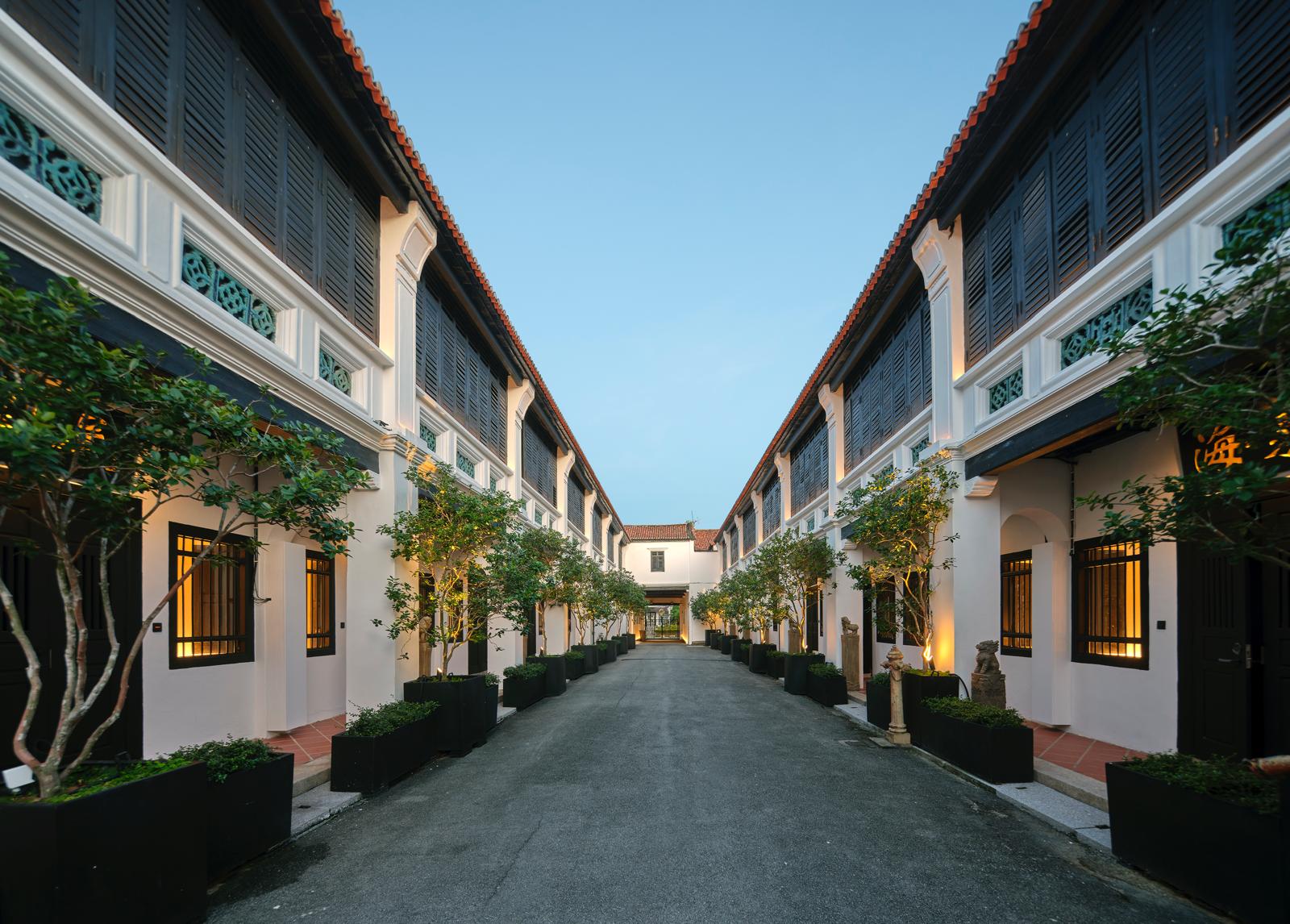
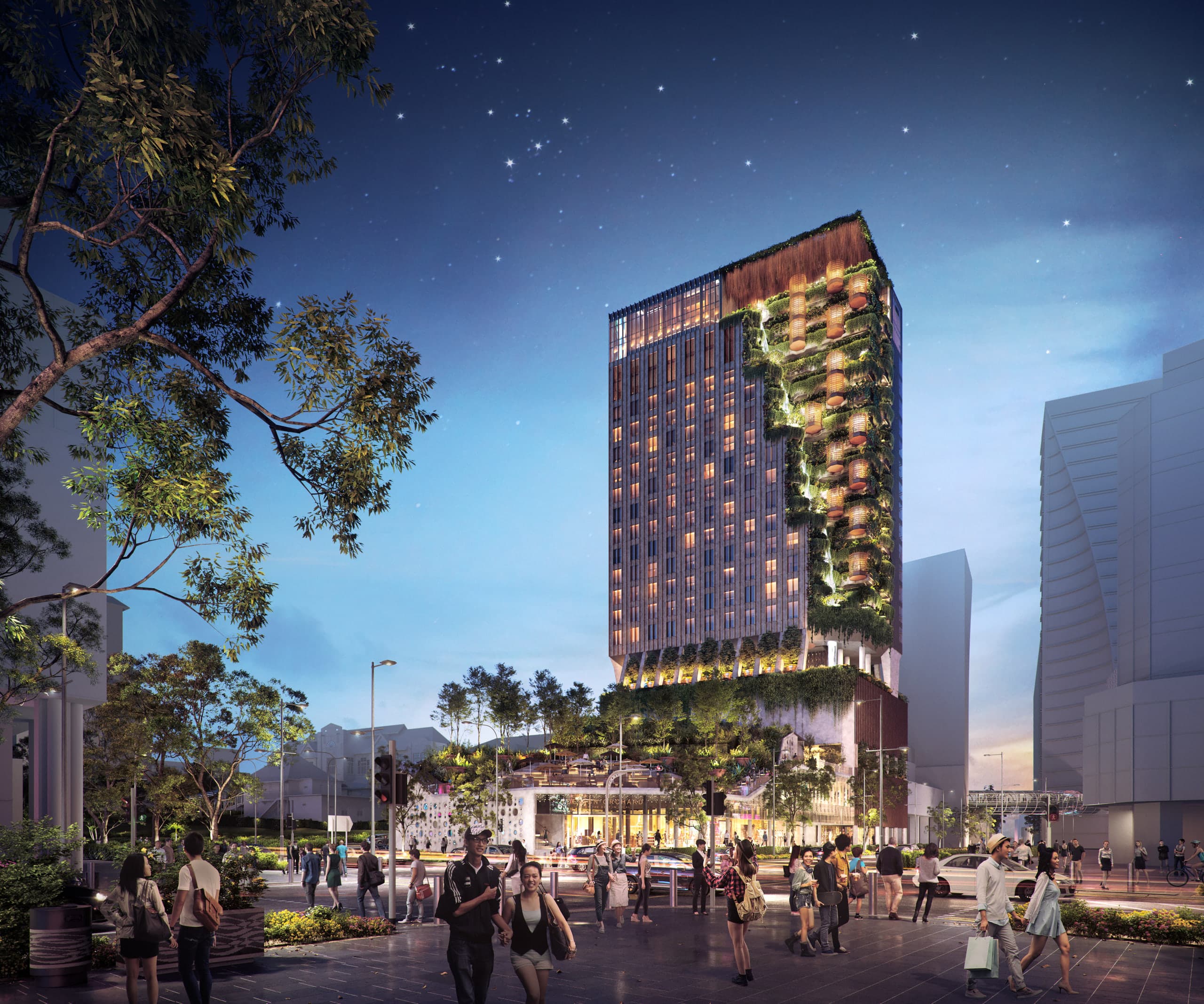
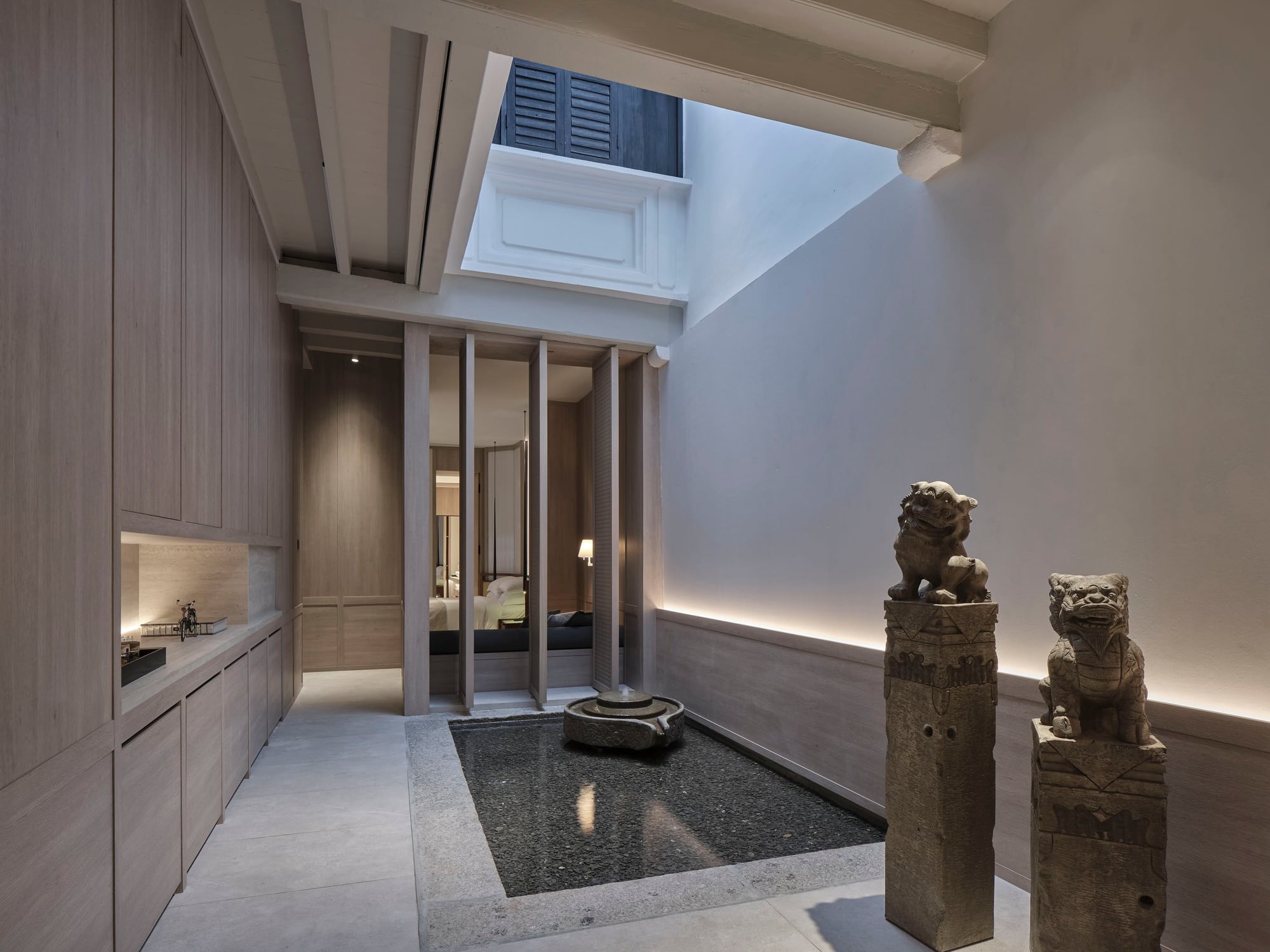
The newest Southeast Asian chapter opened on 15 January 2026. Soori Penang, by Singapore-based architect Soo K. Chan of SCDA, occupies 15 restored shophouses inside the Khoo Kongsi clan compound, where Chan spent his childhood. He reversed an earlier hotel’s corridor logic (the former Clans Hotel had subdivided the row into roughly 40 rooms) and returned each shophouse to a single suite with an airwell reflecting pool: a deliberate echo of the sunken courtyard that filled with rain when he was a boy, briefly becoming a pool for every child in the compound. After 5 p.m., when the temple compound closes to day visitors, guests inherit a private courtyard and temple backdrop. That is residential privilege you cannot fake with a lobby sculpture. Pair it with George Town Shophouse Grammar for the Diaspora Household if you are also thinking about buying, not only booking.
What Small Hotels Can Deliver
Global chains still win on loyalty currency, meeting space, and the comfort of knowing the breakfast buffet will look familiar in Jakarta and Seoul. What they struggle to standardize is memory of place. You remember the ferry to Setoda, the Bukchon alley, the Khoo Kongsi gate after closing time, and the stay becomes a chapter of the city rather than a sealed product delivered inside one.
Then there is service density without the performance. Fewer keys mean staff learn your coffee order without a loyalty algorithm prompting them. Capella’s butler ratios and Azumi’s island house staff are different expressions of the same arithmetic, and neither needs a lobby to prove it is happening.
The third advantage is the hardest to buy. A lightwell that once drained monsoon rain, a machiya progression from street to garden, a private lift that replaces a public lobby: these are spatial ideas the building already had, not set decoration bolted onto a podium floor plate. The New Generation of Luxury Ryokans tracks how Japan updated inn culture without abandoning the grammar. The same test now applies from Penang to Wan Chai.
The Set-Dressing Risk
Adaptive reuse can also become expensive costume. George Town’s boutique-hotel boom has already drawn academic attention to heritage commodification: opium beds, antique piles, and selectively romantic interiors that sell nostalgia while thinning the social history of the building.
“It’s really about capturing the essence of a shophouse space through cultural references without over-romanticising other aspects.”
Soo K. Chan, architect of Soori Penang, speaking to Robb Report Malaysia
Chan’s own brief, deliberately sparing of Peranakan stage props, is one answer. The other answer is yours as a guest. Ask whether locals still use the street, the bathhouse, the temple courtyard. Ask whether the restoration kept the plan of a house or only the Instagrammable facade.
A vernacular hotel earns its rate when the building still teaches you how to move: shoes at the threshold, voice down in the courtyard, dinner timed to the house rather than to a 24-hour room-service menu. When the stay could be swapped for any “heritage boutique” template from Lisbon to Luang Prabang, you have paid for set dressing.
The practical filter is simple. Skip the marble lobby when the alternative has a biography you can walk: Azumi’s merchant roofs, Capella Kyoto’s alley sequence, Rakkojae’s Bukchon compound, The Jervois’s private lifts, Soori’s shophouse airwells. Book the house that still knows it is a house. Confirm rates and seasonal closures directly; small inventories move, and the best courtyards do not apologize for being hard to get.