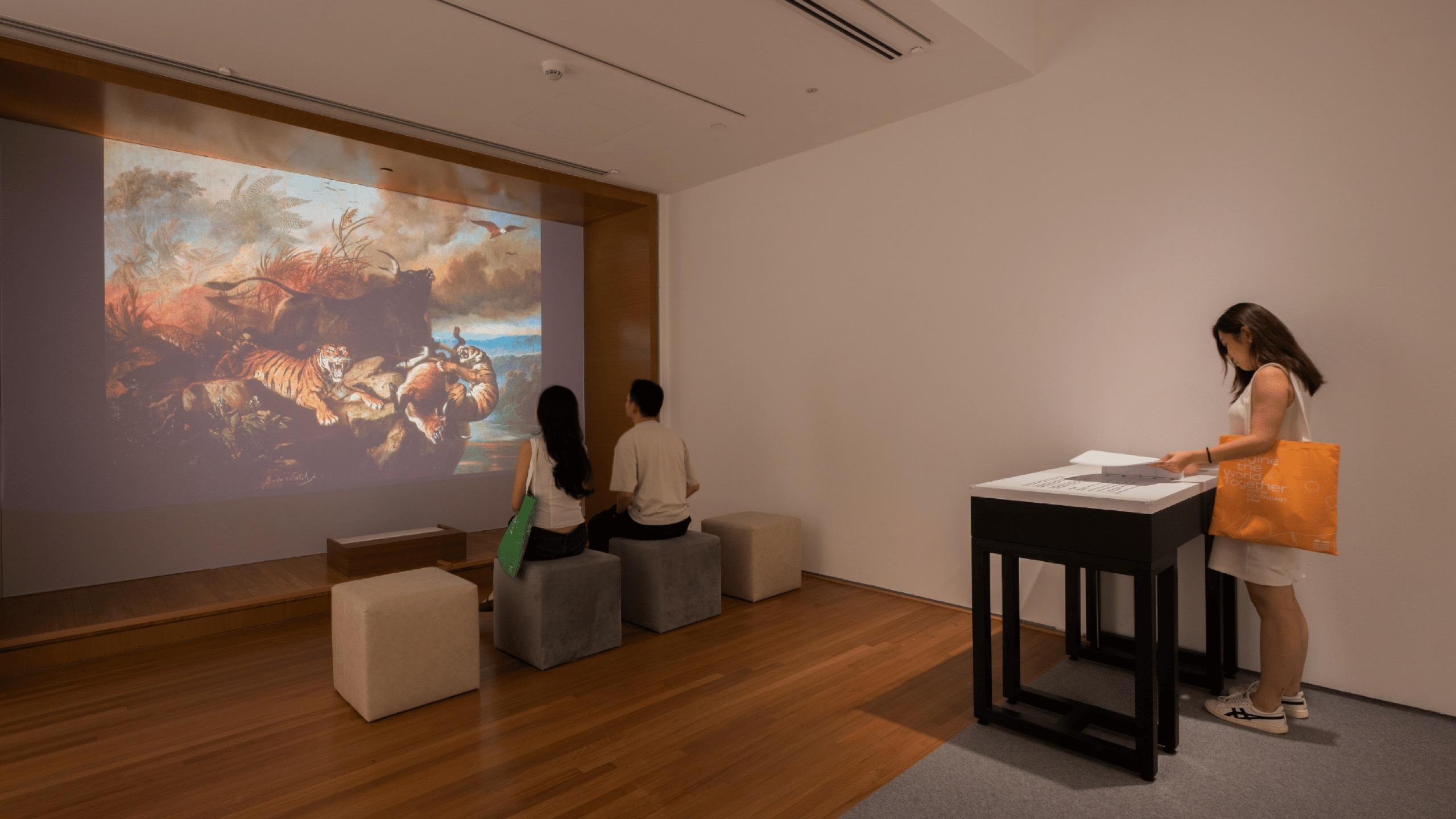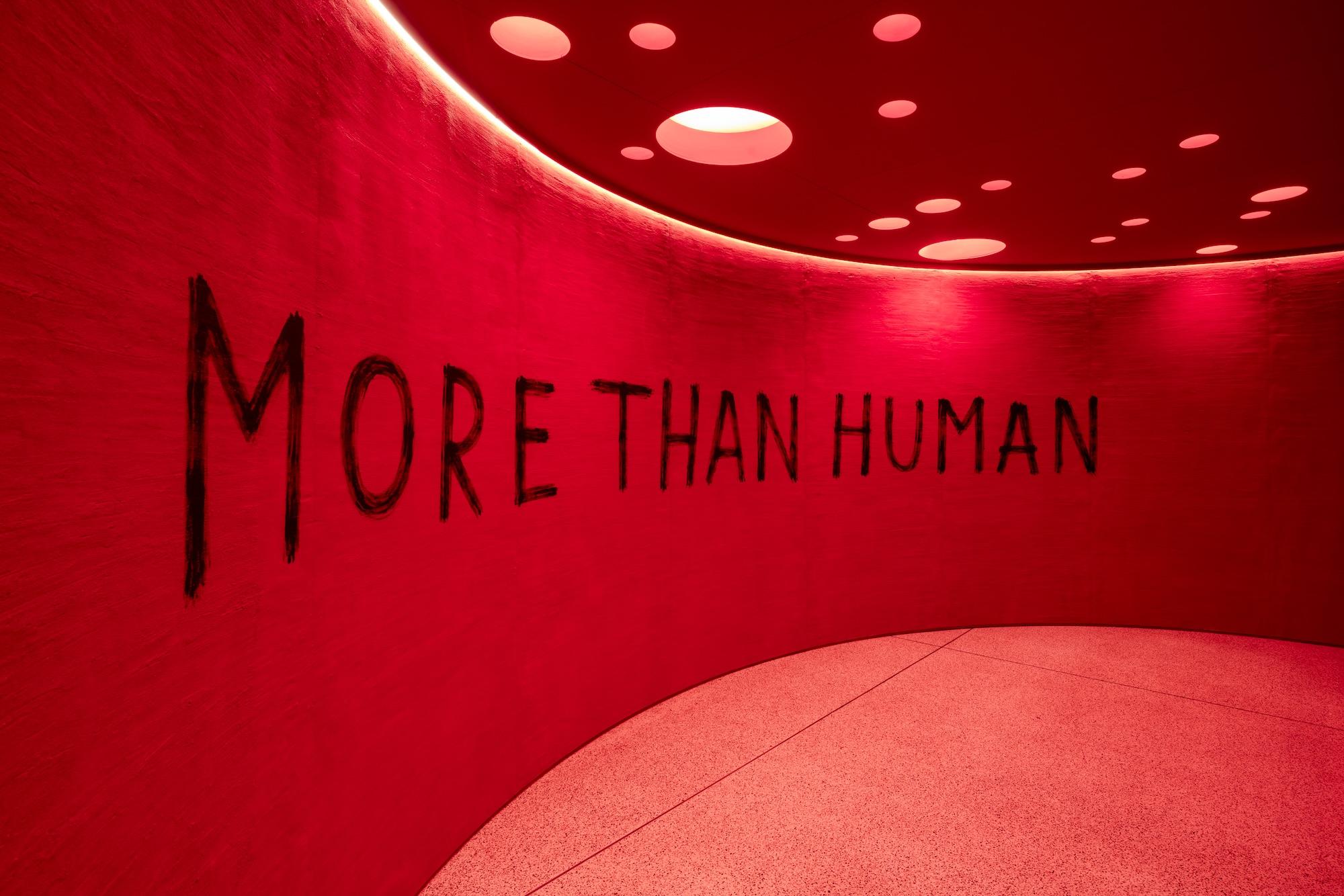
When More than Human opened at London’s Design Museum in July 2025, the question was blunt: what if design served animals, plants, and ecosystems as seriously as it serves people? Justin McGuirk and Rebecca Lewin built the hang with Future Observatory, the museum’s green-transition research programme. Visitors moved through a clay landscape by MSOMA Architects, past Alexandra Daisy Ginsberg’s pollinator tapestry, Julia Lohmann’s seaweed forms, and more than 140 other works. The Kensington run ended in early October. On 28 November the same touring show opens at ArtScience Museum in Singapore, where it stays through 16 May 2027.
ArtScience co-curated the Asia edition with the Design Museum, with support from DesignSingapore Council, and added or adapted twenty-five works for the region rather than shipping the London hang intact. Angelita Teo, vice president of attractions at Marina Bay Sands, said the museum needed its own perspective, bringing Singapore and Southeast Asian knowledge into how people here live with nature. Three of those moves change the visit more than any headline wetland or beaver sculpture: the rooms you walk through, a local marine lab on the wall, and fish traps from Singapore’s own collection.
Lekker’s route instead of clay hills
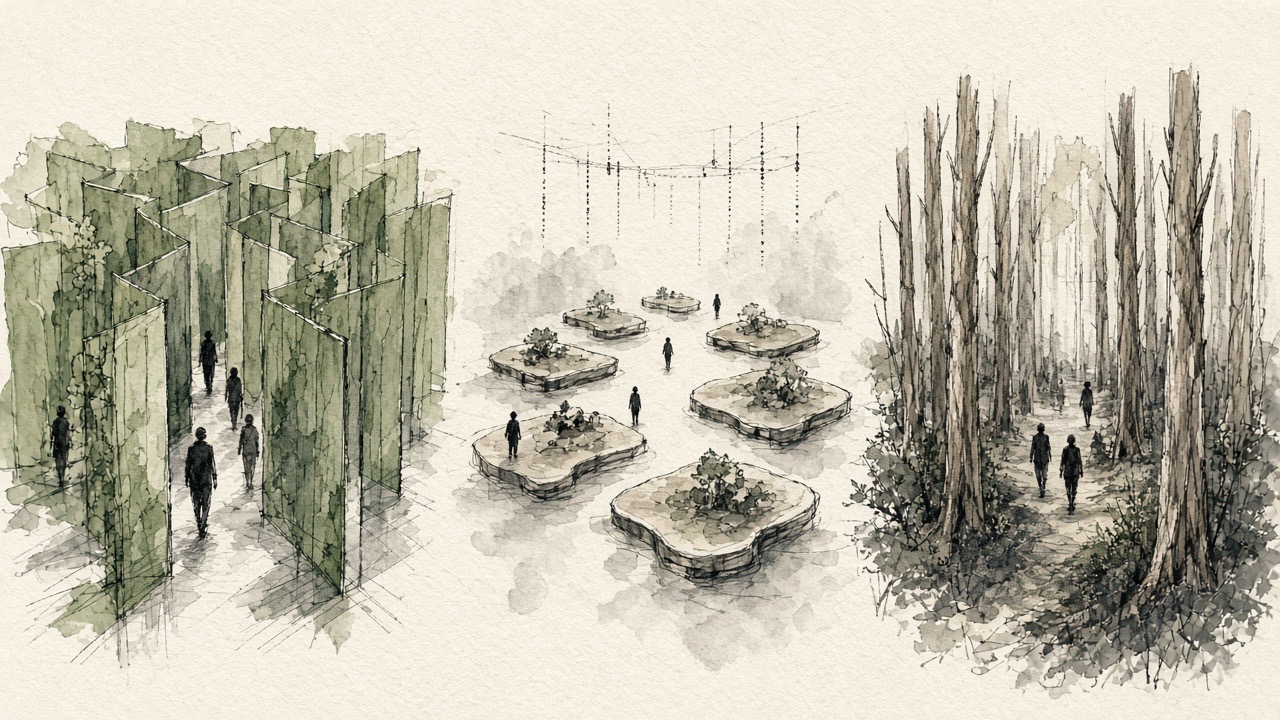
In London, MSOMA’s clay mounds asked you to climb a soft topography inside a white gallery. In Singapore, Lekker Architects has shaped three thematic sections after hedge mazes, archipelagos, and woodland, and the museum presents those rooms as different ways to meet the same more-than-human brief. You lose the corridor in the maze, then find yourself on separated platforms that still belong to one plan, then walk between trunks. For a harbour city that already thinks in gardens and island chains, that sequence tracks daily geography better than a clay rise in Kensington.
The Singapore hang still carries London headliners such as Jakob Kudsk Steensen’s Berl-Berl digital wetland and Aki Inomata’s beaver-carved wood. Lekker’s rooms land first, though, before the regional loans start to do their work.
Fish houses from a Singapore seawall
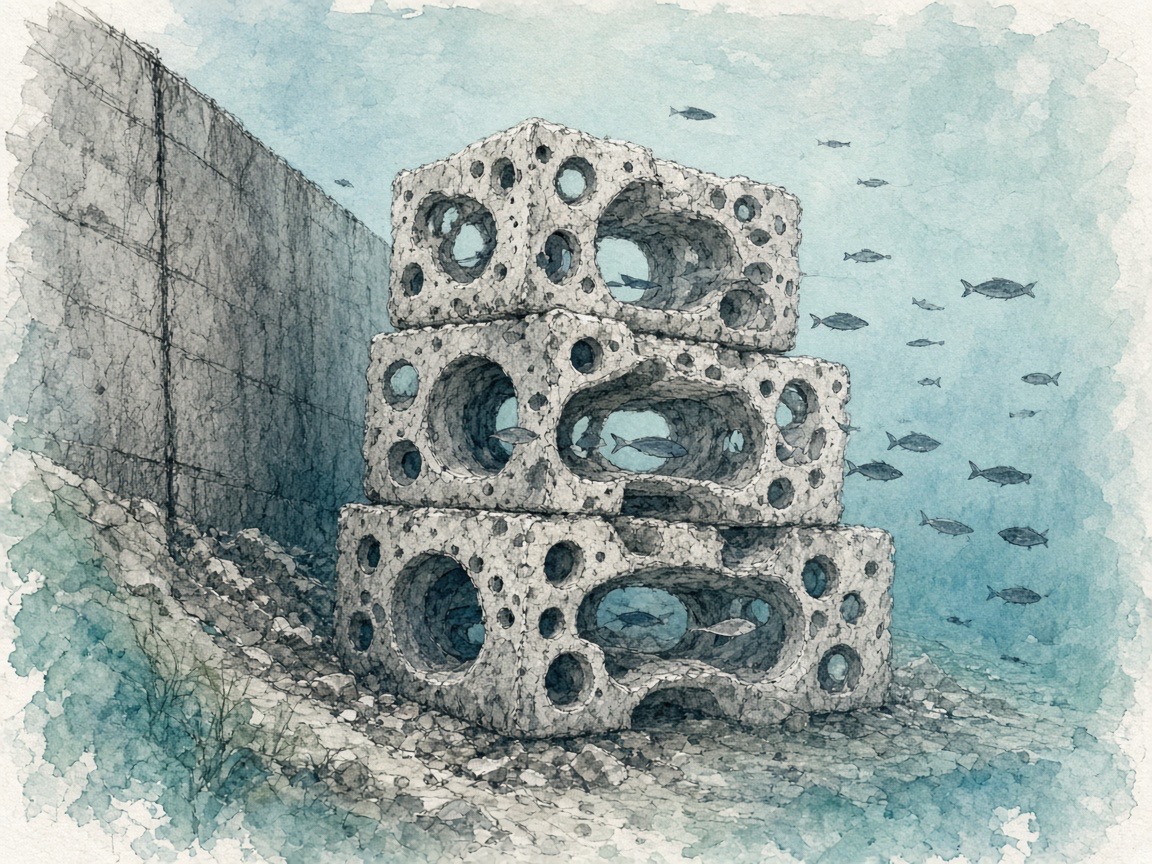
The National University of Singapore’s Experimental Marine Ecology Laboratory looks like an odd credit beside a contemporary art label until you see what the lab actually built. Under Associate Professor Peter Todd, researchers poured concrete Fish Houses and tested them at Pulau Hantu to give fish shelter along sea walls that replaced reefs and mangroves. About seventy percent of Singapore’s coastline is hard infrastructure. A 2024 paper in the Journal of Applied Ecology found that more complex, freestyle stacks drew greater fish diversity than simple cubes. Inside More than Human, that research gives the exhibition’s thesis a southern-island address.
London already showed living seawall panels from other practices. Singapore puts a local lab on the wall, so the concrete edge of this island sits inside the argument rather than arriving as atmosphere.
Traps from the Asian Civilisations Museum
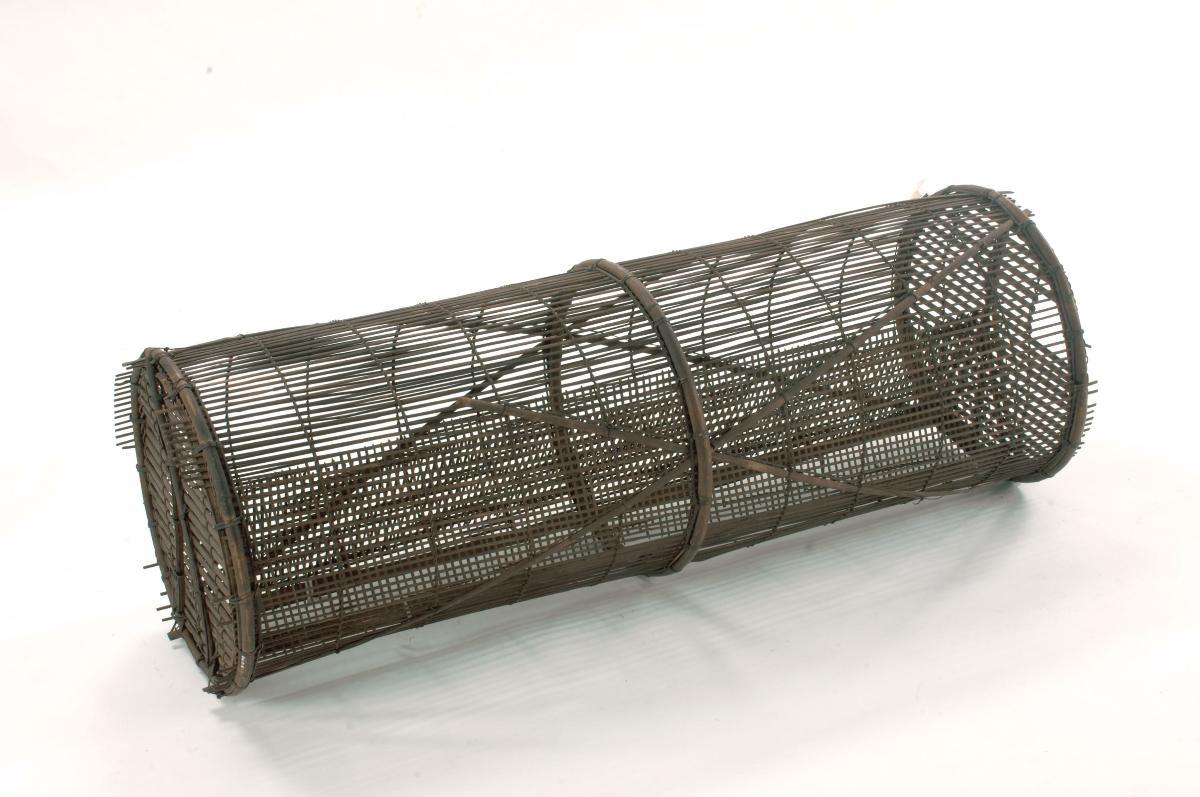
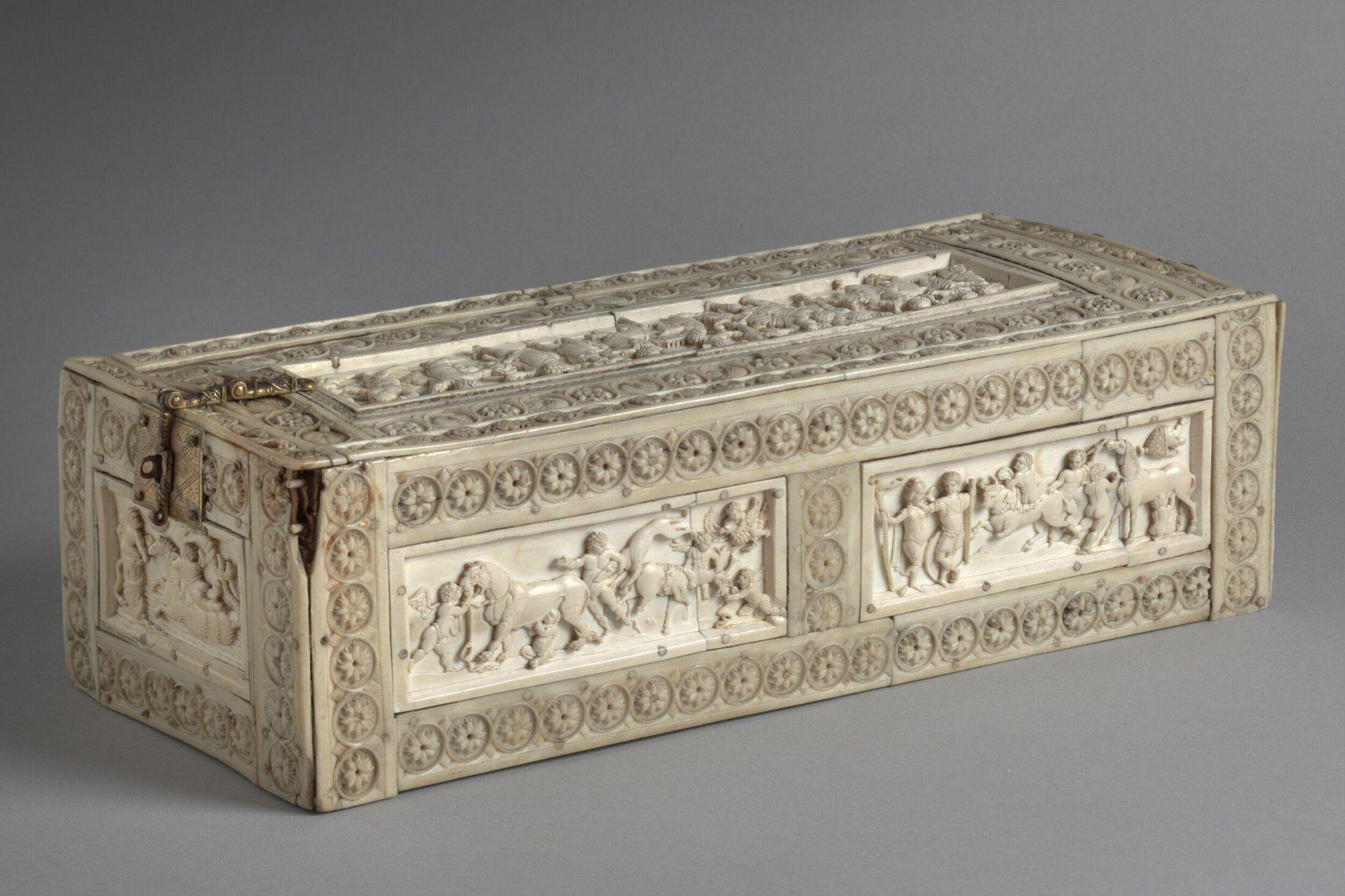
London already made the case that traditional fishing gear can count as more-than-human design. Feifei Zhou’s commission studied the sero, a porous fish fence used in Kupang Bay, Timor. Singapore can show the objects themselves. Loans from the Asian Civilisations Museum include Southeast Asian bamboo-and-rattan traps of the kind left along riverbanks, built with a funnel that fish can enter only one way. An ACM trap on a plinth is already a tool shaped around animal behaviour, drawn from a collection that has held those crafts for years.
NParks’ Bee Trail contribution does related work for pollinators, tying HortPark’s bee hotels to the Ginsberg tapestry that travels with the show. The traps remain the clearest regional object on the floor: heritage design London could describe, and Singapore can borrow from next door.
Marina Bay logistics
More than Human: Making With the Living World opens 28 November 2026 in the Basement 2 galleries at ArtScience Museum, 6 Bayfront Avenue, and runs through 16 May 2027. Hours are daily 9:00 to 18:00, with last entry at 17:00. Resident adult tickets start from about S$19.50; tourist adults from about S$22. Confirm prices on marinabaysands.com. More than Human at ArtScience Museum is on the Banquet calendar; The Banquet Guide to Singapore covers the bay around it.
Give Lekker’s three rooms the first hour, then the Fish Houses and the ACM traps, then the London commissions you already know from photographs. The Design Museum’s question survives the flight; Marina Bay answers it with a local route, a local lab, and traps already in the city’s own collection.