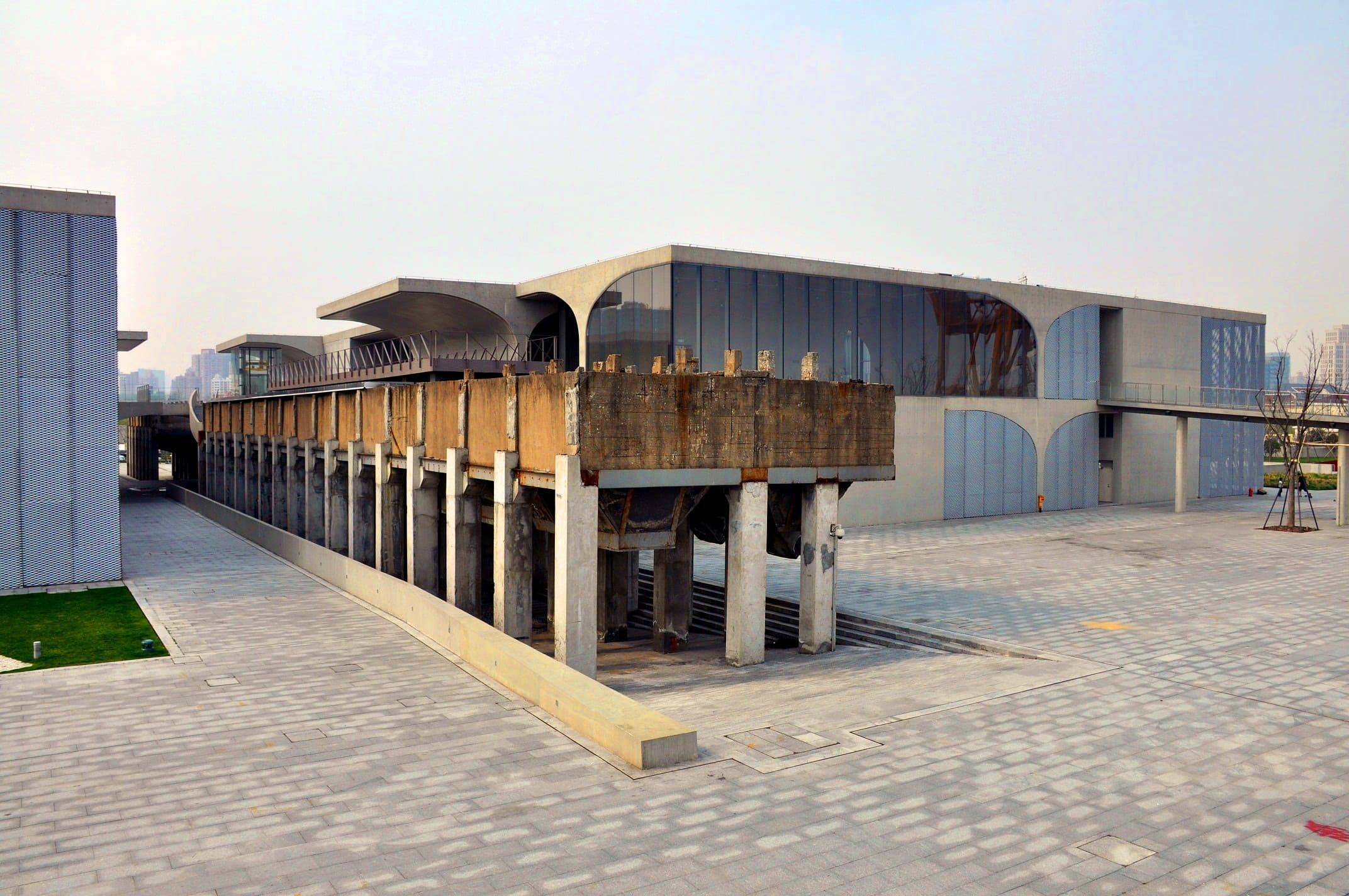
Long Museum West Bund, 3398 Longteng Avenue, Shanghai: the preserved coal hopper under Atelier Deshaus’s concrete vaults, the private museum Liu Yiqian and Wang Wei opened to the river in 2014. Photograph by Fayhoo.
Start on Longteng Avenue.
For Banquet readers, this Ambassadors stop in Shanghai tracks collectors whose holdings leave a room you can diary: a private museum on the West Bund, a Qingpu foundation floor after a Hongqiao hop, then gift labels and appointment rooms elsewhere as export proof. Fair week still matters. The canon holds when the work stays public after the booth closes.
“Collections are personal, but civilization belongs to everyone.”
Liu Yiqian, founding collector of the Long Museum, speaking at the opening of Panorama: Timeless Imprints of Civilization, Long Museum West Bund, March 2025, as reported by shanghai.gov.cn
Private Museums That Function as Civic Rooms
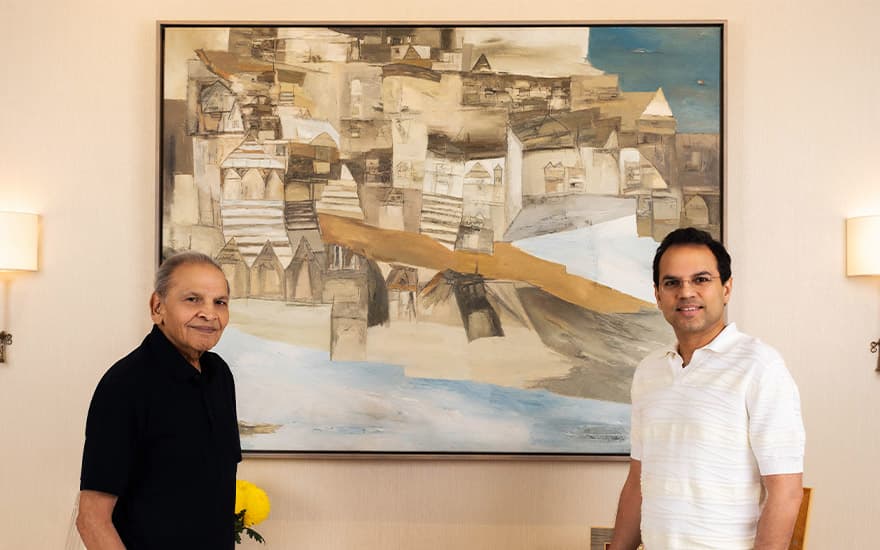
Liu Yiqian and Wang Wei built the Long Museum into a working institution rather than a vanity annex. Long Museum Pudong opened 18 December 2012; Long Museum West Bund followed on 28 March 2014 at 3398 Longteng Avenue, Xuhui, in an Atelier Deshaus conversion that kept the coal hopper as civic furniture. A Chongqing branch extends the same brief inland.
Wang Wei curates as director; Liu still speaks for the collection’s public claim. The 2026 West Bund hang has moved through collection surveys such as Flow earlier in the year into named solo shows including Wang Chuan: Four Decades of Abstraction (30 May through 30 August 2026) and Wallace Chan: Vessels of Other Worlds (18 July through 25 October 2026). Confirm what is on the floor on thelongmuseum.org before you taxi from Middle Longhua Road.
Summer hours at West Bund typically run Tuesday through Thursday 10:00 to 18:00 and Friday through Sunday 10:00 to 21:00, with last entry an hour before closing; winter closes earlier. Closed Mondays. Free entry on the first Tuesday of each month excluding special exhibitions and holidays.
Budi Tek, the Chinese-Indonesian collector who opened Yuz Museum in a West Bund hangar in May 2014, chased monumental installations most museums struggle to hang. After his death in March 2022, his daughter Justine Alexandria Tek steered the foundation through a move to Panlong Tiandi in Qingpu, with a grand opening on 17 May 2023 at No. 8, Lane 123, Panding Road. Typical hours run Tuesday through Sunday 11:00 to 19:00. Partnerships with LACMA and Qatar Museums, plus gifts into Los Angeles, keep the collection travelling even when the Shanghai floor changes. Check yuzmshanghai.org for what is actually on view before you commit the Hongqiao hop.
The Ambassadors point is local: two Shanghai addresses where private collecting became civic opening hours.
Gift Labels and Appointment Rooms Elsewhere
The hammer is optional. The label is often the authorship.
Uli Sigg’s gift of roughly 1,510 works to M+ in 2012 still anchors the Sigg Galleries on Level 2 in West Kowloon. The long-run hang M+ Sigg Collection: Inner Worlds opened 27 June 2025. Hong Kong collectors have kept feeding that building: William and Lavina Lim’s Living Collection gift of nearly ninety works; Hallam Chow’s twenty-five works since 2016, including a seventeen-work gift. Walk Level 2 with an eye for credit lines. For the full architecture of the Sigg gift, read How the Sigg Collection Built M+.
Adrian Cheng’s visible Hong Kong floor remains K11 MUSEA at Victoria Dockside, 18 Salisbury Road, open roughly 10:00 to 22:00 daily: cultural-retail as footfall pedagogy beside West Kowloon. Useful if March already has you in the city for Art Basel Hong Kong. Not a substitute for Longteng Avenue.
Singapore’s collector class builds smaller rooms that behave like institutions. Linda Neo and Albert Lim’s Primz Gallery at 40 Penjuru Lane, Block 1 #01-06 runs by appointment (info@primzgallery.com), with Ink and Paper: 10 Years On into 2026. Yeap Lam Yang’s Project Art Hunter at 37 Tanjong Pagar Distripark, #04-01A draws on decades of collecting. Pair either stop with a Civic District morning at the National Gallery Singapore when you want the institutional spine after the private room. Neighbouring parallel. Not a second city chip.
How to Follow From the West Bund
Start at Long Museum West Bund. 3398 Longteng Avenue, Xuhui; Middle Longhua Road Station on Metro Lines 7 or 12, then a walk east along the riverfront. Book special exhibitions ahead; Mondays are closed.
Add Yuz only if Qingpu fits the day. No. 8, Lane 123, Panding Road, Panlong Tiandi: confirm open shows and leave buffer for the Hongqiao transfer. Do not stack both museums against a Bund dinner without empty hours between them.
Keep M+ and Salisbury Road for a Hong Kong week. Sigg Galleries and loan labels first; K11 MUSEA if the brief is harbourfront cultural-retail the same trip.
Watch fair weeks for temperature. West Bund Art & Design each November remains Shanghai’s densest collector week. Frieze Seoul each September and March in Hong Kong still concentrate institutional traffic. Buy what you would live with for a decade. Prefer galleries with stable provenance. Think in loans as hard as acquisitions.
Continue the Ambassadors map with Why Design Miami Basel Matters when June teaches collectible design, after Manila’s Payak Keeps the Weave Visible and Seoul’s The Names Behind the Canon Shift. For the board seats that fund public rooms, read The Patrons Who Earned the Job.
This is the Shanghai chapter of The Ambassadors: authorship after the hammer, measured first in Longteng Avenue hours.