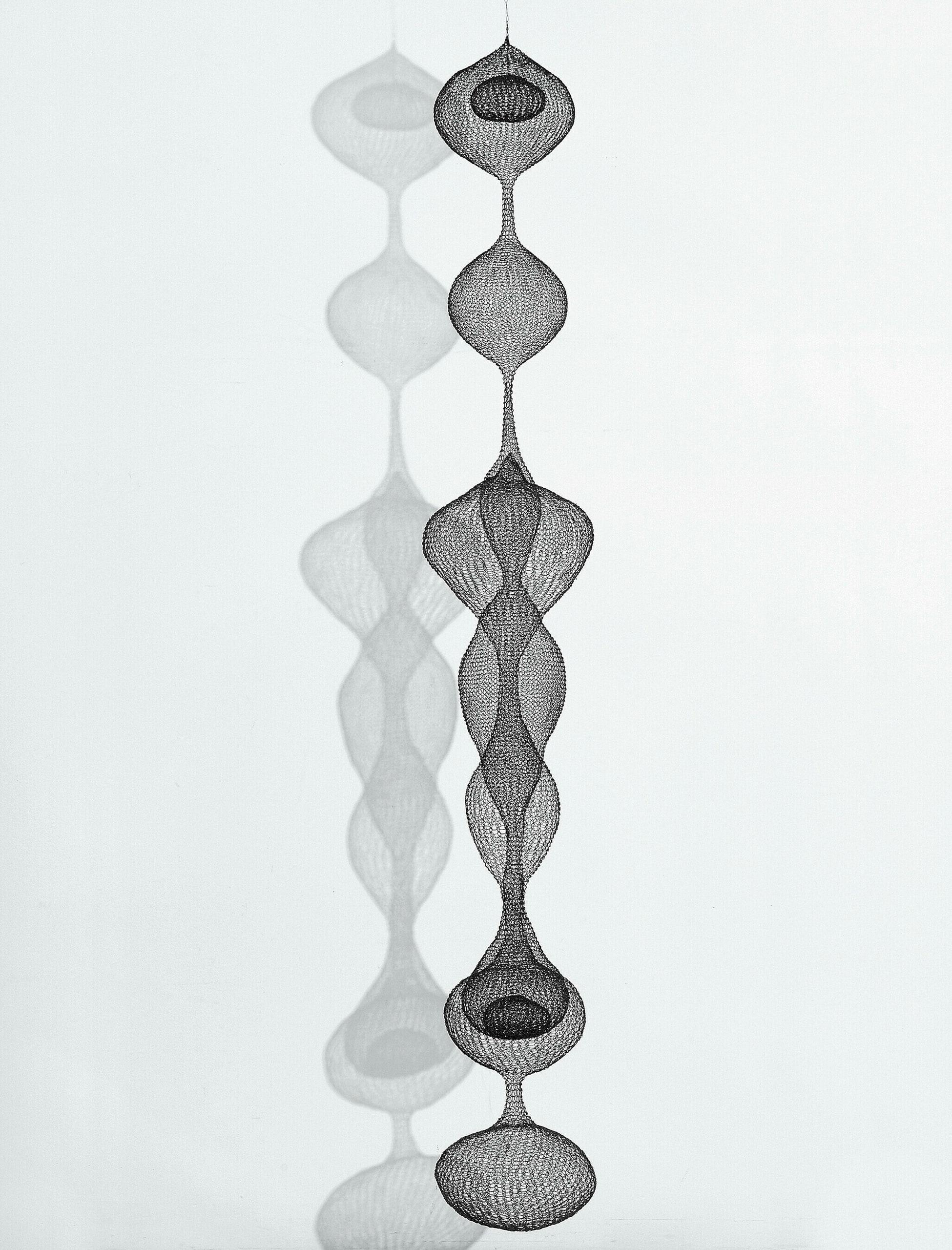
Ruth Asawa, Untitled (S.272), c. 1954, in Noguchi to Asawa: Designing Postwar America at the Barnes Foundation, Philadelphia. Looped copper and iron wire, nearly nine feet hanging, with nested spheres and a soft wall shadow. Artwork © 2026 Ruth Asawa Lanier, Inc. Courtesy David Zwirner / Barnes Foundation.
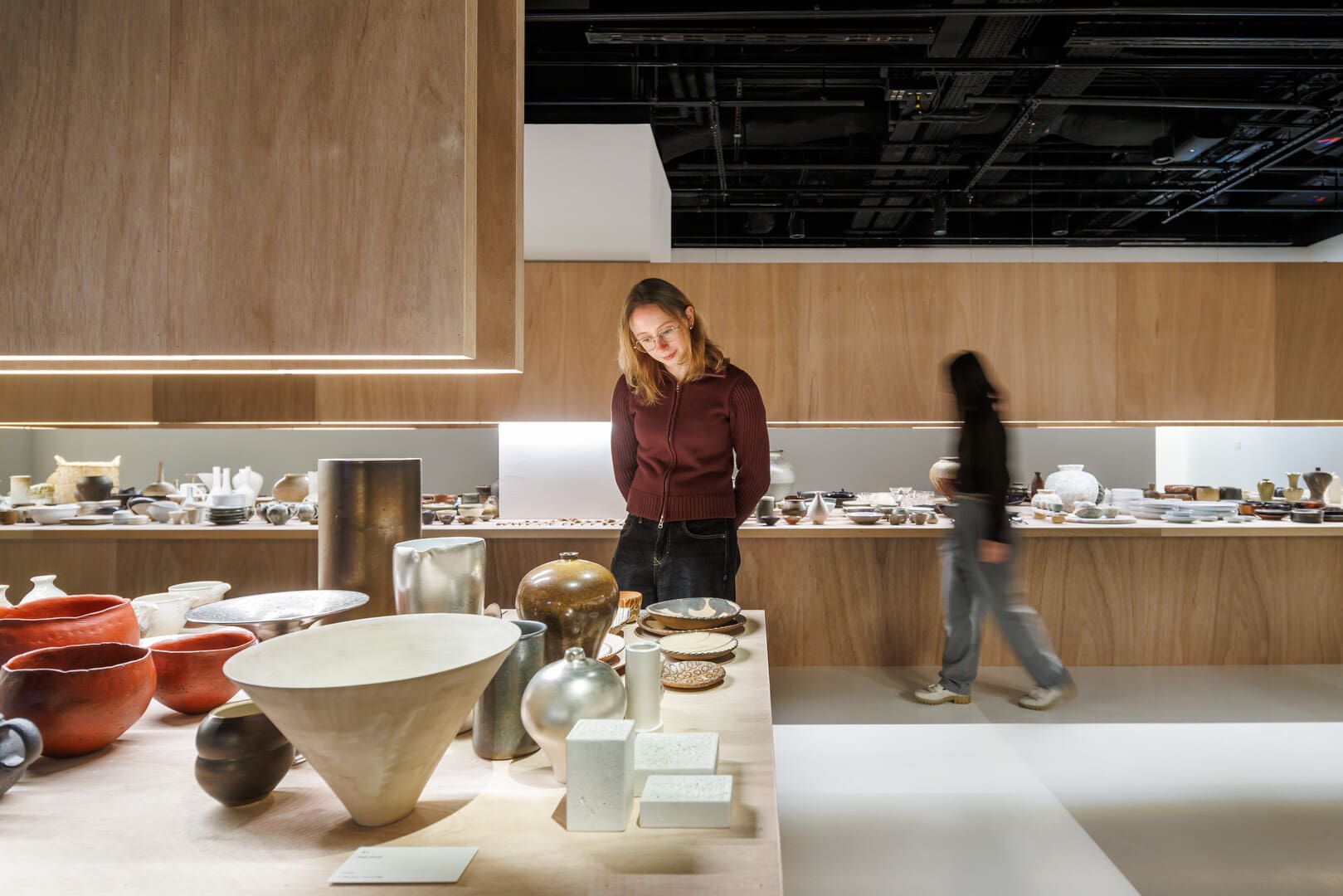
In the Roberts Gallery at the Barnes Foundation, a midcentury living room has been assembled from objects many Americans already think they know. Paper lamps soften the corners. Wire hangs from the ceiling and still leaves a path underneath. A glass coffee table shows the carpet through its top. Noguchi to Asawa: Designing Postwar America, curated by Cindy Kang and on view through 10 January 2027, gathers six Japanese American artists behind that domestic language. Noguchi and Asawa are the pair to stay with. They showed a postwar room how to use light, hanging form, and open floor as part of the furniture plan.
Kang keeps wartime history in view. Noguchi voluntarily entered the Poston War Relocation Center in Arizona in 1942. Asawa was a teenager when her family was forced through Santa Anita’s horse stalls and on to Rohwer in Arkansas. The lamps and wire carry that past without needing a wall label to announce it. For anyone furnishing a flat now, three works still explain the spatial habit they left behind.
“All that you require to start a home are a room, a tatami, and Akari.”
Isamu Noguchi, on the Akari light sculptures
Light that becomes the room
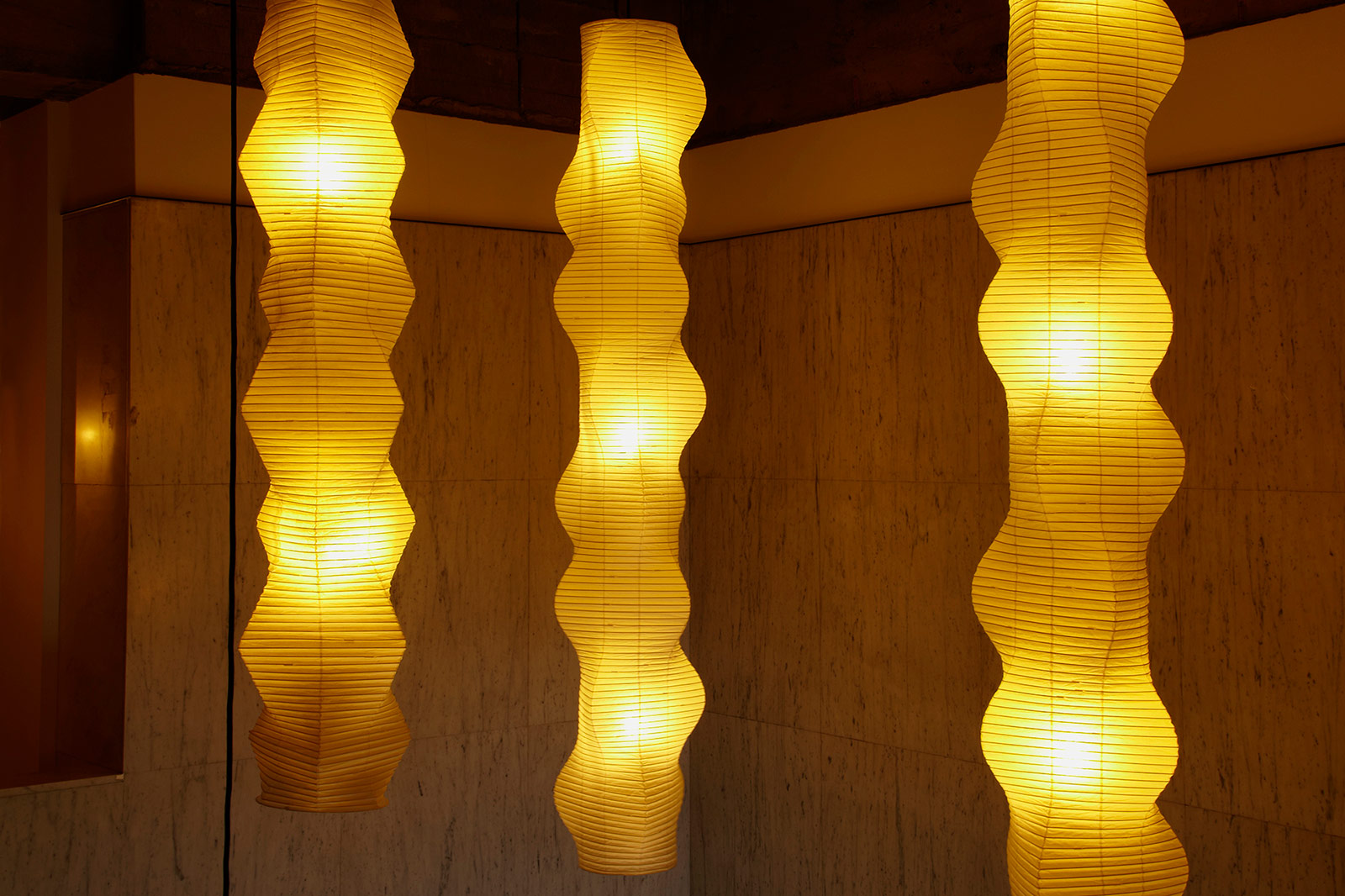
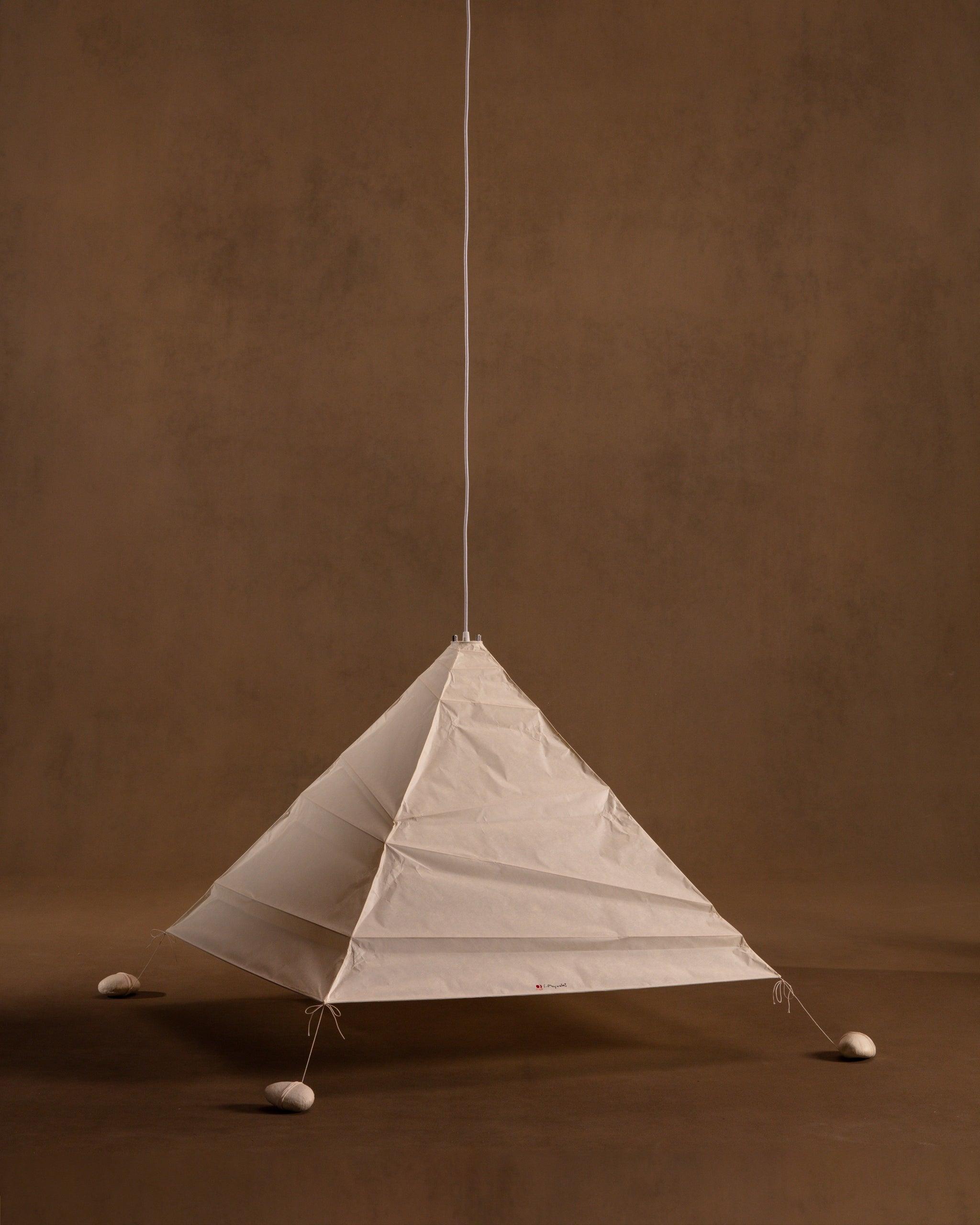
Noguchi began the Akari series in Gifu in 1951 after watching chochin lanterns light cormorant fishing on the Nagara River. With Ozeki & Co. he kept the collapsible bamboo-and-washi craft and put a bulb inside. The paper takes the light into its grain, so the glow fills a corner instead of dropping hard from a metal shade. He designed more than two hundred models; the Barnes includes Akari among the domestic pieces that still shape how Americans light a room, even when the lamp on the side table is a later copy.
Diaspora households that already live with shoji will recognize the temperature of that light. Noguchi’s contribution was to put it into an object midcentury America could buy, ship flat, and keep beside a sofa. Kang has said these artists helped define the look and feel of modern America. After dark, that claim is easiest to test next to an Akari.
Forms that hang without taking the air
Asawa’s Untitled (S.272) is nearly nine feet of looped copper and iron wire: seven continuous lobes, with spheres nested in the first and sixth. The mesh is open enough that the eye passes through outer volumes into inner ones, then out to the wall shadow that repeats the silhouette. She learned the looping technique in Toluca, Mexico, in 1947, watching craftspeople make wire baskets, then developed the hanging sculptures at Black Mountain College and later in San Francisco. Wall text at the Barnes quotes her aim to define the air without stealing it from anyone.
A closed bronze would take the same height like a column. S.272 takes the height and stays see-through, so a dining table or a walkway underneath still works. Step sideways and the wire and its shadow recompose. Hang the Kite Above the Table follows light that behaves like craft skin; Asawa’s wire is the vertical counterpart, volume held by line alone.
Negative space you can live under
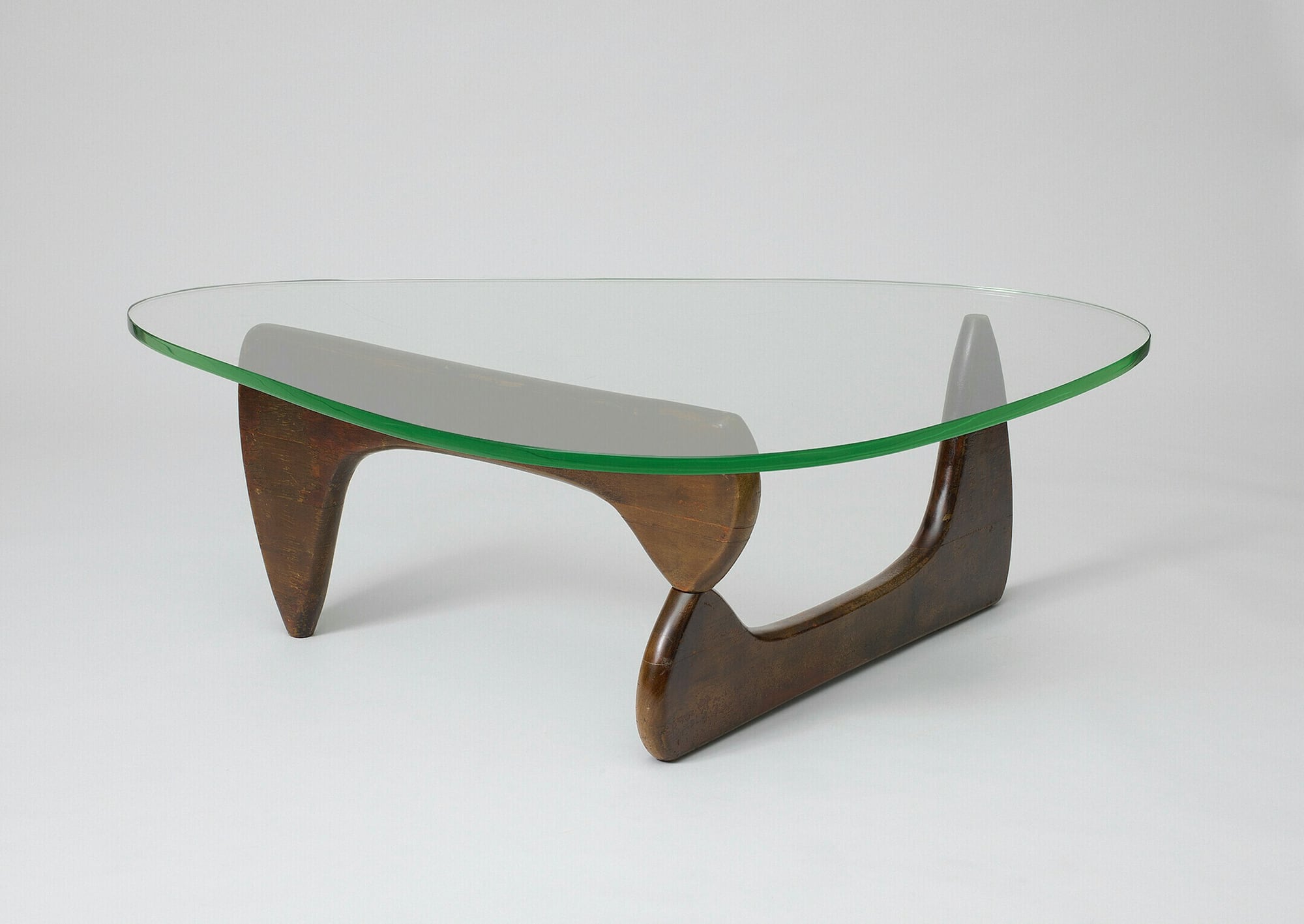
The Model IN-50, designed around 1944 and produced by Herman Miller from 1947, brings the same thinking to the floor. Two curved wood pieces interlock into a tripod; a thick glass top rests on them. You see the base, the carpet, and the open triangle of air under the glass. Noguchi had been interested in what he called the space between in sculpture. The coffee table puts that space in the middle of the living room. Later writers called the underside a subscape: the domestic zone below chair-seat height that most furniture hides. The IN-50 leaves it open.
With Asawa’s wire above and Akari’s paper glow nearby, the table makes the same case horizontally. Soft light, hanging volume that leaves a path, carpet readable under glass. The New Asian Minimalism maps related ideas of measured pause; here the pause arrived through industrial design and stayed in production.
See it while the hang lasts
Noguchi to Asawa runs through 10 January 2027 in the Roberts Gallery at the Barnes Foundation, 2025 Benjamin Franklin Parkway, Philadelphia. General admission includes the special exhibition; tickets are typically valid for two consecutive days. The museum is open Thursday through Monday, 11:00 to 17:00, with members admitted from 10:00. Book through barnesfoundation.org, walk the Akari, the Asawa, and the IN-50 first, then decide how much of the six-artist survey you still want. Noguchi to Asawa: Designing Postwar America is on the Banquet calendar.
Noguchi and Asawa put soft light, transparent hang, and open floor into American houses. The Barnes hang is where those decisions still sit in one room, through mid-January.