The postcard of Istanbul is a skyline. Domes, minarets, water. Constantinople to Istanbul: One City, Two Empires, which opened at the V&A on 7 November and runs through 9 May 2027, asks you to put that photograph down for a morning and look at what the city actually made.
More than two hundred objects cover the stretch from AD 330 to 1922, when the same Bosphorus capital served first as a Byzantine seat and then as an Ottoman one. Tim Stanley, the museum's senior curator for the Middle East, led the hang with project curator Bella Radenovic. Their aim was to keep both empires in one civic argument, rather than sorting the same city into separate museum departments.
"By combining the stories of these two empires and the amazing art they both produced, we have been able to release the stories of Constantinople and Istanbul from their separate boxes and let them enjoy the limelight together."
That is Stanley in the museum's own briefing. It matters because the V&A has long shown Byzantine ivories with medieval Europe and Ottoman silks with the Islamic Middle East. Here they share a city again. Europe's Courts Were Already Half Asian follows the later European habit of borrowing eastern surfaces; this hang begins earlier, inside the capital that produced them.
An ivory box that refuses the postcard
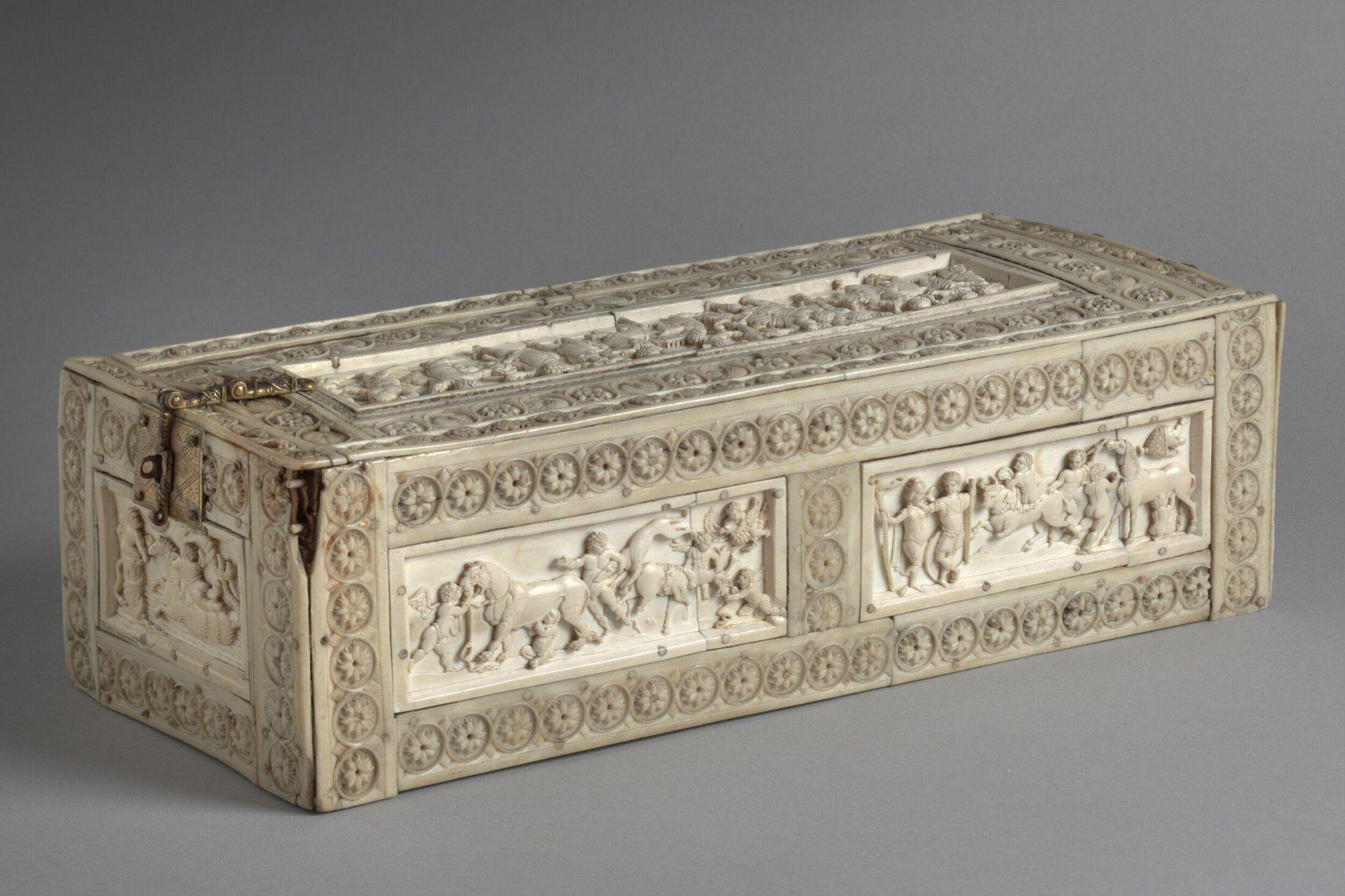
The Veroli Casket is where the argument gets physical. Carved in Constantinople in the second half of the tenth century, the box is only about forty centimetres long: wood faced with ivory and bone, edged with the rosettes that name its whole group of Byzantine caskets. The panels still chase classical myth, Europa on the bull, centaurs and maenads along the frieze, Bellerophon and Bacchus keeping their places. The city had been Christian for centuries by then, and a workshop was still undercutting ivory this deeply for a high household.
A skyline cannot teach that difference. While the city's public face ran on mosaic and relic, a workshop could still carve classical stories sharp enough for a table. The casket later sat in a cathedral treasury at Veroli, southeast of Rome, before it reached South Kensington. Even in the tenth century, it was already an object built to travel.
Rooms you enter through a clog and a tile
The Ottoman galleries make the same case with steam. Blue-and-white Iznik tiles from the Zeyrek Çinili Hamam, the tiled bathhouse linked to the admiral Barbarossa and designed in Sinan's century, hang as fragments of a wall you can no longer walk into. Beside them, a red silk bath wrap and wooden foot supports inlaid with mother of pearl show how completely the bath was dressed. The V&A's own qabqab, wooden bath clogs of about 1867 bought from the Paris Universal Exposition, lift the wearer above soapy water on stilts of inlaid wood. They are practical shoes that still behave like jewellery.
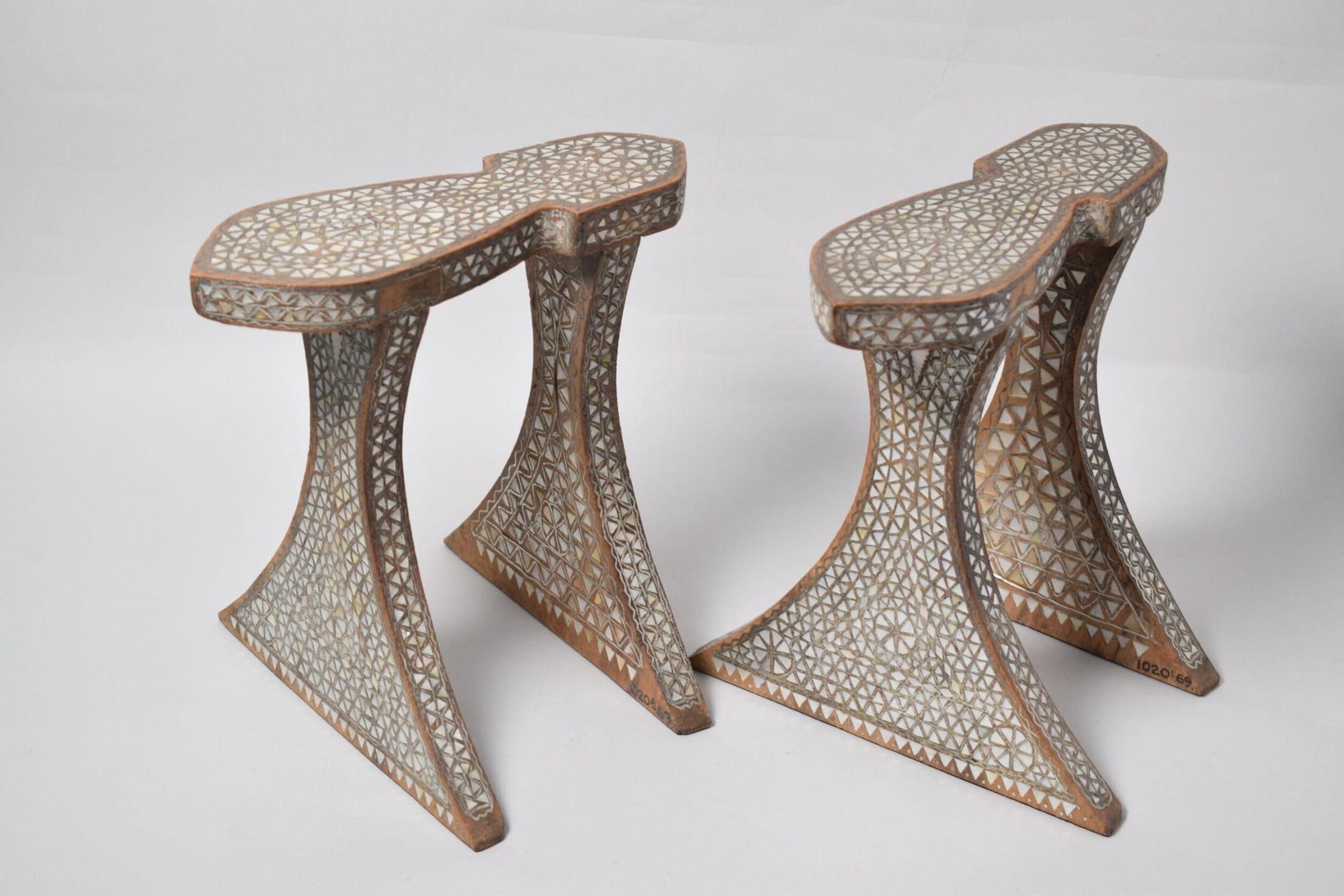
Jonathan Jones, reviewing for the Guardian, noticed a wall text that puts the claim plainly: if you have a nice bathroom, you are living under the influence of Ottoman Istanbul. The clog gets there faster than any panorama from the Galata Bridge. Court textiles then push the domestic scale upward. Among the Topkapı loans, reviewers have lingered on a sixteenth-century zerbaft kaftan, gold-threaded silk associated with Sultan Selim II. Bursa velvet nearby shows how the capital's luxury trade depended on Anatolian workshops answering Italian imports. Dress, tile, and clog belong together. An empire rehearsed its power in rooms people actually used.
Exchange written on a face and a scroll
Gentile Bellini's 1480 portrait of Sultan Mehmed II, lent by the National Gallery, is the exchange object most visitors will recognise first. Venice sent its court painter after the sultan asked for one in 1479; the diplomatic visit lasted about a year and a half. What hangs in South Kensington is Ottoman power painted in a Venetian format, useful to both courts that commissioned the visit.
The quieter exchange is paper. A seventeenth-century processional scroll from Manchester's John Rylands Library unrolls to about nine metres. It names the sultan's officers in Ottoman Turkish, then adds Latin-alphabet transliterations and French captions so a European eye can follow the parade. Rank becomes readable across languages, which is how a foreign diplomat was meant to understand the room.
The Lincoln Typikon pulls the story inward again: an illuminated fourteenth-century manuscript from the Convent of the Virgin of Sure Hope, on public view for the first time in sixty years. Donor portraits and monastic rules sit where a household of nuns once lived by them. By the close, the exhibition turns the exchange around and shows nineteenth-century Europe taking the city's patterns home, including William Morris pieces from the V&A's own stores. Schiaparelli's V&A Exhibition Treats Fashion as Surrealist Art was the museum's other South Kensington argument this year. This hang is older, and more interested in how a city dresses a room.
South Kensington, one clear morning
Galleries 38 and 39 hold the show. Weekday tickets are £25, weekends £27; members enter free. Book ahead on vam.ac.uk, take South Kensington station to Cromwell Road, and give the hang its own morning rather than sandwiching it between the Natural History queue and a Knightsbridge lunch. The skyline will still be there when you fly east. The Veroli undercutting, the hamam clog, and the French notes on the procession are why you stand still in London first.