The bag that gets compliments in an airport lounge is rarely the bag you want.
Logos perform for strangers. Quiet carry performs for you: weight distributed where your hand actually rests, a zipper that closes without negotiation, leather that darkens at the corner you touch every morning. Diaspora consumers who grew up watching monogram cycles come and go often arrive at the same conclusion later than their parents and earlier than their children. The question stops being "Who will recognize this?" and becomes "Will I still respect this in five years?"
"A fun pair of earrings is basically the finishing touch to any outfit; a nice watch is both practical and decorative, while the perfect unique bag is not only eye-catching but also timeless — it can be passed on to future generations."
— Liu Wen, Vogue
That is not modesty. It is a different definition of luxury: objects that accompany daily life and record use without broadcasting it. Pair this essay with Independent Japanese Watchmakers to Know and Tailoring Traditions Meet Modern Silhouettes for the wider Style desk.
The Diagnostic Details
Quiet accessories share a testable grammar. Patina on vegetable-tanned leather. Hinge resistance on a case that will be opened ten times a day. Stitch count visible when you turn a bag inside out. Acetate that polishes cleanly because the sheet was dense to begin with.
These are not romantic adjectives. They are how you tell whether something was built to launch a season or to survive a decade. A coherent daily carry should feel inevitable: each object justified by function and feel, not by what it signals across a dinner table — the same standard Contemporary Jewelry from the Asian Diaspora applies to metal at the wrist and neck.
Leather: Florence, Tokyo, Seongsu
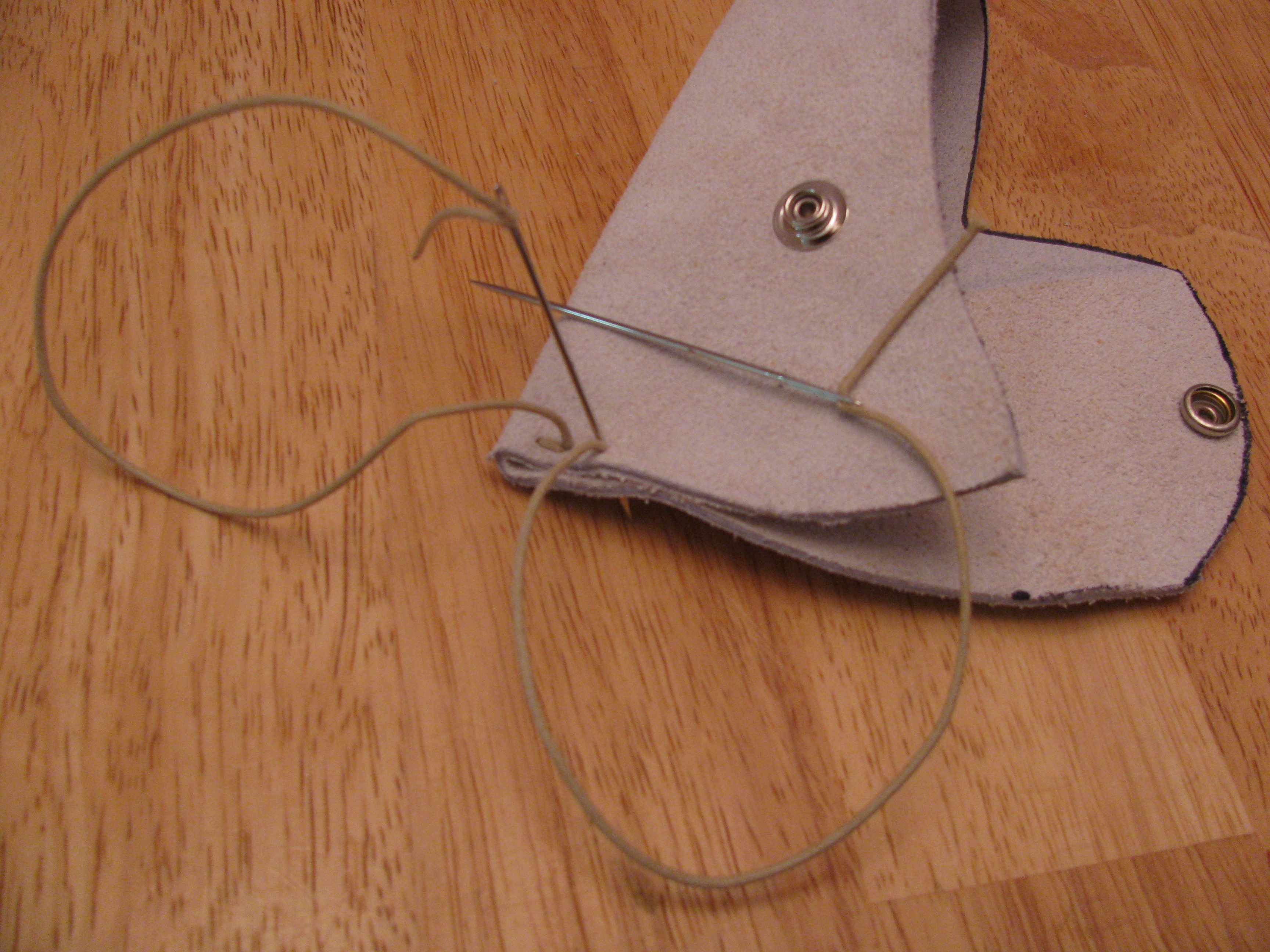
Florence remains the reference for classical leather. Workshops in the Oltrarno still sell directly from ateliers where saddle-stitching is standard and edges are beveled by hand. Il Bussetto, based in the Lombardy tradition with Milanese retail presence, and Vasco in Florence produce structured bags and small leather without relying on exterior logos. The leather is often vegetable-tanned: pale at purchase, cognac within a year of daily carry.
Tokyo brings a different scale. Artisan & Artist on Nihonbashi and in other districts builds camera bags and organizers sized for Japanese daily carry habits: compartments that assume precision instruments, not marketing inserts. The silhouette is often smaller than European equivalents. The discipline is obsessive. Our Tokyo guide maps the neighbourhoods where this scale of object shopping rewards an afternoon on foot.
Seongsu-dong in Seoul has become the city's leather belt: ateliers and young makers testing contemporary proportions, handle lengths, and interior pockets sized for phones and transit cards rather than catalog fantasy. The work reads Korean in proportion even when the technique is European in origin — adjacent to the quiet-luxury mood in The Return of Quiet Luxury in Seoul.
What to inspect: Full-grain leather, saddle stitching (not machine lock-stitch alone), solid brass hardware, interior finishing as careful as the exterior. A natural veg-tan tote is among the most useful purchases a frequent traveler can make. It never looks newly bought, which is the point.
Eyewear: Fukui, Sabae, and the Independent Optician

Japan's Fukui Prefecture, especially Sabae, produces a disproportionate share of the world's serious acetate and titanium frames. Sabae alone accounts for roughly 90 to 95 percent of eyeglass frames made in Japan, according to Fukui Prefecture's official tourism board and Japan's METI regional brand program. Frame-making arrived in the region in 1905, when Gozaemon Masunaga invited craftsmen from Osaka to teach farmers winter-side work; by the 1980s, Sabae workshops became the first in the world to mass-produce titanium frames (1983), solving the allergy and weight problems that plagued conventional metal.
Today a single pair can pass through more than 200 processes across specialized workshops — a division of labour that explains why the quiet dresser buys at the optician, not the logo boutique. The Megane Museum in Sabae documents that pipeline; its street, Megane-dori, is walkable from Sabae Station.
Independent makers and ateliers supply frames to serious opticians globally; Yuichi Toyama, based in Tokyo, treats eyewear as sculpture with optical discipline.
Gentle Monster in Seoul proved Asian eyewear could set global retail taste rather than follow it. Its stores function as installation art. Whether that qualifies as quiet is debatable. The foundation beneath the spectacle is craft culture: Korean and Japanese acetate production, lens labs that cut to prescription rather than inserting later, fit that balances on the bridge without sliding in humidity. See our Seoul guide for Apgujeong and Sinsa optician culture.
For the quiet dresser, lens quality, coating matched to screen and driving habits, and frame balance matter more than temple logos. A frame that sits correctly reduces fatigue across a fourteen-hour travel day. You feel the difference within an hour.
Pens, Watches, and the Inner Layer
Japanese fountain pen culture is the accessory category tourists overlook and locals treat as infrastructure. Nakaya in Tokyo, Sailor in Sakado, and Platinum in Tokyo produce nibs ground with tolerances that change handwriting ergonomics: less pressure, smoother flow, the pen becoming extension rather than ornament.
Mechanical watches belong in the same register. Grand Seiko launched in 1960 to prove Japanese mechanical watchmaking could meet Swiss observatory standards; its Spring Drive movement, conceived in 1977 by engineer Yoshikazu Akahane and released commercially in 1999, combines a mainspring with quartz-regulated accuracy — the kind of hybrid engineering Japan does unusually well. Grand Seiko's first automatic Spring Drive caliber, 9R65, arrived in 2004. Our guide to independent Japanese watchmakers covers the atelier end of that spectrum.
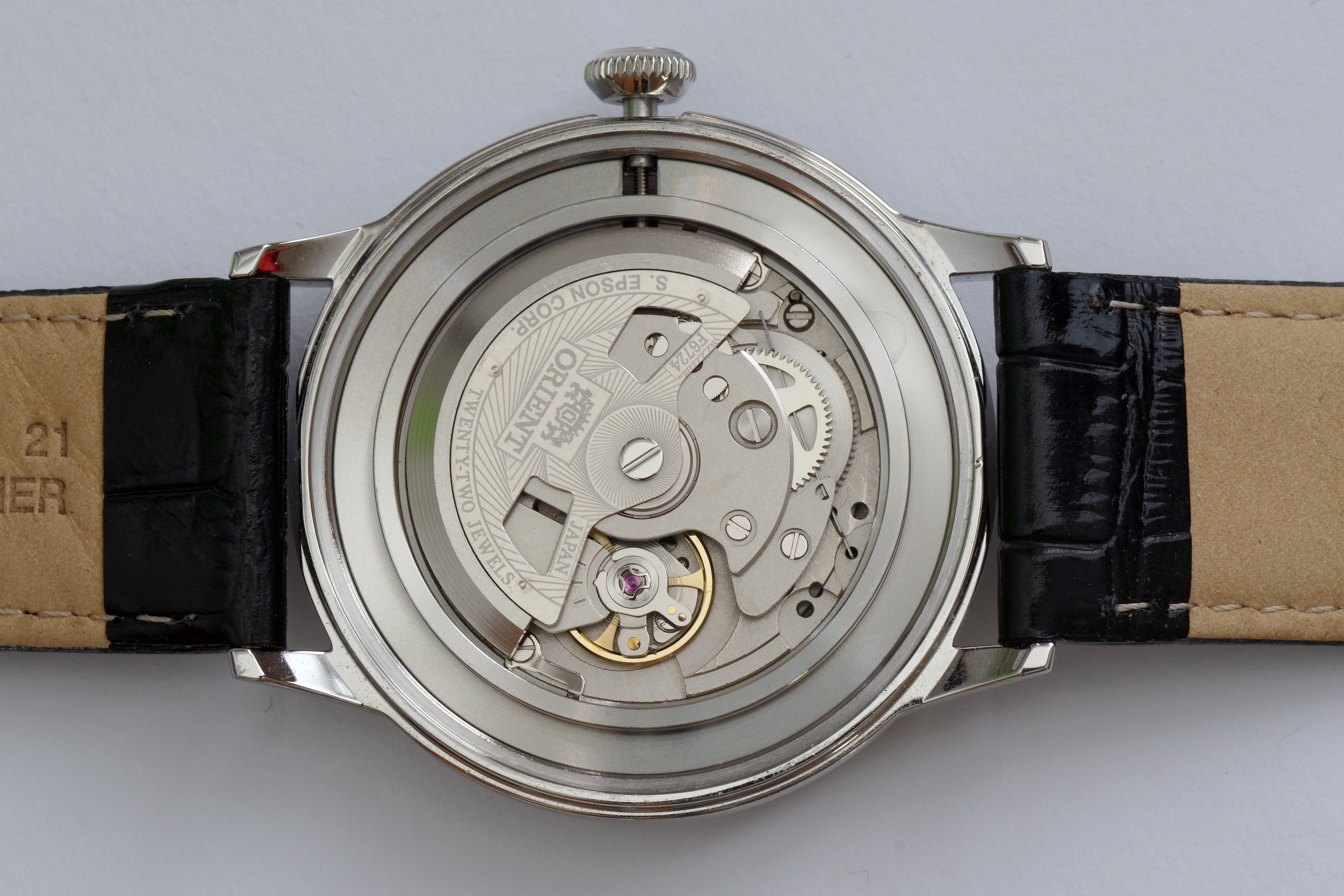
For daily carry, the principle is one watch that works with everything, serviced on schedule, worn until the case learns your wrist. Movements such as Orient's F6724 — 22 jewels, 21,600 vibrations per hour, roughly 40 hours of power reserve — represent the accessible mechanical layer: not investment hype, but honest gear you maintain because Liu Wen's distinction still holds. A nice watch is practical first. Restraint beats rotation for most people.
Belts are the invisible layer. Anderson's, founded in Parma in 1966, produces belts in widths and leathers that respect tailoring proportion. A poor belt undermines an excellent suit. A well-made one disappears while doing its job. Card cases, key organizers, and watch rolls follow the same logic: buy once in leather that will patina, from makers willing to explain stitching on their website.
Seasonal Objects
Accessories are also climate tools. A cashmere scarf in the correct weight extends a coat by a month. Lambskin driving gloves protect without bulk. Diaspora dressers who move between Vancouver rain, Singapore humidity, and London wind learn quickly that seasonal accessories matter more than seasonal clothing drops.
European houses still dominate scarf imagination, but Japanese and Korean makers increasingly offer alternatives with cleaner pattern and softer hand. The goal is not collection. It is coverage: one excellent object per category, maintained rather than replaced.
In Tokyo, serious opticians cluster in Jingumae, Aoyama, and Ginza, where staff will adjust temple pressure and explain acetate sourcing without rushing you toward a logo. In Seoul, Apgujeong and Sinsa offer the same service culture with Korean frame proportion. In Florence, leather purchases still reward walking the Oltrarno and asking which workshop stitched the bag you are holding. The purchase is part travel, part education — the same rhythm as The Asian Grand Tour.
Maintenance as Taste
Quiet carry fails when owners treat objects as disposable. Vegetable-tanned leather needs conditioning every few months in dry climates; neglect it and it cracks rather than patinas. Brass hardware loosens; tighten before you lose a screw. Fountain pens need flushing. Watch gaskets age. Lens coatings attract micro-scratches from careless pocket storage.
Maintenance is how you signal, to yourself, that the object was worth buying correctly the first time. Diaspora collectors who rotate between humid and dry cities feel this acutely: the same tote behaves differently in Singapore and Vancouver. Care is not hobbyism. It is the difference between patina and ruin — the same ethic The Gem Palace and the Education of Stones describes for jewelry that outlives a season.
How to Build a Carry You Will Keep
Start with subtraction. Most bags carry too much. Remove one object per month until what remains is essential.
Buy one excellent tote or briefcase before buying three compromises. Structure, leather weight, and handle attachment determine whether a bag becomes companion or regret. Rotate eyewear by season if you must, but match lens coatings to actual screen and driving life, not a salesperson's script.
Maintain what you own: leather conditioning, hinge tightening, lens cleaning. Maintenance is ownership, not chore. Allow patina. Vegetable-tanned leather, brass, and acetate all change with use. The object should record your life without announcing it.
Buy from workshops where someone inspects finished pieces. If a brand cannot tell you where it is made and how it is stitched, pause.
Where Taste Is Moving
Mass luxury still optimizes for visibility: collaborations, limited drops, objects designed for photographs. Parallel to that, small workshops in Florence, Fukui, Seongsu, and Tokyo sell to clients who exited the logo cycle and want use-first objects.
Diaspora consumers have an advantage here. Cultural fluency makes global sourcing legible: a Florentine wallet, a Sabae frame, a Seoul tote, a Tokyo pen. The collection becomes a map of where craft still operates at human scale, not a uniform from a single flagship street. Why Hospitality Design Is Influencing Luxury Homes tracks how travel teaches the same lesson at room scale: competence over logo.
The conversation quiet carry generates is private. The leather person notices stitching at a table. The watch person reads caliber through a cuff. The pen person hears nib feedback in handwriting. These are micro-languages between people who practice taste rather than perform it.
You do not need a room to approve your objects. You need objects that make your days slightly easier and your standards slightly harder. That is what quiet carry actually looks like.
Continue with Independent Japanese Watchmakers to Know, The Banquet Guide to Tokyo, and The Return of Quiet Luxury in Seoul.