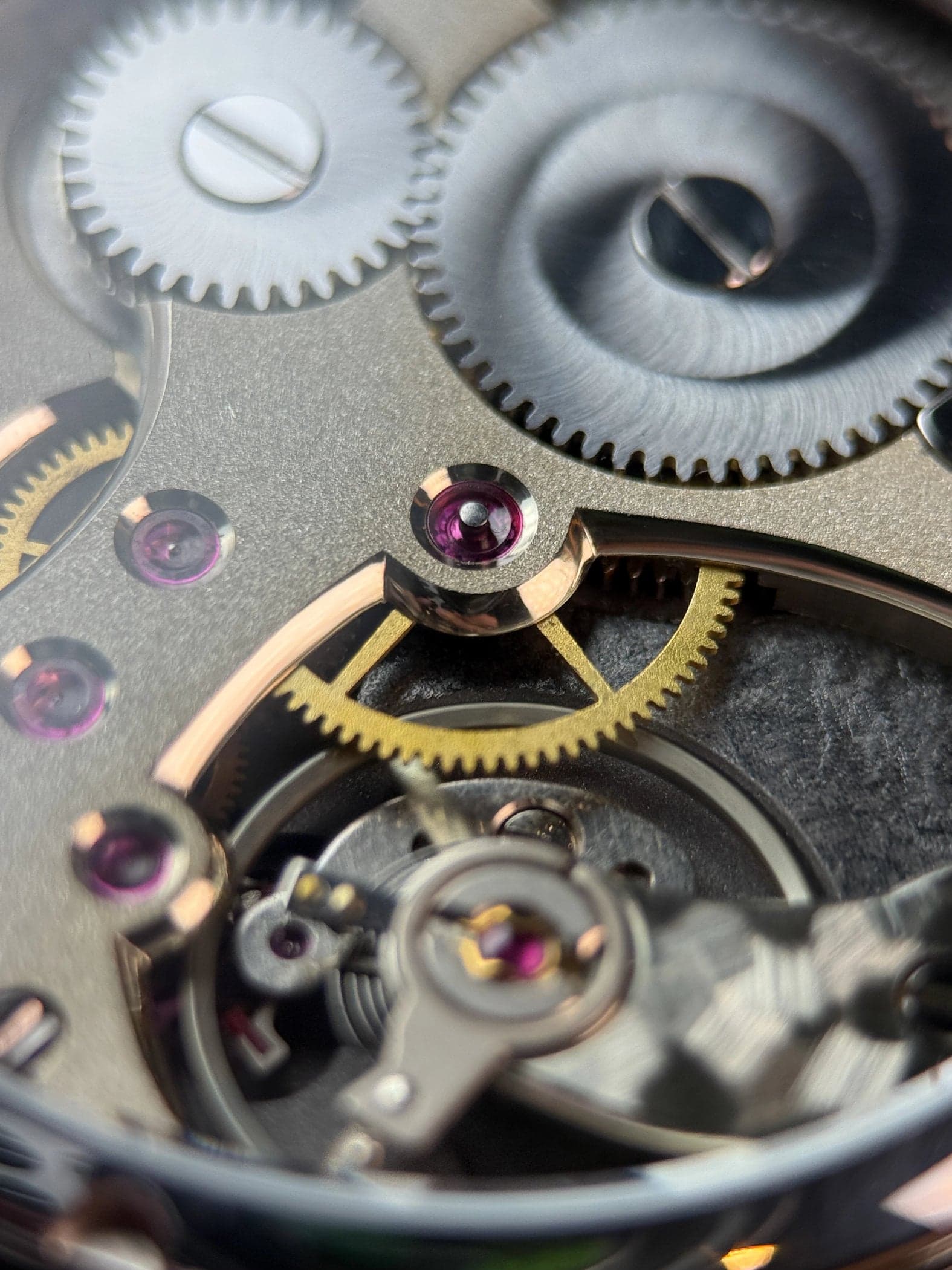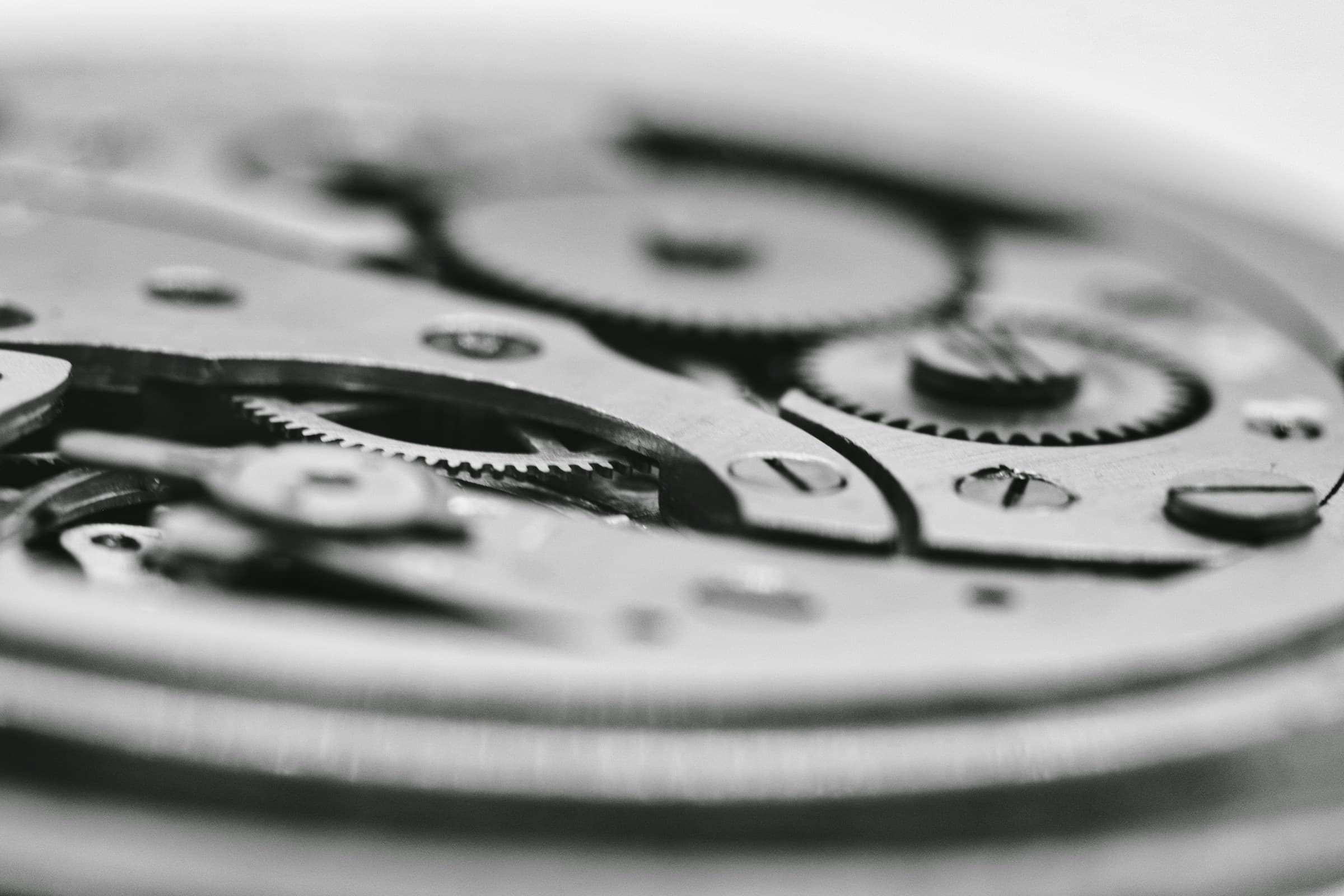
Japanese watchmaking has long been defined by precision.
The quartz revolution, the relentless pursuit of accuracy, the industrial mastery of Seiko and Citizen: these are the names most collectors know. Grand Seiko and Credor occupy the summit of what a large manufacture can achieve when finishing becomes philosophy rather than marketing. But a parallel tradition has always existed. The independent artisan working alone or in a small atelier, producing watches of extraordinary beauty in quantities measured in dozens rather than thousands.
That tradition has entered a new phase. Collectors who once looked exclusively to Geneva and the Vallée de Joux now track release calendars in Tokyo with the same intensity. Waiting lists stretch years. Secondary market prices for the best pieces reflect a growing appreciation for craftsmanship that cannot be scaled. Japanese independents are no longer a regional curiosity. They are a global conversation.
"A great watch does not demand attention. It rewards it."
What follows is not a comprehensive survey of every independent atelier in Japan. It is an introduction to the makers whose work has reshaped how the world thinks about Japanese horology, and a practical guide for collectors who are ready to look beyond the catalogue.
The Landscape: Industry and Atelier
Japan's relationship with timekeeping runs deeper than any corporate timeline suggests. Public clocks in Ginza, the domestic mastery of hairspring production, the culture of punctuality that treats a seconds deviation as personal failure: these conditions produced both mass-market dominance and a reverence for mechanical craft that never fully disappeared.
The independents occupy the space between. They do not compete with Seiko on volume or with Swiss houses on century-long marketing heritage. They compete on finishing, proportion, and the conviction that a wristwatch can be a complete artistic statement in 38 millimeters.
For diaspora collectors especially, Japanese independents carry an additional resonance. They represent a craft tradition that is unmistakably Japanese without requiring nationalist display. The dials are restrained. The cases are disciplined. The complications, when they appear, feel earned rather than announced. This is horology that speaks quietly and assumes you are paying attention.
Hajime Asaoka: The Pioneer
Hajime Asaoka is the figure against whom every other Japanese independent is measured. A former product designer who graduated from Tokyo University of the Arts, he taught himself watchmaking and produced among the first Japanese wristwatch movements with an in-house tourbillon (2009). He became an AHCI member in 2015 and founded Precision Watch Tokyo Co., Ltd. in 2016, operating from Maeda Building, 2-13-2 Suido, Bunkyo-ku, Tokyo.
His eponymous brand produces only a handful of pieces annually. Representative models include the Tsunami three-hand watch with a full-plate movement, Project T (a tourbillon that uses ball bearings in place of traditional jewel bearings), and a chronograph built on a module atop the Tsunami base. The aesthetic is restrained, the finishing Swiss-grade, and the production numbers deliberately tiny.
Under Precision Watch Tokyo, Asaoka also oversees Kurono Tokyo, Takano, and Otsuka Lotec, making him less a solitary watchmaker than the architect of an ecosystem. Kurono Tokyo, in particular, has become the accessible entry point for collectors who admire Asaoka's design language but cannot wait years for a piece from his primary atelier. The watches share a family resemblance: clean dials, thoughtful typography, proportions that sit comfortably on a wide range of wrists.
For collectors entering Japanese independents, Asaoka is the reference point: proof that Tokyo can produce complications once assumed to be the exclusive domain of Swiss ateliers. His work also establishes the collector's contract that governs this entire category. You will wait. You will communicate through authorized retailers or the atelier directly. You will receive something that cannot be ordered again on demand.
Naoya Hida & Co.: The Dial as Canvas
Naoya Hida founded his eponymous brand in 2018, and in the years since it has become among the most sought-after names in independent Japanese horology. The watches appear classical at first glance: vintage-inspired cases, restrained proportions, dials that seem to belong to mid-century Switzerland.
The distinction lies in the details. Hand-engraved numerals by craftsman Keisuke Kano can require one to five days per dial. Production runs are measured in tens, not hundreds. In 2025, the brand released its first perpetual calendar, the NH TYPE 6A, signaling ambitions that extend beyond the time-only pieces that built its reputation.
Hida's work appeals to collectors who value subtlety over statement. These are watches that reveal their quality slowly: in the depth of the dial printing, in the warmth of the patina that develops over years of wear, in the knowledge that the person who designed the case also approved the hand that engraved every numeral.
The perpetual calendar arrival matters because it places Hida in a different competitive set. Calendar mechanisms are unforgiving. They expose any weakness in design, assembly, or finishing. That the brand attempted this complication at all suggests confidence in its production pipeline and in the collector base willing to follow it into more complex territory.
Minase: Architecture in Steel
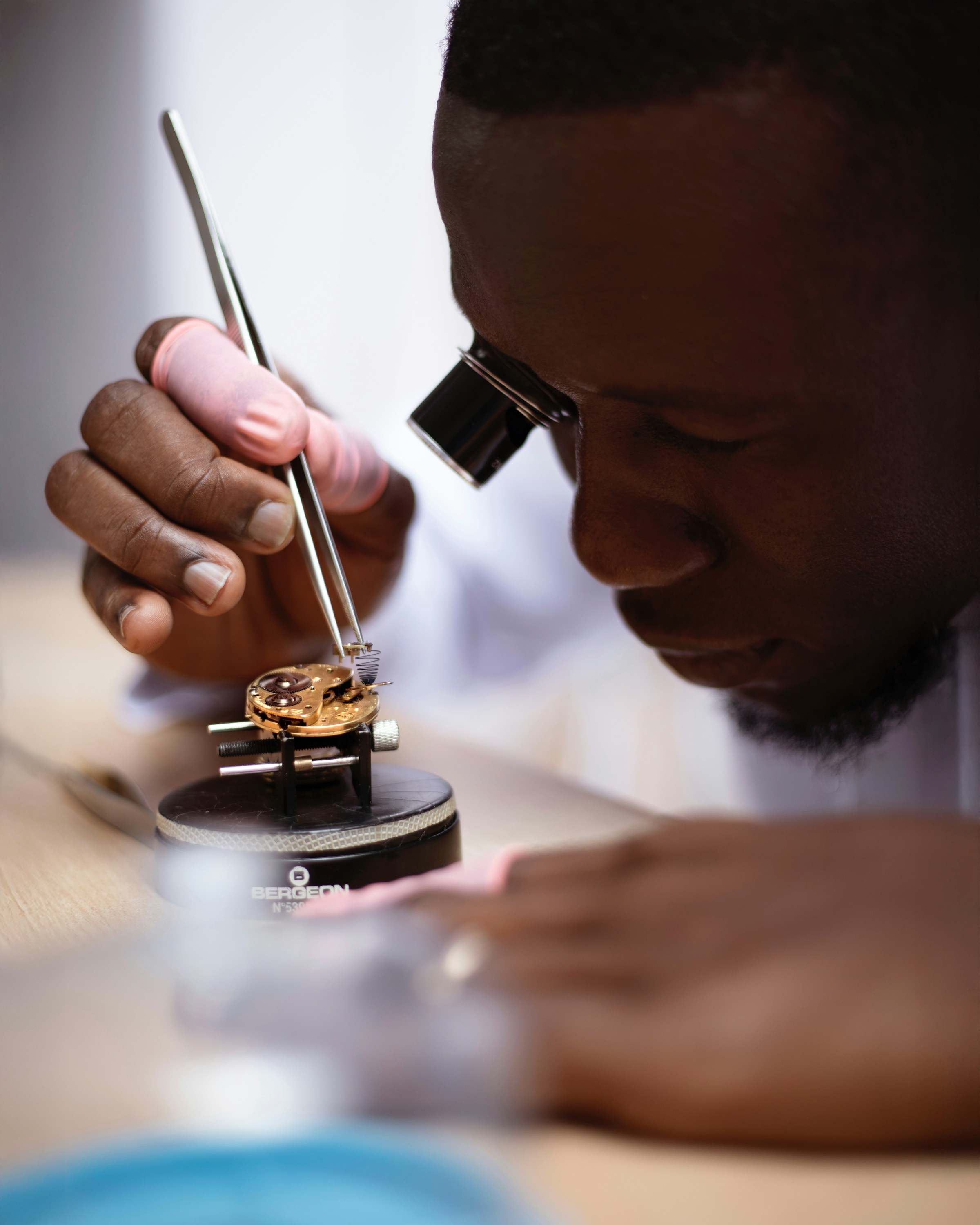
Minase occupies a different position in the landscape. Founded in 2005 under parent company Kyowa and Co. (itself established in 1963 as a precision machining firm), Minase is a production watchmaker rather than a one-man atelier. Its signature is architectural case construction: multi-layered "window" cases that reveal the movement from oblique angles, Sallaz polishing that rivals Grand Seiko, and dial treatments that emphasize texture and depth.
Most models use Swiss ETA movements, which purists sometimes note, but the value proposition is in the case and finishing rather than in-house calibres. Price points range from roughly $3,500 into five figures for precious metal and lacquer-dial variants. For the collector who wants Japanese finishing standards without a decade-long waitlist, Minase is the pragmatic entry.
The brand's engineering background shows in how it thinks about metal. Cases are not stamped and brushed as an afterthought. They are constructed as spatial objects, designed to catch light differently from every angle. This is watchmaking that borrows from architecture and precision machining in equal measure, which makes sense given Kyowa's industrial history.
Masahiro Kikuno and the Hand-Made Tradition
If Asaoka represents the designer-watchmaker and Minase represents precision manufacturing at small scale, Masahiro Kikuno represents something older: the solitary artisan who makes nearly everything by hand.
Based in Matsudo, Chiba Prefecture, Kikuno produces watches in quantities so small that ownership becomes a form of patronage. His work includes timepieces with fully hand-cut gears and components that would normally require industrial equipment. Collectors who acquire a Kikuno watch are not buying a product line. They are supporting a craft practice that exists outside the logic of scale.
This is not a practical first purchase for most collectors. It is, however, essential context. Japanese independent horology is not a single aesthetic. It spans industrial finishing houses, design-led ateliers, and one-man workshops where a single watch may require months of labor. Understanding Kikuno's position on that spectrum clarifies what you are actually buying when you enter this market.
Daizoh Mihara and the Language of Urushi
Daizoh Mihara brings a material tradition into wristwatch form. His urushi lacquer dials apply a centuries-old Japanese craft to contemporary watch faces, producing surfaces that change character with light and age in ways that printed or enamel dials cannot replicate.
Urushi work is slow and unforgiving. A dial may pass through dozens of layers and weeks of curing before it is ready for assembly. The resulting watches appeal to collectors who value material honesty: the sense that what you see on the wrist required a specific hand and a specific cultural knowledge.
Mihara's work also demonstrates how Japanese independents draw on local craft traditions without turning them into costume. The lacquer is not applied for novelty. It is applied because it produces a dial surface with depth and longevity that other methods struggle to match.
Where Collectors Encounter the Work
Tokyo remains the primary point of contact. Authorized retailers and specialist boutiques in neighborhoods from Ginza to Daikanyama carry Japanese independents alongside Swiss houses, often with staff who understand the production realities behind each name. International retailers in Hong Kong, Singapore, and major European cities have expanded their Japanese independent offerings as demand has grown.
The secondary market deserves separate consideration. Prices for the most desirable pieces have risen sharply, which has attracted speculators alongside genuine collectors. This is not inherently corrupting, but it changes the calculus. A watch bought at retail with patience may be a lifelong companion. A watch bought at secondary premium requires extra scrutiny on provenance, service history, and authenticity.
What to Know Before You Buy
Waiting lists are real. Independent Japanese pieces are not impulse purchases. Expect months to years for the most desirable models, and build relationships with authorized dealers or the ateliers directly. Patience is not a virtue in this market. It is a requirement.
Condition and provenance matter. Secondary market prices have risen sharply. Buy from reputable sources and verify service history for any piece that has changed hands. Request documentation. Ask about previous ownership if the seller can provide it.
Complement, don't duplicate. A collection that already includes Grand Seiko or Credor may find Japanese independents offer a different proposition: smaller scale, more idiosyncratic design, and the intangible value of knowing human hands assembled every component without compromise. The two categories can coexist without redundancy.
Service and longevity. Independent watches require independent thinking about maintenance. Confirm who will service the piece in your country, how long that process takes, and what parts availability looks like. A beautiful watch with no service pathway is a short-term pleasure.
Wear the watch. Japanese independents are designed for wrists, not safes. The finishing reveals itself in daylight. The dial printing changes with angle. The case catches light differently in a restaurant than in a showroom. These are objects that reward daily use.
The Collector's Perspective
For those of us who grew up between cultures, Japanese independent watchmaking offers something that mass-market luxury often cannot: a sense that craft still exists at human scale. The watches are not focus-grouped. They are not designed to satisfy a quarterly sales target. They emerge from ateliers where the person whose name is on the dial may still be filing a component on the morning of your delivery.
That intimacy has limits. Production is slow. Prices are not modest. Access requires relationships and patience. But for collectors who have already experienced what large manufactures do well, Japanese independents open a different conversation. Smaller. Slower. More particular.
The independent Japanese watchmaking scene is no longer a curiosity at the margins of horology. It is a central conversation, and these makers are its most compelling voices. The question is no longer whether Tokyo belongs in the same sentence as Geneva. The question is which atelier speaks to you, and whether you are willing to wait long enough to find out.
Continue Reading
See The New Language of Accessories, Tokyo Department Store Dressing, and The Banquet Guide to Tokyo.