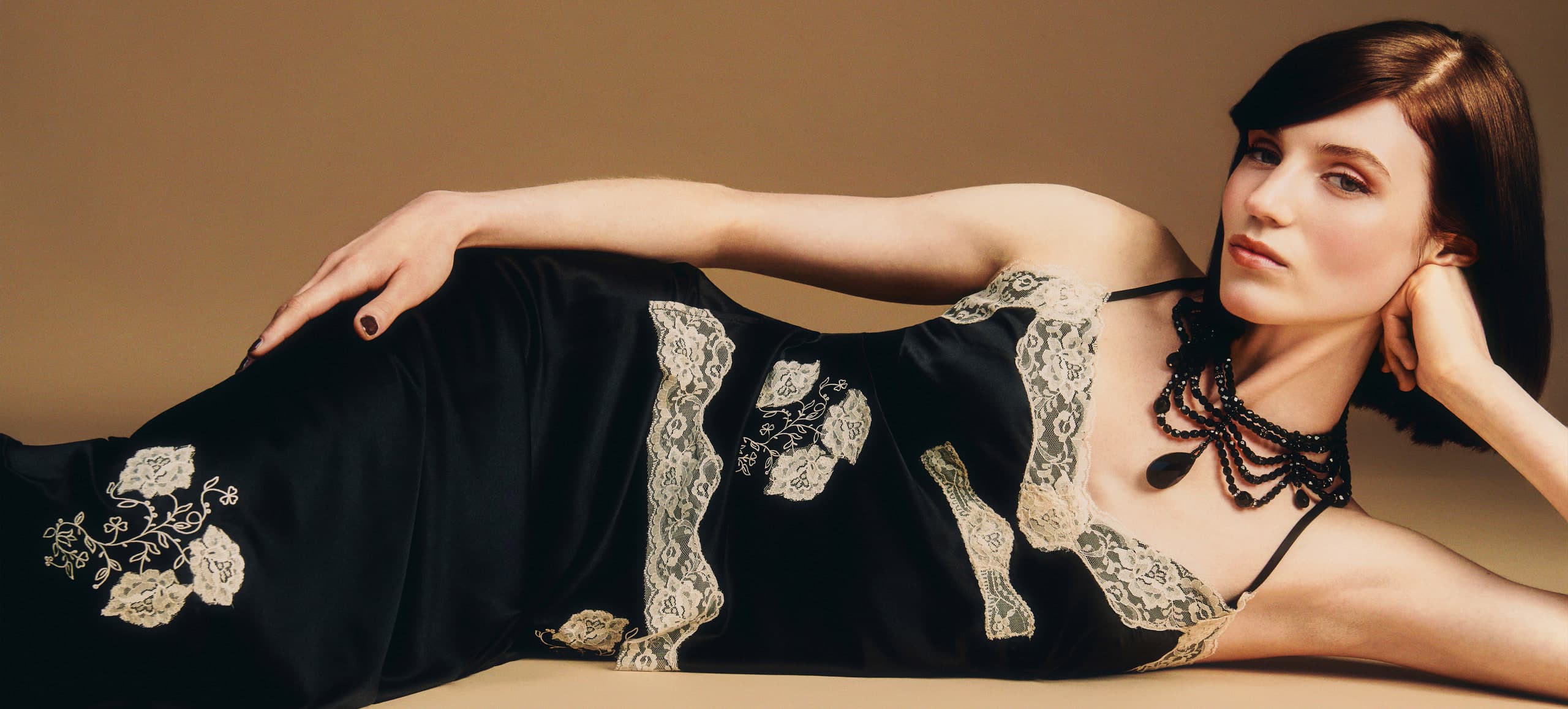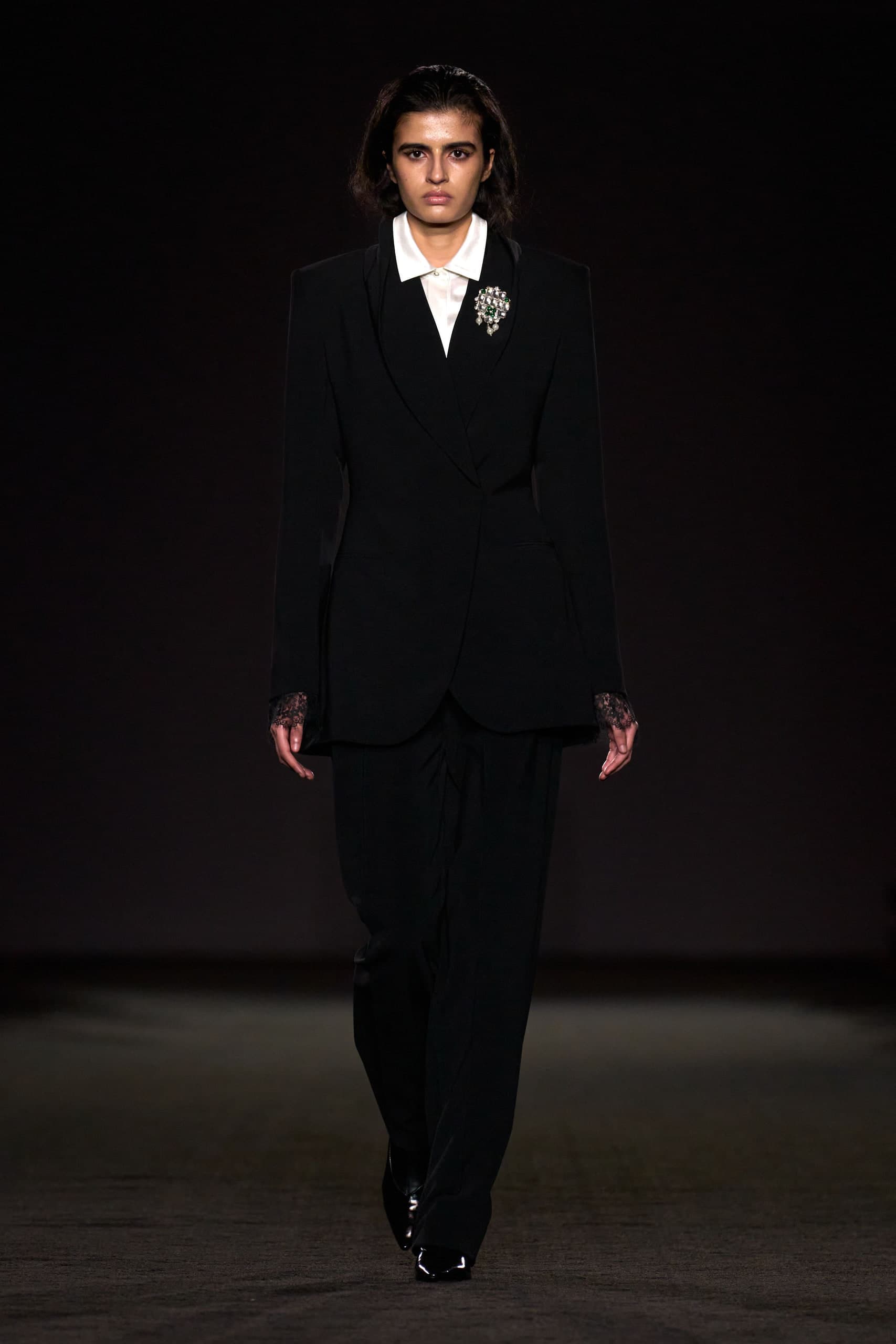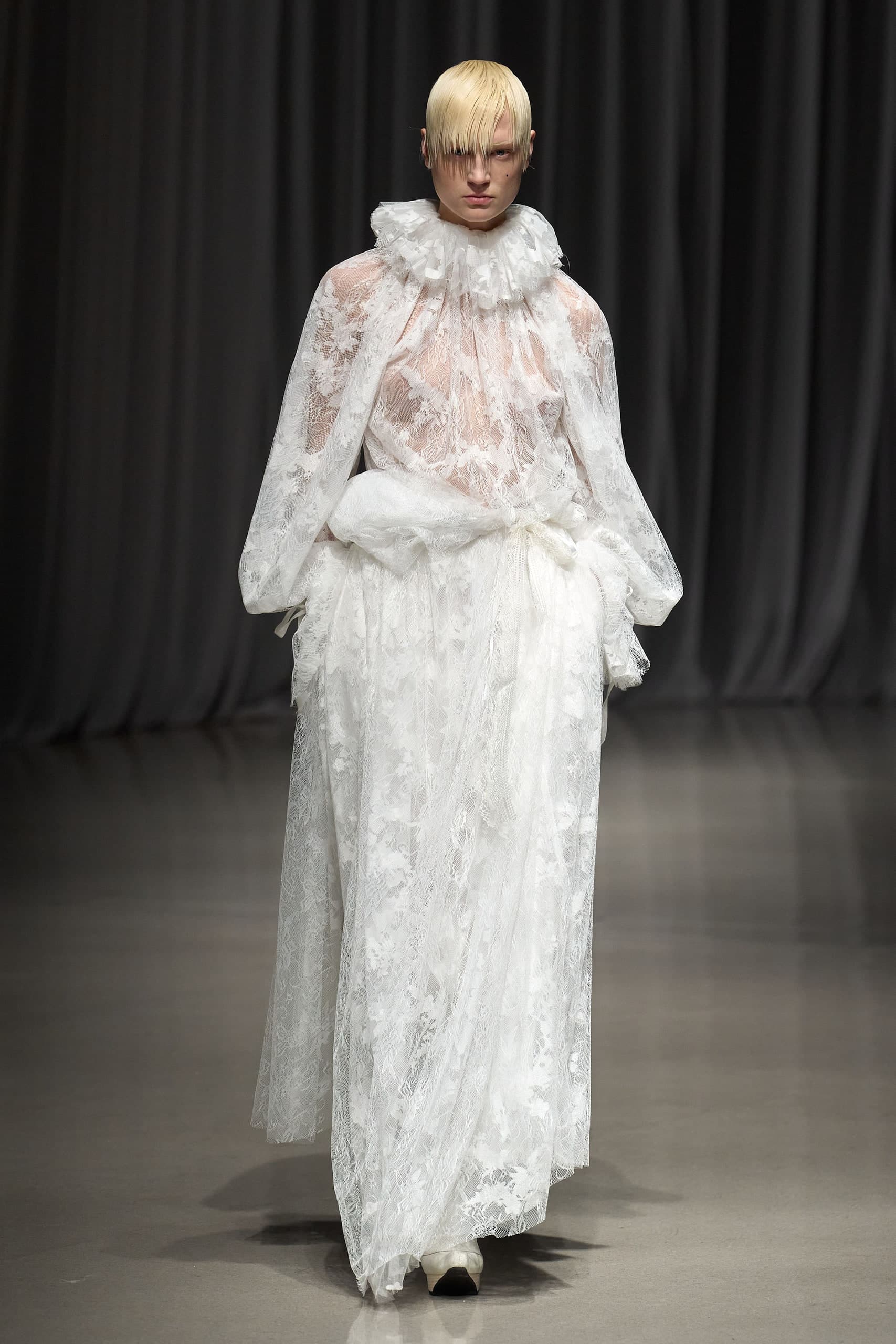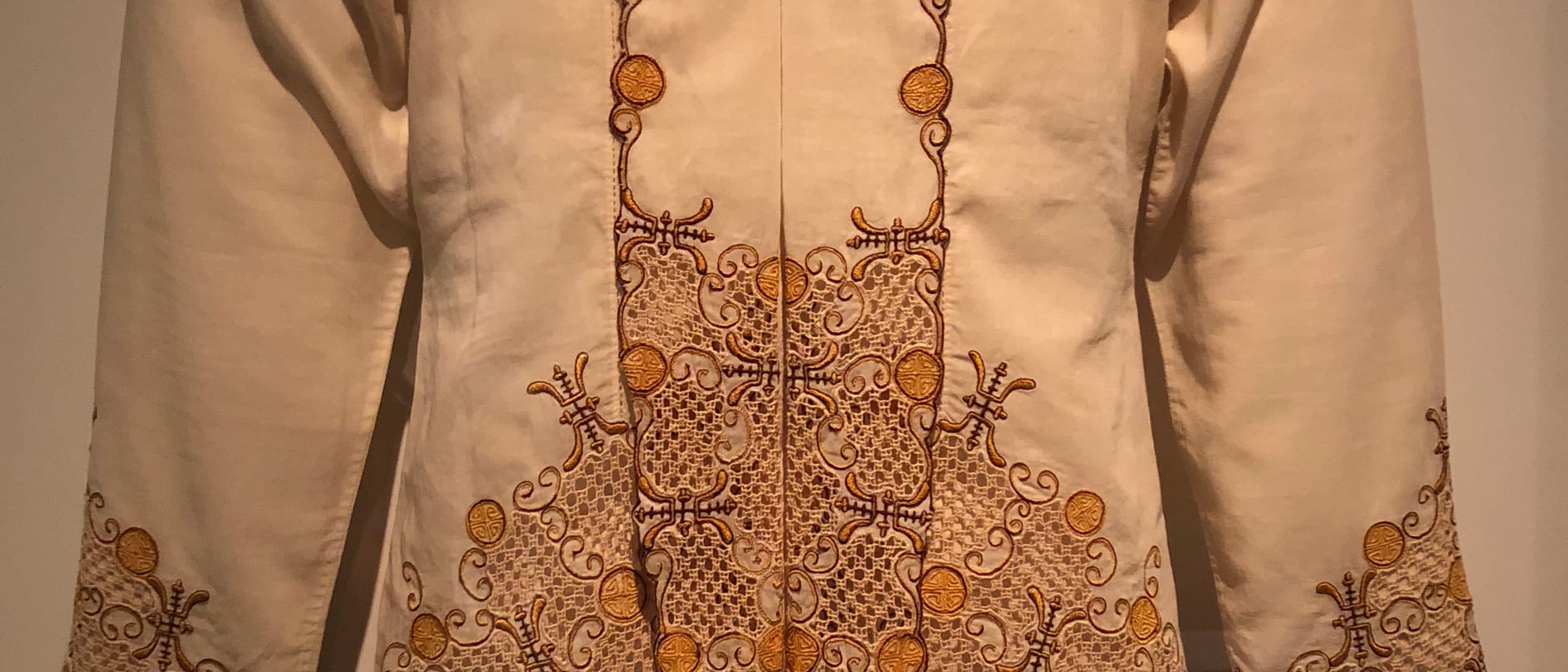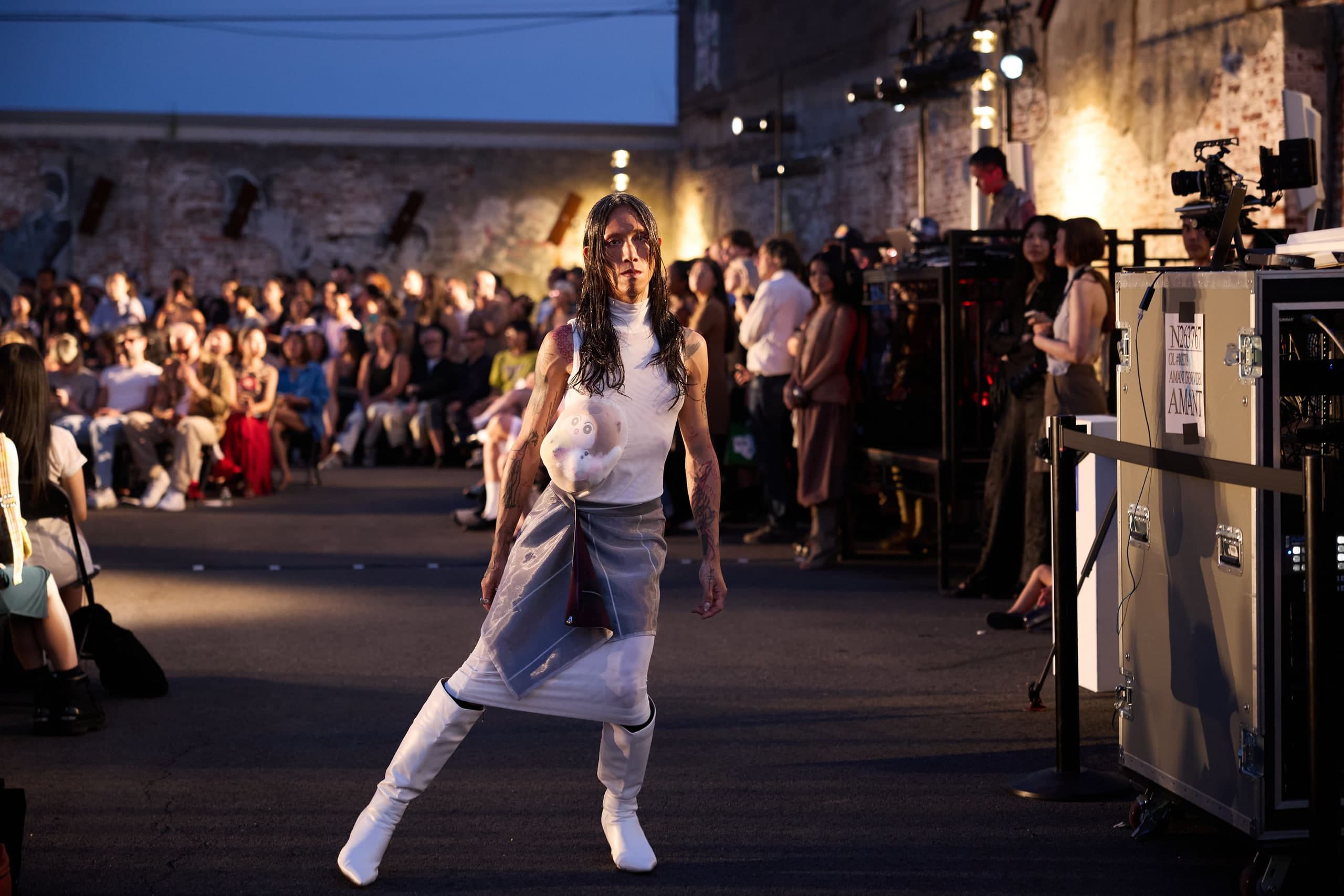
Most identity fashion wants a clean slogan. CFGNY wants a misfit that still walks.
On 17 July 2026, the New York art-and-fashion collective marked ten years with CFG-20260717, a free outdoor performance co-commissioned by The Kitchen and Amant in Amant’s 316 Ten Eyck lot in Brooklyn. More than thirty looks, made with tailors in Ho Chi Minh City from materials found in Vietnam, moved through a scaffold of two-by-fours, plastic, and LED monitors. Performers carried cameras. Live doubles flickered on the screens. Angelique Rosales Salgado, assistant curator at The Kitchen, opened with a lecture on video history. The clothes left heritage-brochure silk and single-origin storytelling off the cast list. Polite silhouettes stayed home too.
That is the Banquet brief. Ambiguity here is method, not mood lighting.
“We can try things: experiment, make mistakes. We can make it messy with our own work.”
Ken Leung, on walking CFG-20260717, to Vogue
Vaguely Asian, Sewn in Vietnam
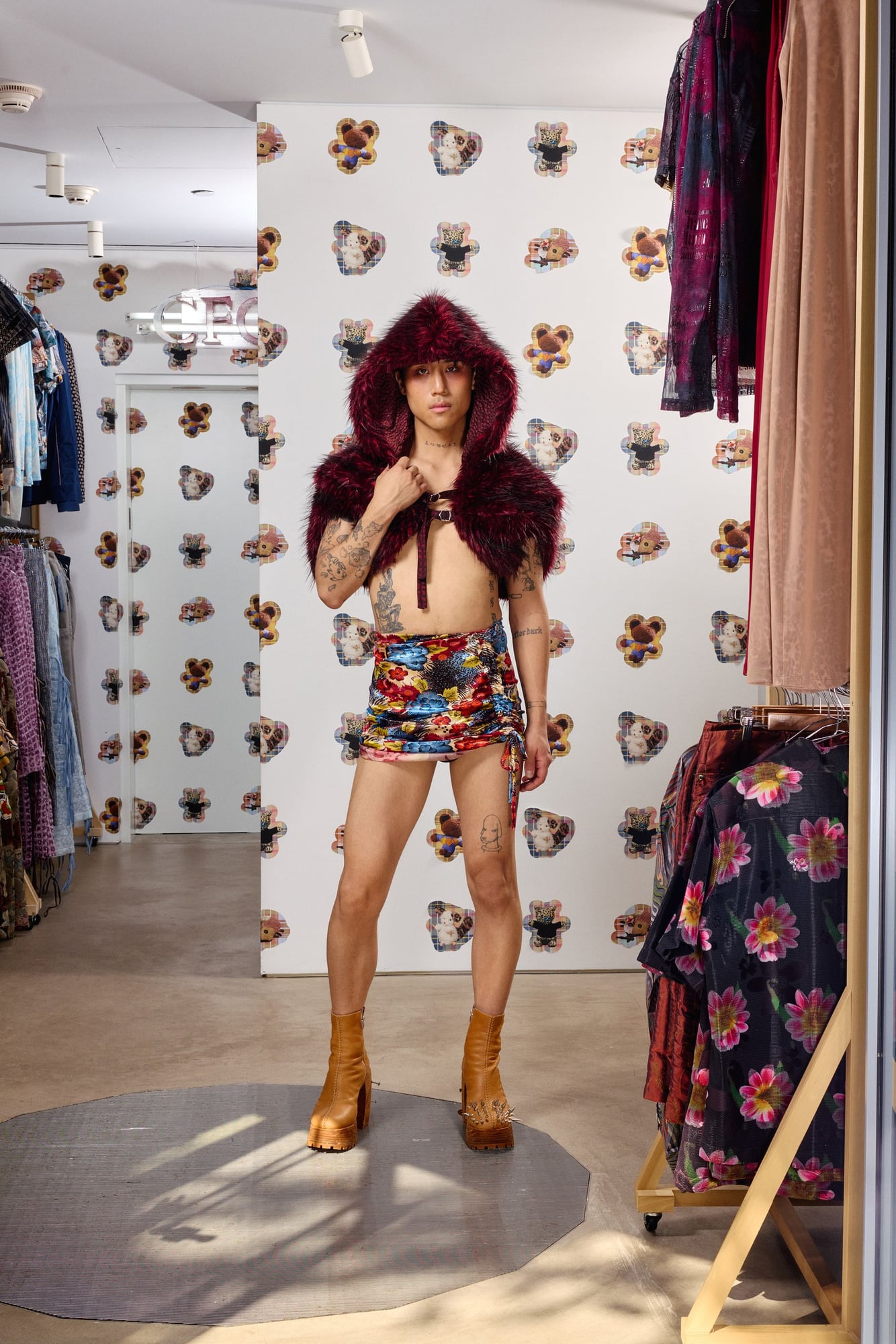
CFGNY usually expands as Concept Foreign Garments New York, though the acronym is designed to slip: Cute Fucking Gay New York, Corporate Global Fashion New York, and, for one night, Can’t Forget Gossip Needs You. Founded in 2016 by artists Daniel Chew and Tin Nguyen, and working in 2026 with Ten Izu, the collective treats “vaguely Asian” as working language. Racial identity as a specific lived experience plus the experience of being read as other. Fashion is a ready-made inside that argument: something you wear into a room, not a caption you pin on a wall.
Production keeps the argument honest. Chew, Nguyen, and Izu pull deadstock and “ugly” clash fabrics that strike them as vaguely Asian without reading as tourist-brochure Asia, then cut and iterate with Ho Chi Minh City tailors over chats and translation. The mistranslations stay. Necks come too wide. Patterns fight. Avena Gallagher, the longtime Telfar collaborator who styled the show, has pushed the group to keep awkward fits rather than airfreight a correction. The fifth fashion presentation arrived looking sexy by their own measure, still ambivalent about cuteness: zippers on polo backs, deconstructed mini corsets, and bump dresses stuffed with plush toys that nod to Rei Kawakubo’s 1997 Body Meets Dress while turning cute into a tumor you wear.
The cast was community, not agency board. Ken Leung of Industry, editor-actor Blake Abbie, chef Anthony Ha, artists Sung Tieu and Lotus Kang, publicist-dramaturg Cynthia Leung. Clothes mediating relationships is Chew’s plain line about why the garments leave the gallery. Wear them and the concept walks into the night. We’ll be blunt: diaspora fashion that only flatters a press release is easier to sell. CFGNY would rather risk a neckline that looks wrong until the room adjusts.
Imported Video, Local Gossip
The show’s other spine was hardware history. Sony’s Portapak, introduced in Japan in 1967, made one-person video practical. Chew told Vogue the evening was about that importation and how it helped build New York’s video-art culture. The Kitchen, founded in 1971 by Steina and Woody Vasulka, is the institutional hinge; the performance landed under The Kitchen’s Without Walls program while its Chelsea building renovates. Rosales Salgado’s MC track pulled Nam June Paik, Shigeko Kubota, Joan Jonas, and Charles Atlas into gossip form: who worked with whom, who handed whom a camera. The LED light box in the parking lot was the Portapak argument made contemporary. Image transmission as social fact. Identity as something you perform for a feed you also hold.
The anniversary sits inside a crowded New York year: solo exhibition Puddles into Pond at Amant through 16 August 2026, the Whitney Biennial, the Met Costume Institute’s Costume Art, Pioneer Works. Institutions want a legible Asian-American story. CFGNY keeps answering with plural garments and plural clocks. For diaspora readers tracking fashion that refuses logo clarity, keep The New Asian Luxury Buyer Doesn’t Need You to Recognize the Brand nearby. CFGNY’s wager is sharper. Recognition itself can be the trap.
If you are in Brooklyn before the Amant show closes, enter at 315 Maujer Street (galleries typically Thursday 12:00–18:00, Friday 12:00–21:00, Saturday–Sunday 12:00–18:00; free). Confirm current hours on amant.org. Ask for the garment pop-up as well as the fur bridge. Walk the Ten Eyck lot even on a quiet afternoon. The tidy brand story is elsewhere. The awkward silhouette is the point.