September in Seoul used to belong to the weather.
Cool mornings, clear evenings, the first serious restaurants reopening after summer exodus. Now September belongs to art, and art in Seoul means a single address: COEX in Gangnam, where Frieze Seoul and Kiaf SEOUL run in tandem, filling the convention center with galleries, collectors, advisors, and the diaspora network that treats fair week as a movable feast.
I have attended three editions. The first felt like an experiment: could a European fair brand translate to a Korean context without becoming a satellite of London? The third felt like infrastructure. Flights from Hong Kong, Tokyo, Singapore, Los Angeles, and London arrive already full of collectors comparing preview schedules. Hotel bars in Seongsu and Hannam-dong host dinners where the seating is more strategic than any auction paddle.
"We do not fly to Seoul because it is convenient. We fly because everyone we need to see is already there."
The Fair as Calendar Event

Frieze Seoul launched in 2022 as Frieze's dedicated fair in Asia. Patrick Lee, who has directed the fair since its inception, has resisted the temptation to import London wholesale. His stated priority from the beginning was regional identity: Asian galleries, Asian collectors, Asian curatorial voices setting the tone rather than filling a quota. October's Frieze London remains the founding European counterpart in Regent's Park; Seoul is the September appointment that treats Korea as a centre rather than a satellite.
The numbers support the thesis. At Frieze Seoul 2025, roughly 64 percent of participating galleries were from Asia, up from 48 percent in 2024 and 35 percent in the inaugural year. Lee has described the shift as organic rather than engineered: galleries from Manila, Jakarta, Bangkok, and Taipei now treat Seoul as a primary appointment rather than a secondary stop after Hong Kong.
For diaspora collectors, particularly Korean Americans based in Los Angeles and New York, and Chinese Singaporeans with institutional ties across Northeast Asia, September in Seoul functions like Art Basel week in June or Hong Kong in March. It is the week you cancel other travel for. School schedules in the Northern Hemisphere have resumed, but the art calendar has its own academic year.
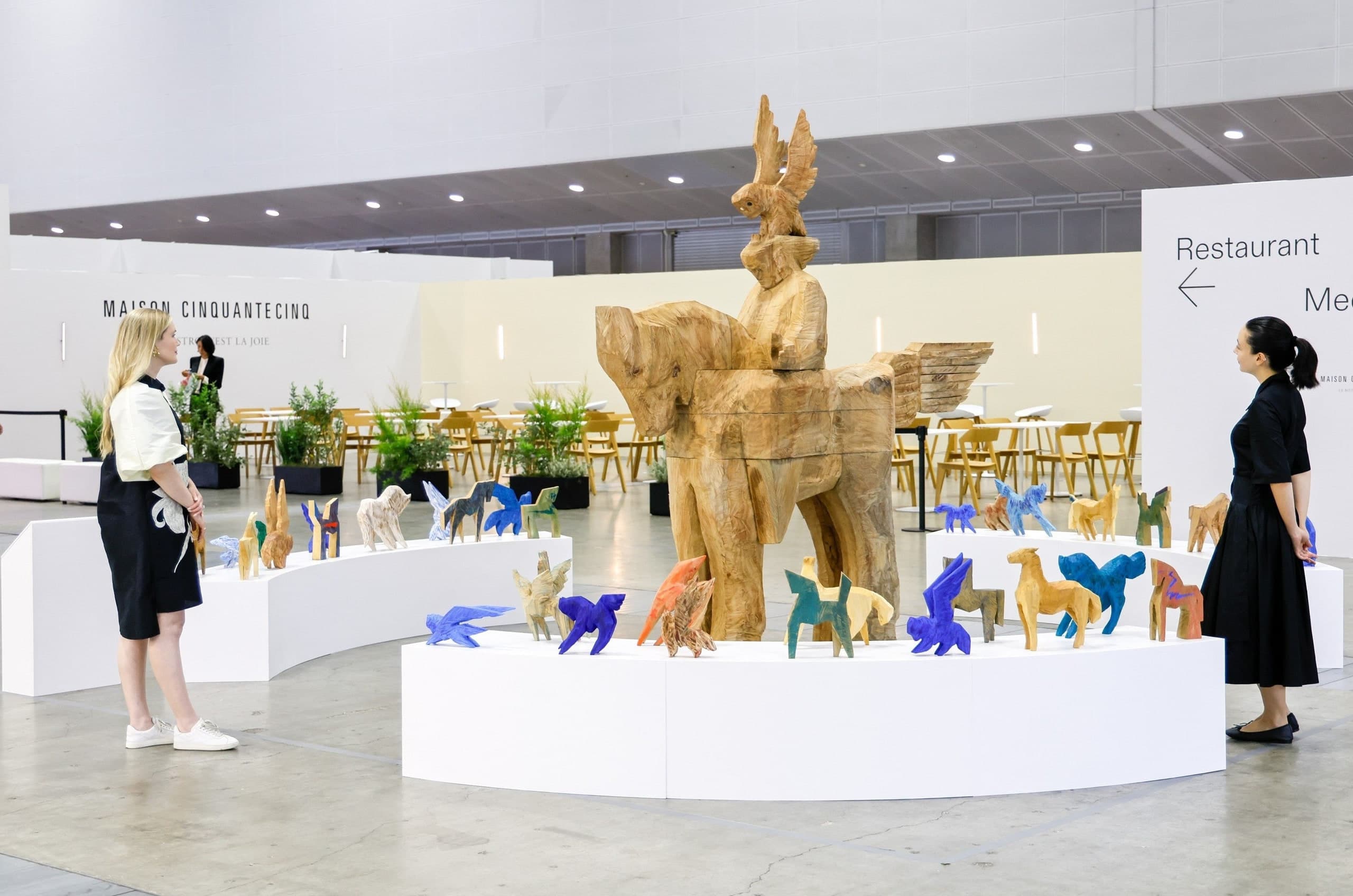
The fair occupies COEX alongside Kiaf SEOUL, organized by the Galleries Association of Korea. The dual-fair model can confuse first-time visitors. Think of it as two rooms in the same house: Frieze brings international blue-chip programming and curated sections; Kiaf carries the weight of Korea's domestic gallery ecosystem. Collectors move between them across preview days, comparing booth architecture the way sommeliers compare vintages.
In December 2025, the Galleries Association of Korea held an extraordinary general meeting and voted unanimously to renew the partnership with Frieze for another five years. The decision, reported with near-unanimous support from attending member galleries, signals that the joint model is no longer experimental. Seoul has committed to being a fair city on a five-year horizon.
What Happens Inside COEX
Frieze Seoul's layout rewards the prepared walker. Preview day begins with staged entry: collectors, then VIPs, then the professional crowd that trades information faster than invoices. Booth density is high but navigable if you study the map the night before.
The Focus Asia section, which Lee has cited as a driver of regional participation, concentrates younger galleries and curatorial projects that might be drowned out in a main-floor sea of established names. This is where you find the conversation that will matter in three years: a Manila gallery presenting a painter before the auction houses discover them, a Tokyo dealer testing a Korean collector base, a Jakarta studio project that looks better in person than on Instagram.
Kiaf SEOUL's floor carries different energy. Korean galleries show Korean artists with the confidence of a home game. International visitors who skip Kiaf miss half the point of the week. The domestic market is not a sideshow. It is the foundation that convinced Frieze to anchor here rather than in Singapore or Tokyo.
Sales happen quickly on preview day. By public opening, the best works at accessible price points are often spoken for. Diaspora collectors who fly in for forty-eight hours prioritize previews above hotel check-in. Jet lag becomes a negotiating posture.
The Diaspora Circuit
Fair week is not only COEX. It is the dinner circuit, the studio visit circuit, the museum morning before the preview circuit.
Collectors based in Hong Kong and Singapore treat Seoul as a northern complement to Art Basel Hong Kong each March. The cities are not rivals. They are bookends on an Asian calendar that now runs year-round. A serious collector in the region might anchor March in Hong Kong, September in Seoul, and December in Miami, with studio visits in between.
Korean diaspora collectors from Los Angeles, New York, and Vancouver use fair week as a reunion. The language in the room shifts between English and Korean. Deals are discussed over soju in Gangnam and over natural wine in Hannam. The social layer is as important as the transactional one. Trust in this market still travels through meals.
I watched a Hong Kong-based family office advisor schedule twelve meetings across four days last September. Three were booth visits. Nine were meals. By fair's end, two acquisitions were confirmed and one artist studio relationship had opened that no gallery intermediary could have engineered. This is how the Asian market actually moves.
Museums and the Institutional Floor

Fairs do not float in isolation. Seoul's museum layer gives fair week intellectual gravity.
The Leeum Museum of Art in Hannam-dong, operated by the Samsung Foundation of Culture, remains the institutional reference point for visitors who want Korean modern and contemporary art in depth. Following the national donation of the Lee Kun-hee Collection, the Leeum made permanent exhibitions free to the public, a civic gesture that collectors notice. Fair week schedules often include a Leeum morning before an afternoon preview.
The National Museum of Modern and Contemporary Art offers multiple locations; the Seoul branch in Jongno-gu rewards a half-day visit for collectors who want state-curated context before private acquisitions. Seongsu-dong, east of the Han River, has become a studio and gallery neighborhood where younger Korean artists work in converted industrial spaces. Fair week studio visits in Seongsu are appointment-only and competitive.
Hong Kong's institutional anchor, M+, opened in November 2021 with the Uli Sigg Collection at its core. Sigg, the former Swiss ambassador to China who assembled one of the world's most comprehensive holdings of Chinese contemporary art, represents the collector-as-institution model. M+ matters to fair week in Hong Kong each March. In Seoul, the parallel is Leeum and MMCA: museums that lend credibility to the market activity around them.
Adrian Cheng of K11 and New World Development operates at a different speed, merging retail footfall with museum-grade programming across Hong Kong, Shanghai, and beyond. Cheng's patronage network surfaces during Hong Kong fair week more than Seoul's, but his model influences how diaspora collectors think about visibility: art must live in public, not only in storage.
Patrick Lee and the Identity Question
Lee's interviews before the 2025 fair carried a consistent message: Frieze Seoul must feel like Seoul, not like London with kimchi.
That sounds like marketing until you walk the floor. The gallery geography has shifted decisively toward Asia. The collector audience has diversified beyond Korea's domestic base. Institutional attendance from Japan, Southeast Asia, and a reopening China has risen, according to fair reporting. Lee has emphasized staggered preview scheduling between Frieze and Kiaf as a practical innovation, reducing the crush that dual-fair models can create.
The director's background matters less than his consistency. Three years in, the fair has a recognizable personality: polished without being sterile, international without being imported, serious without the auction-house hysteria that can infect other fair brands.
Critics note that booth costs and ancillary expenses pressure smaller Korean galleries. That tension is real. Every successful fair creates winners and stressed participants. The December 2025 renewal vote suggests the domestic gallery association believes the tradeoff favors continuation.
Where to Be, and When
Fair week typically occupies early to mid-September. Confirm exact dates annually; the calendar shifts slightly year to year.
Preview days are by invitation or accreditation. Collectors should confirm eligibility through galleries or fair registration well in advance. Public days follow, useful for enthusiasts without acquisition budgets who want to read the market's temperature.
Hotels: The Park Hyatt Seoul in Gangnam and properties in Seongsu-dong serve different tastes. Gangnam minimizes transit to COEX. Seongsu places you in the gallery neighborhood after hours. Diaspora visitors often split: business hotel for fair days, boutique property for the weekend after.
Dining: September weather rewards long dinners. Hannam-dong and Itaewon's international restaurants fill with fair crowds. Book early. The best fair-week conversations happen at tables, not in booths.
Transport: Incheon Airport to Gangnam takes forty-five minutes to an hour by car. The subway works but preview mornings reward taxis.
Why September Stays
Art fairs proliferate. Collectors complain of fatigue. Seoul's September week persists because it solved a specific problem: Asia needed a northern fair anchor with institutional depth, domestic gallery support, and a diaspora network willing to treat the city as a destination rather than a layover.
Frieze Seoul is not perfect. Kiaf SEOUL is not perfect. Together they create a week where the region's collectors, curators, and artists occupy the same city with intent. The 64 percent Asian gallery figure is not a statistic. It is a statement about who sets the tone.
Hong Kong in March remains the commercial south. Seoul in September is the northern anchor. Diaspora collectors who understand both calendars hold a map of contemporary Asian art that did not exist a decade ago.
Fly in for preview day if you must. Stay through the weekend if you can. Walk Kiaf before you declare the week understood. Accept at least one dinner you did not plan. September in Seoul is no longer a regional art holiday. It is the week the diaspora calendar bends toward Gangnam, and the art world follows.
Continue Reading
Read The Banquet Guide to Seoul, The Return of Quiet Luxury in Seoul, and Why Design Miami Basel Matters to Asian Collectors.