
Central India asks for a different pace than Rajasthan.
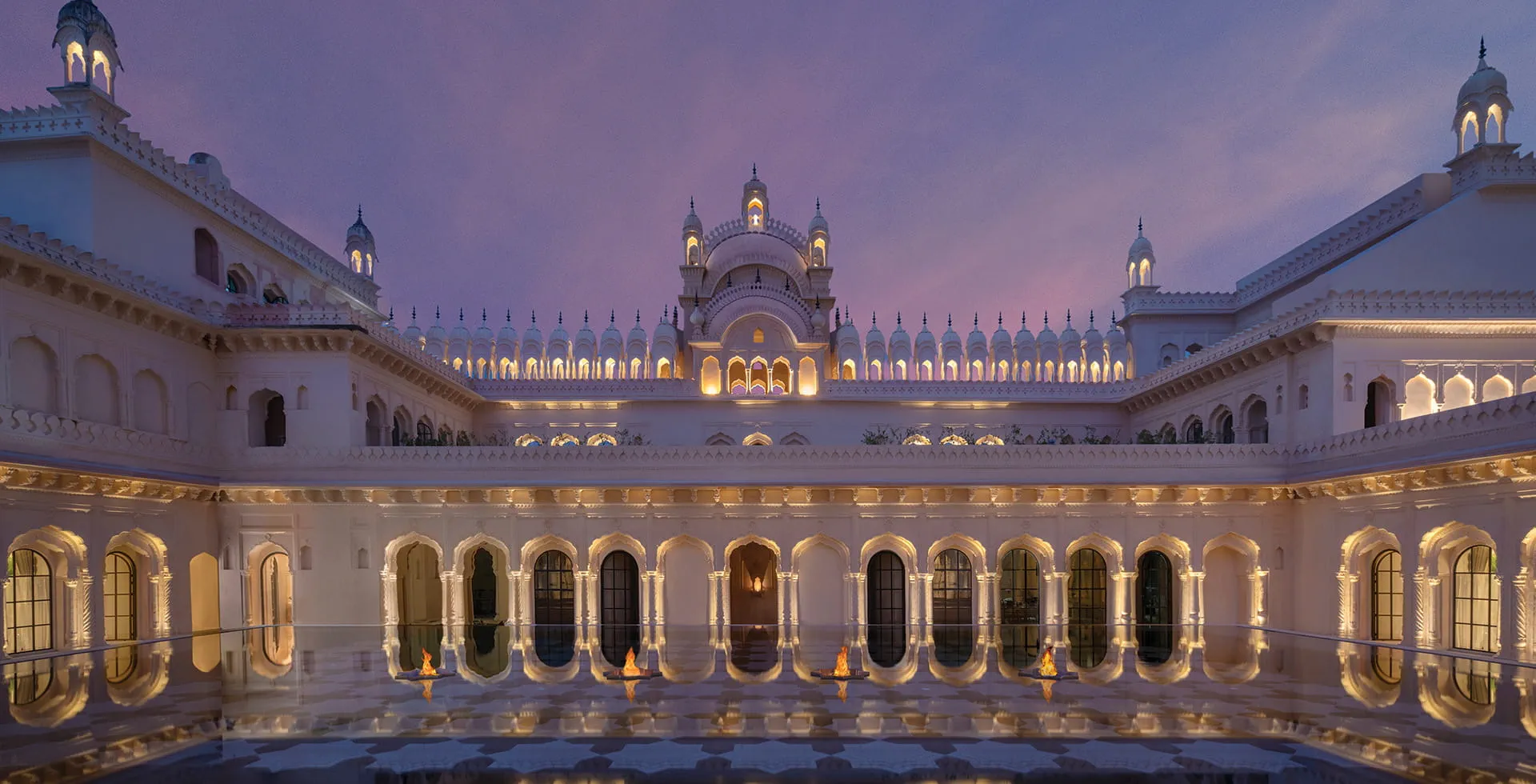
Khajuraho is not Jaipur's bazaar geometry or Udaipur's lake theatre. It is temple stone at sunrise, forest heat by mid-morning, and a growing argument that the serious traveler should stop treating Madhya Pradesh as a connection between Delhi and Mumbai. The Oberoi Rajgarh Palace, which opened in November 2025 on the Maniyagarh Hills above a rain-fed lake near Panna National Park, makes that argument physical. This is a room study: three nights to learn how a 350-year-old Bundela palace functions when Oberoi hospitality, UNESCO temples, and a recovering tiger landscape share one address.
"Bringing Rajgarh back to life has been both an honour and a responsibility." — Manav Mathur, General Manager, The Oberoi Rajgarh Palace (Oberoi press release, November 2025)
What You Are Actually Booking
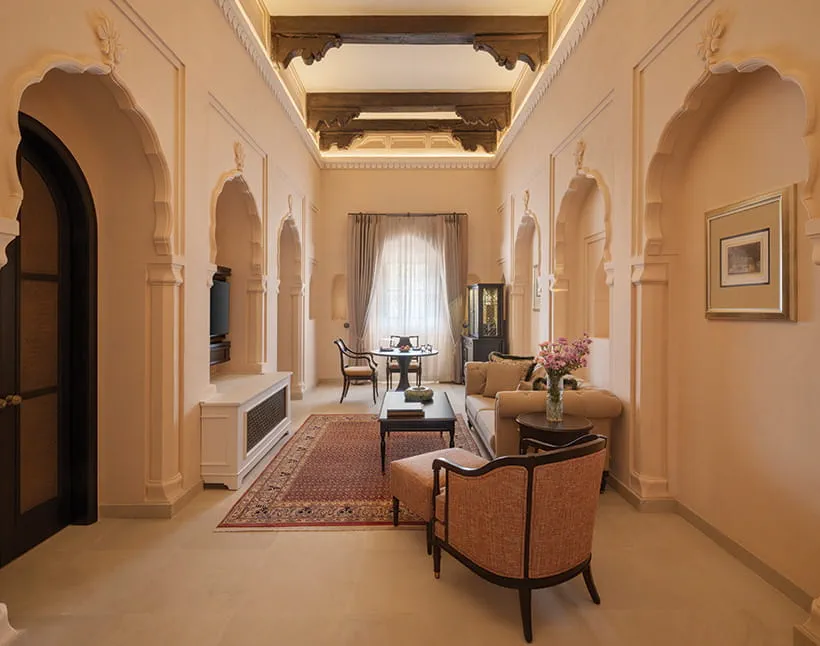
The property is not in Khajuraho town. It sits at Rajgarh, Tehsil Rajnagar, roughly Chandranagar, Madhya Pradesh 471101, on a 76-acre estate the Oberoi group describes as forest, courtyards, terraces, and lakeside promenade. The palace itself was built by Maharaja Hindu Pat of the Bundela dynasty; Oberoi's restoration teams worked with historians, conservation architects, and regional craftsmen to stabilize limestone interiors, vaulted ceilings, hand-carved pillars, and fresco work without turning the building into a stage set. Arjun Oberoi, executive chairman, framed the project as "bringing history back to life" while introducing contemporary comfort "with sensitivity and respect" (Oberoi, November 2025).
TIME named the hotel to its World's Greatest Places 2026 list, citing the pairing of restored palace life with Panna safaris and Khajuraho temple access. That is the product: not a city hotel, but a base camp for two UNESCO-grade reasons to be in this corner of India.
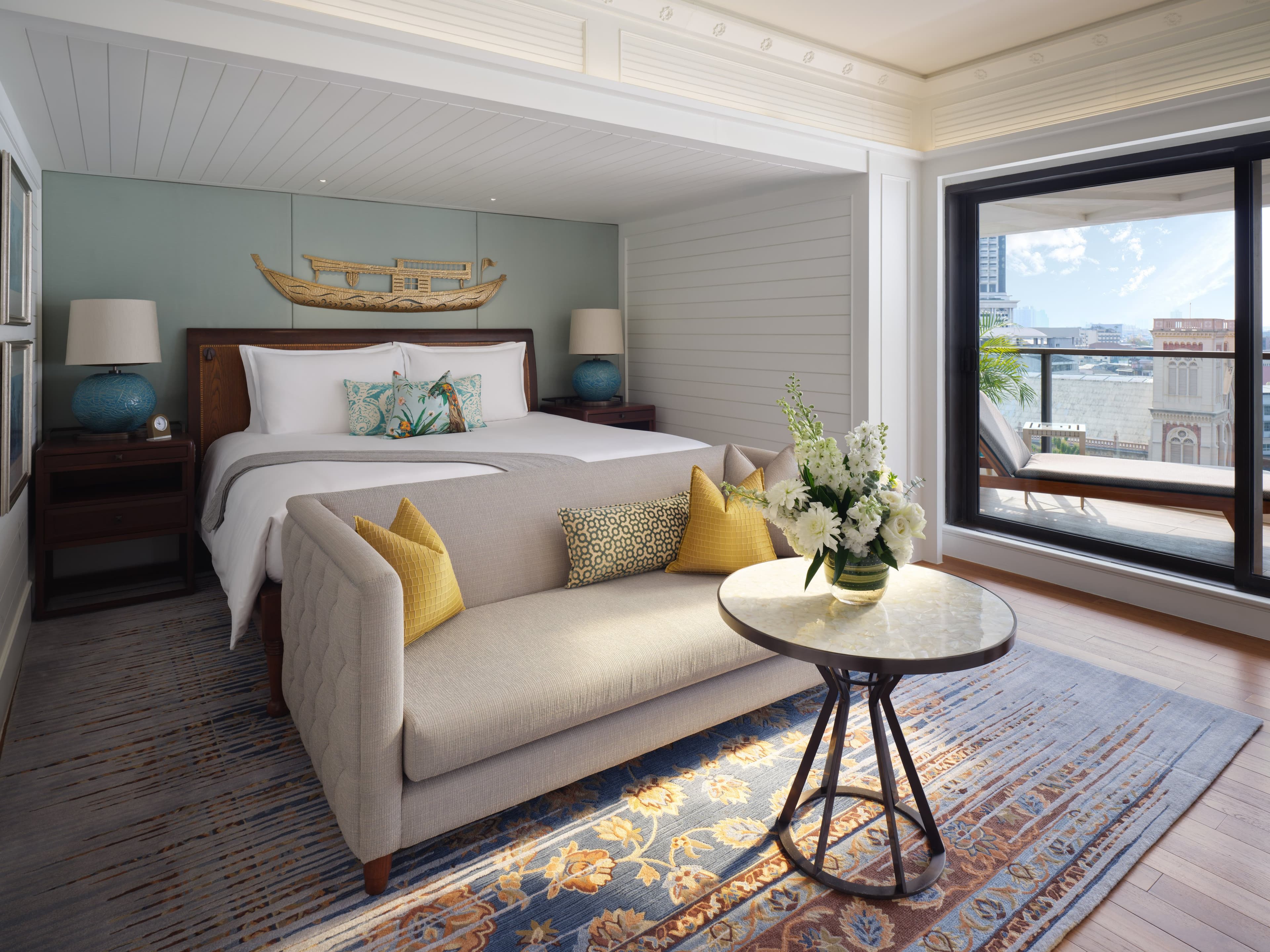
The estate holds 65 rooms and suites, from 50-square-metre Palace Rooms facing the courtyard reflection pool to the 400-square-metre Kohinoor Suite with two bedrooms, a 12-metre private pool, and views toward Panna. Mid-tier Premier Rooms (about 120 square metres) offer private gardens or 8-metre plunge pools. Palace Suites at 100–150 square metres add separate sitting rooms and, in terrace categories, park-facing outdoor space. Royal Villa categories reach 300 square metres with butler pantry service. Published Indian media have cited entry rates from roughly ₹73,000 per night for Palace Rooms to ₹95,000 for Premier pool categories, with suite pricing confirmed only at booking; treat any headline about ₹1 crore top suites as indicative until the hotel quotes your dates.
Arrival: Lake, Forest, and the First Slow Hour
Most guests fly Khajuraho Airport (HJR), then drive to the palace. Oberoi includes airport transfers on many packages; confirm when booking. The correct first impression is vertical: sandstone massing on the hill, Sal and Palash forest, the lake below, and the Vindhyachal ranges beyond. Check-in should not be rushed. The property rewards the guest who walks the Discovery Trail along the lakeside promenade before unpacking.
Dress for heat and modest temple visits later in the itinerary. Evening palace dress runs smart casual to formal depending on venue; Maanya is dinner-only and merits the extra effort.
If you have stayed at The Oberoi Vanyavilas in Ranthambhore or The Oberoi Vindhyavilas at Bandhavgarh, Rajgarh completes Oberoi's Madhya Pradesh wildlife triangle with a heritage anchor the tented camps cannot supply. Pashan Garh, Taj's stone cottage safari lodge near Panna, remains the alternative for guests who want jungle-first minimalism. Rajgarh is for travelers who want the forest outside the window but stone arches at dinner.
Night One: Echoes of the Past and Palace Evenings
Begin inside the walls. The Echoes of the Past tour with the palace historian covers what brochures call the Kachehri king's court, subterranean passages, and the evocative remains of the Mastani Mahal, named for the daughter of Maharaja Chhatrasal in Bundela lore. This is the difference between a restored hotel and a themed one: the dungeon and shrine are treated as archaeology, not animation.
Evenings are programmed rather than accidental. Palace Evenings fold dhoop daan rituals, dance, and storytelling about Panna's tigers and the region's diamond legends into the courtyard. Vikram Oberoi, chief executive, has said the group's aim is to "encourage a new set of travellers to visit Khajuraho" while supporting regional employment (Oberoi inauguration release, November 2025). You feel that intent in the staffing depth: naturalists, historians, and butlers appear when needed, not in costume parade.
Sleep in a Palace Room with Private Terrace if budget allows the Panna view; book Premier with Private Pool if you plan midday retreat from temple and safari heat.
Days Two and Three: Temples, Tigers, and the Ken River
Schedule Trails of the Chandela Kings for one morning: breakfast at Neerangan, the lakeside all-day restaurant, then a historian-led run to the Khajuraho Group of Monuments, the UNESCO site whose 9th–12th-century Hindu and Jain temples the Chandela dynasty raised between roughly 950 and 1050 AD. Oberoi positions the drive at about 30 minutes. Go at sunrise when stone reads warm and tour buses have not arrived. The carvings are explicit about life, devotion, and pleasure; the site's reputation for erotic sculpture is only part of a larger sculptural curriculum.
Afternoons belong to Panna National Park, which Oberoi describes as 543 square kilometres abutting the palace. The reserve is a Project Tiger success story after a near collapse of its big-cat population; Oberoi naturalists lead Into the Wild safaris with the understated confidence of people who listen for brush movement. Expect Bengal tiger possibility, leopard, sloth bear, gharial along the Ken River, and more than 200 bird species. Journey to Raneh Gorge adds pink granite canyon, seasonal waterfalls, and Ken Gharial Sanctuary before cocktails at Amrava, the courtyard bar.
Life Beyond the Palace Gates offers village lanes and shrine walks if you want human scale after big stone and big cats. MP Tourism also promotes Pardhi community walks in the buffer zone, a fraught history reframed as guiding livelihood; ask the concierge what is appropriate during your dates.
Dining as Regional Argument
Rajgarh's food program is stronger than many palace hotels where kitchen talent hides behind generic international menus.
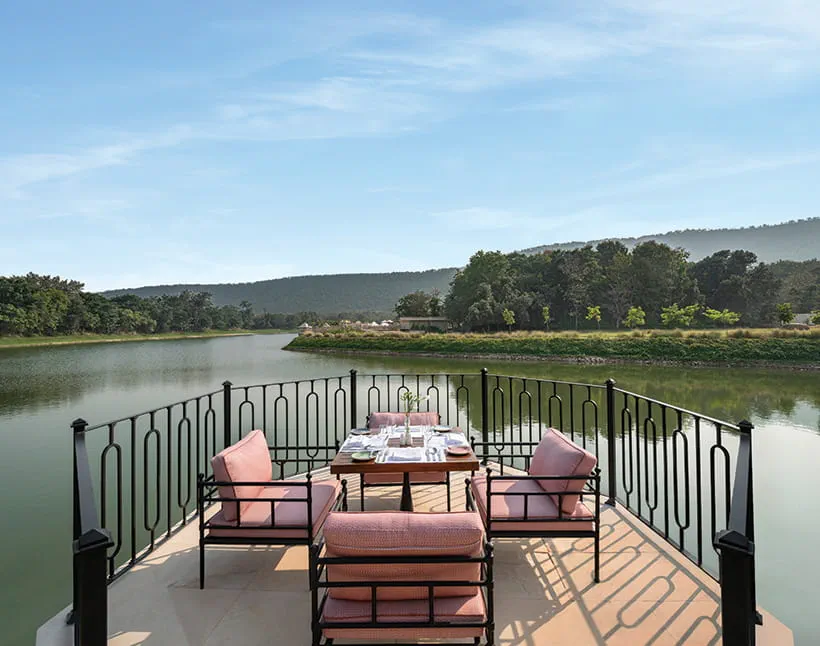
Maanya serves royal Bundelkhand recipes dinner-only in palace interiors and on a terrace facing the hills. Neerangan handles breakfast, lunch, and dinner lakeside, with Indian and international menus and evening live music. Amrava supplies cocktails and small plates beside fountains in the courtyard. Private dining rooms across the estate can host bespoke meals; Twilight by the Lake pairs a 90-minute couples spa ritual with champagne dinner on the water.
The kitchens emphasize Madhya Pradesh produce, a kitchen garden, and foraged seasonality on Maanya's menu (stone-hearth pizzas appear alongside regional curries and kebabs on Oberoi's dining pages). For Table readers, Maanya alone could support a future room study; here it suffices to say dinner is worth dressing for, and lunch at Neerangan is worth scheduling around safari return times.
Read Dinner at Indian Accent, Mumbai for how modern Indian tasting menus handle inheritance elsewhere on the subcontinent. Rajgarh is the opposite pole: regional royal recipes in situ.
Spa by Boat and the Oberoi Contract
Asmi by Oberoi spa rituals begin with a boat crossing of the lake to tented treatment suites. That arrival sequence matters: water, forest quiet, then therapy. Two temperature-controlled pools, one lakeside infinity and one within the palace, split day use between guests who want social calm and guests who want courtyard privacy.
Mohit Nirula, chief operating officer, described Rajgarh as proof that heritage, wilderness, and contemporary luxury could be integrated "with uncompromising attention to detail" (Oberoi, November 2025). The operational details support the claim: solar integration, solar-heated water, STP/ETP recycling, LED throughout, on-site bottling, and vegetable cultivation on estate grounds. Sustainability here is not a brochure badge; it is how a 76-acre property functions without insulting the lake it markets.
A Three-Night Frame
Night one: Arrive, historian tour, Amrava cocktails, early sleep after travel.
Night two: Pre-dawn Khajuraho with Oberoi historian, late breakfast at Neerangan, afternoon rest or pool, Maanya dinner.
Night three: Morning Panna safari, Raneh Gorge if energy allows, final lakeside walk, pack for Delhi or Mumbai connection.
Add a fourth night if you want a second safari window or if Bandhavgarh or Satna rail links require an easier departure day.
How It Compares on the Grand Tour
On the Asian Grand Tour, Jaipur teaches splendor through Rambagh Palace. Rajgarh teaches splendor plus ecology plus temple literacy. It is the stop for travelers who already own Rajasthan and want India to surprise them again.
Chief Minister Dr. Mohan Yadav, inaugurating the property in November 2025, called it "a remarkable addition to the state's tourism landscape" (Oberoi release). The state's bet is clear: luxury beds that keep guests in Madhya Pradesh longer than a temple half-day. Oberoi's 25-property development pipeline through 2030 suggests the group agrees.
Practical Notes
Address: The Oberoi Rajgarh Palace, Tehsil Rajnagar, Rajgarh, Chandranagar, Madhya Pradesh 471101, India.
Reservations: oberoihotels.com or +91 76863 53000. Confirm safari and temple timings with concierge before arrival.
Best season: October through June for Panna access; confirm park closure dates annually.
Rates: Published room categories and taxes change by season. Confirm total nightly price in writing before committing.
Air: Khajuraho Airport is the usual gateway; Satna and Jhansi rail are alternatives for combined itineraries.
Sensitivity: Panna is a living reserve, not a zoo. Khajuraho is active religious heritage. Dress and behavior should reflect both.
The Verdict
The Oberoi Rajgarh Palace is the most significant new palace opening in India since the country's luxury boom turned toward wildlife corridors and away from city glass boxes alone.
Three nights teach Bundela stone, Chandela dawn light, and Panna's second-chance tigers. The hotel earns its TIME listing not because the restoration is flawless marketing, but because the itinerary outside the walls is as strong as the suites within them.
Book terrace or pool category if heat will define your stay. Take the historian to Khajuraho once. Safari twice if you can. Confirm rates, transfers, and park permits directly with the hotel.
Read Three Nights at Rambagh Palace, The Asian Grand Tour, and The Art of Slow Travel in Kyoto for how other stops teach patience.