


Higashiyama sells dawn temple walks. Aman Kyoto sells the decision to stay put.
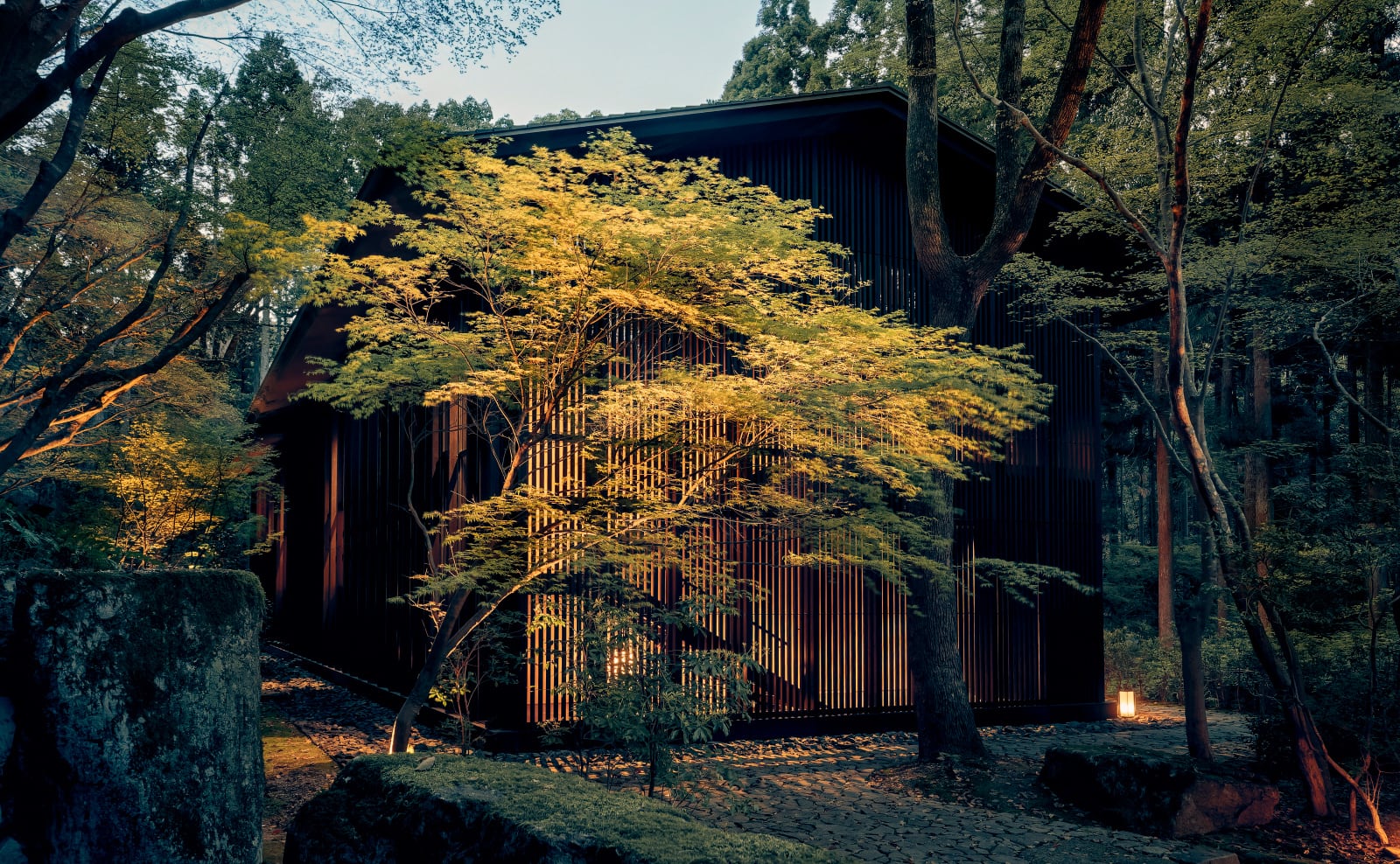
The resort opened on 1 November 2019 at 1 Okitayama Washimine-cho, Kita-ku, under Hidari Daimonji in Takagamine. You are roughly a twenty-minute drive from central Kyoto and a short hop from Kinkaku-ji, yet the product is a private forest garden first shaped in the 1970s for a textile museum that was never built. Kerry Hill Architects placed latticed pavilions on those mossed platforms so the canopy keeps the upper hand. Hill died in August 2018 before construction finished; the rooms still read as his last Japanese argument for the brand after A Lantern Above Otemachi.
“The materials and proportions of the pavilions are intended to feel Japanese, while not being traditional.”
Kerry Hill Architects, project description for Aman Kyoto, Australian Institute of Architects International Architecture Awards, 2020
Book three nights here when Kyoto needs a retreat spine, not another postcard room beside a bus queue.
What the Forest Is Doing
Shimizu Corporation built the resort between 2017 and 2019 for Kyoto Resorts. The plan is a contemporary homage to the ryokan: zinc roofs, timber lattice, stone paths, and rooms that behave as windows onto maple and cedar rather than as showrooms for the city.
Takagamine is also cultural ground. Hon’ami Kōetsu founded an artist community here in 1615, the milieu later tied to the Rinpa school. The Japanese restaurant Taka-An takes its cue from that history; nearby Kōetsu-ji remains a quieter temple walk than the Golden Pavilion circuit if you want the district’s story without another ticket queue.
Inside the grounds, the day orbits The Living Pavilion by Aman: fireplace, garden terrace, Western and Kyoto-leaning cooking, afternoon tea, and the soft drinks and evening aperitif that Aman folds into many rates. Confirm current inclusions when you book; the February 2025 factsheet still lists breakfast, garden tour, and spa onsen access among the standing compliments.
What You Are Actually Booking
Aman Kyoto holds twenty-six keys. Entry rooms (Susuki, Susuki Terrace, Nara, Kaede) run about sixty square metres with combined living and sleeping areas, tatami, a tokonoma, and a hinoki cypress bath. The Takagamine Suite and Washigamine Pavilion step up into one- and two-bedroom forest houses with kitchens and longer views; ask for pavilion inventory by name if privacy is the point.
Dining splits cleanly. Live in the Living Pavilion for breakfast and flexible nights. Put Taka-An on the calendar as its own reservation: omakase by chef’s recommendation in a pavilion with a solid timber counter, seating for about twenty-four. Shinichiro Takagi, of Kanazawa’s Zeniya, has led Taka-An since April 2020; treat published lunch and dinner bands as planning signals and confirm through the restaurant desk (+81 75 496 1335).
Aman Spa adds indoor and outdoor onsen bathing drawn from the local spring, plus treatment rooms and garden yoga when scheduled. Soften any brochure count of rooms against what the spa desk confirms for your dates.
Airport math is northern Kyoto math: about ninety minutes by express train or two hours by car from Kansai International, about an hour from Itami, and roughly thirty minutes from Kyoto Station when traffic behaves. Central reservations sit on aman.com; Japan phone +81 3 4577 7920.
How a Diaspora Traveler Should Use It
Use Aman Kyoto when the week’s question is recovery, not coverage. Pair it with one Higashiyama hotel block if you still want Kodai-ji mornings: What Park Hyatt Kyoto Teaches About Arrival and Capella Kyoto Starts in the Alley remain the southern contrasts. The Banquet Guide to Kyoto already flags Aman and Roku Kyoto as north-retreat options; Aman is the smaller, quieter key count inside that map.
Night one: Arrive before dark if you can. Walk the stone paths once without photographing every lantern. Eat in the Living Pavilion unless Taka-An is already booked.
Day two: Onsen before any temple. Keep Kinkaku-ji as a short early car if the gold pavilion is non-negotiable; return for garden time rather than stacking Arashiyama the same afternoon.
Day three: Hold the forest. Calligraphy, tea, or a guided garden hour beats another shopping street. Leave for the station only when the next city is already pulling.
We'll be blunt. If you need nightly Gion dinners and a walkable Kaburenjo, stay in Higashiyama. Aman earns the rate when the canopy is still the reason you booked.
The Verdict
Aman Kyoto is Japan’s forest Aman: Hill’s pavilion grammar, Takagamine’s older arts district, hinoki baths, and a Living Pavilion that makes three nights feel like a complete trip. The fanfare is maple season. The useful test is quieter. Does the stone path still slow you on a wet Tuesday in July?
Book through aman.com/resorts/aman-kyoto. Ask for Nara or a pavilion by name if the forest window is the point, and put Taka-An on the calendar before the room.


