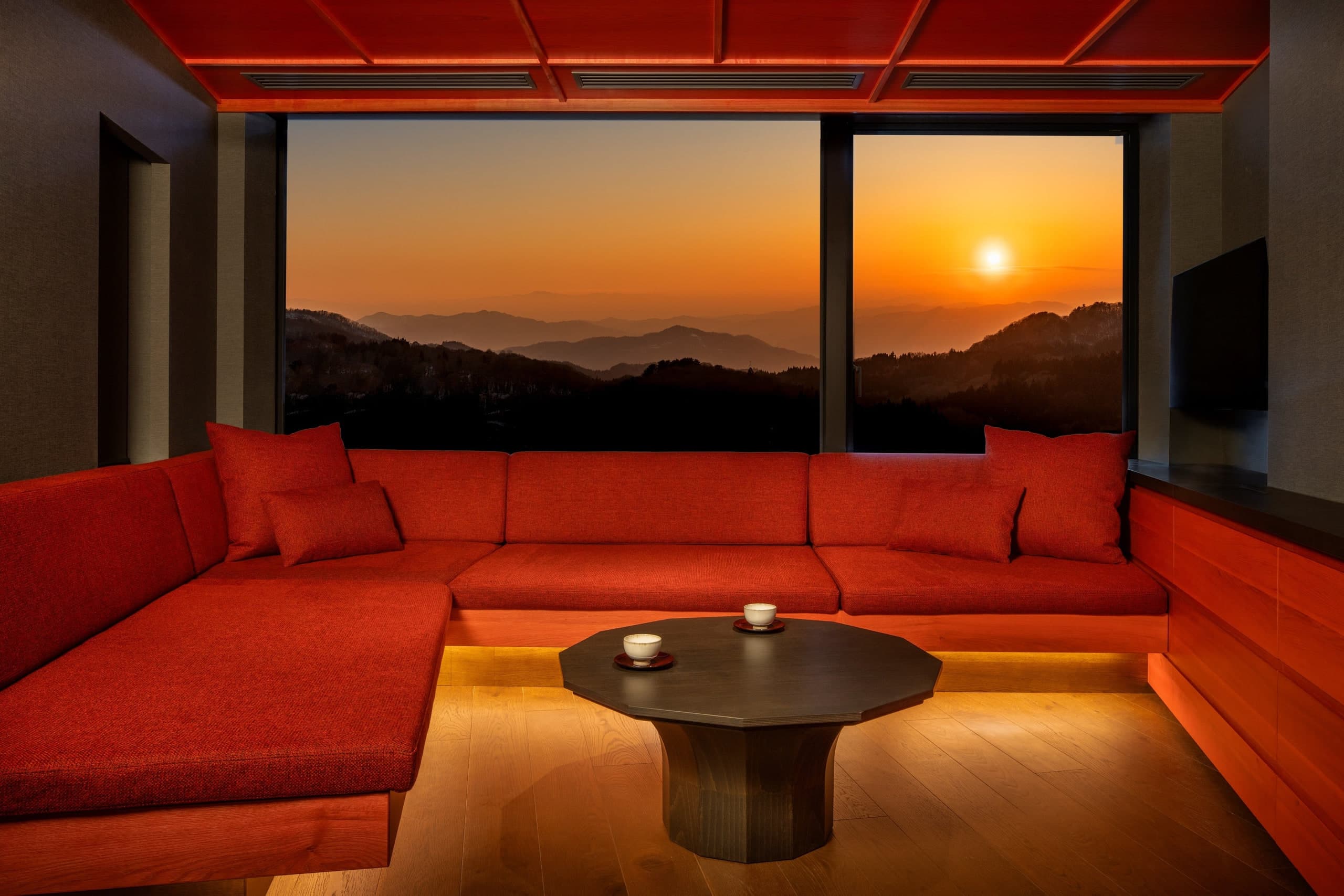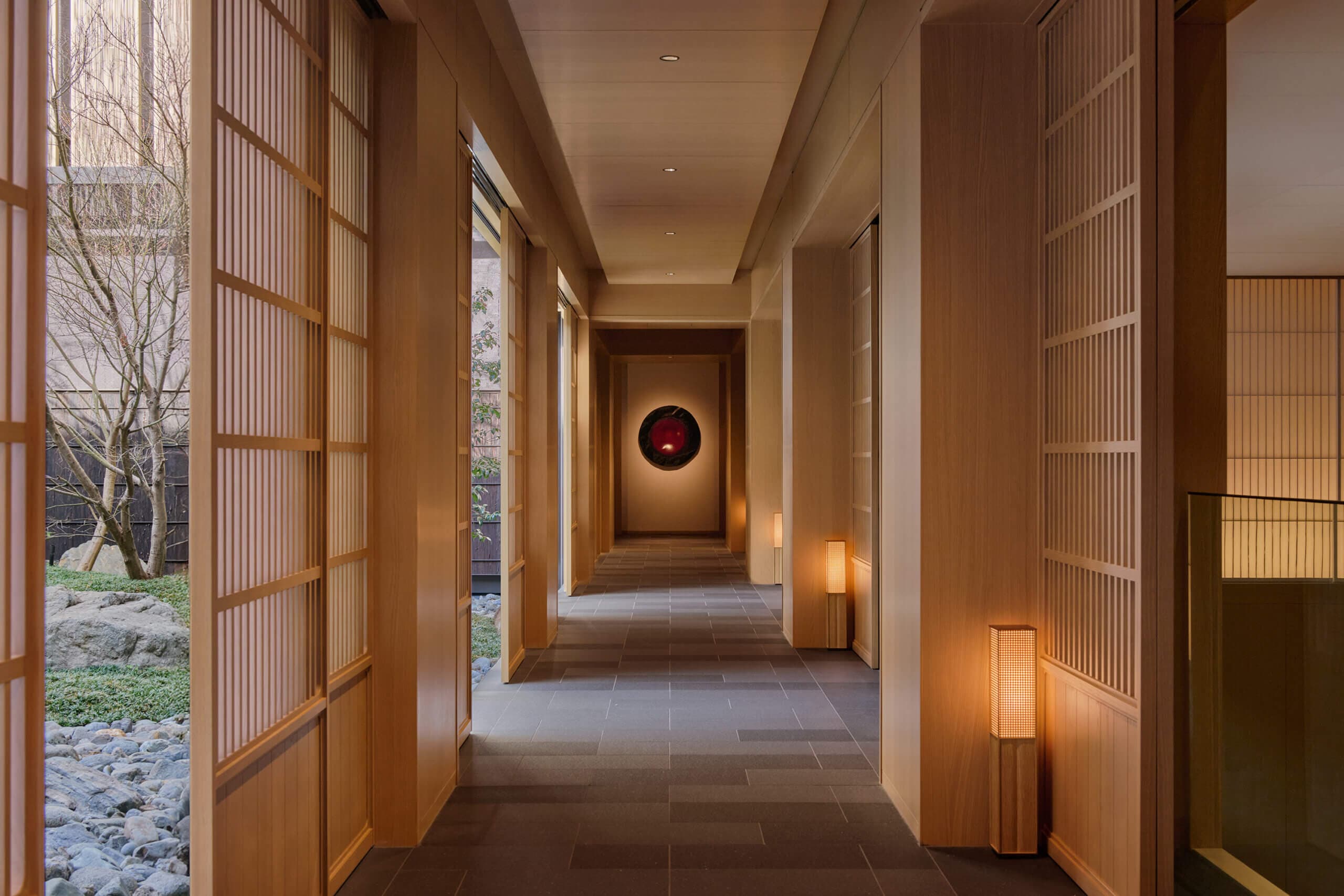
Book the bath before you book the mountain. Hotel The Mitsui Hakone opens on 15 December at 450-1 Kowakudani, and the promise actually written into the release is a private hot spring in all 126 rooms, drawn from a source on the grounds, with a balcony or terrace on every one of them. Reservations have been open since 15 July, so the opening weeks are already a conversation with the book. The shared bath is the line I would read twice. It faces Mount Sengen, the Jakotsu River is close enough to hear, and you wear a swimsuit. If your Hakone memory is a ryokan, where the public bath is taken bare, that footnote changes what you pack.
The building is new, on ground the family has used for a long time. Kowakudani is where Mitsui villas once stood in a cluster, and this hotel takes about 14 hectares of that ground inside Fuji-Hakone-Izu National Park, rising about 45 metres from the river, with the forest on the mountain side left standing. The old house you can still have dinner in is a different street number: Hakone Suishoen, at 519-9, a 1925 Mitsui villa registered as a cultural property and run now as a ryokan. Keep the two addresses apart when you search. Both are quiet. Only one of them is opening in December.
If you know Hotel The Mitsui Kyoto, the temptation is to import its reputation with the general manager. Manabu Kusui opened that hotel and ran it until this summer. On 1 July 2025 he took Hakone as its first general manager and kept the brand, and Yoshihito Kaseda took Kyoto. Let him travel, and leave the prizes on the other door. Kyoto's Forbes five stars, a fifth year in the 2026 guide, and a third year of Michelin's three keys, announced in September, belong to the building opposite Nijo Castle. Hakone has not been inspected. You are booking the bath in the room, and a man who already knows how this house likes to be run.
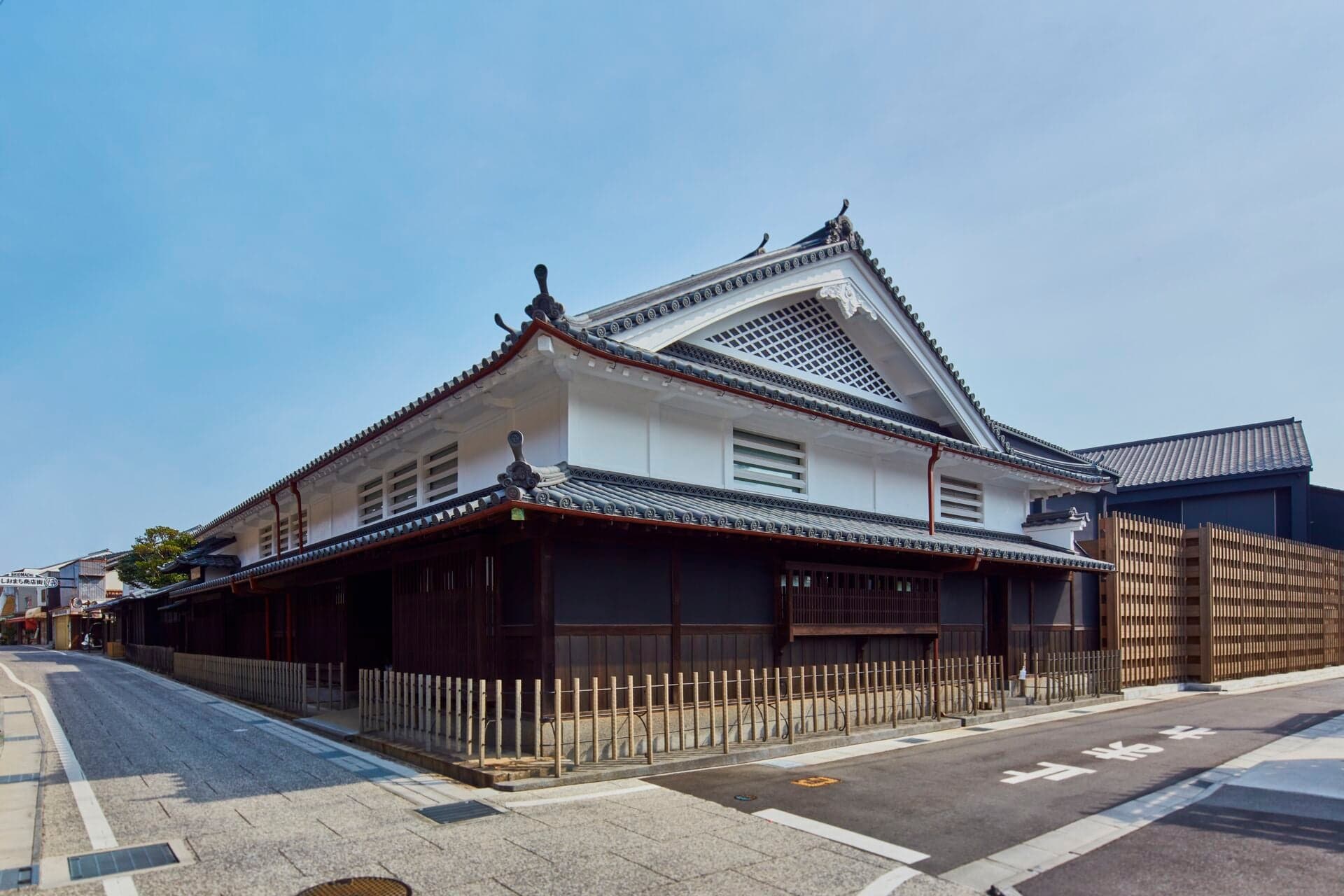
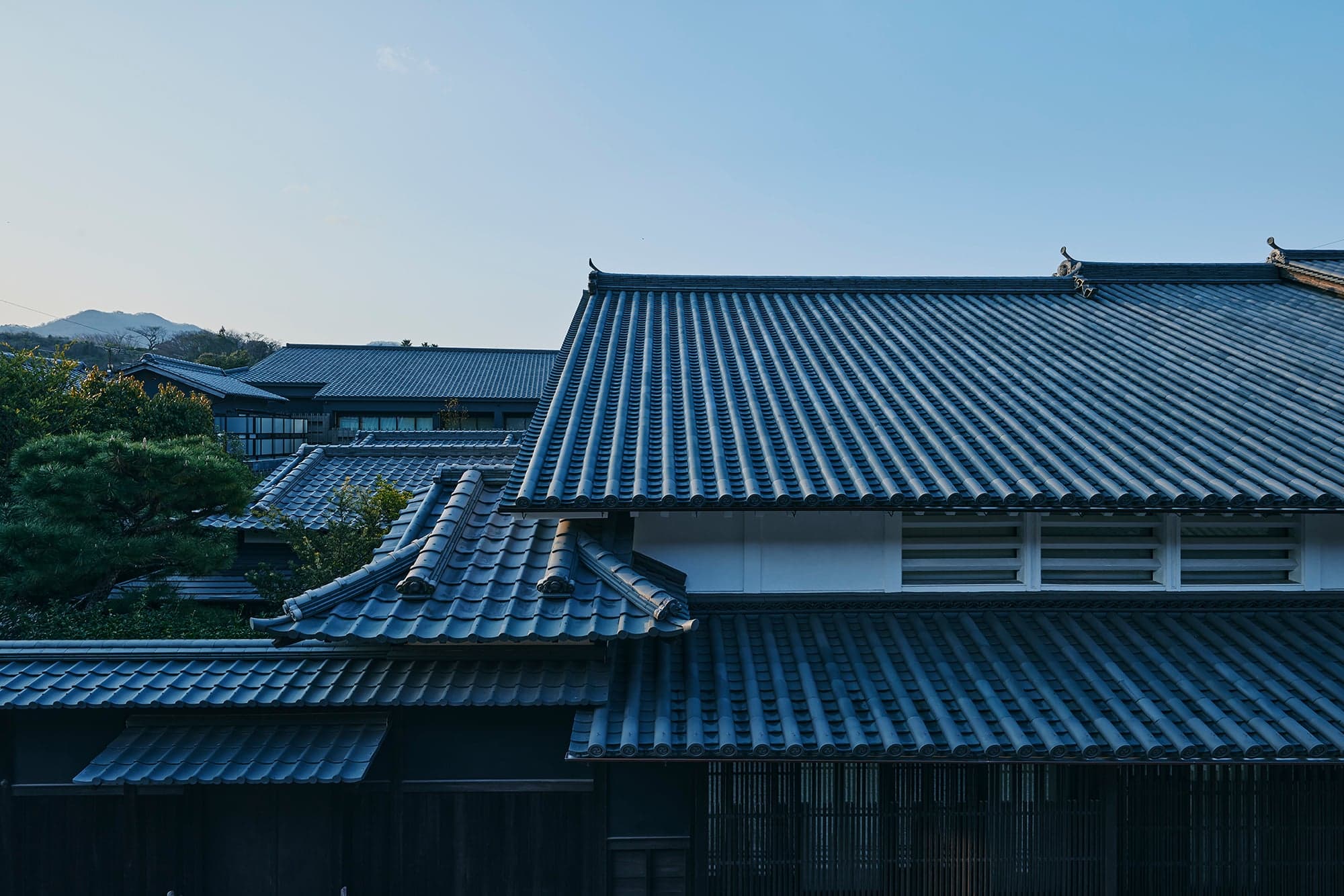
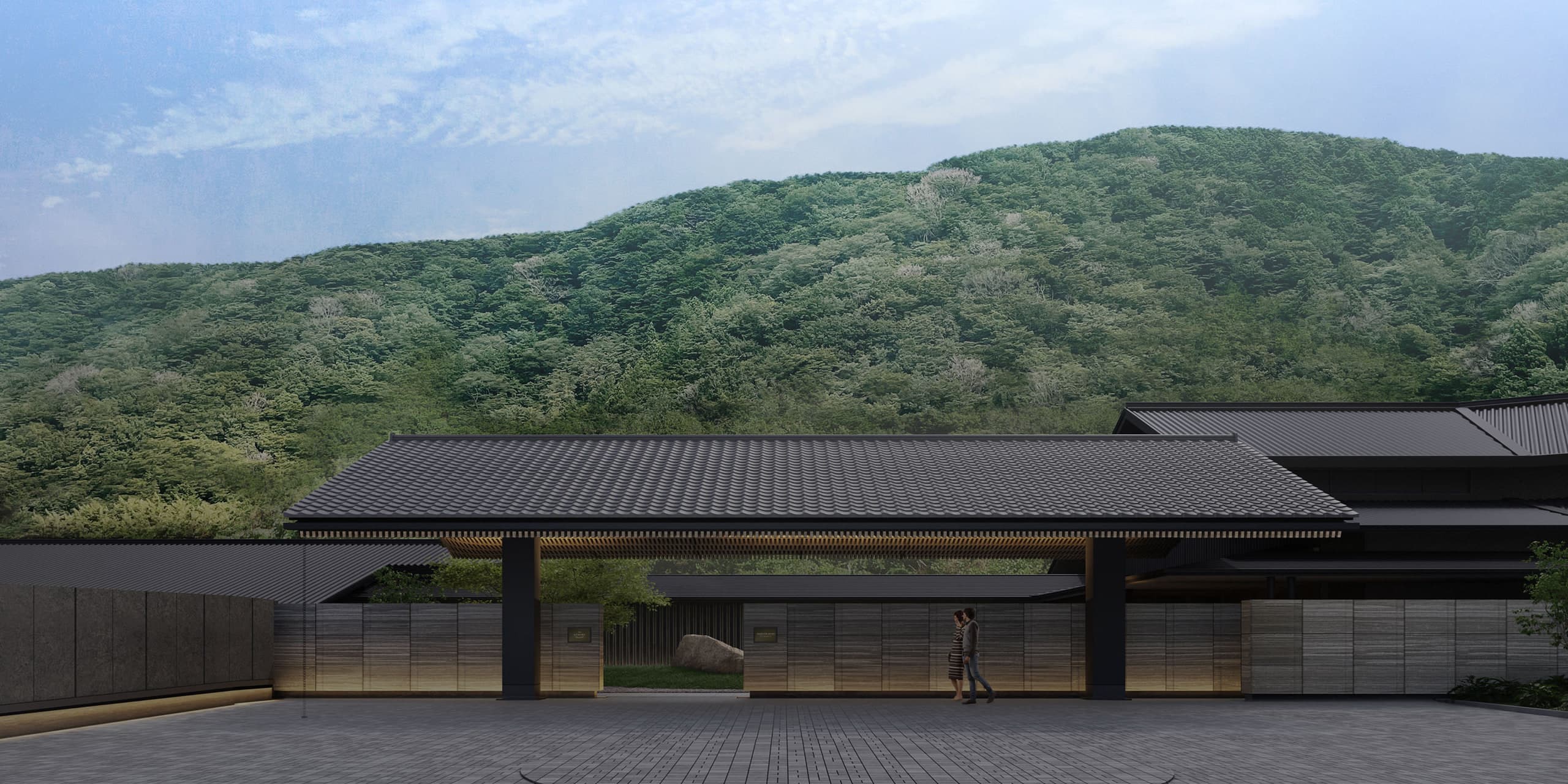
The picture above is the hotel's rendering of the gate, a long tiled roof with Mount Sengen behind it. Mitsui said in July that every view in the announcement is an illustration. I would treat the room the same way until you are standing in the water.
"I think of cooking as an experience that holds the room, the hour, and the hospitality, together with the plate. I go myself to the producers and the makers, and I choose the ingredients, the vessels, and the cutlery after I have heard what they are trying to do."
Hiroshi Takahashi wrote that for the 13 July release. Our translation. He was deputy executive chef at the Ritz-Carlton Tokyo and then ran the kitchen at Halekulani Okinawa, and the sentence is really a shopping note: he wants to have stood in the workshop before a bowl reaches the table. At Sankei, the Japanese restaurant, the kaiseki is Hiroyuki Kurosu's. The hotel's mention of three consecutive Michelin one-star years points back to the Japanese kitchens Kurosu ran at the Ritz-Carlton Tokyo from 2008 to 2010. Nothing has been awarded to the Hakone dining room. Go for the cook, and wait on the star.
Forty-three rooms, and five villas with the outdoor bath
The room chart is longer than the decision. Forty-three deluxe rooms, 48 square metres and a balcony of 10 square metres, already have the private spring, and that is the stay most people should book. The mountain comes with it. An open-air bath of your own is a different purchase: three villas, a terrace villa with a private garden, and a signature villa of 217 square metres. One presidential suite sits above those, 240 square metres and a terrace of 81. Yabu Pushelberg shaped the rooms, Takenaka built them, and Nikken Sekkei ran the project. None of those names will tell you which bath you wanted. Decide that before you fall for the rendering.
Shiki-an, deeper in the trees, is the room with the oldest ambition. Yasui Mokko, the Kyoto carpenters who built the seasonal room at the Kyoto hotel in 2020 and who have been repairing Katsura Imperial Villa for decades, put up this sukiya teahouse for tea gatherings, and the release says some of the timber was cut on the site. I would walk out there even if tea is not the plan. It is the one place still trying to behave like a villa.
Eat at Sankei if you eat once. Sixty-four seats, a kaiseki counter, ten at the sushi bar, teppanyaki, a private room, bamboo on the walls. Riverine is the other night, and the morning: a buffet breakfast, a grill dinner of Sagami Bay fish, ninety-six seats and a terrace toward the mountain. That is the meal for when the bath was the point and dinner should be easy. Lambent comes after, Japanese whiskey under a long piece about the Tokaido as it runs from Kyoto through Hakone to Nihonbashi. Thirty-four seats. If the Tozan was slow, this is the hour that repairs it.
The two-minute walk ends at a drive
The direction worth remembering is the one the website tucks under a two-minute walk. Kowakidani Station really is about two minutes from the hotel entrance. The grounds then climb those 45 metres, and the hotel will drive you the rest of the way, free, if you ask at that entrance. Ask before you start up. A walk to the gate is a different errand from a walk to the door, and a Hakone slope is unkind to a suitcase.
How you reach the station depends on where the day began. From Tokyo, the shinkansen to Odawara takes about thirty-five minutes, then about fifty on the Hakone Tozan line. The Romancecar from Shinjuku is the way in through the valley, about an hour and ten to Hakone-Yumoto, where you change for the Tozan. From Haneda, budget about two hours in a taxi. Marriott says the hotel does not run an airport car, lists check-in at 3:00 and check-out at noon, and asks that you be 18. I would confirm all three when you call +81 460-83-3122, weekdays from 9:00 to 18:00, because that is also when you should take the rate. It moves with the date. A figure you saw in the summer will not be December's.
The Grand Tour is the trip for someone who already wants both hotels, and it starts at a suite: the deluxe suite here with Kyoto's Nijo suite, or a presidential suite in both, or the signature villa against Kyoto's presidential. A car meets the train at each end. The Green Car between Kyoto and Odawara, the Haneda transfer, and a local car from 9:00 to 19:00 have to be requested ahead. They will not be waiting because you hoped they would. Treatment is ninety minutes for two on the suite version, two hours on the top. Dinner is Sankei or Riverine here, Toki or Forni in Kyoto. None of it comes with the 48-square-metre room. The Banquet Guide to Kyoto covers the night you already know how to plan.
If what you wanted was tatami, and a kaiseki that organizes the whole evening, Gora Kadan is a short taxi up the same valley. The New Generation of Luxury Ryokans is the case for staying there. Kowakudani, from 15 December, is the hotel where the spring is already in the room.