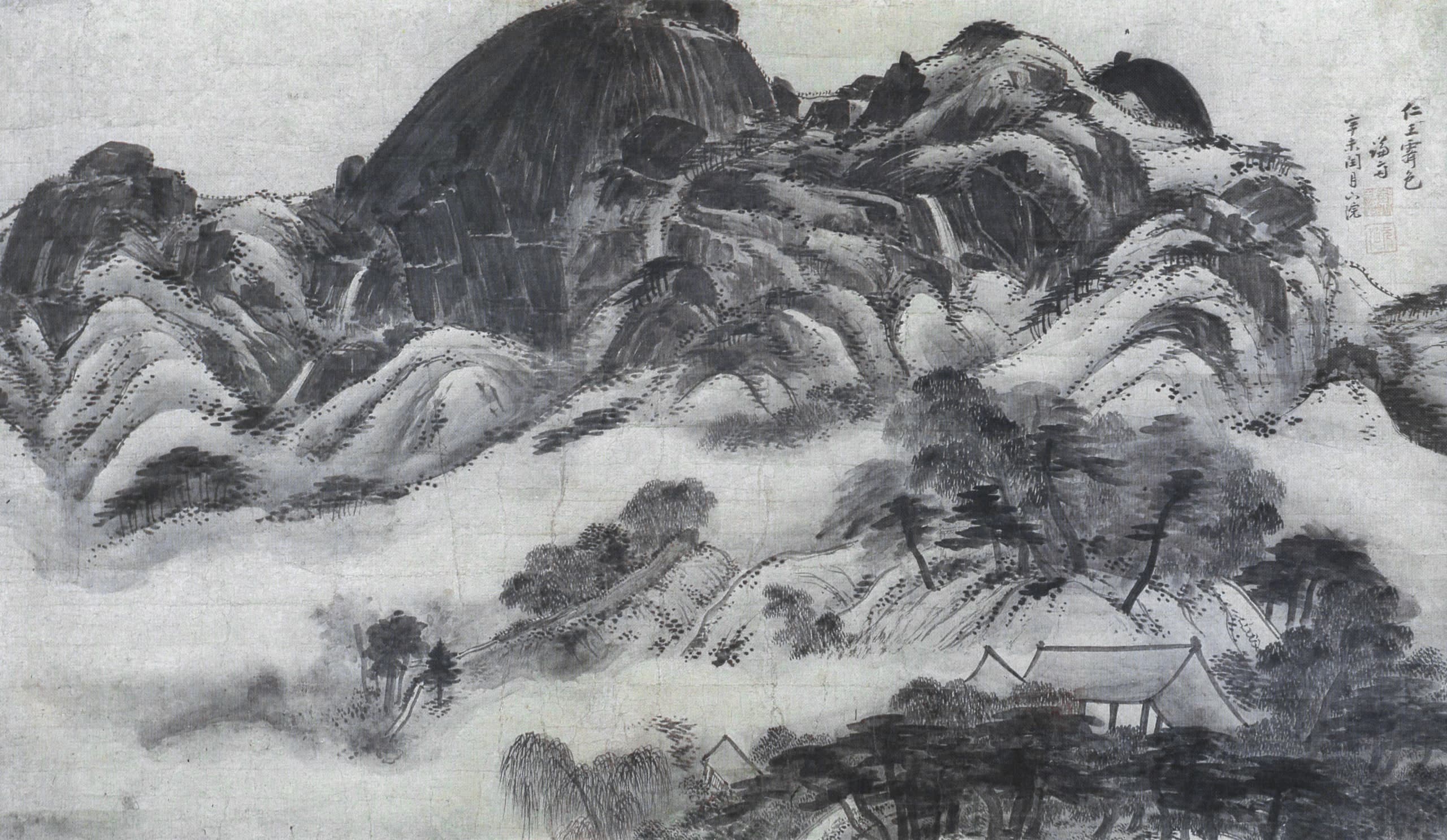
Give ninety quiet minutes to a mountain painted in Seoul in 1751.
Jeong Seon’s Clearing after Rain on Mount Inwang hangs through 31 January 2027 in Room 35, the Joseph Hotung Great Court Gallery at the British Museum. Ink, mist, a few rooftops through the trees: a National Treasure that usually lives in Korea, now level with the Great Court’s glass roof. Korea: 2,000 Years of Creativity is built around objects like this one. Treat the title as a promise of density, then ignore the century-count and walk case by case. The show earns a diary line because these works are rarely this close to a London Tube exit.
Most of what you see comes from the roughly 23,000 works the family of the late Samsung chairman Lee Kun-hee gave to Korea’s national museums in 2021. About 185 pieces have travelled for London, with a fuller National Treasure lineup than the earlier Washington and Chicago stops. Sang-ah Kim, curator of the British Museum’s Korean collections, leads the hang. She has said Jeong Seon’s landscape is “extremely important to Korean art history,” and that Lee and his wife bought it early, together. That joint purchase is the human detail that sticks. The scroll is also simply beautiful: moisture still sits in the rock.
“Prior to this, a lot of artists painted idealised Chinese landscapes, but he painted his own surroundings instead. His work is extremely important to Korean art history.”
Sang-ah Kim, on Jeong Seon’s Clearing after Rain on Mount Inwang (Apollo, 2026)
Stay With the Mountain, Then the Glaze
If the room lets you, start at the Jeong Seon and do not rush. Before him, Joseon painters often borrowed Chinese ideal mountains. He painted a ridge west of the palace district that he had known for decades, at seventy-five, on a sheet about 79 by 138 centimetres. Wall text will say true-view landscape. What you feel is weather: summer rain clearing, valleys holding mist, a city barely admitted at the edge. Stay until you can point to a rooftop. Then step aside. The next person deserves the same minute.
From there, let the celadon reset your eyes. A thirteenth-century gourd-shaped ewer carries chrysanthemums inlaid in white and black slip under that grey-green Goryeo glaze collectors still chase. It was made for elite tables, not vitrines, which is why the craft reads as slightly smug in the best way. Nearby, a sixth-century gilt-bronze Bodhisattva triad from the Three Kingdoms period puts the Bodhisattva at the centre with monks at the sides. In Chinese formulas the Buddha usually holds the middle; here the iconography has already been rewritten for a Korean workshop. Lean in until the faces resolve. Kim has said she wants visitors to take the smallest bronzes seriously; the skill is easier to miss than the mountain.
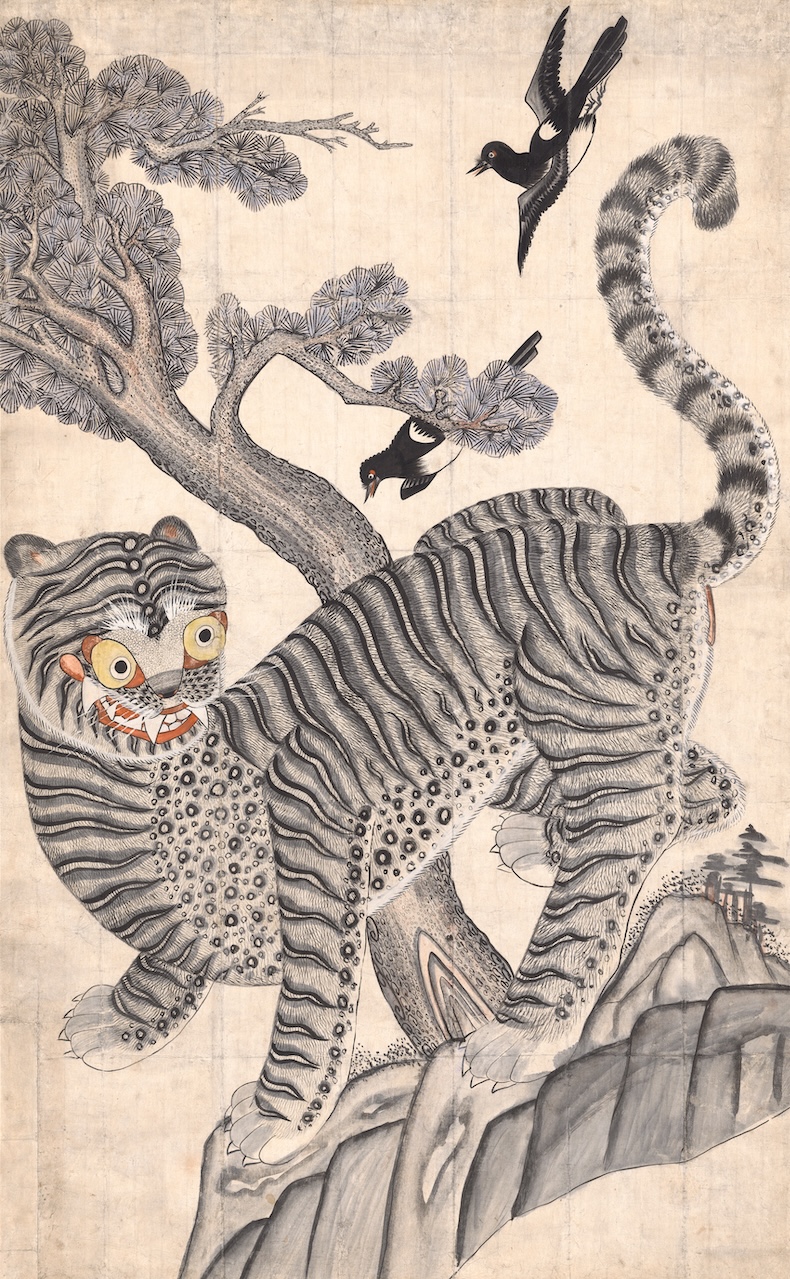
The gilt-bronze burial shoes will make someone in your party laugh, then go quiet. They look almost like fashion until you remember the tomb. A few steps on, early ritual bronzes from Bisan-dong in Daegu push the story back toward 300–100 BC; some are on public view for the first time on this tour. Tiger and Magpie, bright and a little comic, is making its first overseas outing here. If you collect screens, look for the sun-moon-and-five-peaks type that once sat behind a throne, and for chaekgeori panels that stack books and curios in painted shelves. Those two tell you Joseon taste ran from palace theatre to the scholar’s study.
Contemporary loans from the National Museum of Modern and Contemporary Art, Korea, including Nam June Paik, close the walk. Fine. Do not let Paik become the reason you came. The mountain and the ewer already are.
For readers who follow how private gifts become public hangs, Hong Kong's Collection Lands in Vancouver is a useful parallel. For another museum morning booked for the works themselves, see Fantasy Opens at M+ Before the Paris Fairs.
How to Use Room 35
Book the special exhibition on britishmuseum.org/exhibitions/korea before you invent a clever Bloomsbury loop. Early-bird adults have listed from £14; later bands have posted around £20, with concessions and National Art Pass rates below that, under-16s free with a ticketed adult, and members free. Confirm the live price before you leave the hotel. Hours follow the museum: 10:00–17:00 most days, Fridays until 20:30. Miss 1–2 December, when Room 35 closes for a rotation of light-sensitive works, and 24–26 December, when the museum itself is shut. Tottenham Court Road and Holborn are the nearest stations; the Great Court is less of a scrum if you arrive with a barcode and a midweek morning.
Give Room 35 the unhurried stretch. Then walk to Room 67, the free Korea Foundation Gallery, opened in 2000 and refurbished in 2014 with National Museum of Korea support. It is quieter, smaller, and useful after the Hotung density: the museum’s own Korean collection without the ticketed press. A free audio tour on selected highlights sits on the British Museum Audio app if you want wall text without standing in a second queue. Kim’s companion volume from British Museum Press (hardback, about £40) is a winter purchase. Buy the ticket first, then stand with the mountain while it is still upstairs in Bloomsbury.