London finally gives Elsa Schiaparelli a museum argument large enough for her method.
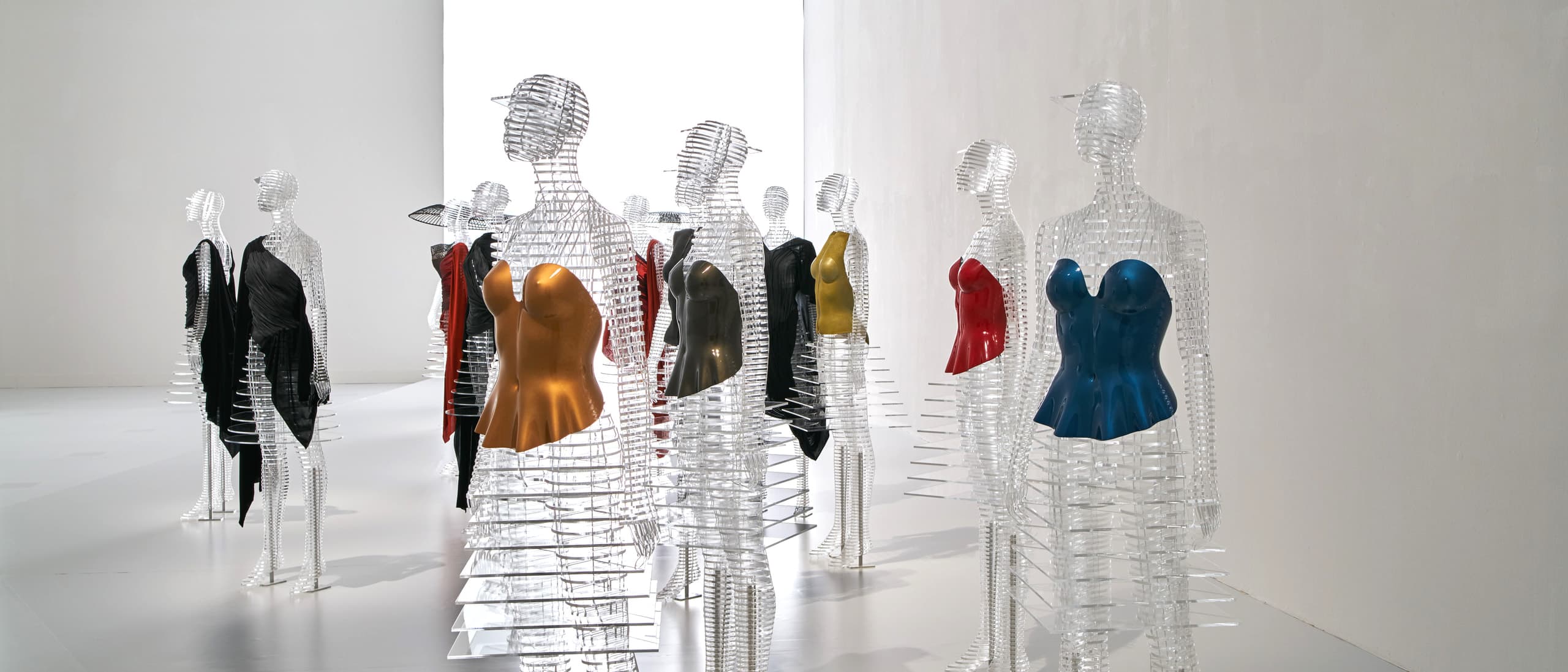
Schiaparelli: Fashion Becomes Art, the United Kingdom’s first exhibition devoted to the house, fills the V&A’s Sainsbury Gallery at South Kensington through 8 November 2026. About 400 objects move from the 1920s trompe-l’oeil bow sweater to Daniel Roseberry’s red-carpet anatomy. One hundred ensembles. Fifty artworks by names including Picasso, Jean Cocteau, Man Ray, and Eileen Agar. Perfume bottles, furniture, jewellery, archive paper. The Banquet brief is narrower. The V&A is staging couture as Surrealist proposition: a dress that carries a message beyond silhouette.
“It wasn’t about reimagining silhouette. It was about image making.”
Daniel Roseberry, Schiaparelli creative director, to WWD
Bones Outside, Lobster on the Line
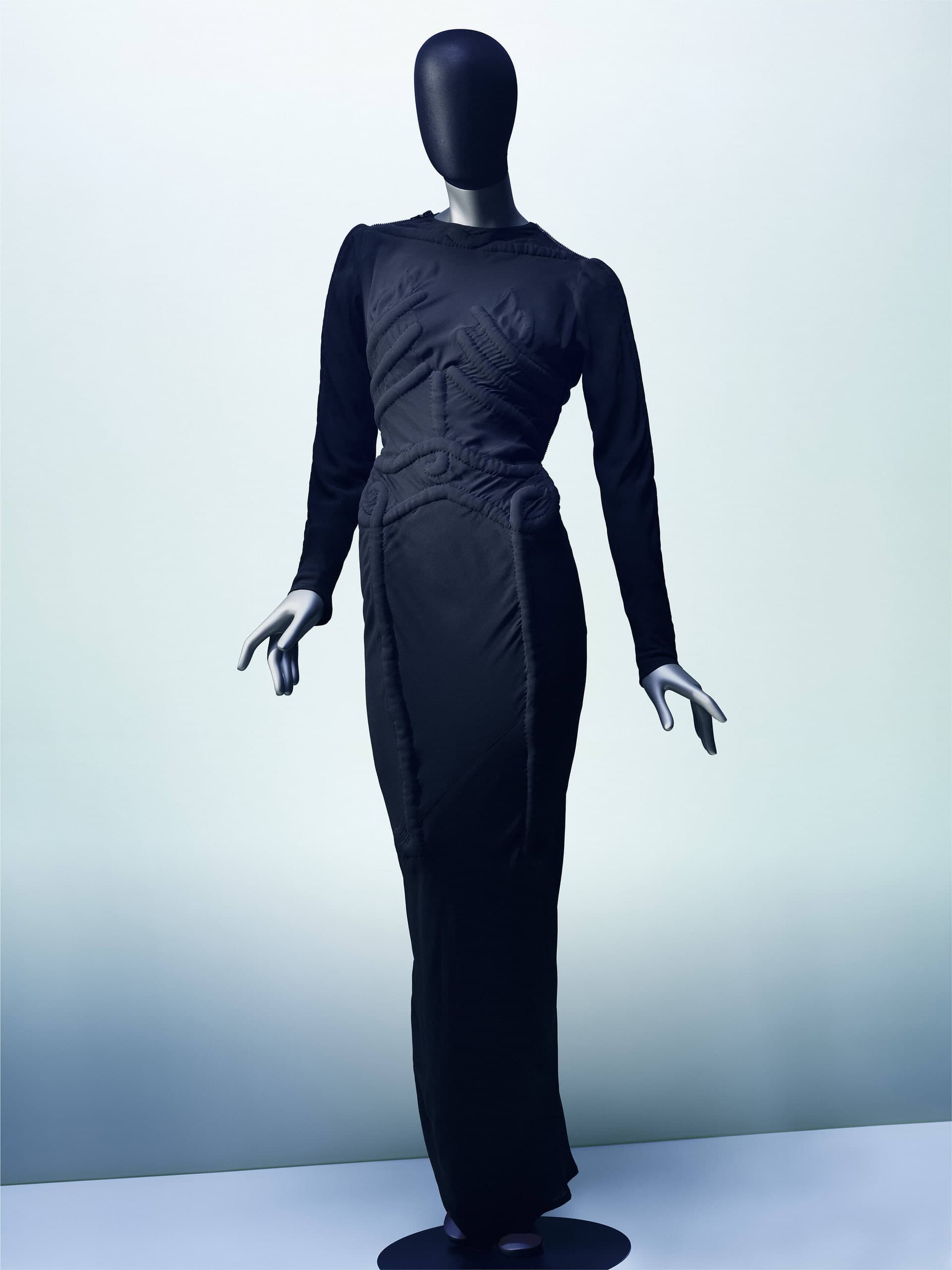
Start with the house’s own permanent treasure. The Skeleton Dress is the only known surviving original: black silk crêpe, plastic zips, and trapunto quilting that pads spine, ribs, and hips onto the outside of the body. Ruth Ford, the American actress and sister of Surrealist writer Charles Henri Ford, gave it to the V&A. Nearby, Dalí’s sketches of fashionable skeletons carry his note about liking bones on the outside. You walk past a garment and read a manifesto.
The lobster pairing does the same work in stereo. Schiaparelli’s 1937 Lobster Dress, the white organza gown whose crustacean print Dalí designed (Wallis Simpson wore it for Cecil Beaton before the Windsor marriage), sits beside Dalí’s 1938 Lobster Telephone. Sonnet Stanfill, the V&A’s senior curator of fashion and lead on the show, has described the dress as the spark for the telephone. Fashion and sculpture share a motif without hierarchy. Elsewhere, Cocteau’s double-profile vase of pink Lesage roses climbs the back of an evening coat ordered from Schiaparelli’s London house; the shoe hat turns millinery into sculpture you tip. Stanfill’s useful correction, to Dezeen: Schiaparelli worked as an active collaborative partner in Surrealism, an equal in the design process rather than a borrower of finished motifs. People treated her Paris salon as one of the movement’s beating rooms.
We’ll be blunt. Costume nostalgia would hang pretty black dresses and stop. This hang keeps asking what the object proposes. Bones outside. Lobster as erotic joke. Faces that are also a vase. That is art-world grammar inside a fashion museum.
Roseberry’s Continuity, London’s Claim
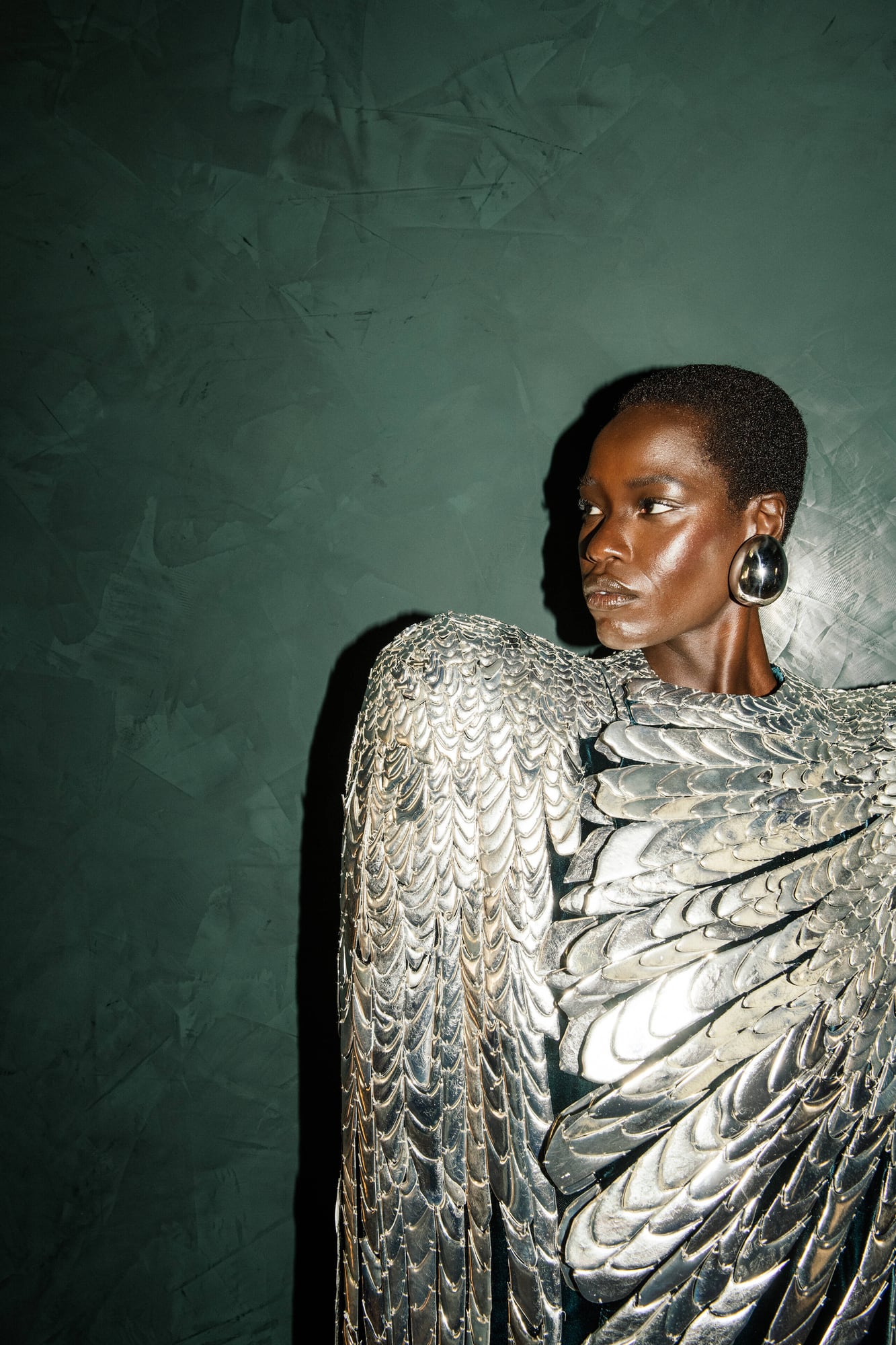
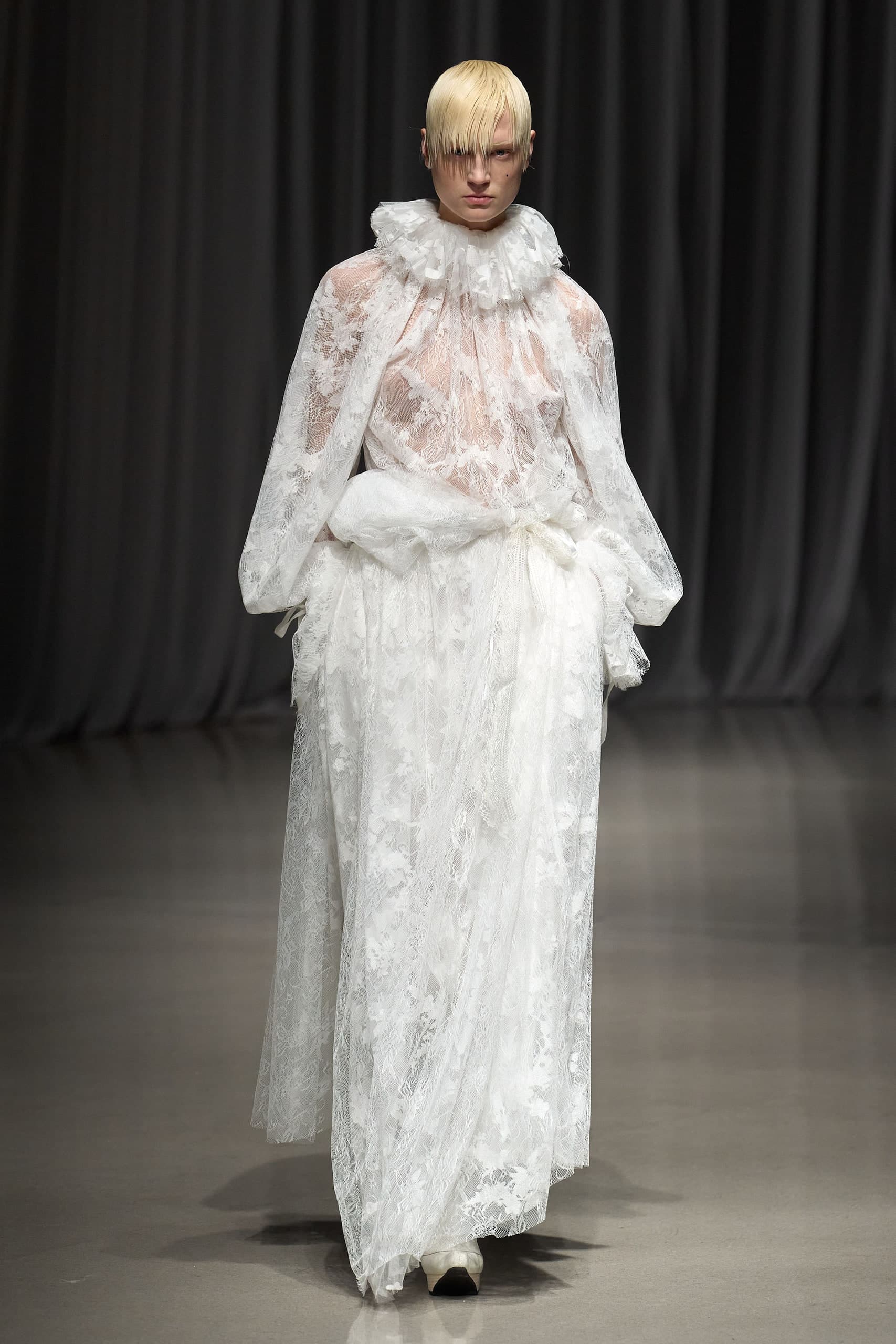
The final galleries carry the method into the feed years. Roseberry, the Texan who took creative direction in 2019 after Diego Della Valle’s Tod’s-group revival of the closed house, fills the close with looks that already behaved like exhibitions: Bella Hadid’s gilded lung necklace at Cannes 2021; Dua Lipa’s black velvet, diamond-bone skeleton at the 2024 Golden Globes; Ariana Grande’s 2025 Oscars couture, loaned back for the room. Celebrity dressing here is proof that attention-grabbing image was always the product. Roseberry’s own line to WWD about pre-social-media siren jackets at the dinner table is the bridge. Elsa designed for the across-the-room glance. He designs for the across-the-phone glance. Same economy, different aperture.
London gets a chapter museums in Paris often skim. From 1933 or 1934 until wartime closure in 1939, Schiaparelli ran a Mayfair salon on Upper Grosvenor Street, partly to dodge British luxury-import taxes on silk and to dress local clients in Irish linens and Scottish wools. Stanfill’s research treats that outpost as part of the story rather than a footnote. Useful for diaspora readers who already use London as a fashion-week and fair hinge: the Surrealist house was never only Place Vendôme.
If you are already booking Frieze or a South Kensington hotel week, put Schiaparelli: Fashion Becomes Art on the same diary as the museums you actually finish. Tickets run about £28 weekdays and £30 weekends; members enter free. Confirm timed slots on vam.ac.uk. The permanent galleries stay free around the ticketed hang. Ask for the Skeleton reverse view when the Nebbia route doubles you back: the show is designed for déjà vu. For how other houses currently sell continuity as evidence, keep Versace Puts the Archive on the Floor nearby. Schiaparelli’s wager is older and sharper. Continuity here is a Surrealist object that still walks into a room and makes the room rearrange itself.