Jennie in Chanel, Felix on a Vuitton womenswear runway, Lisa on the same house roster, G-Dragon in pearls at a maison that once felt strictly European: the stills still work. They also used to be the whole story.
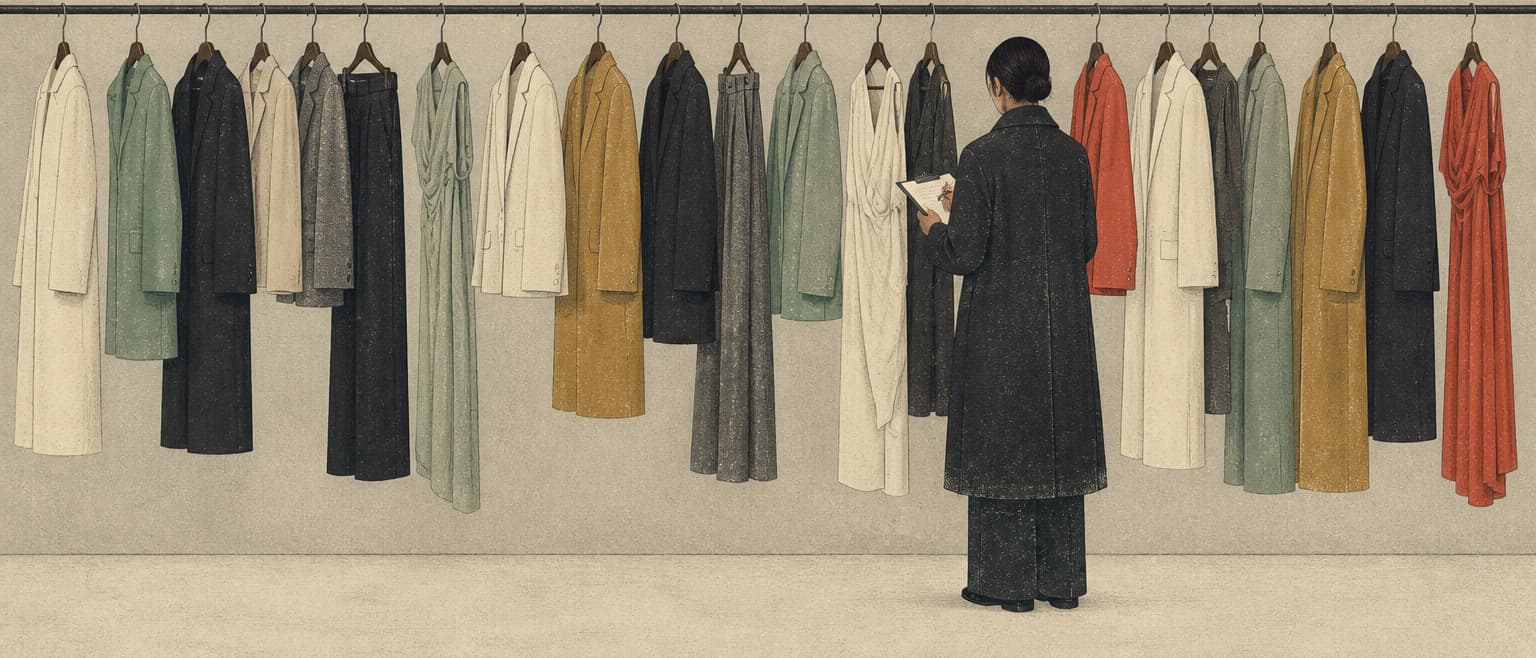
What happens after the photograph ships is the more interesting Seoul. A buyer at The Hyundai writes an order. A Seongsu label gets a Milan rail before most Americans can spell it. Musinsa flies foreign buyers into a neighborhood that still looks like a workshop district. The faces are real. The rooms behind them decide what you can actually buy.
Department stores still carry about forty percent of Korean luxury and train the eye from childhood. Seoul Fashion Week has become a buyer week with a seven-figure order book. The platforms export thousands of labels without waiting for a comeback stage. If your map of the city still ends at the billboard, you are a season late.
"Seoul Fashion Week is evolving into a business platform that supports the global expansion of K-Fashion brands."
Lee Soo-yeon, head of the Economic Office, Seoul Metropolitan Government
The Department Store Still Sets the Floor
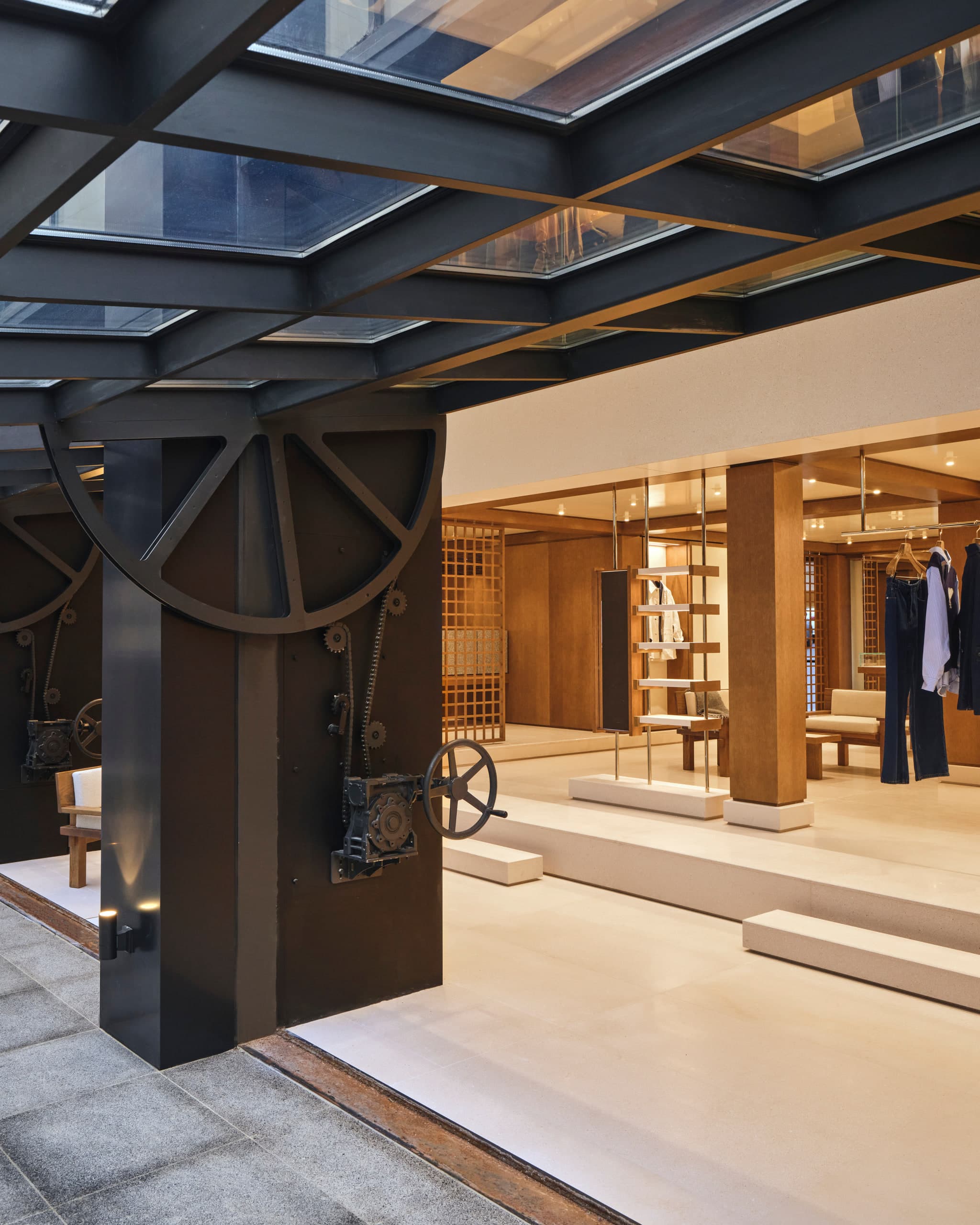
Walk into The Hyundai Seoul in Yeouido, Shinsegae Gangnam, or Lotte Jamsil and you are inside the country's real styling school. While department stores struggle almost everywhere else, Korea's big three keep posting record quarters, with luxury accounting for more than a third of revenue at some chains and close to half of sales coming from VIP clients who expect private rooms, same-day tailoring, and a buyer who remembers their last purchase.
Those buyers are the first tastemakers most Seoul shoppers ever meet. Shinsegae's international fashion division and Handsome, the fashion subsidiary inside Hyundai Department Store Group, employ merchandisers who choose which European houses get corner windows, which Korean labels graduate from pop-up to permanent counter, and which seasons deserve extra depth in tailoring instead of logo knitwear. Their names rarely trend. Their spreadsheets move billions of won.
Foreign traffic is rewriting the mix without displacing local judgment. The Hyundai Seoul reportedly draws about a fifth of its transactions from overseas visitors, and both Lotte Jamsil and Shinsegae Gangnam have seen foreign sales roughly double in recent seasons. In the first quarter of 2026, fashion was the fastest-growing category for tourist spend at Lotte's flagship, up around 180 percent year on year and ahead of leather goods. Chinese and Taiwanese shoppers who once flew in mainly for Chanel now clear rails of Korea-only lines from labels like Matin Kim, plus department-store exclusives that exist precisely because a buyer in Gangnam said yes.
Chip and platform wealth, and the tourism that follows it, open the wallet. That is the story we told in South Korea Is Luxury's Bright Spot While the Market Hesitates. The buyer on the fourth floor decides where the money lands.
Seoul Fashion Week Sells Cloth, Not Just Content
The Dongdaemun Design Plaza is on every tourist map because Zaha Hadid drew a silver spaceship in the middle of the garment district. For the industry, it has become something less photogenic and considerably more useful: an export office that happens to have a runway in it.
This February the city consolidated everything at DDP for the first time, a format it calls one-site, running the forum, fifteen shows, nine presentations, and the trade floor inside one building from 3 to 8 February. MÜNN opened the season on the first evening in Art Hall 1, its designer Han Hyun-min working through a military wardrobe with the deconstruction that won him the Woolmark Prize regional menswear award in Asia. Mayor Oh Se-hoon sat in the audience, which tells you how the city files this event: industrial policy in show clothes.
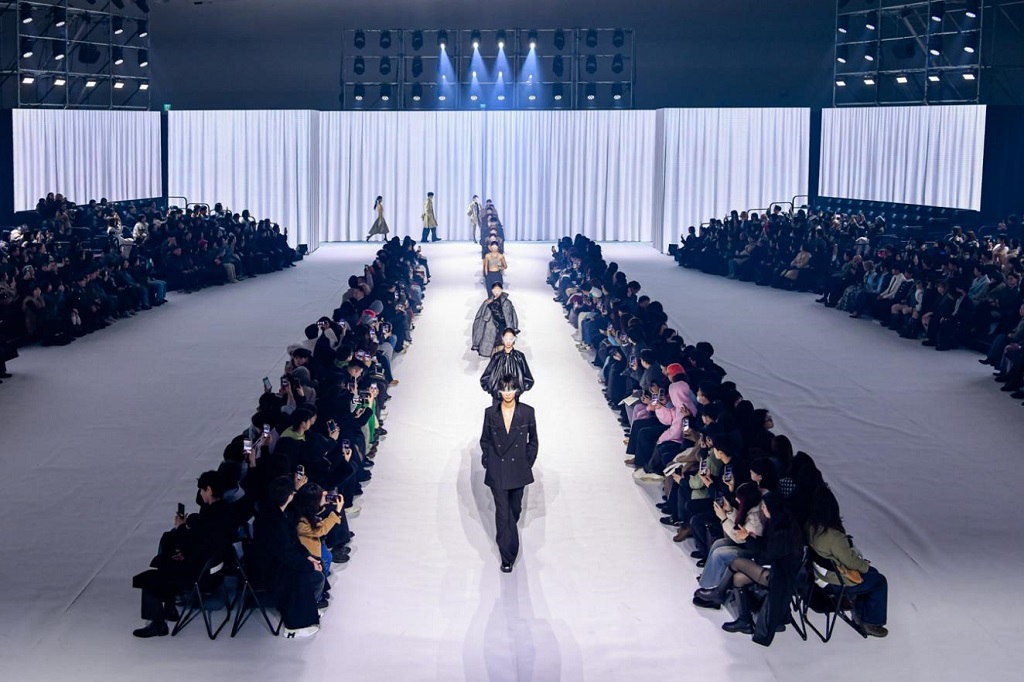
The consolidation had a purpose, and it was two floors down. From 5 to 7 February the Design Lab put ninety-two brands on four levels for one-to-one matching. Ninety-nine buyers came, from twenty-three countries. Harvey Nichols, Urban Outfitters, and Club 21 Singapore all sent people. Greater China made up about forty percent of the list. The season closed around $7.54 million in order consultations. That is a trade fair that happens to have a runway upstairs.
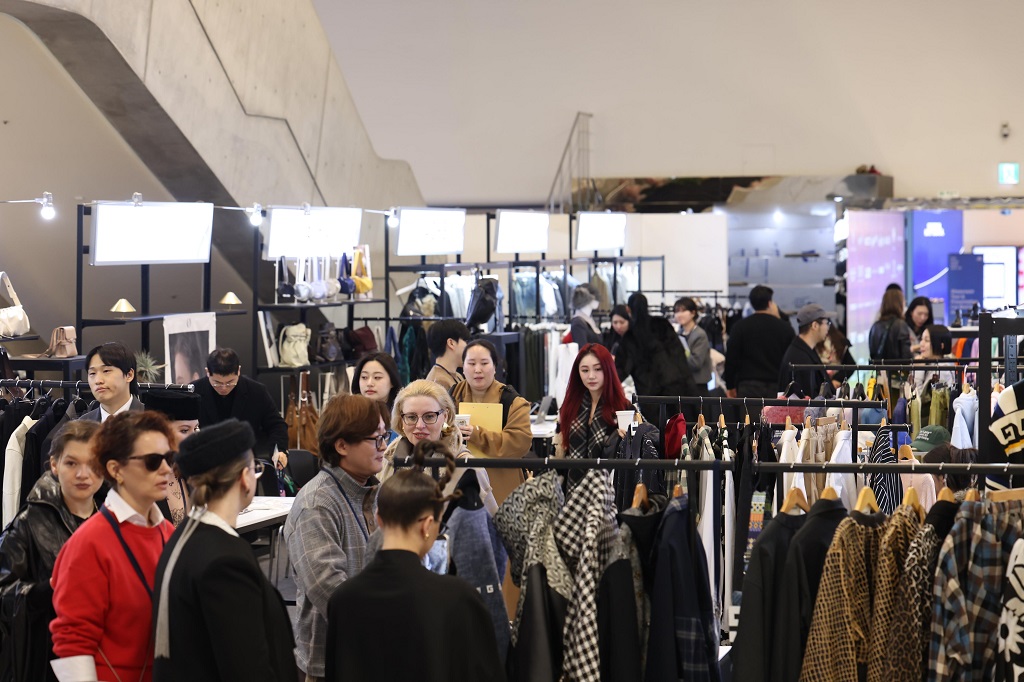
The book has grown for four seasons, from about $6 million in spring 2025 to this winter's $7.54 million. The last step was small. That is what a maturing export platform looks like: the easy gains are over, and the buyers who come back now decide the next increment.
The follow-through reaches Milan. Under Soul Threads: Voices of Seoul, now in its third edition and curated by Seung Ik Lee, Seoul Fashion Week's global creative director, five labels showed at the Antonioli boutique from 26 to 28 February, among them Amomento and Kimhēkim, with a pop-up that sold spring stock into March. Claudio Antonioli had already flown in on opening night to sit with fifteen Korean designers and explain how European distribution actually works, again with the mayor in the room. Taste, in this version, arrives with a purchase order.
Lotte is folding the week into retail next. For the 2027 spring/summer season in early September, Lotte Department Store hosts runway shows and buyer meetings across its Jamsil complex, including Kimhekim's tenth-anniversary collection and pop-ups on the K-fashion floor. A department store is formalizing what Seoul already does informally: using the week to settle what gets bought next season.
Platforms, Neighborhoods, and Labels the Buyers Already Know
Below the atrium level, Seoul's taste map fragments into neighborhoods and platforms that export faster than any ambassador cycle.
Musinsa, the country's dominant online fashion retailer, lists more than ten thousand Korean brands and spent 2026 turning itself into a place you can walk. In April it opened Musinsa Megastore Seongsu on Seongsui-ro: five levels, around a thousand brands, the largest multi-brand store in the country under one roof. Olive Young's Seongsu flagship sits a seven-minute walk away and already draws a crowd that treats beauty as a neighborhood sport. In August, Musinsa flew buyers from Zozotown, Tmall, and Southeast Asia into the same streets to preview its 2027 spring own-label line. Whatever halo pop culture throws off, this part of the business runs on merchandising.
Seongsu-dong and Hannam-dong remain the neighborhoods where labels prove themselves before a buyer upstairs takes the risk. Amomento is the clearest case: founded by the siblings Lee Mikyung, who designs, and Lee Myeongsoo, who runs the company, it now sells through more than 120 stockists across 19 countries, from La Garçonne in New York to Printemps in Paris.
"Our focus is on everyday life. Our clothes are for wear rather than for show."
Lee Myeongsoo, chief executive of Amomento, to WWD
That is the right sentence for a city tired of being treated as a mood board, and it explains the export success better than any trend label. Low Classic, Recto, Post Archive Faction, Andersson Bell, and Wooyoungmi travel on the same logic, cited by stylists in Paris and New York as working references. When Andersson Bell opened a Seoul Fashion Week season with a show along Deoksugung-gil, the palace-wall street beside City Hall, the location was the argument: Korean design staged on a royal-city block, sold to buyers who had meetings the next morning.
For the neighborhood directory itself (Hannam multi-brand floors, Seongsu concept stores, Dosan Park appointment rooms), read The Return of Quiet Luxury in Seoul. Those floors only exist because someone upstairs said yes.
The Ambassadors Still Move the Room
None of this makes the idols irrelevant. It reframes the job.
Korean celebrities remain among the most efficient distribution channels luxury has found this century. Jennie did not become a Chanel fixture by accident; she has held the relationship since 2017 and still sets the template for how a house uses one face across beauty, eyewear, and ready-to-wear without splitting the story. Lisa's move from Celine to Louis Vuitton in July 2024 consolidated the brand's Asian bench at a moment when Seoul was one of the few luxury markets still reliably growing.
What changed is the work contract. Felix of Stray Kids became a Louis Vuitton house ambassador in August 2023, after Nicolas Ghesquière met him at the maison's pre-fall show on the Jamsugyo Bridge over the Han River that April. "It instantly clicked between us," Ghesquière said at the time, praising his "audacious sense of style." Felix has since walked the womenswear runway in Paris twice. More to the point, he has put his hand on product: a Silver Lockit jewelry collaboration with Vuitton in 2025 that routes proceeds to UNICEF, and a Hera ambassadorship that produced a lip gloss shade, Brownie Boy, named for him.
That is the modern influence, and it is a different job from holding a handbag. The idol has become closer to a brief editor with a fan base large enough to move the first drop. Global style still watches what they wear through an airport, but the more durable signal is whether the house lets them near the collection. Seoul's tastemakers now work in both registers: the buyer who imports a rail of Korean tailoring, and the star who makes a French house look willing to share authorship.
Where to Stand in September
If you are planning a Seoul week, watch the rooms that photograph badly. Give an hour to a department-store contemporary floor in Gangnam and count how many Korean labels sit at eye level against the European ones; the ratio has moved, and it moved because a merchandiser argued for it. Walk Seongsu on a weekday morning, before the pop-up queues form and the street turns into a photo set.
The calendar is doing something useful this year. Frieze Seoul runs 2 to 5 September, and Lotte's Seoul Fashion Week programming at Jamsil runs 3 to 6, so the art crowd and the buying crowd are in the city on the same days. If you are packing for the fair, our Frieze Seoul notes still apply: soft layers, COEX is cold, Hannam dinners run late. Just know that while you are queuing for a booth in Samseong, the season's orders are being written a few subway stops away.
Give the buyer an hour and the idol the rest of the week, if you must. Seoul stays interesting after the still ships.
This is the South Korea chapter of The Tastemakers. Next: China, where the quieter tempo sits under the billboard.