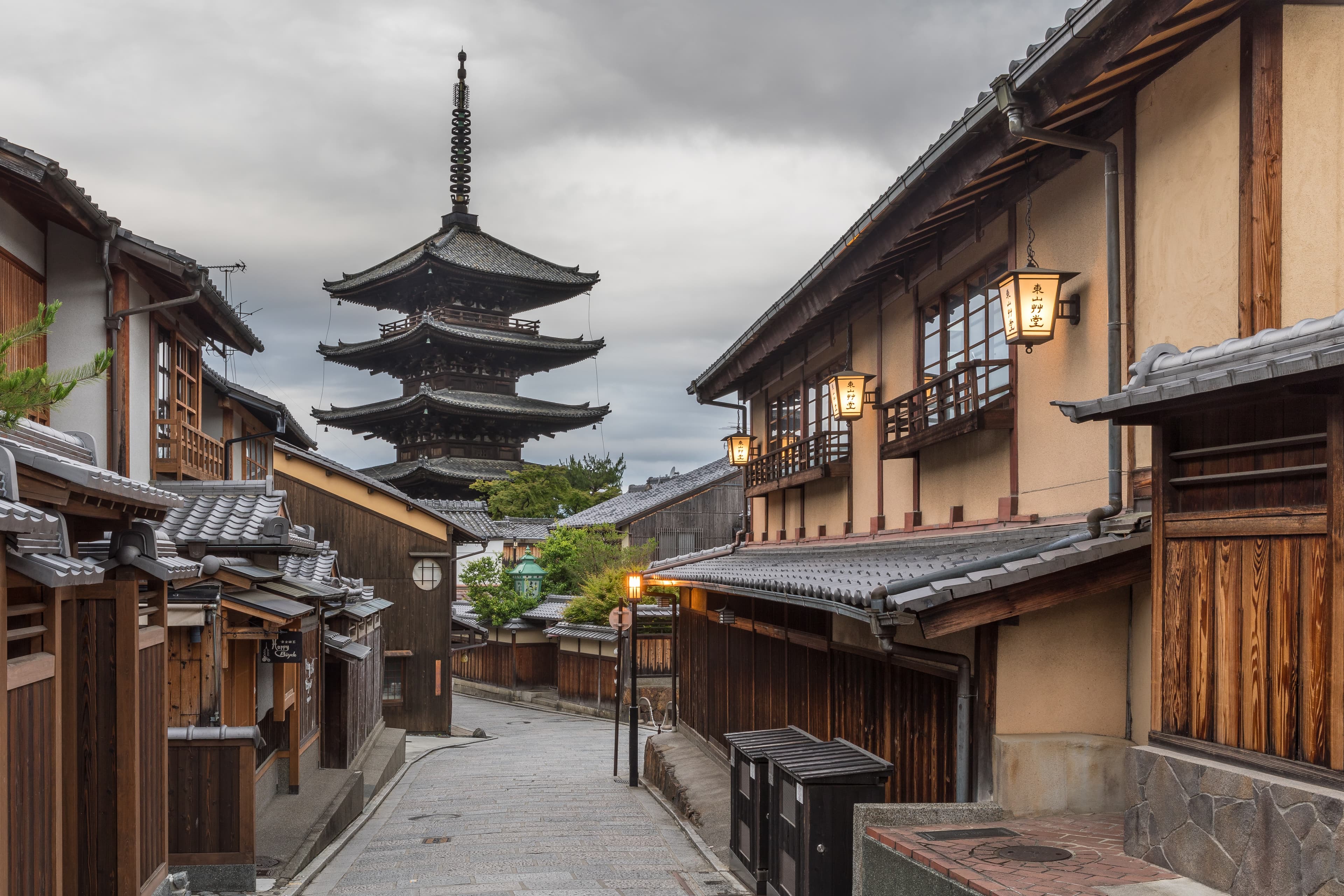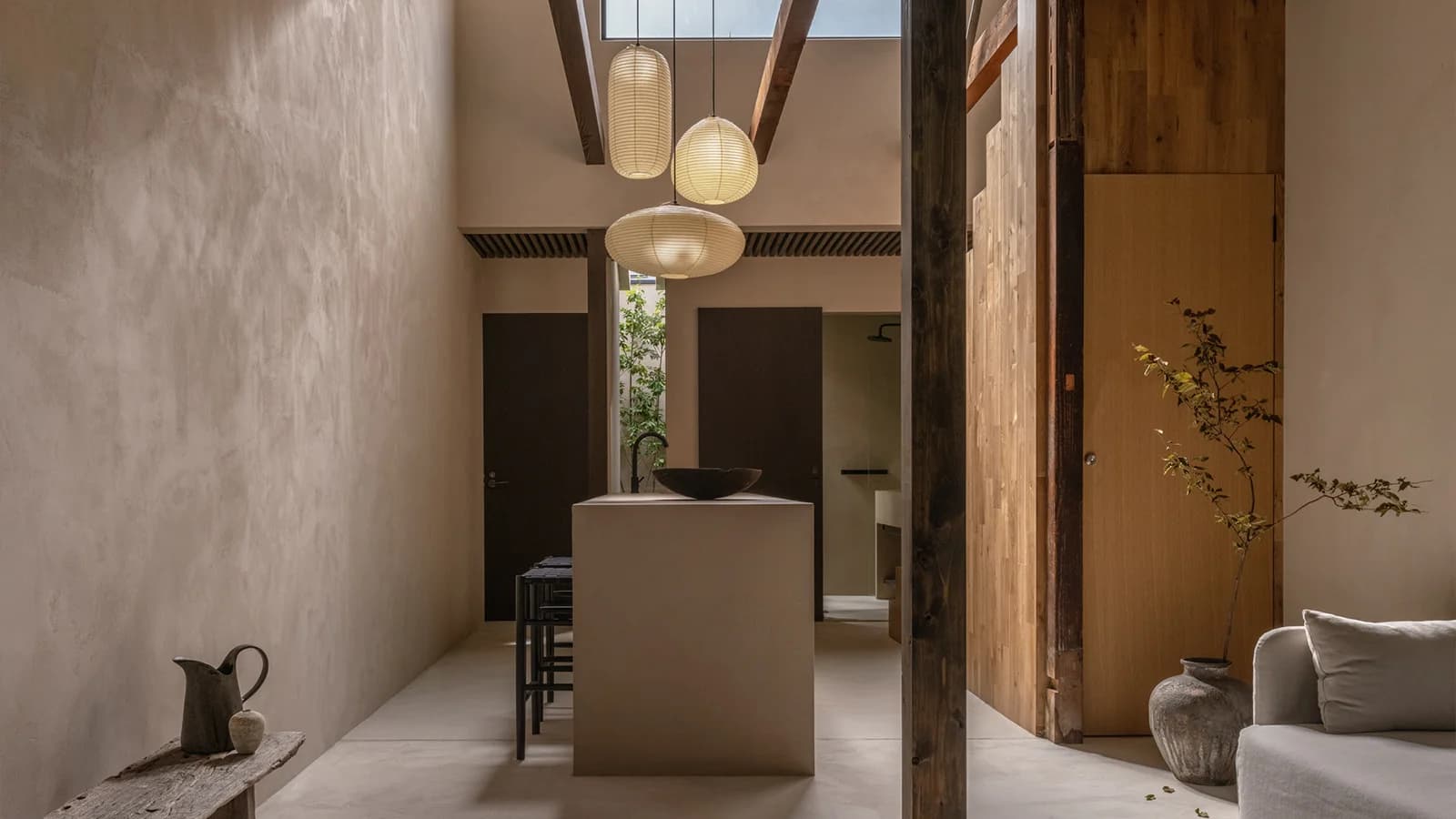
Kyoto's machiya were never monuments. They were merchant houses: narrow at the street, deep toward a private courtyard, built from timber and earth plaster that breathed with the seasons. The plan has a name, unagi no nedoko (eel's bed), and a logic any household can learn from. Light enters indirectly. Rooms unfold in sequence rather than opening into spectacle. Bathing, sleeping, and receiving guests each claim their own chamber along the spine.
That grammar is under pressure. Municipal surveys cited in preservation debates estimate that roughly eight hundred machiya vanish from Kyoto each year, replaced by parking blocks and apartment boxes. The loss is not only architectural. It is a way of sizing domestic life to a lot width of under six metres and a culture that treats the threshold as a room in itself.
Maana Homes, the hospitality and craft brand co-founded in 2017 by interior designer Irene Chang and art director Hana Tsukamoto, has made restoration its argument. Working with Kyoto architect Shigenori Uoya (and, at Maana Kiyomizu, Takeshi Ikei), they renovate rather than replicate: keeping rooflines and street presence while inserting the baths, beds, and kitchens a contemporary household expects. Their stated aim, repeated across FRAMA, Digs.net, and company materials, is to show that preservation can outperform demolition. For diaspora homeowners sketching courtyard houses in Vancouver or planning a Tokyo pied-à-terre, the lesson is practical. Machiya are not museum pieces. They are a spatial textbook.
The Compound at Kiyomizu
Maana Kiyomizu, which opened in November 2022, sits at 427-18 Myohoin Maekawacho in Higashiyama, a short taxi from Kyoto Station and walking distance to the temple quarter without living inside the tour-bus current. The project merges four adjoining machiya into a single address with three suites, a ground-floor POJ Studio shop, the Kissa Kishin café (a second location of the Gion breakfast restaurant), and workshop space tied to Maana Atelier in Nishijin.
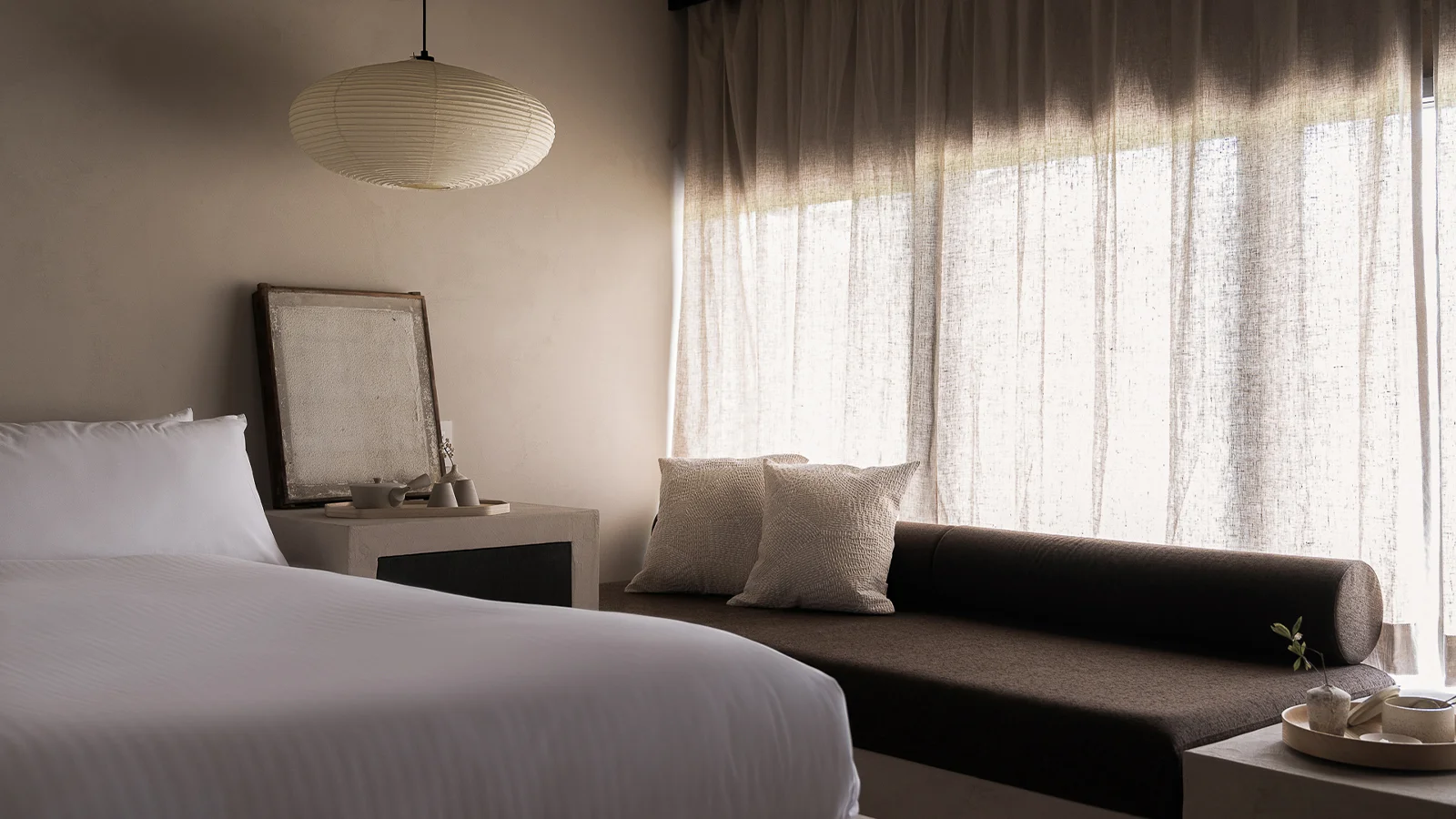
The suites range from an intimate 23-square-metre studio for two, with a soaking tub framed by greenery and the thatched roofs of Toyokuni Shrine, to a 63-square-metre two-bedroom plan with a contemporary tokonoma, tatami guest room wrapped in washi by artisan Hatano Wataru, and a Shigaraki ceramic tub. Western queen beds sit beside futons; walk-in showers replace the shared well of an earlier century. Every room carries POJ Studio ceramics, Imabari towels, and the small bath-and-tea rituals the founders treat as non-negotiable domestic equipment.
The architecture reads as machiya from the lane and as a calm contemporary house once the door closes. Exposed structure, tsuchikabe earth walls, and woven bamboo screens (takekomai) sit next to pendant lights by Ren Nakane and furniture scaled for lingering rather than display. It is the same proposition Tony Chi pursued at Park Hyatt Kyoto, translated from hotel to home. The New Asian Minimalism names the wider material discipline; Maana supplies the Kyoto case file.
Press coverage in Vogue, Architectural Digest, Dezeen, and Wallpaper* (photography by Mitsuru Wakabayashi) helped establish the property during Kyoto's hotel boom. TIME placed Maana Living, the brand's Higashiyama craft boutique that opened in September 2025, on its World's Greatest Places 2026 list alongside the townhouse stays. A fourth residential machiya built from salvaged Atelier materials is slated to follow.
What Travels Home
Machiya logic travels because it solves problems global apartments still fumble: how to give a narrow facade depth, how to separate guest circulation from family sleep, how to make a bathroom feel like a room rather than a fitting.
Three habits worth stealing appear clearly at Kiyomizu. Material honesty: plaster left slightly raw, wood allowed to darken, craft objects placed where they will be touched daily. The bath as architecture: deep tubs, stone or ceramic, with views or courtyard glimpses, the same move Why Hospitality Design Is Influencing Luxury Homes tracks from Aman suites into private houses. The display niche: the updated tokonoma as a shelf for one antique bowl or a seasonal branch, not a gallery wall.
None of this requires a Kyoto address. Designing a Contemporary Courtyard House shows how courtyard sequencing works in new builds; Maana shows how to recover it inside existing timber bones. Diaspora clients who spend weeks in restored townhouses often return with revised briefs: lower furniture, softer light, fewer but better objects, mudrooms that behave like genkan. The household becomes slightly more Kyoto without pastiche.
Staying there is one way to study the grammar. Nightly rates are date- and suite-dependent; third-party listings in 2026 commonly start near USD $770 (roughly JPY 81,000–190,000 depending on suite and season). Book through maana.jp for current availability. Cherry blossom weeks (late March–April) and autumn foliage (November) fill quickly; summer brings humidity that makes the plaster's coolness feel essential. The property does not accommodate children under six. Pair a stay with You Need a Week in Kyoto for pacing, and with Lunch at Kikunoi Honten if you want kaiseki context for the same Higashiyama slopes.
Preservation, here, is not nostalgia. It is proof that a city can keep its wooden streetscape while houses meet present-day life. That is a brief worth carrying home.