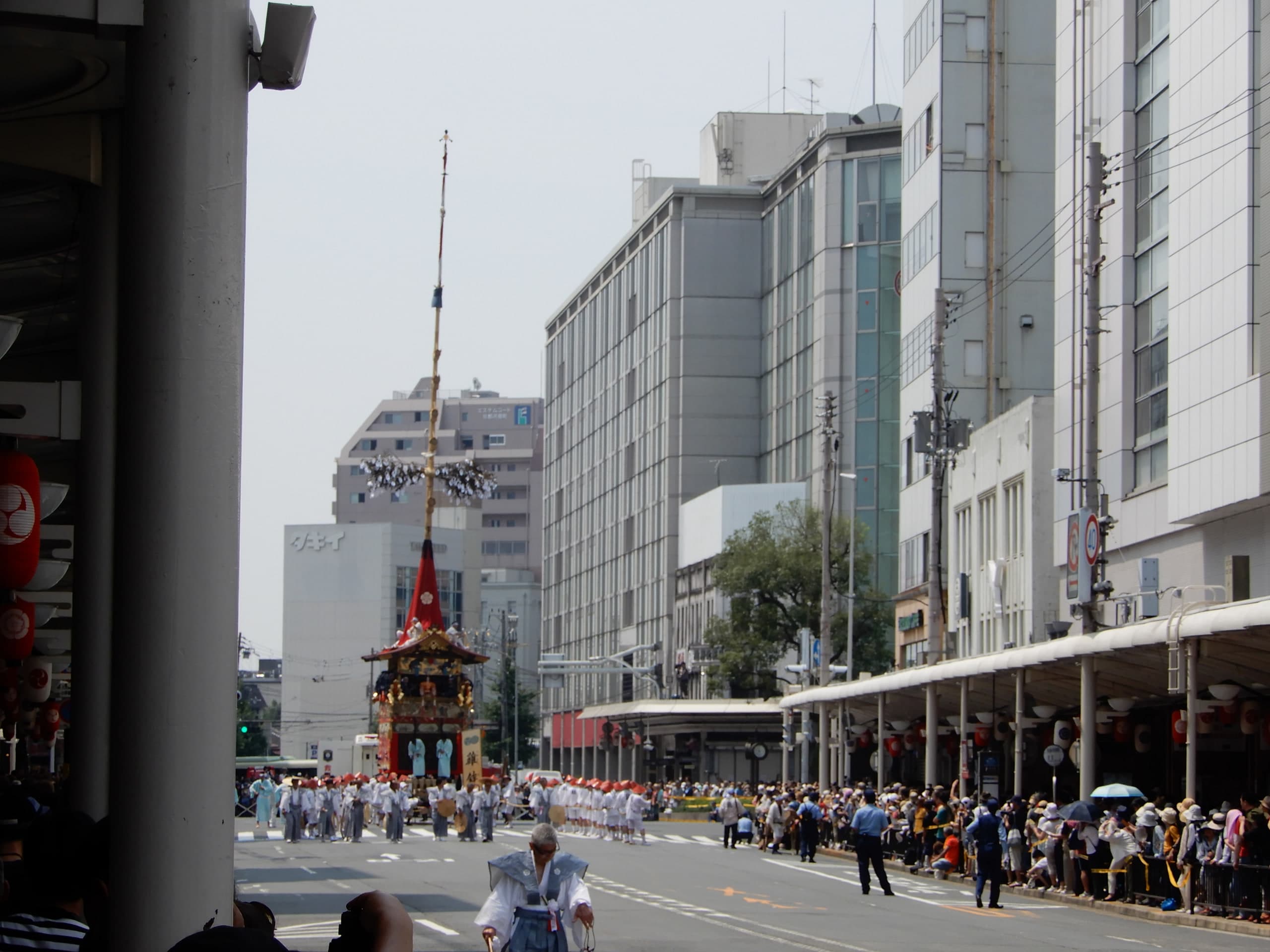
Most visitors meet Kyoto's July as a single morning photograph: a tall wooden float, a rope team, a corner turn, then lunch.
That image is real. It is also the wrong unit of measurement.
What Kyoto actually runs in July is Gion Matsuri, the month-long festival of Yasaka Shrine. The shrine sits in the Gion district east of the Kamo River, which is how the festival got its name. The floats you came to see assemble west of the river, around Shijo and Karasuma, in neighborhoods that have funded, stored, and rebuilt them for generations. Official Kyoto tourism materials call the float procession a moving gallery. Textile scholars treat the hangings as a working collection. Neighborhood associations treat the week as stewardship with a public audience.
The useful question for a Banquet reader is not whether the parade is beautiful. It is which part of the month behaves like a collection you can actually walk: one Yoiyama evening among the lanterns and open houses, then one procession morning, with heat and lodging treated as seriously as tickets.
For dated logistics, keep Gion Matsuri on the calendar. The autumn counterpart is Jidai Matsuri, the 22 October procession from the Imperial Palace to Heian Jingu. If you stay on, the Shōsō-in Exhibition opens two days later at the Nara National Museum. For where to sleep and eat around Higashiyama and the central grid, use The Banquet Guide to Kyoto and You Need a Week in Kyoto.
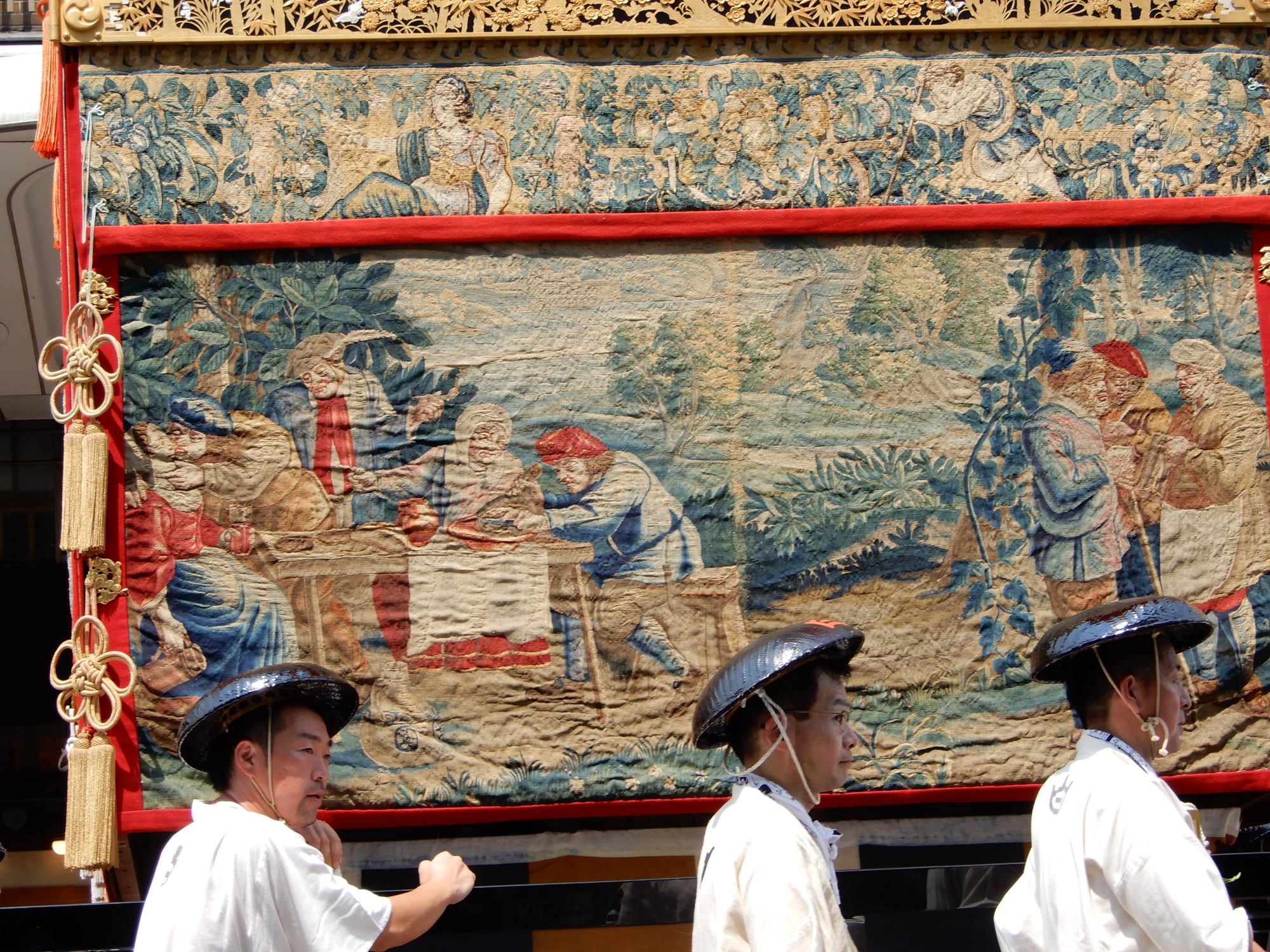
"The Yamahoko Junko procession is also called a moving gallery because the floats are decorated with beautiful embroidery, imported fabrics, and other gorgeous ornaments."
Kyoto City Tourism Association
A Month, Not a Parade
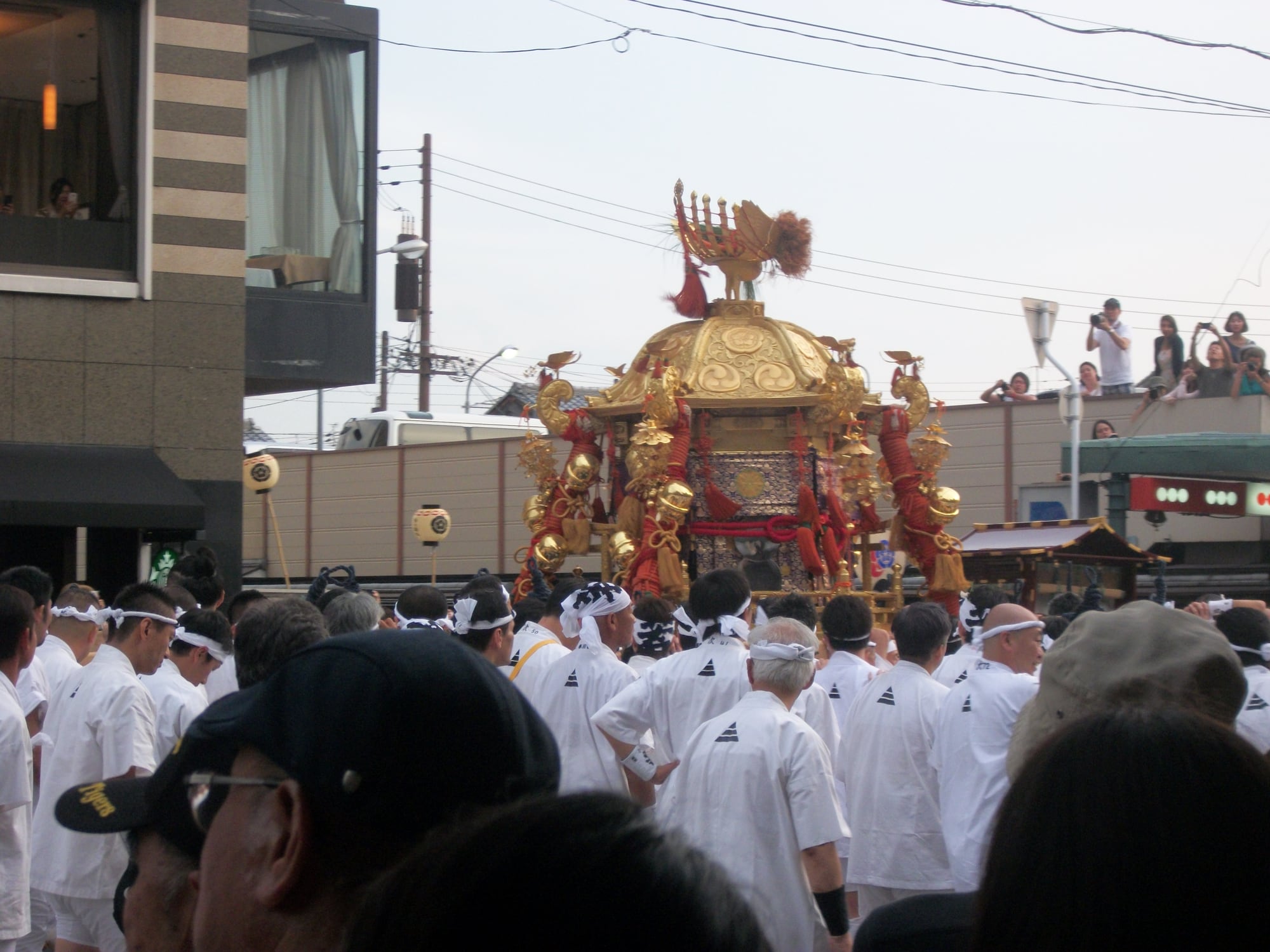
Yasaka Shrine tradition traces the festival to 869, when Kyoto answered epidemic fear with a purification rite: sixty-six spears for the provinces of the day, portable shrines, and prayer at what is now the shrine's sacred geography. The observance became annual in the late tenth century and survived wars, mergers, and tourist pressure. The form you meet in 2026 still fills 1 to 31 July, with two public peaks most travelers actually use.
Saki Matsuri, the early festival, builds toward the larger float procession on 17 July (about twenty-three floats, start around 9:00 a.m. from the Shijo-Karasuma side). Ato Matsuri, the latter festival, builds toward the quieter procession on 24 July (about eleven floats, start around 9:30 a.m. from Karasuma-Oike, reversing the earlier route). The evenings before each procession are Yoiyama, when floats sit in their neighborhoods under komagata lanterns and the streets close to cars.
Between those mornings sit the shrine's portable-shrine journeys: deities leave Yasaka for a temporary dwelling downtown on the evening of the 17th, then return on the evening of the 24th. The floats purify the roads; the mikoshi carry the religious spine. Tourists who only photograph floats still stand inside a ritual sequence, whether they notice or not.
From 1966 to 2013, traffic-era planning folded both processions into a single mid-month spectacle. 2014 restored the dual calendar and brought back Ofune-hoko, the great ship float of the latter procession, after a long absence following nineteenth-century fire loss. Prefer the 24th if you want fewer shoulders between you and the textiles. Prefer the 17th if you want the denser float count and accept denser crowds.
The Floats Are the Collection
Each float belongs to a neighborhood association, not to a municipal props department. The large wheeled towers are hoko; the smaller mountain floats are yama; together they are yamahoko or yamaboko. The biggest hoko can rise toward twenty-five meters and weigh on the order of twelve tons, pulled by rope teams with wheels that do not steer. Corner turns, tsuji-mawashi, happen on wet bamboo because the axle cannot pivot. That is craft under load, not stagecraft.
Look at the hangings before you look at the height. Some cloth is Nishijin weaving from Kyoto. Some is imported: Flemish tapestry, Chinese court textiles remade as festival hangings, fragments that textile historians have surveyed as a serious corpus. On Niwatori-hoko, the rear hanging includes a sixteenth-century Flemish tapestry of Hector's farewell, protected as an Important Cultural Property; a replica often travels while the original is conserved. A 1990s survey tradition around the float decorations helped put those imports on the map for specialists. UNESCO listed the float ceremony of Kyoto's Gion festival on the Representative List of the Intangible Cultural Heritage of Humanity in 2009.
The timber itself is annual assembly. Neighborhood crews bind frames with rope techniques (nawagarami) rather than nailing a rigid box that would shatter under procession stress. You can watch construction in the days before Yoiyama. The point is not romantic anti-modernism. It is engineering that keeps a twelve-ton heirloom moving through a living city.
Buy a chimaki charm from a float neighborhood if you want a clean patronage gesture. The leaf-wrapped talisman hangs at a door; the purchase helps fund next year's rope, textile care, and association work. Choose a smaller float if you want your yen to matter more than a souvenir bag.
Before the Floats Move
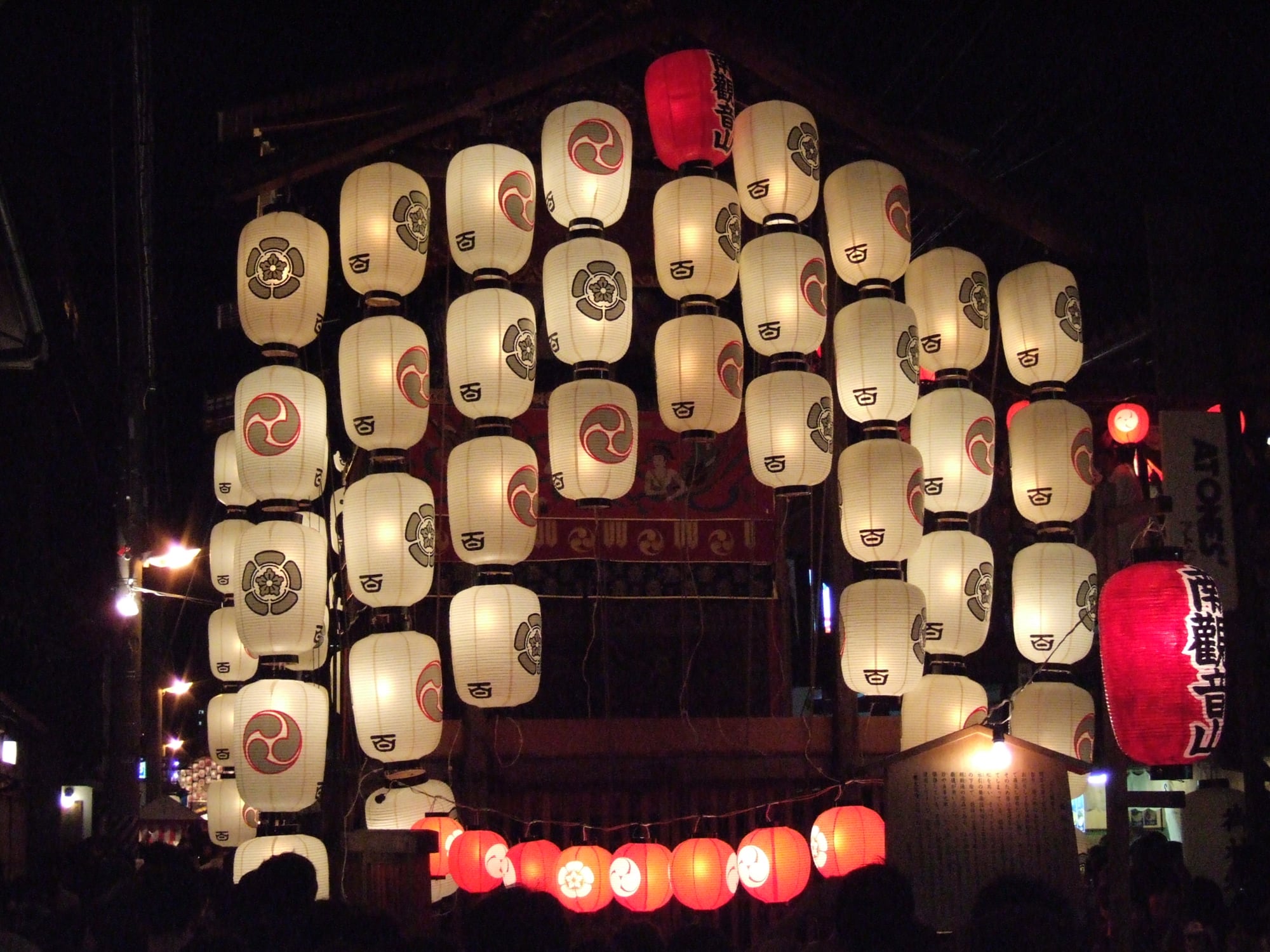
Yoiyama is the appointment most diaspora visitors underbook.
On the evenings of 14 to 16 July (early festival) and 21 to 23 July (latter festival), floats stand in their streets, musicians play Gion-bayashi, and food stalls appear. The early festival evenings are louder and more crowded; the latter evenings are thinner and often kinder if you want to read a textile rather than navigate a crush. In 2026, Kyoto Travel guidance flags heavier pedestrian closures on 15 and 16 July for the early programme.
Walk the float neighborhood for the hangings you will only see as a blur at procession speed. Some floats open for brief boarding for a donation. Some neighborhood houses and long-established shops remove lattices and display folding screens, calligraphy, and family objects for Byobu Matsuri. That screen festival is community hospitality, not a Yasaka ticketed exhibition. Behave like a guest in a private room: no flash, no lingering if a family is closing, no treating a machiya threshold as a free museum café.
This is the hour when Kyoto's merchant patronage becomes legible. The parade is the collection in motion. Yoiyama is the collection at rest.
How to Spend the Week Without Losing July
Do not attempt the entire month. Pair one Yoiyama evening with one procession morning. If heat is already punishing, take the latter festival: 21 to 23 July evenings, then 24 July from Karasuma-Oike. If you want maximum float density, take the early festival and protect sleep the night before the 17th.
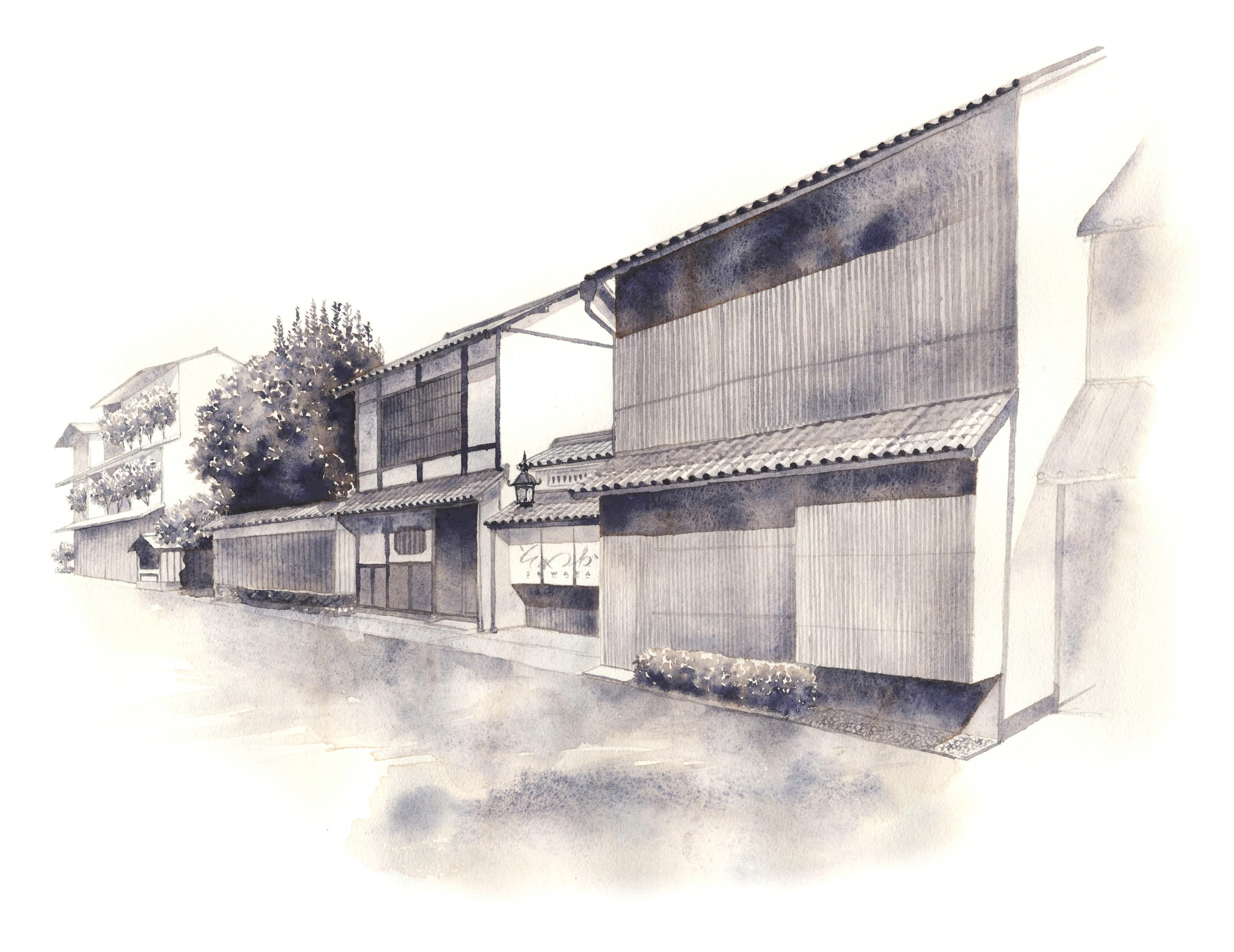
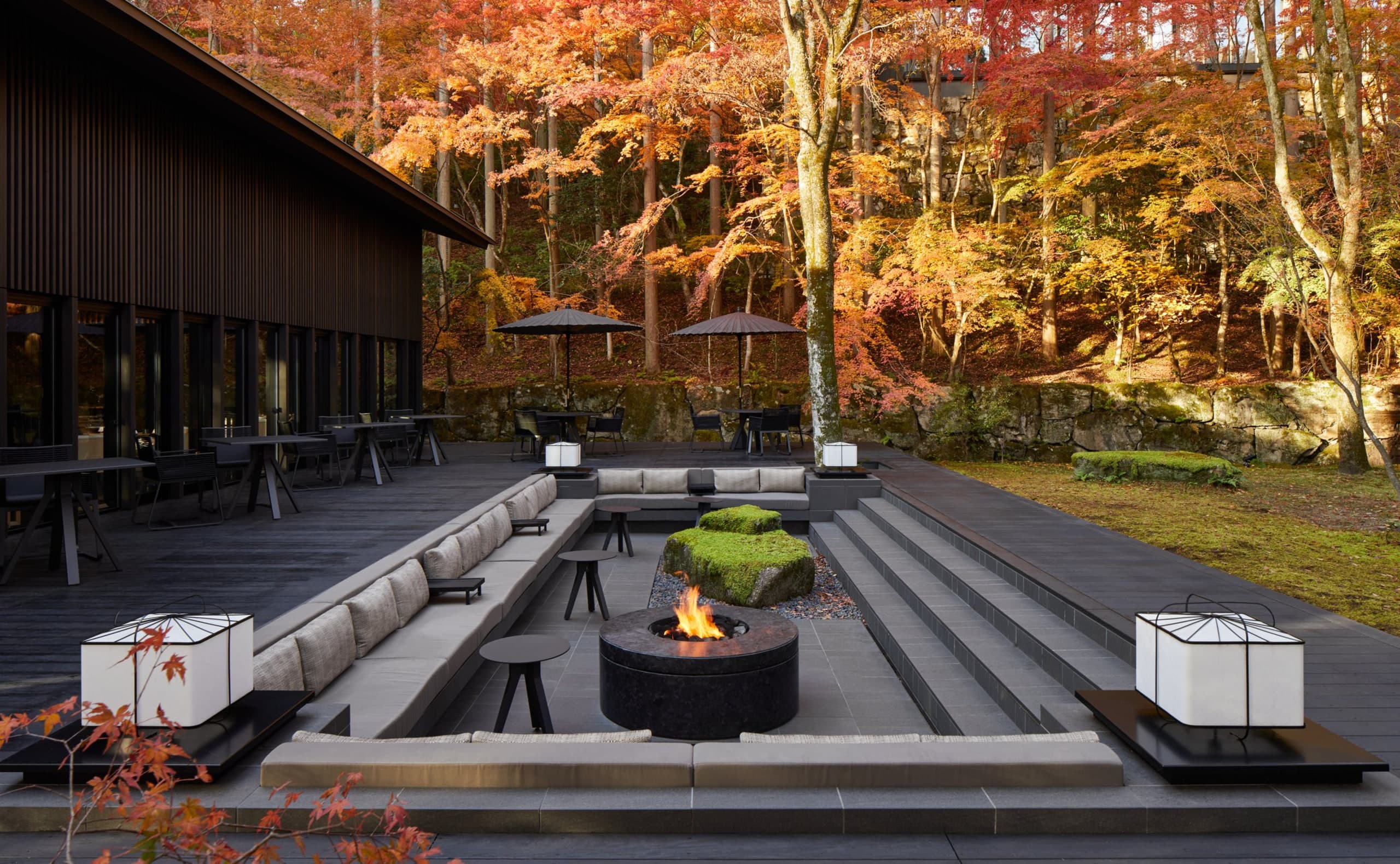
Stay where walking recovers time. Park Hyatt Kyoto and Sowaka keep you on the Higashiyama and Yasaka side for shrine evenings without a long return across town. Central craft and Nijo logistics sit more easily at Hotel The Mitsui Kyoto. After a procession morning, a calm kaiseki lunch at Kikunoi Honten or a reserved night at Gion Nishikawa beats racing for a second spectacle. Read the Address Book entries before you lock dates; July compresses Higashiyama inventory the way sakura does.
Watch one tsuji-mawashi if you can stand the crowd density at a corner; otherwise claim a straight stretch on Oike-dori, where the line of floats is easier to read. Official reserved seats along Oike, sold through Kyoto's tourism channels, buy shade discipline and a guidebook more than exclusivity. Ordinary rows often have little sun protection. Hats and water are not optional styling.
On the 24th, a separate Hanagasa Junko flower-umbrella procession also moves toward Yasaka. Treat it as optional color, not a second mandatory checklist item. Protect the evening mikoshi return if ritual, not photography, is why you came.
Practical Notes
Calendar: Festival month 1 to 31 July. Principal float processions 17 July (Saki) and 24 July (Ato). Yoiyama evenings 14 to 16 and 21 to 23 July. Confirm current road closures and seat sales on kyoto.travel before travel.
Seats: Kyoto City Tourism Association sells reserved procession seating along Oike; 2026 general rows have started around ¥6,000 to ¥8,000, with higher commentary and premium tiers. Rain does not cancel the procession; refunds are limited. Confirm live pricing on the official seat page.
Access: Subway to Shijo, Karasuma-Oike, or Gojo beats buses under restrictions. After the 17th, Shijo station congests heavily; shift one stop when you can. Official guidance also points visitors toward Karasuma Oike, Omiya, or Gion-Shijo as alternatives.
Heat: July in Kyoto is severe. Ordinary outdoor seats may have no shade. Rehydrate, rest indoors between Yoiyama and the next morning, and do not stack a full temple day onto procession day.
Stay and table: Lock Higashiyama and central keys early. Cross-link your nights through The Banquet Guide to Kyoto.
Kyoto's July festival rewards the reader who already understands patronage elsewhere: the family that funds a float, the textile that crossed an ocean to hang on a wooden tower, the house that opens a screen for three nights and closes it again. You do not need to know the word Gion before you arrive. You need to know that the collection moves, and that the smartest hour is often the evening before it does.