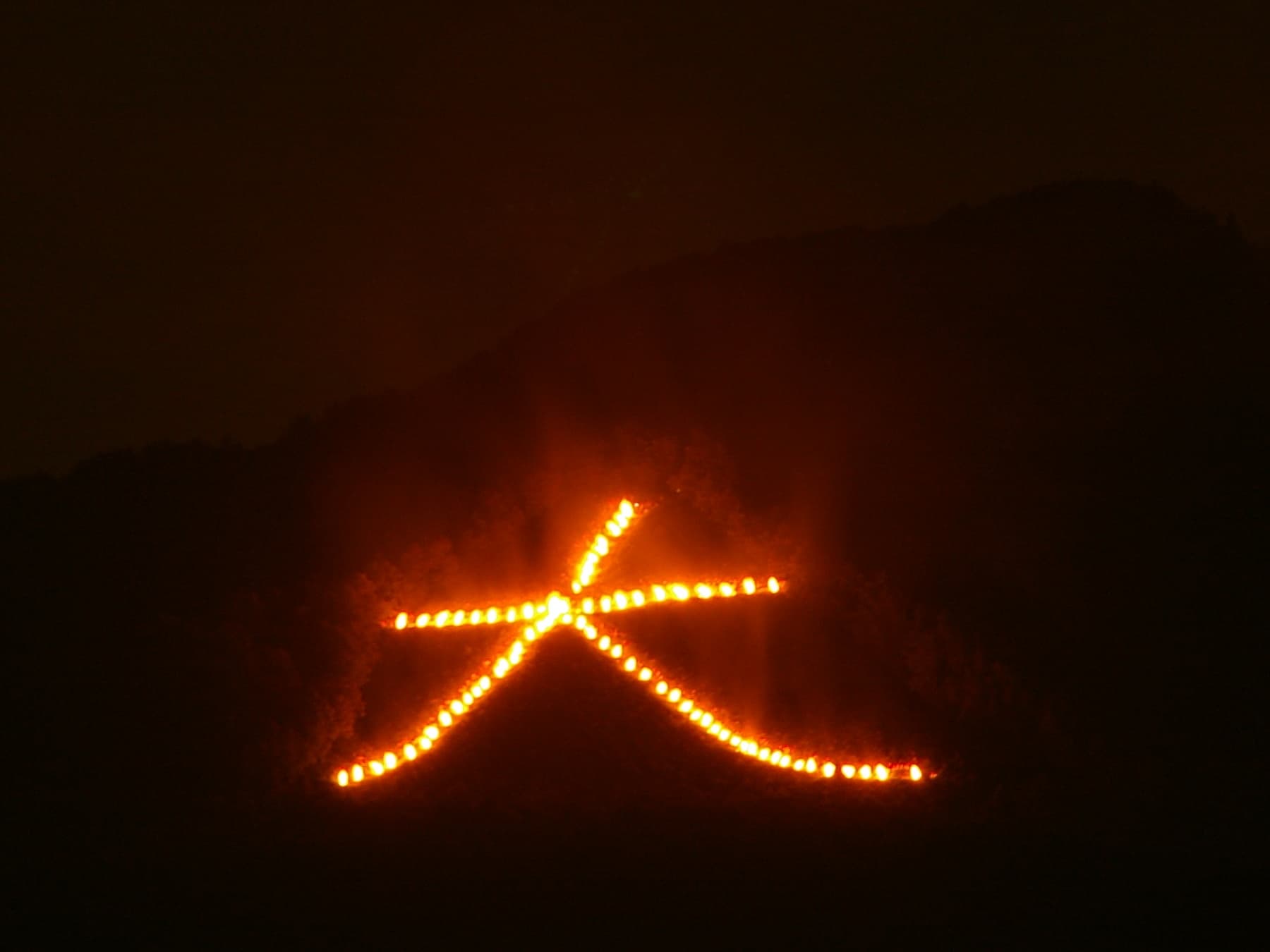
Daimonji burning on Nyoigatake, seen from Funaokayama Park in Kyoto: seventy-five points of fire resolve into one character across the eastern mountain. Photo by J_o, CC BY-SA 3.0.
At 7:50 p.m. on 16 August, Kyoto asks the city to dim. Outdoor signs, neon and building lamps go dark for an hour so the mountains can be read. Ten minutes later, the first stroke of Daimonji catches on Nyoigatake.
This is Gozan no Okuribi, the five-mountain send-off at the close of Obon. Families have welcomed ancestral spirits home for several days; the fires return them. Daimonji appears at 8:00. Myō and Hō follow at 8:05, then Funagata, the ship, at 8:10, Hidari Daimonji at 8:15, and Toriigata, the torii, at 8:20. Each burns about half an hour.
The sequence tempts a visitor into logistics. We’ll be blunt: you cannot chase five mountains through a dark, traffic-restricted city and still call it a ritual. Pick one fire. Watch it from one place. Put the phone down before someone else’s head becomes your tripod.
“Even today these Bonfires are held as local people’s events by their hearty support.”
Kyoto Gozan Okuribi Federation
Choose the Character Before Dinner
For a first visit, choose Daimonji. The official map points you to the Kamo between Marutamachi and Misono, with clearer stretches near Demachiyanagi. Kyoto Gyoen, the park around the old Imperial Palace, gives the same eastern fire more air: lawn, gravel, fewer shoulders. It will not feel like a rooftop viewing package. That is rather the point.
Already north? Kitayama reads Myō; the upper Takano reads Hō. Nishioji toward Kinkaku-ji belongs to Hidari Daimonji. In Arashiyama, Togetsukyo and Hirosawa Pond face Toriigata, and the Arashiyama Toro Nagashi floats memorial lanterns from 7:00 to 9:00 p.m. when the river cooperates. Pairing lanterns with that redder, pine-fed torii fire makes sense if you are already west. Crossing town for it after Daimonji does not.
Whichever view you choose, keep it. Five neighborhoods light five inherited forms while the basin lowers its own glare. A cropped photograph gives you the character. Staying put gives you the scale.
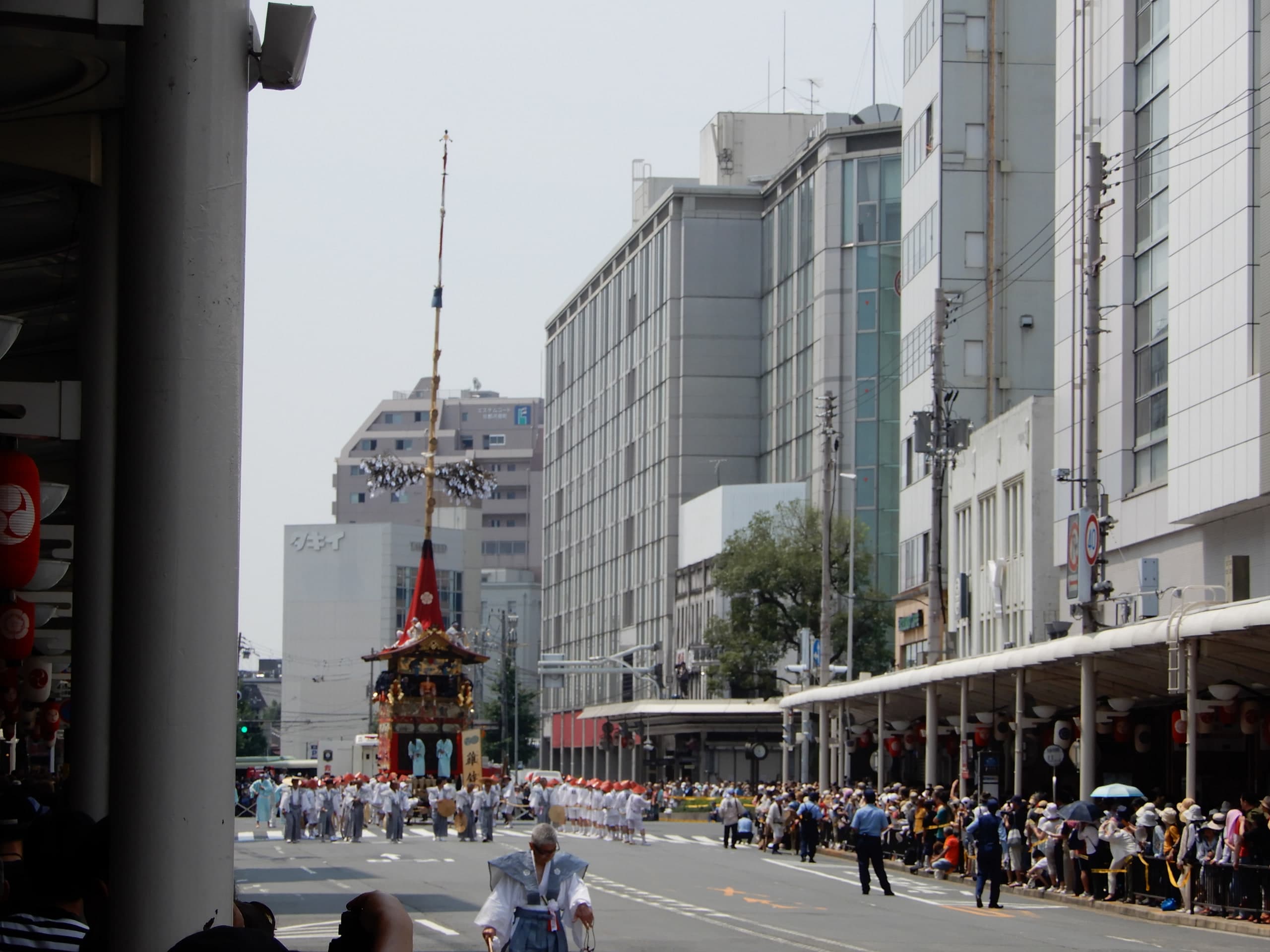
Read Kyoto’s July Festival Is a Moving Collection for the useful contrast. Gion fills streets with timber and textiles. Okuribi empties the foreground and asks the mountains to finish Obon.
Seventy-Five Fires Make One Daimonji
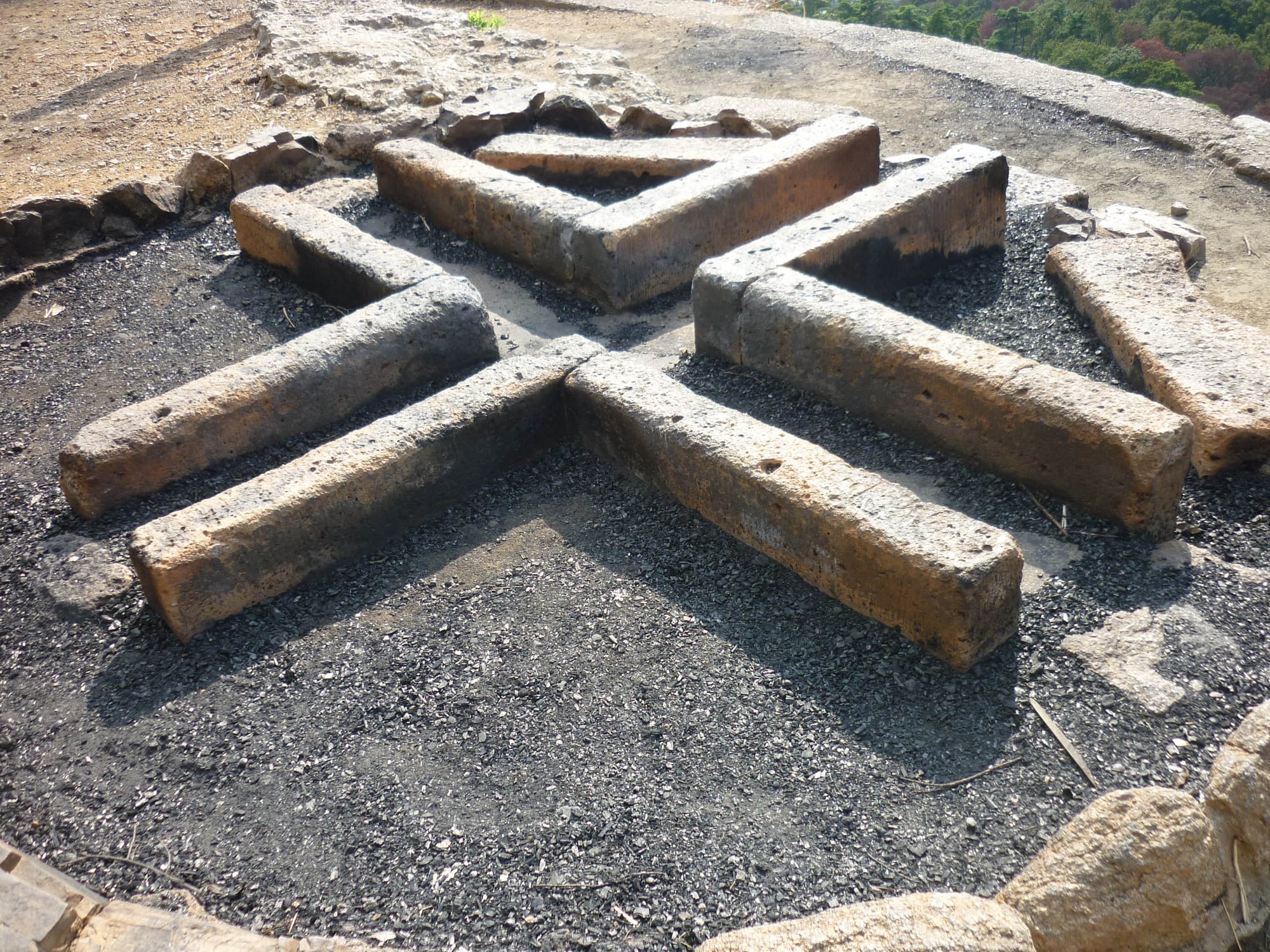
From the city, Daimonji looks like one gesture of flame. On the mountain it is seventy-five separate fire beds. Split pine is stacked in crib-like squares with needles and straw. At 7:00 p.m., a votive light is kindled at the small hall in the character’s centre. A priest from Jodoin and members of the preservation association recite the Heart Sutra. That flame becomes the source for the signal at eight.
The other mountains keep their own grammar. Matsugasaki divides Myō and Hō among old neighborhood groupings. Funagata’s association carries fuel uphill and lights seventy-nine beds at a bell. Hidari Daimonji steps fifty-three concrete beds across a rocky incline. At Toriigata, crews carry oily pine-root torches to 108 points by hand, which is why the last fire runs warmer and redder.
This is why the night is badly sold as a panorama, as if Kyoto simply presses a switch. Five local associations maintain the slopes, source the wood and hand the lighting practice down. Their federation became a public-interest foundation in June 2026; the work still starts with households. The five fires have been registered as Kyoto City intangible folk cultural properties since 1983.
Origin stories are less tidy. Legends credit famous monks and distant centuries. The federation is franker: contemporary records are scarce, and much of what circulates is later conjecture. The earliest diary entry that clearly names Daimonji dates to 1649. The present five-fire arrangement was likely settled by the middle of the Edo period. Leave the founder hunt alone. Watch who still climbs the slope with the wood.
Be in Place Before the Lights Go Out
Arrive by 7:15 p.m. Bring water. August does not cool just because the neon has gone out. Stay on the paved path, not the dark riverbank. Do not stop on a bridge. Do not climb any fire mountain on the 16th. Official guidance is about safety and about not interrupting the ceremony; both reasons hold.
Traffic restrictions usually hit the Kamo and Takano corridors, Kinugasa and Arashiyama between 7:00 and 9:00 p.m. City buses divert from about 6:50. Use rail, then walk. When your fire fades, wait twenty minutes before joining the first station crush. A private car on this night is an expensive way to sit still.
If you want a hand in the fuel before you watch, the Daimonji association accepts goma-ki prayer sticks near Ginkaku-ji on the afternoon of the 15th and the morning of the 16th, while supplies and published hours hold. Names and prayers written on the wood become part of the evening burn. Confirm the window before you go; the five mountains keep different practices.
Keep the city’s published viewing map and ignition times on kyoto.travel before you leave the hotel, and use The Banquet Guide to Kyoto for the days around it. August rewards a slower base more than a heroic route.
At 8:20, Toriigata is the last fire to appear. By about 8:50, the outdoor lights return. You will have missed four close views. That is the correct evening.