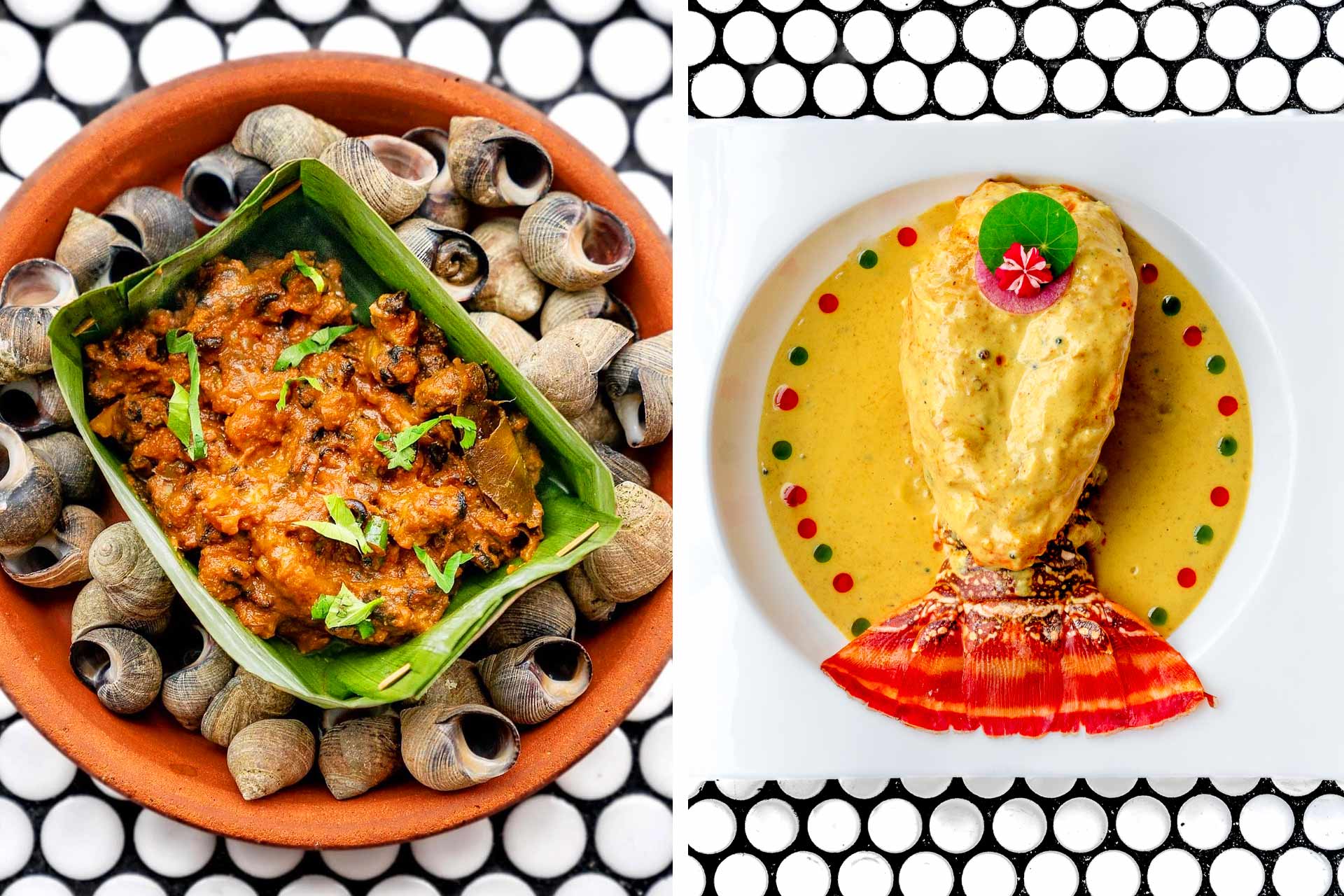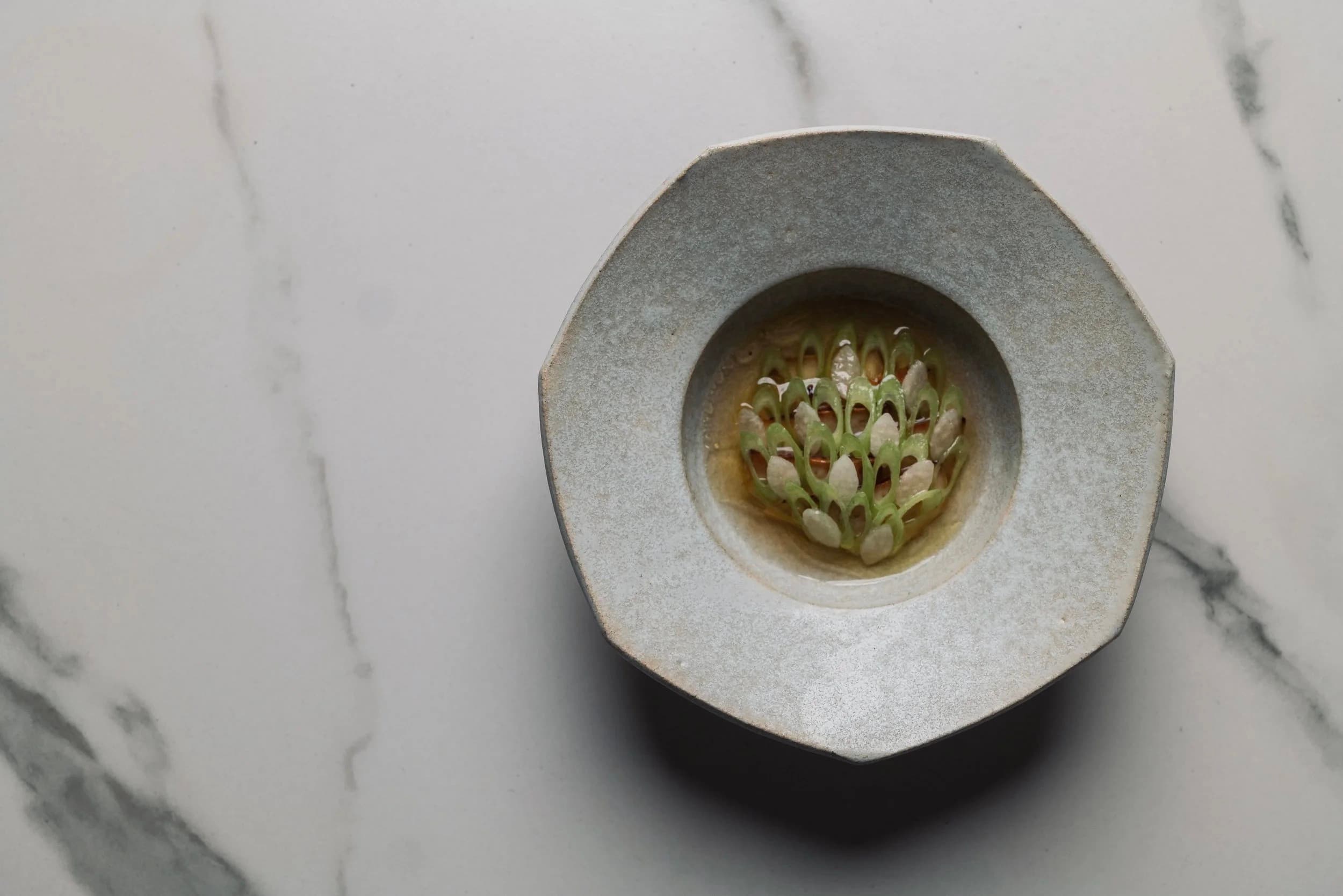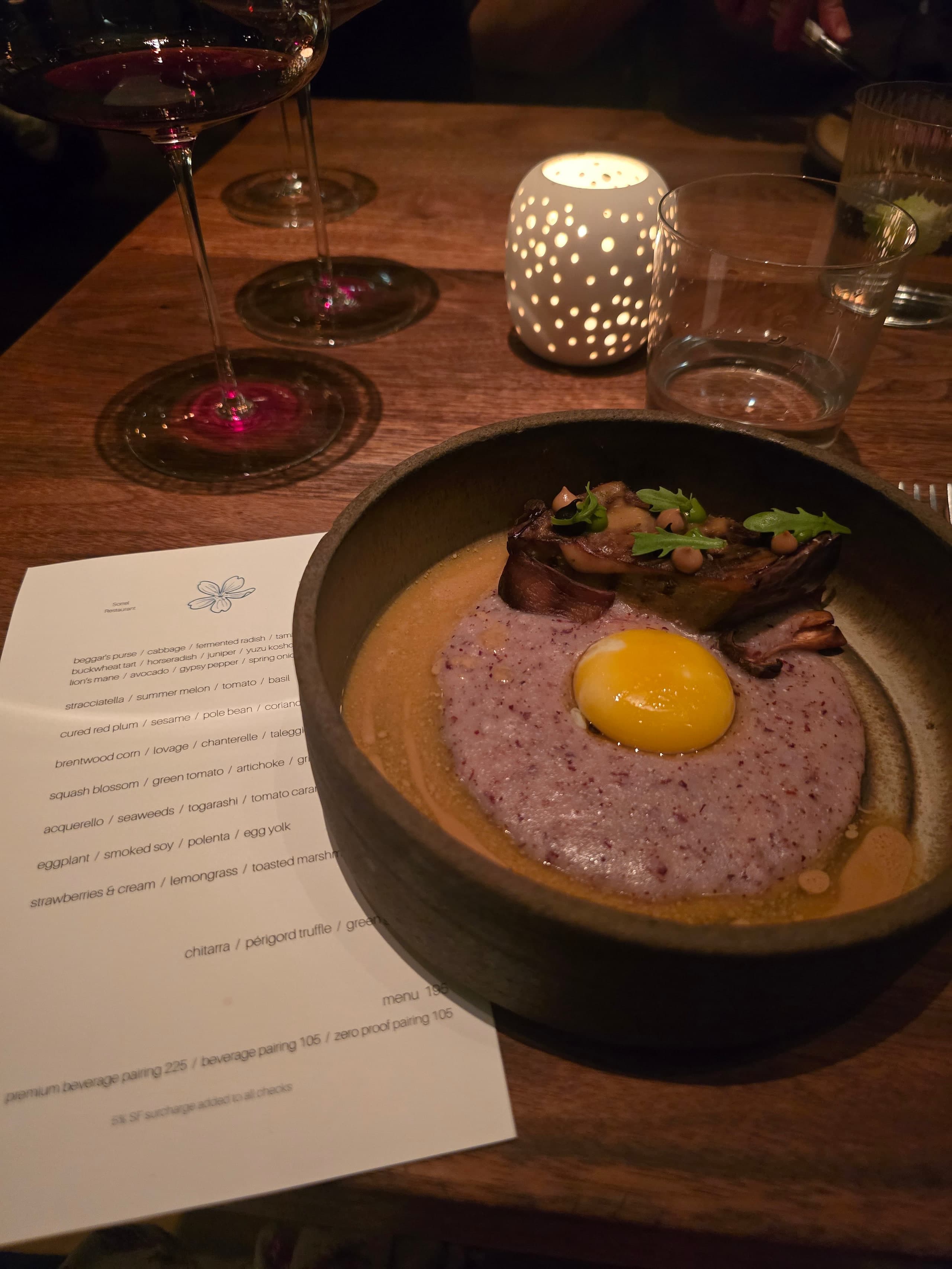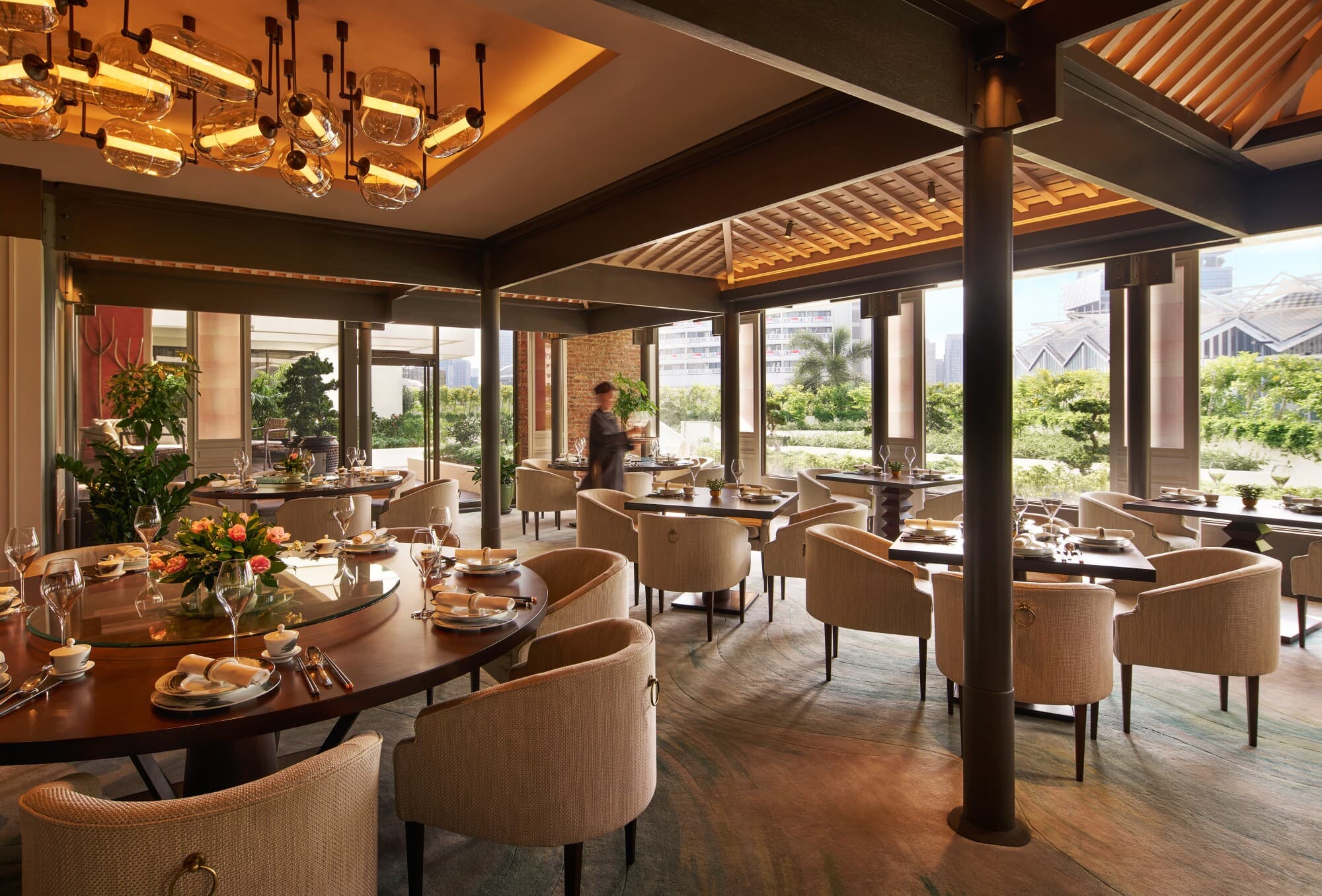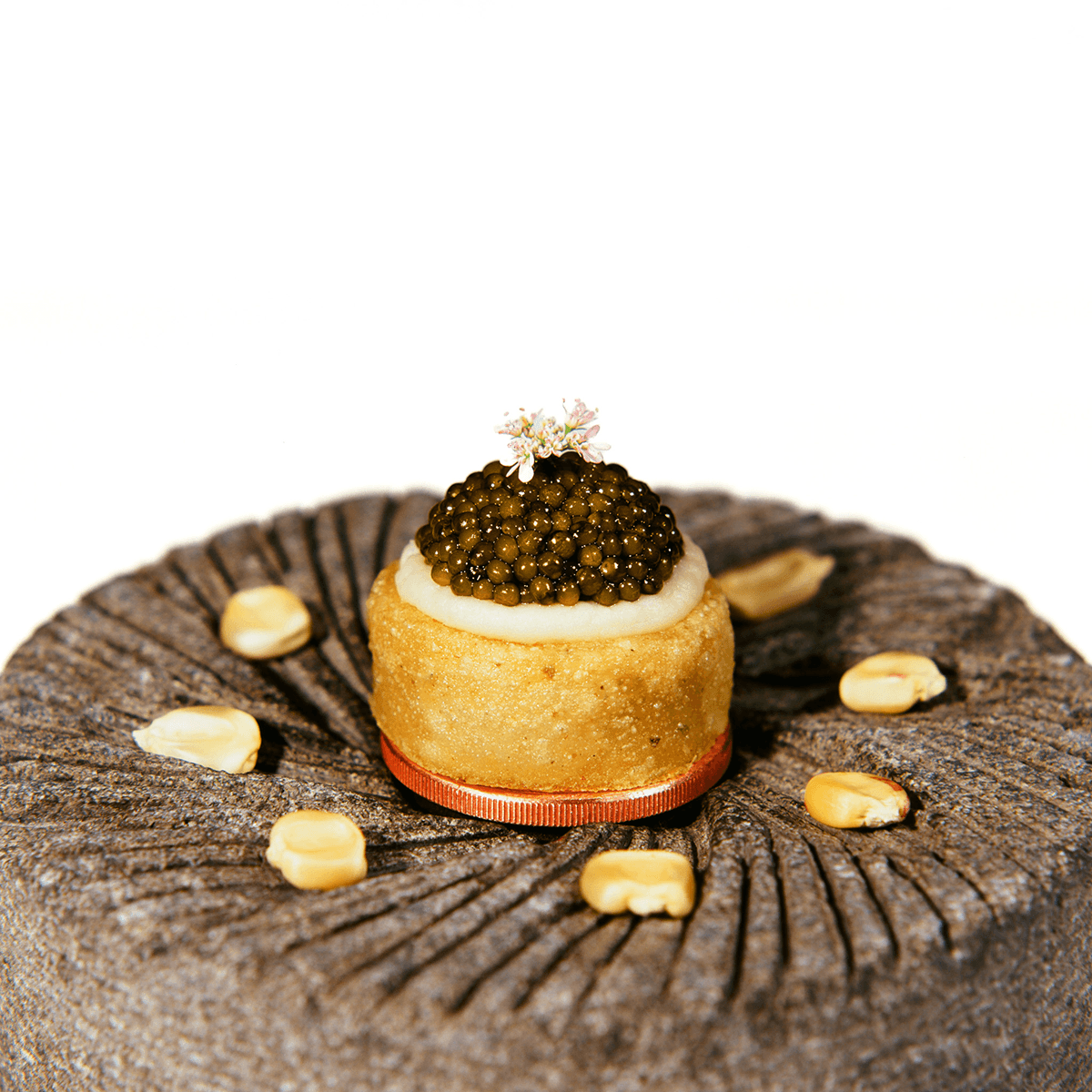
A sope with caviar on a stone masa grinder at Californios, 355 11th Street, San Francisco. Image courtesy of Californios.
When Michelin read the two-star list in San Diego on 24 June 2026, Californios stayed quiet. Val M. Cantú, who grew up around his father’s Texas tortillería and opened the restaurant in the Mission in 2015, already knew that silence. The SoMa room at 355 11th Street had held two stars since 2018. Then the three-star coats came out. Californios became the first Mexican restaurant in the world to take the top mark.
Cantú, accepting the coat, kept the sentence short. “This is all about the culture. This is the cuisine. This is for Mexican people. This is for all Latin people in the world.”
That is the useful story, and it is larger than one San Francisco night. The awards that actually moved the map this cycle went to kitchens that cook a named cuisine hard enough to stand next to the old French and Japanese references. We’ll be blunt: plenty of new stars still go to contemporary rooms with no national adjective. The ones hosts kept texting about had masa on the pass, or southern curry paste, or a region you can point to on a map.
The shortcut that soured
Fusion had a real inventor and a real hangover.
Norman Van Aken, the Florida chef, used the word in the late 1980s for Caribbean flavors run through European technique. Wolfgang Puck made the East-West dining room a Hollywood habit at Chinois on Main. Nobu Matsuhisa’s New York room, opened in 1994 with Robert De Niro, taught a generation that yellowtail, jalapeño, and a black-cod glaze could be a global luxury grammar. For a while it worked. Then the copies piled up.
By 1999, William Grimes was reviewing Roy Yamaguchi’s New York outpost in the Times as a parade of exotic ingredients that collapsed under its own weight. “If clowns had a cuisine, this would be it.” Chefs spent the next decade calling the same habit “globally inspired.” Anything to avoid the word. Wasabi here, pineapple there: a menu that signaled worldliness without having to master a single kitchen’s rules.
Diaspora cooking is a different job. A Taiwanese American tasting in Los Angeles, or a Mexican kitchen in Marylebone that insists on British seafood, still has a through-line. You can name the cuisine. You can taste whether the cook knows it. The 1990s mash-up asked you to applaud the collision. The 2026 star asks whether the cook went deep.
“This restaurant is deeply rooted in Mexican cuisine. To that end, the culinary team at Californios has an exceptional foundation, understanding and mastery of Mexican cuisine. Full stop.”
MICHELIN Guide inspector, on Californios’s promotion to three stars, June 2026
North America names the kitchen
Californios is the clearest American case because the inspectors said the quiet part. Mexican flavors had “crept into fine dining.” What they wanted, early on, was Mexican DNA that still tasted like itself under a tasting-menu light. The dishes they keep returning to are ordinary until they are not: a sope, a tortilla, a blue-masa tostada with Dungeness crab. Caviar shows up. The point is still corn.
Cantú cooked at Pujol in Mexico City before the Mission pop-ups became a restaurant. The tasting has been published in the mid-three-hundreds; the Chronicle had it at $325 the morning after the third star, other desks a little higher. Confirm the current number on Tock before you brag about a booking. The room is intimate. The wait after 24 June was immediate.
Los Angeles made a cousin of the same argument. Kato, Jonathan Yao’s Taiwanese American tasting room at 777 South Alameda Street in the Row DTLA, was promoted to two stars in that same California ceremony. Michelin’s note is specific: fermented Napa cabbage with mountain trout, Peking-style duck with a sesame ball and magao pepper. An LA upbringing threaded through Taiwanese memory, which is a narrower promise than “Asian tasting.” We already put Kato on the booking ledger in Book Named Asian Tables Before the Season Fills. The second star is why the deposit now behaves like a New York counter.
San Francisco’s other new mark was Filipino. Restaurant Naides, chef Patrick Gabon’s counter with partner Celine Wuu at 708 Bush Street, opened in December 2025 in the old Sons & Daughters space and took a star about six months later. Inspectors called it a jewel box. The plates have names you can look up in a Filipino kitchen: sisig, adobo, sinigang. Chicago had already moved that line. Kasama, Tim Flores and Genie Kwon’s room at 1001 North Winchester Avenue, became the first Filipino restaurant in the world to hold a Michelin star in 2022, then rose to two in the Chicago 2025 guide. The lunch bakery is still a bakery. Dinner is where the argument sits.
New York’s Korean map is no longer one address. Atomix, Junghyun and Ellia Park’s two-star counter at 104 East 30th Street, remains the reservation that resets a month. Joo Ok, Chang-ho Shin’s room on the sixteenth floor at 22 West 32nd Street, opened in Koreatown in September 2024 after he closed the Seoul original, and held two stars in the 2025 New York guide. The meal begins with ganjang, gochujang, and doenjang. Those are the house sauces. They are not a garnish.
Tamil New York is still Semma: one star, Greenwich Avenue, a kitchen that will point butter-chicken people elsewhere. If you need the longer Indian map, that piece is the ledger. The point here is simpler. The star followed a region.
Europe keeps the adjective
London’s 2026 guide confirmed a habit Mayfair had already learned.
Ambassadors Clubhouse, the Punjabi room from Jyotin, Karam, and Sunaina Sethi’s JKS group, took a first star on 9 February 2026. The group called it the first Punjabi restaurant in the United Kingdom to be starred. The kitchen, under Shantilal Bhushan, points at roadside stalls and Punjabi houses. The same family already had Gymkhana at two stars on Albemarle Street. Another Indian star in Mayfair is how a category deepens.
KOL, Santiago Lastra’s Mexican restaurant at 9 Seymour Street, has held a star since 2022 on a blunt tagline: Mexican soul, British ingredients. The signature inspectors still mention is a langoustine taco with smoked chilli and sea buckthorn. A Mexican kitchen that refuses to fly in a grocery it cannot stand behind.
Paris, which still writes a large share of the world’s three-star grammar, gave a first star on 16 March 2026 to Imperial Treasure at 44 rue de Bassano, a short walk from the Champs-Élysées. The Singapore group’s room serves Peking duck carved tableside and dim sum that inspectors filed under ancestral recipes. Kenny Leung, the group’s chief executive, called the star especially meaningful because it came from the guide’s home country. For a Chinese dining room in the 8th, the brief is simple: cook Chinese well enough that Paris has to mark it.
West Africa is on the same London list, which matters if you still think the only upgrade path runs through Asia. Akoko, Aji Akokomi’s Fitzrovia room, holds a star for a tasting that names jollof, scotch-bonnet soup, Ghanaian bofrot. Ikoyi, two stars on the Strand under Jeremy Chan, is the more restless cousin: British organic produce with a global spice drawer. Keep it on the map as a hybrid that still works. The fashion this year, though, is a cuisine you can name.
Asia goes deeper at home
In Bangkok the three-star argument is southern.
Sorn, at 56 Soi Sukhumvit 26, became the first Thai restaurant in the world to hold three Michelin stars in the Thailand 2025 guide, announced 28 November 2024, and kept them in 2026. Supaksorn “Ice” Jongsiri cooks the food of the south: crab, Andaman seafood, chilli pastes made daily, rice in clay pots. He told Tatler he felt lucky to have been born Thai. “If I were cooking cuisine from another country, I probably wouldn’t be able to compete.”
That is a mastery sentence. It is also a booking problem. International guests email from midnight Bangkok time on the 15th of the month. Everyone else fights TableCheck at noon on the 25th. Full prepayment. No refunds. About twenty-two seats. Confirm the current tasting price on sornfinesouthern.com; published figures have moved.
The same Thai guide then gave a second three-star to Sühring, the German tasting room run by twin chefs Thomas and Mathias Sühring. German food in Bangkok at the top mark is useful proof. Inspectors will star a kitchen that knows its own rules, wherever the room sits.
Hong Kong has been scoring Cantonese at this level for years. Forum and T’ang Court kept three stars in the 2026 Hong Kong and Macau guide. China Tang took a first star in the same edition: hotel Cantonese treated as a serious room. If you want the older argument for Chinese lunch as luxury, Lunch at Lung King Heen still holds.
Tokyo’s 2026 guide added more sushi and kappo rooms, as it usually does. Japanese fine dining was mastery before fusion had a marketing department. The news is that other Asian cuisines are now being scored with the same seriousness, in Asia and out of it. The New Banquet is the longer version of that hierarchy shift.
What to book, and what to skip
Book the named kitchen. Skip the menu that needs a paragraph to explain why the miso is in the mole.
If you have one American reservation after this week’s reading, make it Californios on Tock, then Kato if you are already in Los Angeles, then Naides if you can live with a twelve-seat notify list. Kasama is the Chicago split-shift: bakery by day, two-star Filipino dinner by night. Atomix and Joo Ok are the New York Korean pair. They ask for different nights.
In London, Gymkhana first if you have only one Mayfair evening, Ambassadors Clubhouse when you want the newer Punjabi star, KOL when the table wants Mexican cooking that still tastes Mexican after a British supply chain. In Paris, Imperial Treasure is the Chinese booking that now has a French star to show the concierge.
In Bangkok, set the Sorn alarm before you buy the flight. The rest of Sukhumvit can wait.
Some fusion rooms still cook well. They have stopped being the way a chef proves the kitchen is expensive. The expensive proof, in 2026, is that the inspector can name the cuisine and still want another look.
The sope at Californios sits on a stone grinder for a reason. It is a Mexican tool doing Mexican work at a three-star price. Master the thing. Then put a deposit on it.