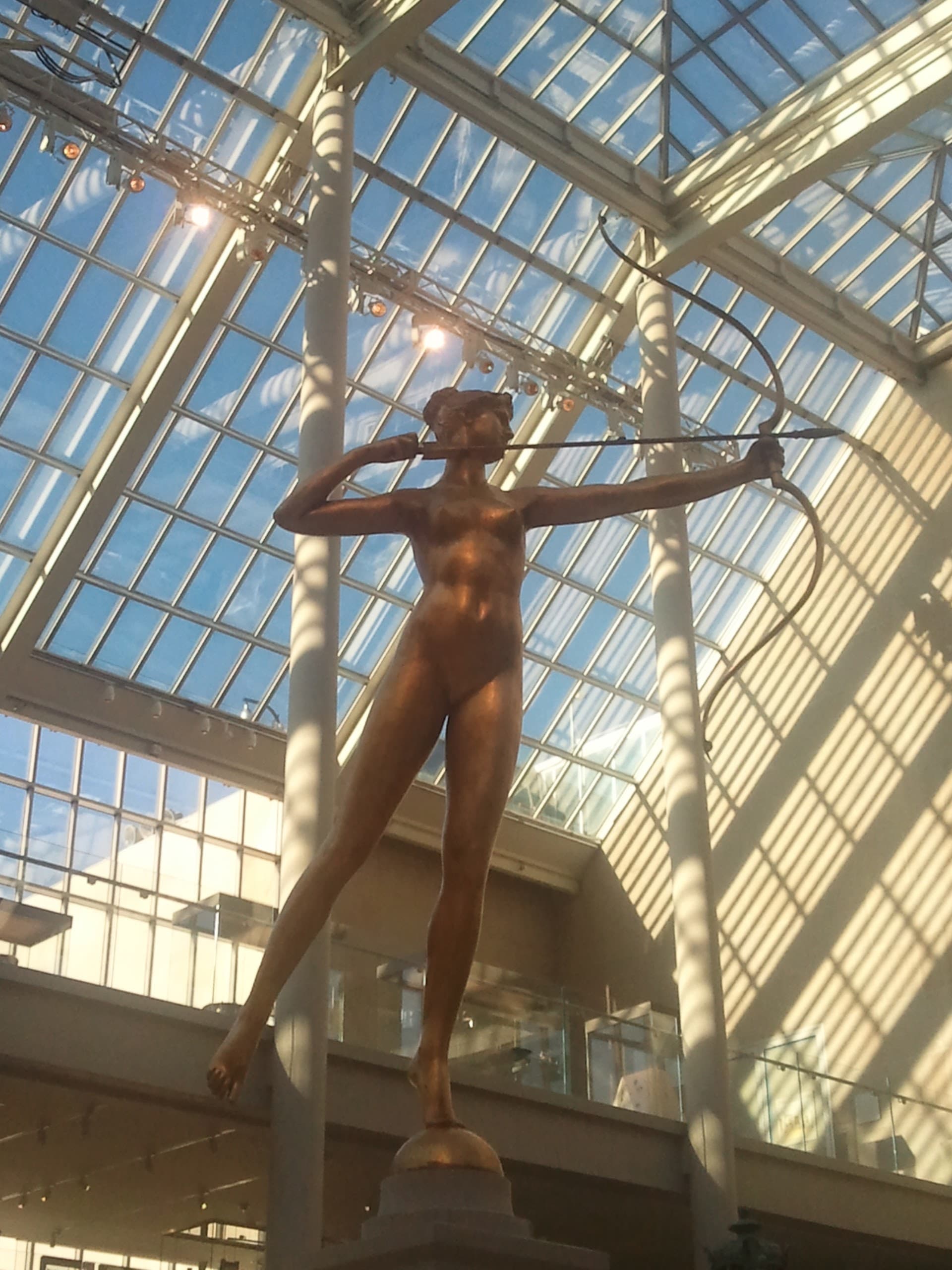
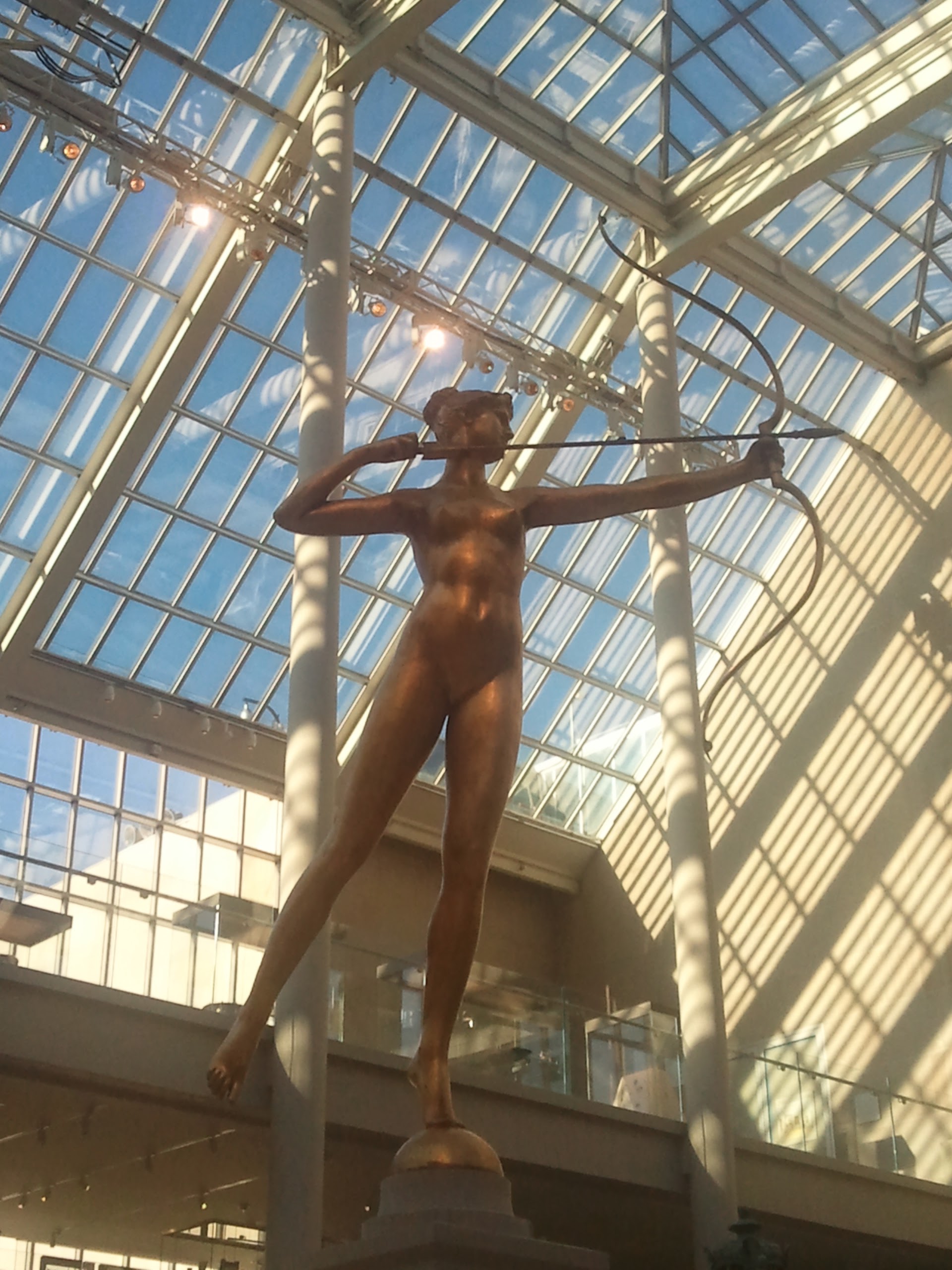
On 21 October, under Augustus Saint-Gaudens's gilded Diana, waiters in vermilion turbans moved through the Metropolitan Museum of Art's American Wing as if the court had always belonged to them. Jazz played beneath the Tiffany loggia. A sixteen-foot table carried caviar, lobster, and mithai in the same line of sight as the marble. Sabyasachi Mukherjee, black bandhgala and red-tinted glasses, was hosting Diwali inside a room most Tuesday visitors still clock as American sculpture. Vogue called the night a landmark. Rani Mukerji was there; so were Masaba Gupta and Kal Penn. Lakshmi Puja, the festival's main night, does not fall until 8 November. The Met simply got there early.
For years the diaspora season lived in hotel ballrooms and private homes. Now Indian designers are borrowing the prestige rooms that used to host other people's culture: museum courts, Pall Mall clubs, department-store members' floors. The photographs will look expensive either way. I care less about the guest-list still than about which of those rooms keep a designer after the diyas go out.
The party was loud. The partnership is quieter, and it is the reason the night matters. Sabyasachi's multi-year collaboration with the Met opened at New York Fashion Week on 15 September with Byzantine-inspired high jewellery, made in his Indian ateliers from objects in the museum's own holdings. Future chapters can move into accessories and clothing, which is the institutional promise: more than one season, more than one category. Talking with Josh Romm, the Met's head of global licensing, Mukherjee put the ambition plainly. The object in the museum, he said, is the beginning of the design process, not the end product. That is a working relationship talking, not a catering invoice. Reports said the Diwali reception was held in honour of the collaboration. Mid-Day called it a first for the museum; India Today remembered the Met's own public Diwali programmes in 2014 and 2015. Both can be true. A family afternoon in the auditorium is education. Lending Engelhard Court to a couture house is a different kind of permission. Sabyasachi already keeps a West Village flagship at 160 Christopher Street. For him, New York is already more than one rented October night.
London is testing a softer room this week. Tomorrow, 3 November, Rahul Mishra hosts a Diwali-themed soirée at 40 Duke, Selfridges' private members' club for Unlocked Keyholders. Abu Jani Sandeep Khosla used the same address ten days earlier, inside a fortieth-anniversary showcase. Vogue filed both nights as shopping-based activations, which is a fair reading and, we'll be blunt, a lower bar than a museum court. A club above Oxford Street can sell you a jacket before midnight. Engelhard Court cannot. Mishra's real continuity sits elsewhere anyway. Paris Haute Couture is still his official calendar home, and he has already parked collections at 40 Duke outside festival week, including a short residence for Devi after the Paris show. The Diwali invitation is hospitality. The couture schedule is what pays the atelier.
The rooms that already behave like habits are easier to trust. On 30 October the UK-India Creative Circle put Anamika Khanna and Amrapali back into the Royal Automobile Club on Pall Mall. That evening has become an annual stage, which is the whole point. You do not have to invent the room, or the guest list logic, every year. Across Knightsbridge, Harrods is in year two of a store-wide campaign running through 8 November, with Gaurav Gupta on the first floor and a Brompton Road façade that lights from 4 p.m. on the festival weekend. Rachel Bright, the store's director of marketing, told Women's Wear Daily that Indian footfall on Diwali itself was up 50 percent, and that the festival now sits with Christmas, Spring Festival, Ramadan, and Eid in Harrods' top tier. Long-term success, she said, is an ongoing relationship, not a single transaction. Chhavi Seth Mediratta, who has worked Diwali activations for houses including Tiffany, told Vogue the same thing from the other side of the table.
"Brands should show up with respect, and not only when it's commercially convenient."
Chhavi Seth Mediratta, to Vogue, on commitments that last year to year
So here is the Banquet test, bluntly. After the mithai trays leave Diana, does the Met still announce the next jewellery chapter with Sabyasachi's name on it? After 40 Duke turns the lights down tomorrow night, is Mishra back for an ordinary appointment, or only for the next Lakshmi Puja? Those are different questions dressed in the same festival. One asks whether a museum will keep making with an Indian house. The other asks whether a retail club was ever more than a good week for appointments. Harrods has already answered year two. New York already has quieter annual habits, from Cartier's Fifth Avenue Mansion to Anjula Acharia's All That Glitters ball. The museum and the members' club are still the grades that feel like experiments. Diwali has entered the cultural rooms. January will tell us who was renting them.