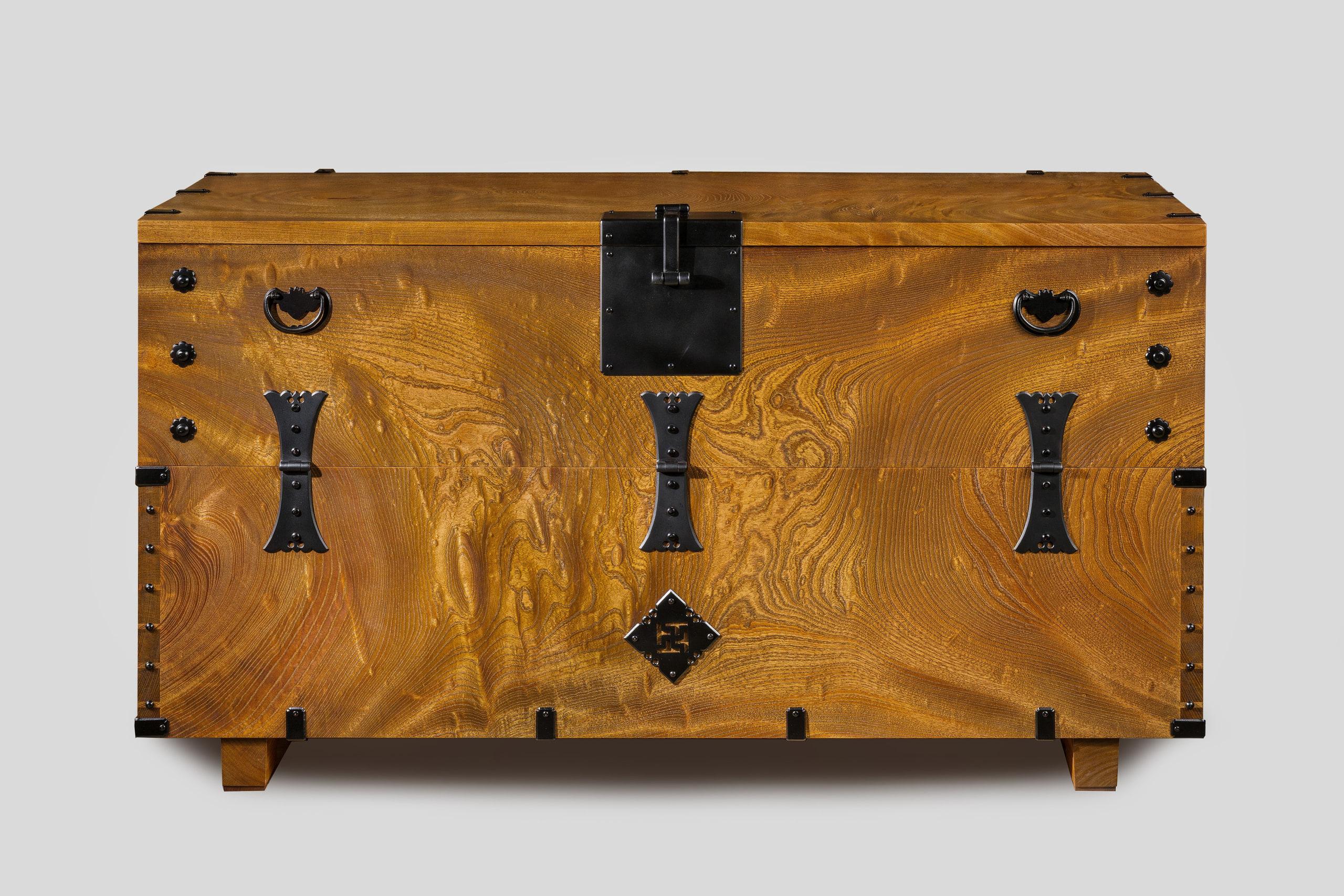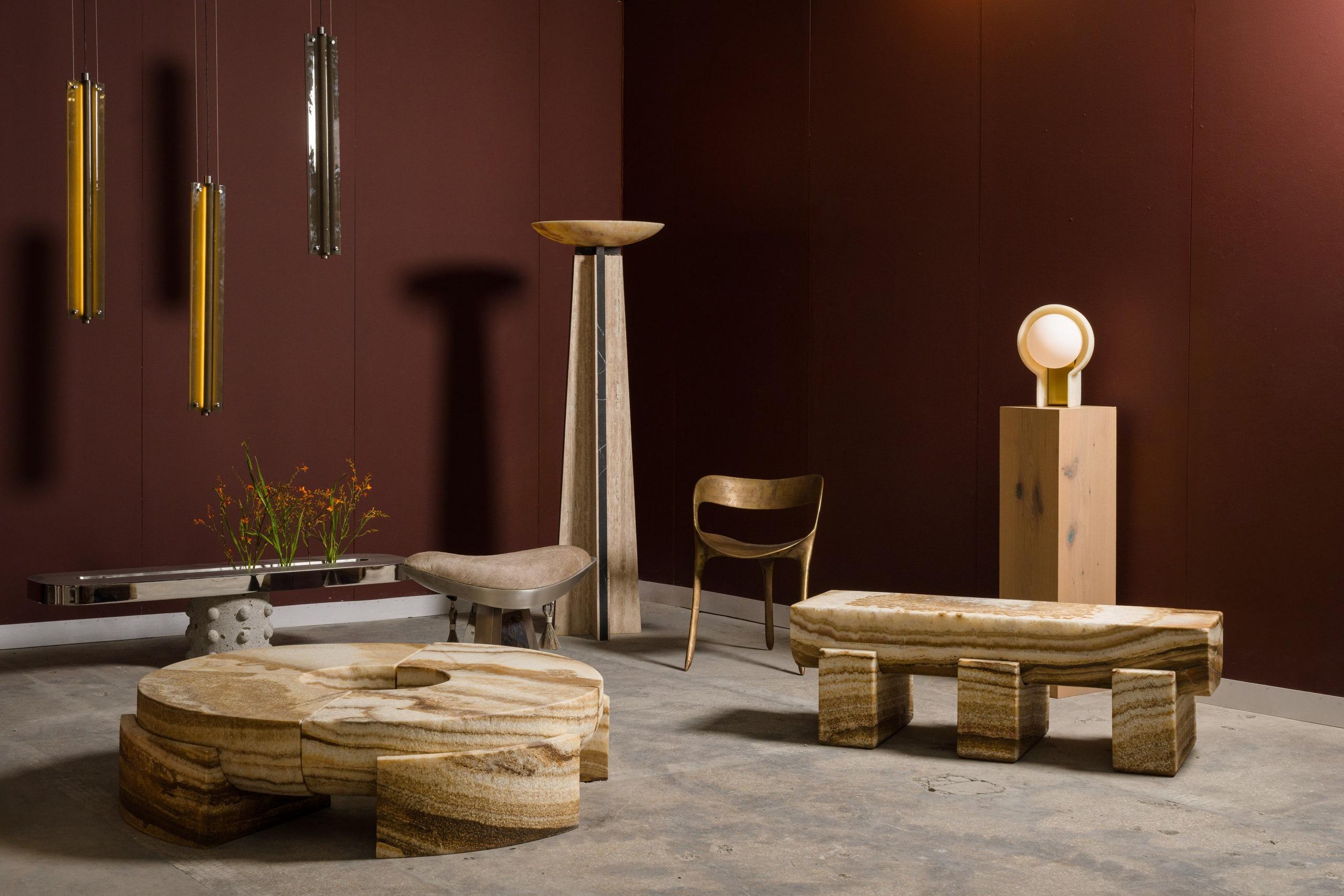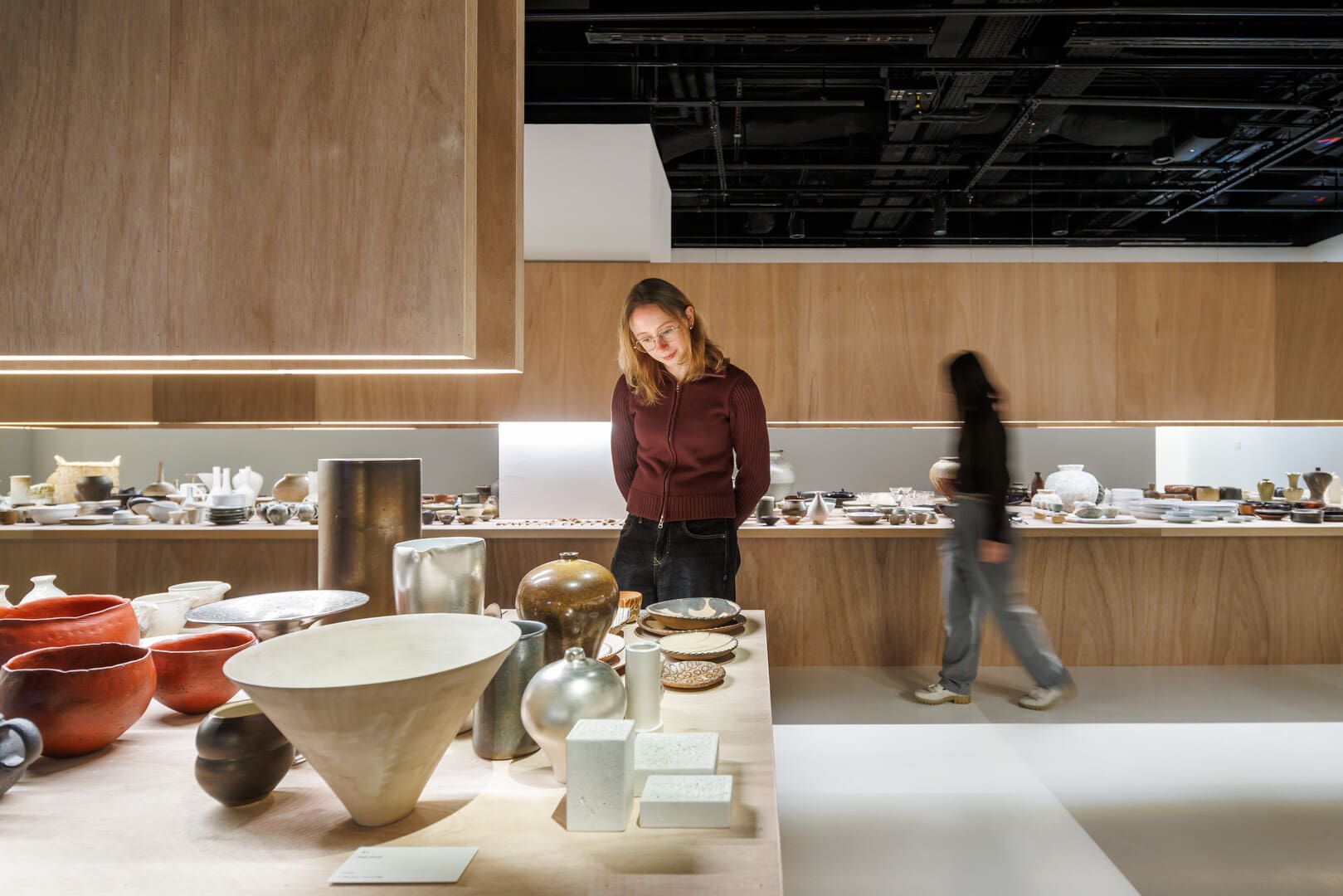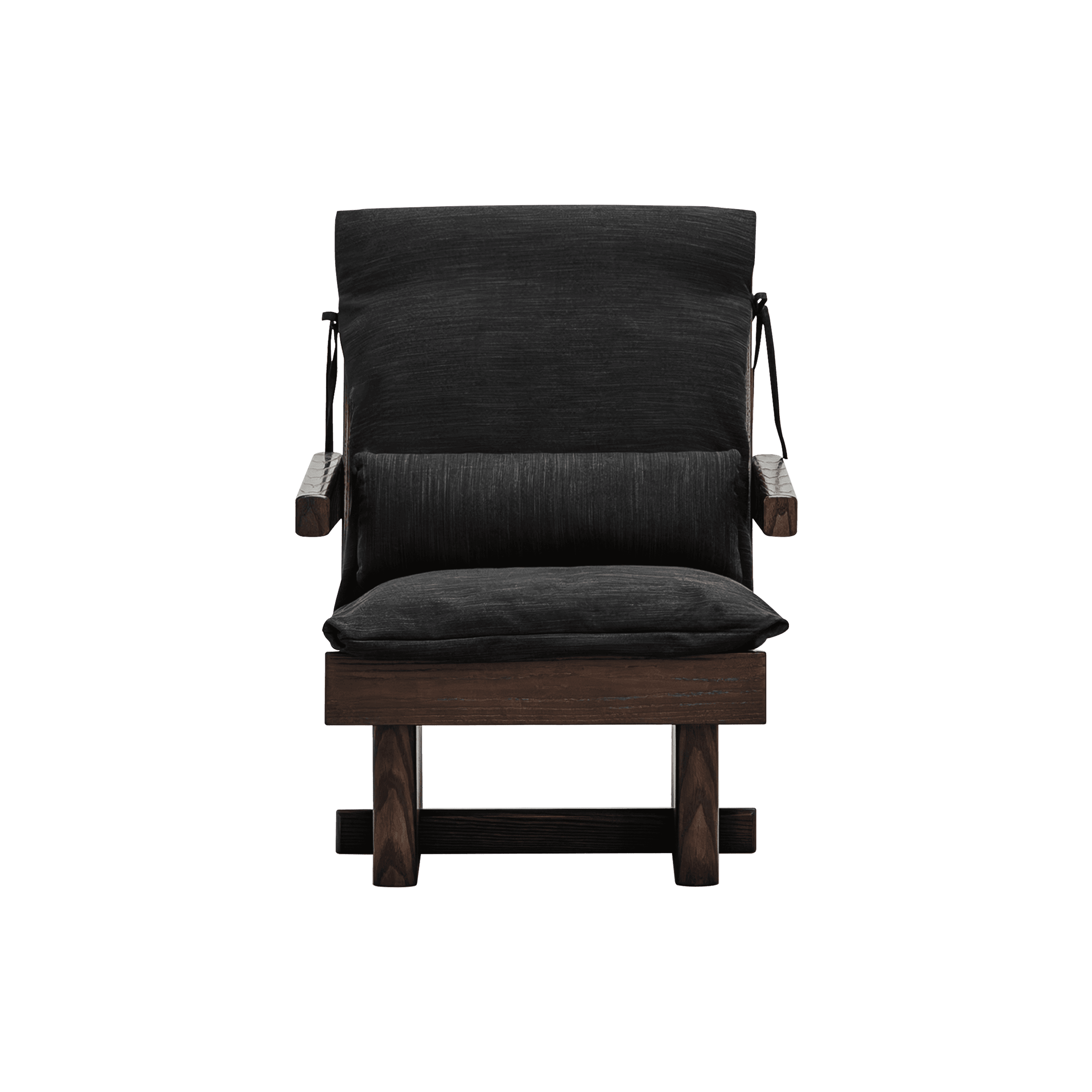
On Thursday, 19 November, NUOVO opens MUMI at G03 in The Galleria, 9 Queen's Road Central: a free hang of Eastern Edition, the Seoul furniture line led by Teo Yang. The show runs through 31 January 2027, Monday to Saturday, 10:00 to 18:30. Yang has spent years translating Joseon-era rooms into pieces that work when the floor is no longer the seat. A Boryo lounge chair, a Nabi stool, and an open display cabinet show what he kept in the joinery or the proportion, and what he changed for a chair-height Hong Kong flat.
Design@HKG also flags a Boryo finished with two-tone fabric by Hong Kong label PONDER.ER, developed with Textile Library in Hangzhou. The cloth changes how the seat feels. The joinery underneath is still the Korean part.
The Boryo Chair Lifts a Floor Mattress Onto Legs
A traditional boryo was a thick mattress laid on the ondol in an anbang or sarangbang, the warm pad where the household sat, received guests, and sometimes rested. Yang's Boryo Lounge Chair keeps the name and that sense of supported leisure, then builds a dark ash frame around it. Eastern Edition lists the piece at about 70 centimetres wide and 94 centimetres high, with a seat height near 53 centimetres. Thick arms and a deep pitch read like a low lounge rather than a dining chair. The brand points to half-tuck joinery, a lap joint used in Korean woodwork where members cross, as the detail that steadies the silhouette.
The inheritance is that joint and the memory of rest. The contemporary move is the chassis itself: cushions tied to a wooden back you can place opposite a coffee table, with fabric that can include the PONDER.ER cloth when the gallery runs that collaboration. You no longer need the floor to be warm for the seat to make sense.
The Nabi Stool Puts the Butterfly Joint Where You See It
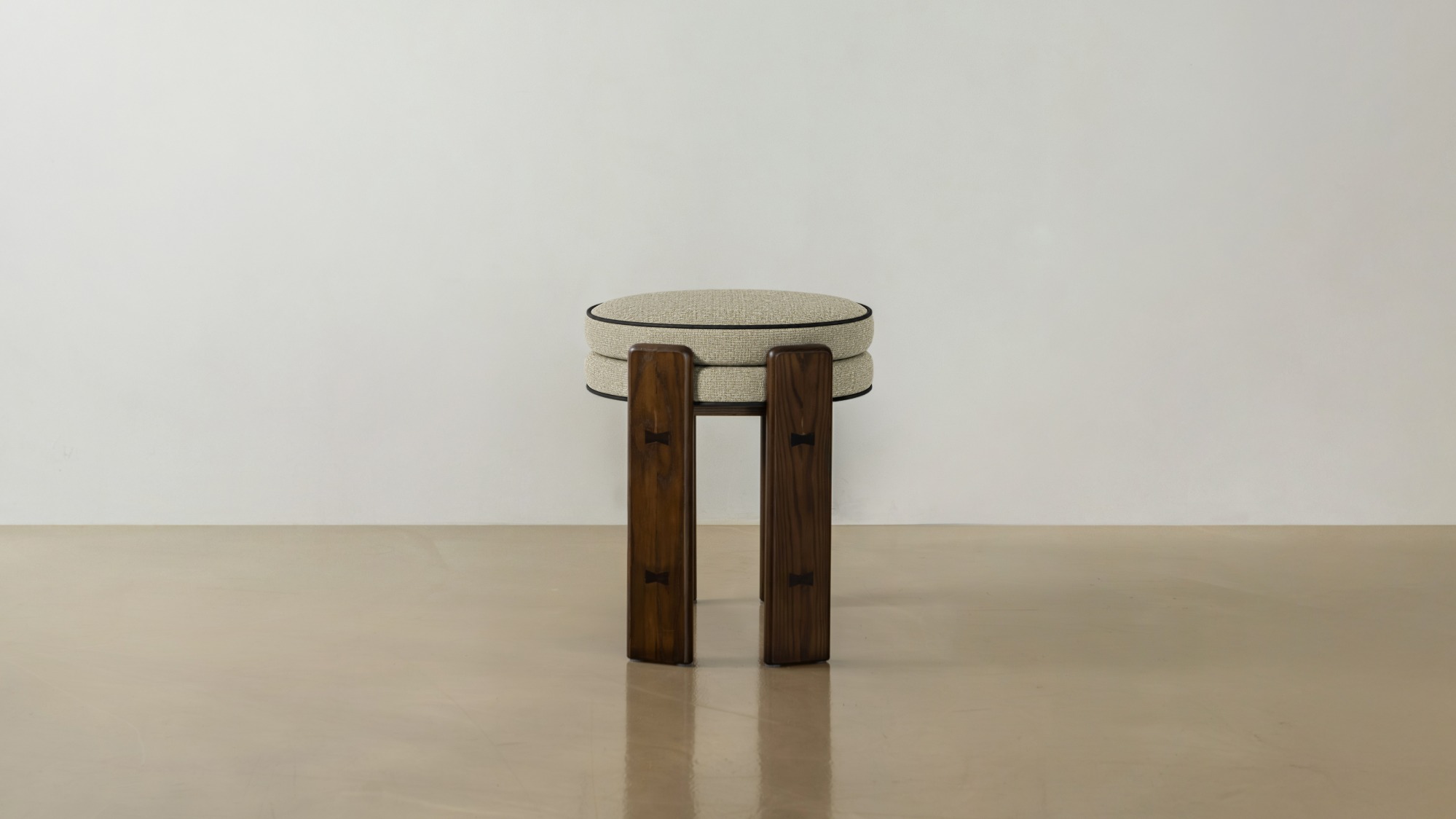
Eastern Edition names the butterfly joint, nabi, as a traditional method left visible on the dark ash legs, two bow-tie inlays stacked on each upright. The seat is a piped fabric cushion on a frame about 44 by 40 centimetres, roughly 47 centimetres high. Almost no metal hardware competes with the wood.
Offering a cushion once marked respect in a floor-sitting room. Yang raises that soft top onto a wooden base so the same hospitality gesture becomes an extra seat under a console or beside a bed. In interviews he has said Eastern Edition researches Korean heritage without copying old forms literally. On this stool, the butterfly joint is the part that stayed. The height is what lets it keep company with chairs.
"There is a Korean philosophy called 'no taste.' It's like taste beyond taste. You've had all the best things in your life. But now you know that materialism doesn't make you happy."
Teo Yang, on the idea behind Eastern Edition, to Architectural Digest
The Open Cabinet Keeps the Sabangtakja's Tall, Narrow Plan
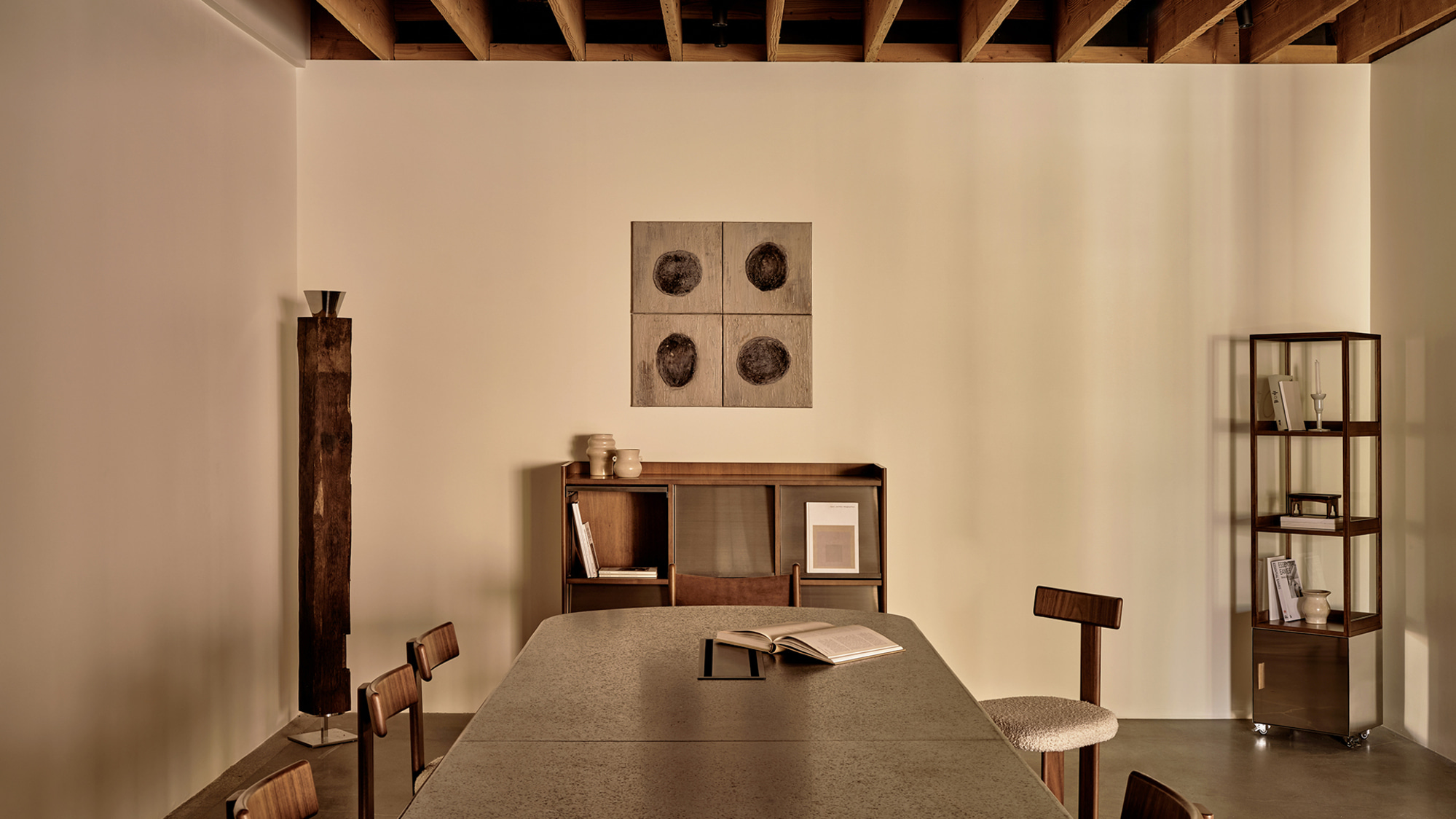
The Open Display Cabinet reworks the sabangtakja, the Joseon open shelf whose four slender posts and thin tiers held books, ceramics, and small objects without closing the view. National Museum examples often sit around 35 to 40 centimetres square in plan and well over a metre tall. Eastern Edition's version is about 40 by 36 centimetres and 159 centimetres high, still a narrow tower in walnut veneer. Glass appears on the open tiers; mirrored steel faces the lower door; non-scratch wheels sit under the base.
The proportion is what he kept: a scholar's open shelf that lets air and light through. Glass, steel, and casters are what he added so the piece can move when a living room changes and can stand beside a sofa rather than only against a hanok wall. Yang calls the show's mood mumi, essence without excess. The half-tuck, the butterfly joint, and the wheeled foot are where that idea becomes furniture.
Enter The Galleria from Queen's Road Central. Confirm Sunday closures before a weekend plan; the published hours stop on Saturday. For the rest of a design day in town, keep The Banquet Guide to Hong Kong open.