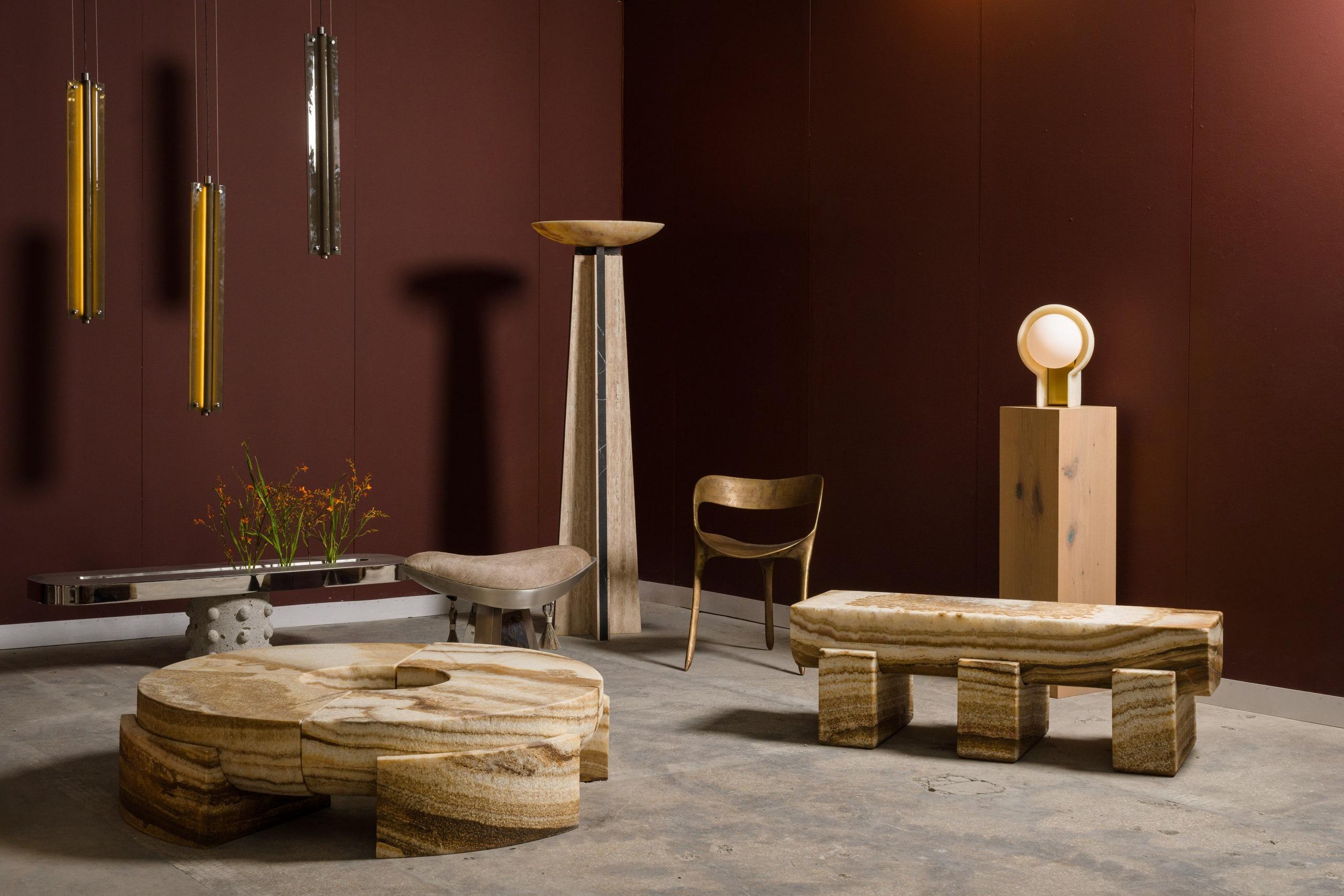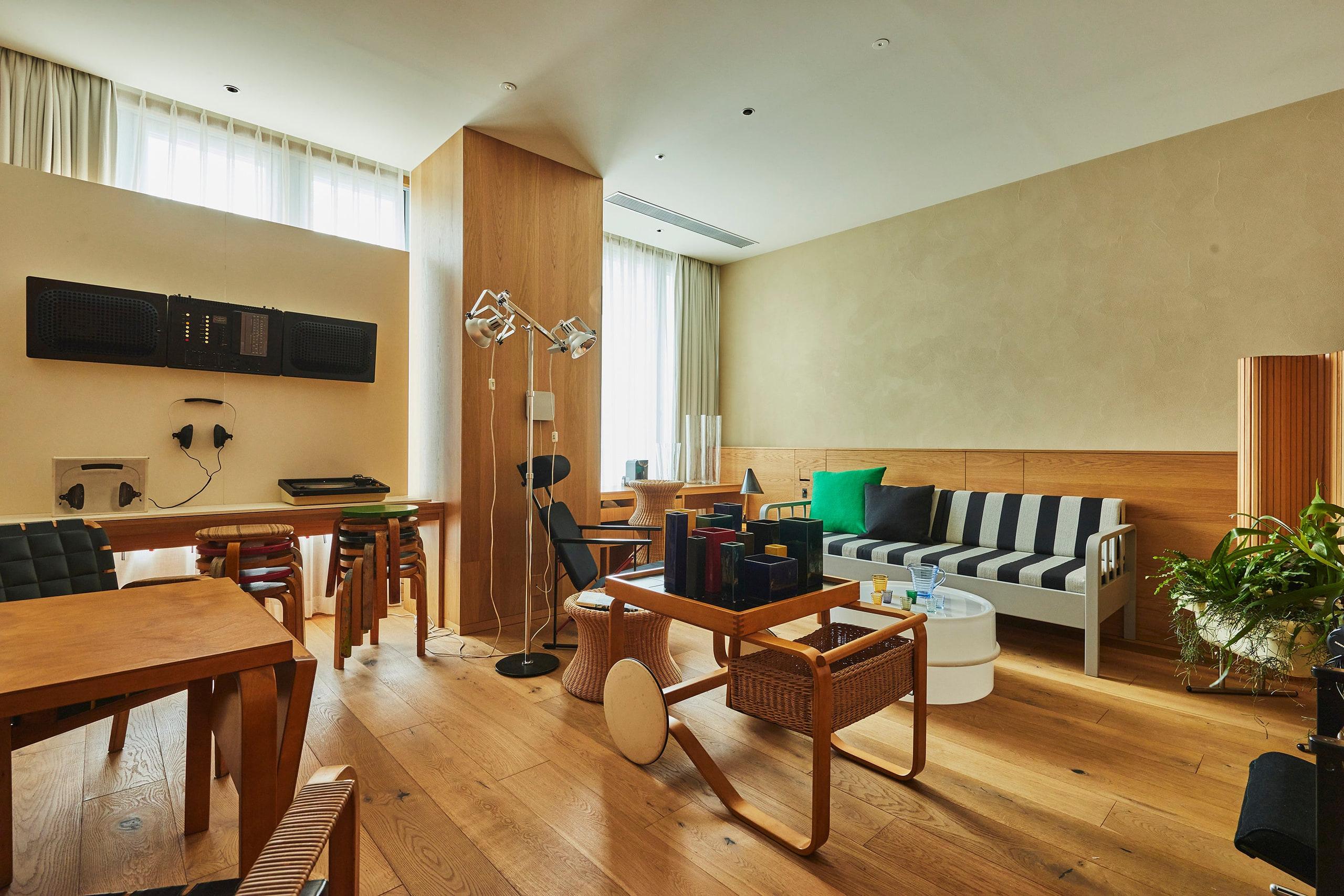
TOKYO MODERNISM SHOW ends on Sunday, 15 November 2026. For four days the furniture has been sitting inside MUJI Hotel Ginza on Ginza 3-chome and across Ginza Sony Park on Ginza 5-chome, a five-minute walk between them. This is the fifth year of the Life in Art fair that Ryohin Keikaku runs with IDÉE, and the first time Sony Enterprise has opened the rebuilt Sony site as a second venue. More than fifty galleries, shops, and collectors are in, and one Peatix pass covers both buildings. Three stops make the split usable before the doors close at 17:00.
Guest rooms as shops
At MUJI Hotel Ginza, thirty dealers have taken over rooms on the seventh and eighth floors. The beds are gone. Turquoise signs by the door numbers name each shop. The corridor still feels like a hotel; open a door and the room is hung with chairs, lamps, glass, and textiles at the scale of a living room. Wooden floors and built-ins stay put, so a cabinet or a stack of stools looks closer to home than it would on a fair carpet.
In Room 802, the Chiba dealer chair-chair, new to the show this year, has filled the suite with original-condition Eames seating bought in the United States. An orange shell chair catches the eye from the doorway. Nearby rooms pull in other geographies. ELEPHANT, in 706, is showing later Nordic work under the title "After Modernism." FUGLEN TOKYO has turned 721 into a Norwegian vintage room with the café-bar habit that already defines its Tokyo shop. Walking room to room is how the hotel half of the fair works. You can finish a short list here, then walk east to Sony Park.
American mid-century on the fourth floor
Ginza Sony Park opened in January 2025 on the old Sony Building plot at Sukiyabashi. For the fair it runs as a market on four levels: galleries on the fourth floor, bookshops on the ground floor, collectors on B1, and manufacturers on B2. The booth to begin with on 4F is the joint stand from BUILDING and Swimsuit Department. Takahiro Goko, who owns Swimsuit Department, also advised the fair's planning with Landscape Products founder Shinichiro Nakahara. BUILDING, based in Shirokane, deals in 1950s and 1960s furniture from the United States, Scandinavia, Europe, and Japan. Here the emphasis is American: George Nelson, Charles and Ray Eames, Alexander Girard, alongside the worldwide vintage accessories Swimsuit Department sells through its BATHHOUSE shop in Komazawa.
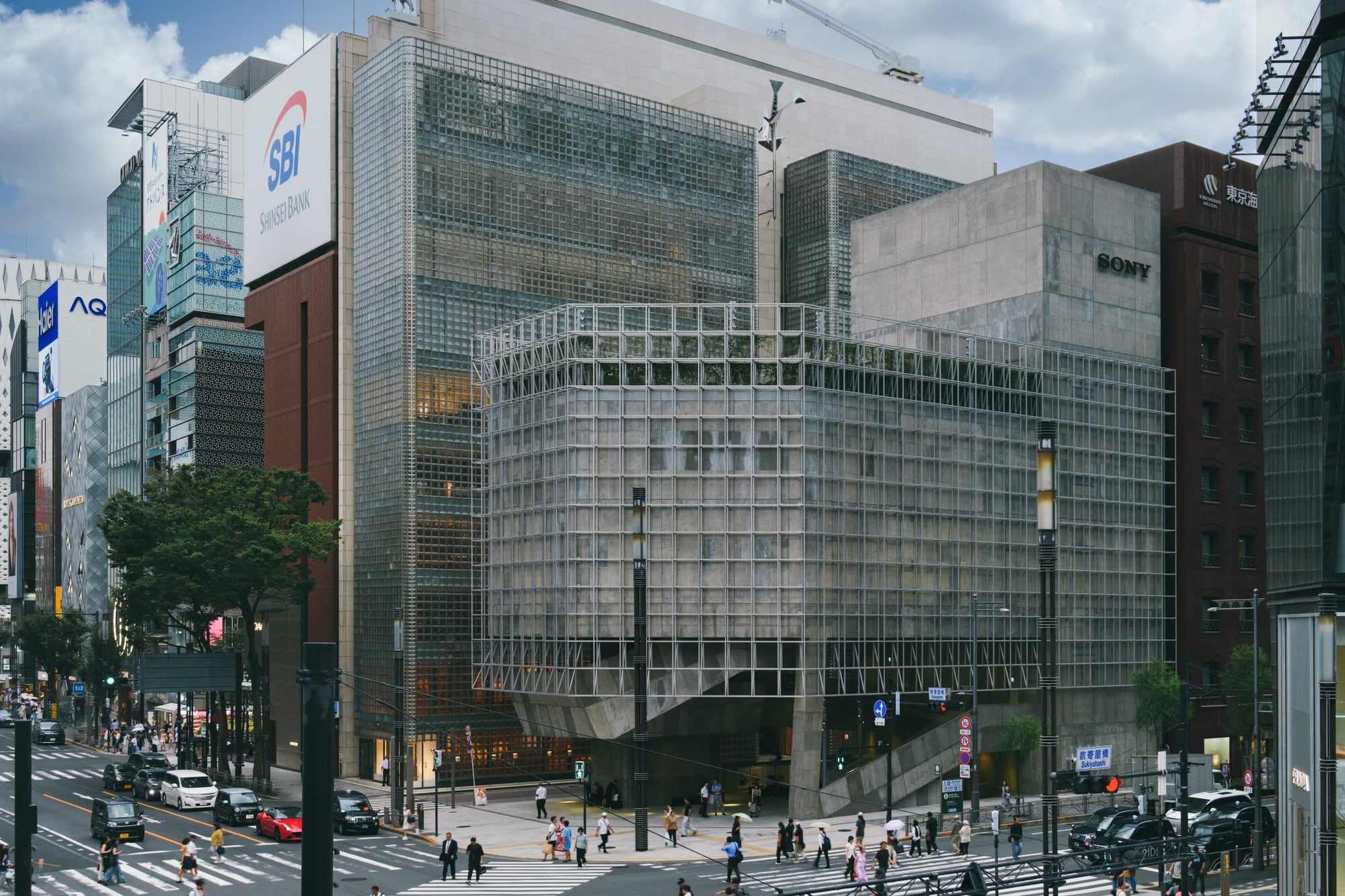
The hall is raw concrete and track lighting, cooler and more open than the hotel corridor. After the intimate rooms at MUJI Hotel, this is where full seating groups and Girard textiles sit under one roof. Neighbors on the same floor include Bureau YT, the Finland-focused gallery Ph.D., and SOMEWHERE TOKYO for postmodern and later Japanese design. Anything that still wants a quieter look can wait for a return trip to the hotel rooms.
Sit on the Butterfly Stool
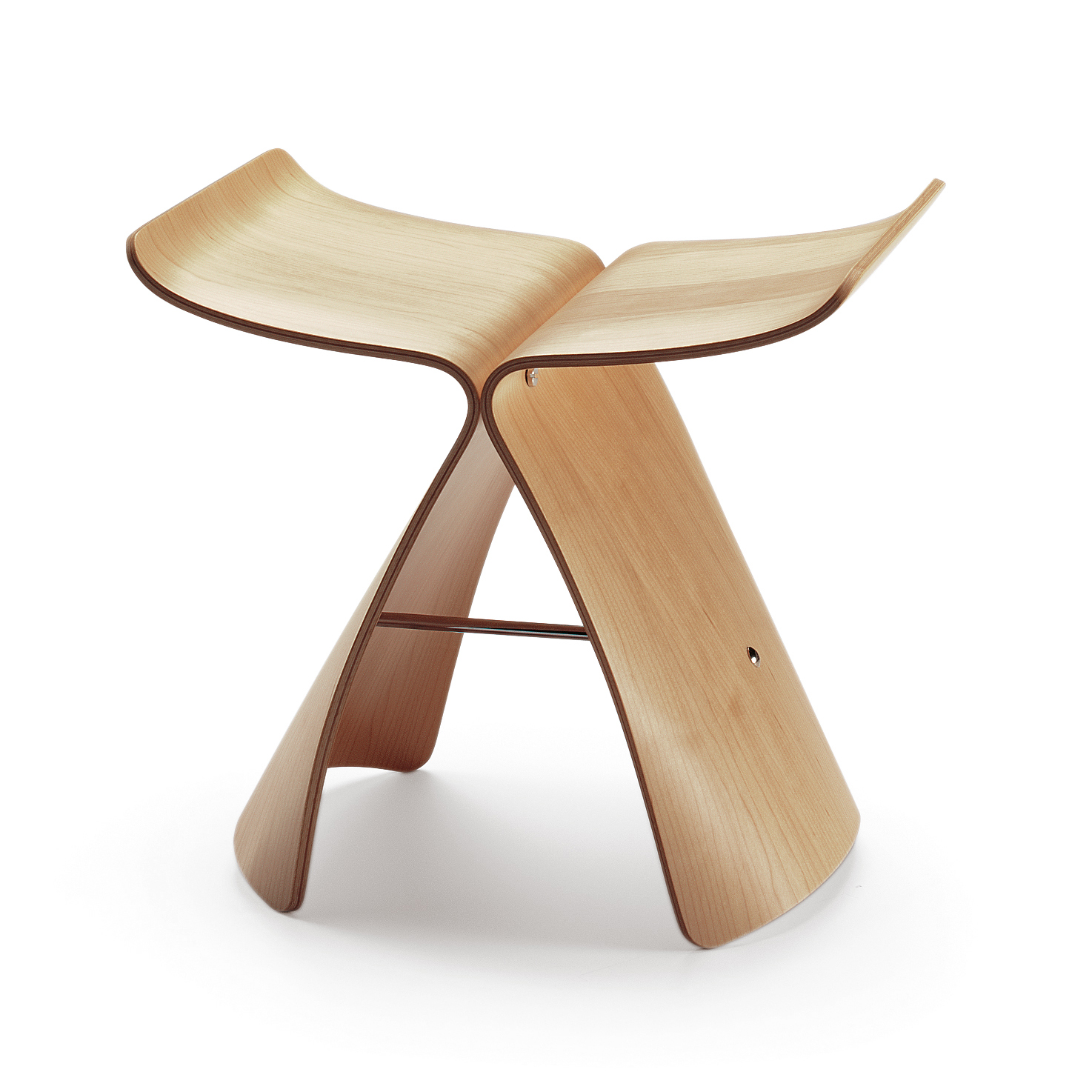
B2 is the makers' floor. Tendo Mokko, the Yamagata molded-plywood manufacturer founded in 1940, is marking seventy years of Sori Yanagi's Butterfly Stool, first shown in 1956. At the booth you can sit the stool with a special cushion covered in Yanagi's "Barcode" fabric, the striped textile he designed from the look of actual barcodes. Brown and green versions are out for trying; the limited cushion goes into wider sale later, after a Matsuya Ginza preview. HIDA Sangyo stands nearby with molded-plywood chairs from the same decades and pieces tied to Enzo Mari. Fritz Hansen and Vitra fill out the brand row if you want current production next to the vintage upstairs.
Tickets are on Peatix and work at both venues with re-entry. A three-day pass for 13 to 15 November is ¥6,000; single days on Saturday or Sunday are ¥3,000; the four-day pass that included Thursday evening was capped and is scarce. Sunday ends at 17:00. Children of elementary age and younger enter free with a guardian. The ground floor of Ginza Sony Park stays open without a ticket if you only want the book tables at POST Architecture Books and MUJI BOOKS. What Collectible New York Reveals About Buying Furniture as Art tracks a related question: how dealers put furniture in reach of a buyer. In Ginza this week, that means a hotel room, a Sony Park floor, and a stool you can sit on before you decide.