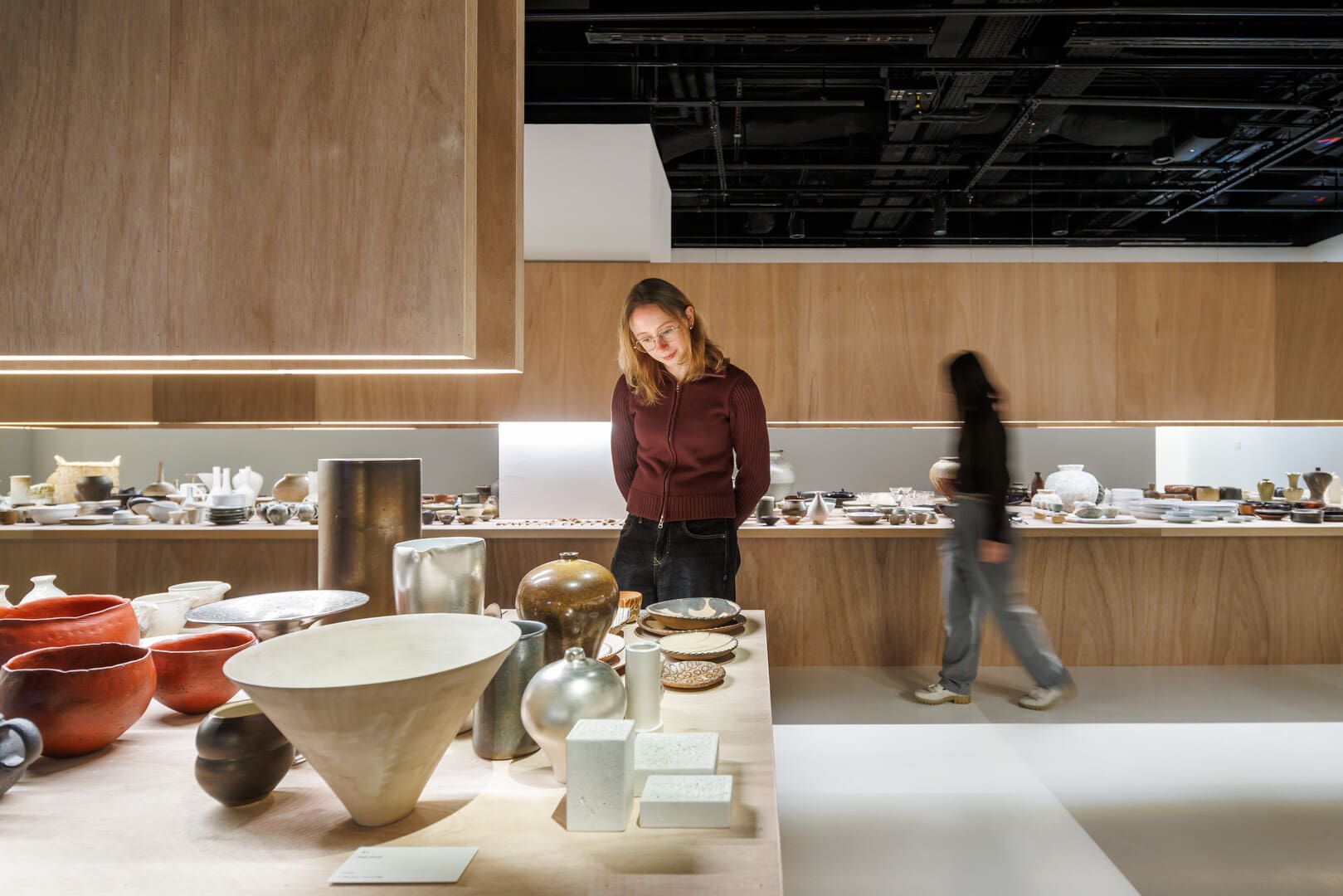
Hangaram Art Museum Gallery 7 sits in the Vitamin Station level at Seoul Arts Center, 2406 Nambusunhwan-ro in Seocho, not in the main Hangaram elevator bank. From 20 to 29 November 2026 it holds the twenty-first hang of National Intangible Heritage somokjang holder Park Myeong-bae with his Mokyahoe apprentices. Hours run 10:00 to 19:00, closed Monday, last entry 18:30, free walk-in.
Somokjang is the furniture side of Korean woodwork: chests, cabinets, and scholar pieces built so the wood locks to itself. Daemok builds the house frame; somok fills the rooms. Park has held the national title since 2010 and has taught long enough, through Yeongsan Workshop and the Korean Traditional Craft Architecture School, that Mokyahoe now returns to this gallery as a yearly habit. For a reader who buys Korean furniture for a chair-height flat, two cabinets show what he teaches more clearly than a wall of names.
The Master’s Bandaji Puts the Joint Where the Grain Can Speak
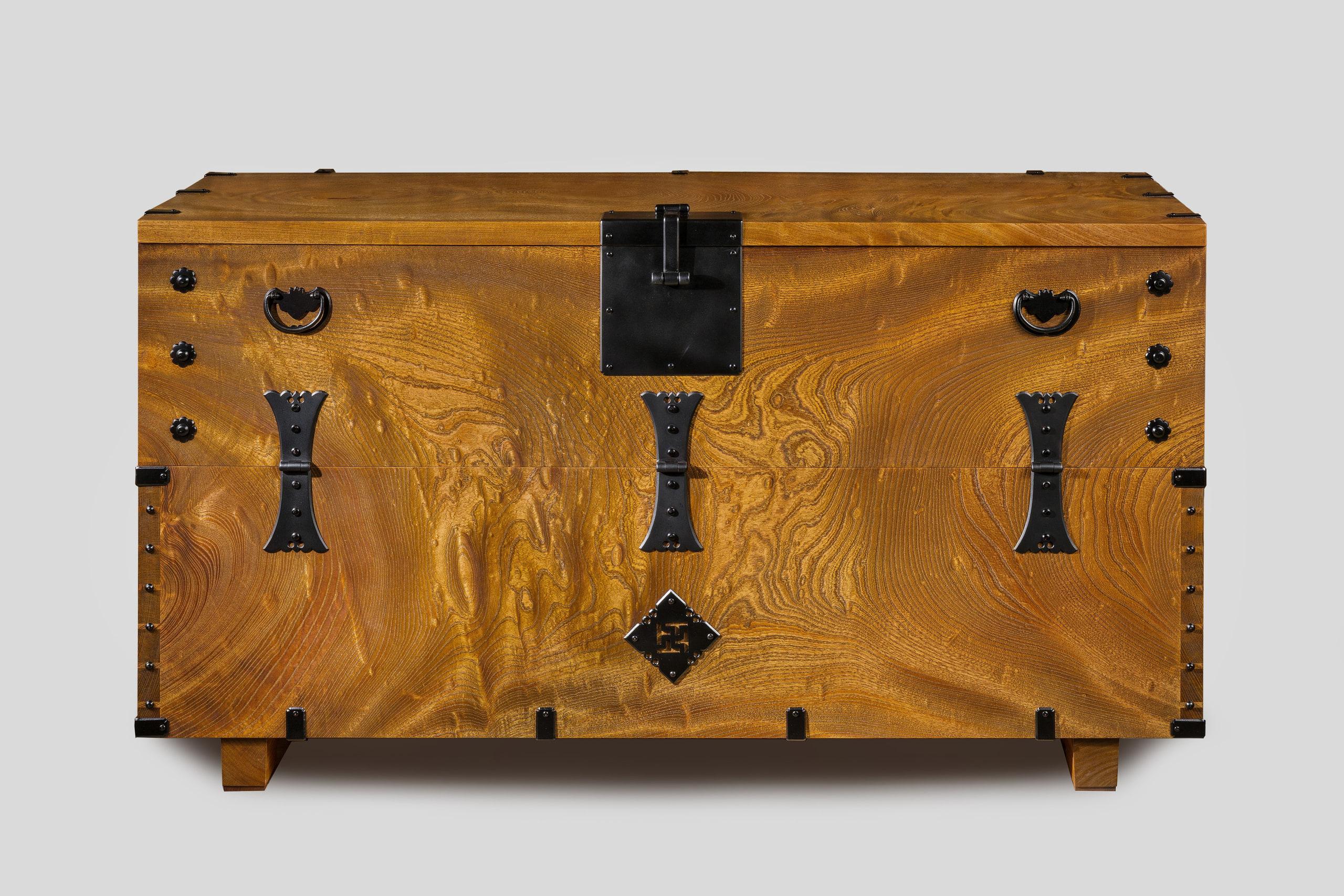
Park’s Naju bandaji Gyeongbok (景福), dated 2025 and listed on the Arts Center page for this hang, is a low chest in zelkova and paulownia with black iron fittings. The upper half of the front drops open, the classic bandaji move that once held bedding, documents, or household metalware. Three tall hourglass hinges bridge the seam. A square lock plate sits on the lid line; a diamond plate anchors the lower face. Corner irons and flower bosses finish the edges.
Naju-type chests were known for strong figure and spare iron, and the title, “scenery of blessing,” keeps that regional calm. The real argument is in the corners. Traditional bandaji sides meet with sageaemullim, a four-way interlocking cut that holds without nails. Park learned more than seventy nail-free joints as a young maker and still drafts each piece before he cuts, a habit he sharpened working with the late museum director Choi Sun-u on proportion rather than carving.
Face boards are divided so humidity can move the panels through Korea’s wet summers and dry winters. That practical split is also why the fronts look so settled. On Gyeongbok, swirling zelkova runs across the drop front, and the iron keeps the width from feeling heavy. The finish leaves the grain readable; the paulownia interior stays pale. Sisa Journal, covering this hang, quotes the line Park keeps giving Mokyahoe: honesty that does not fight the wood.
"Without dragon grain, a woodworker’s work is hollow. The grain is more beautiful than anything made by hand, and because it is natural, you never tire of it."
Park Myeong-bae, on preferring yongmok figure to carved ornament, to Koreana
The Trainee’s Cabinet Strips Color So the Same Lesson Shows
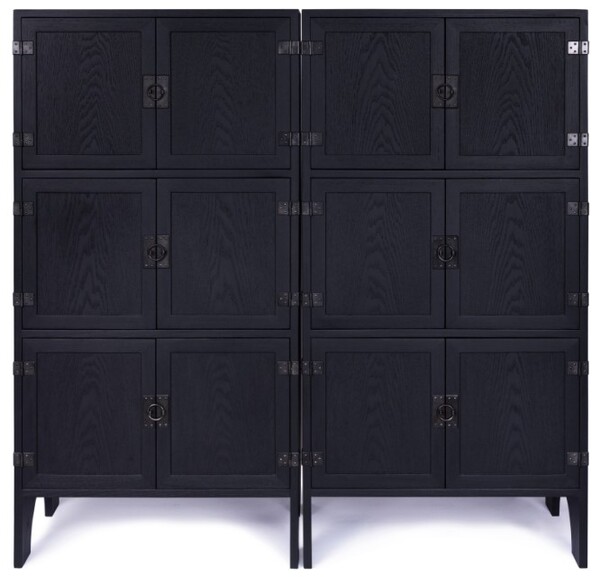
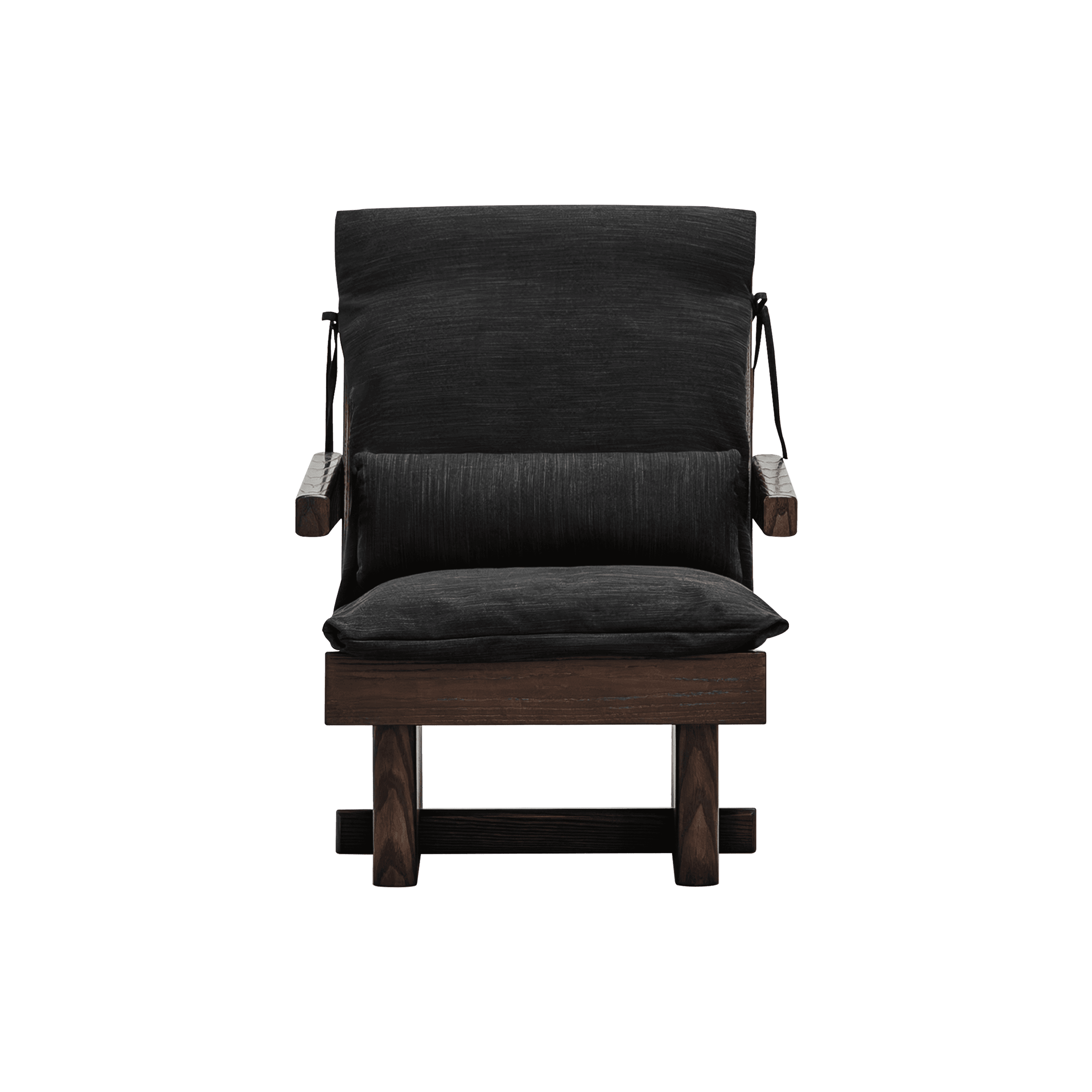
Kim Dong-gyu trained under Park, was recognized as an isuja in 2017, and takes the same craft in another direction. His Samcheungjang, shown in the 2026 Sejong Museum Gallery hang Seu-euk, Tak, is published at about 500 by 350 by 1,000 millimetres in zelkova, oak, and brass: a pair of three-tier cabinets on short legs, each tier a matched pair of doors. Ink black takes the color out of the wood. What you see instead is the frame grid, the centered ring pulls, the thin corner plates, and the motion the titles name: a door that slides open (seu-euk) and seats shut (tak).
Press notes said the ink was there so viewers would watch proportion, structure, and movement instead of chasing figure. Park’s bandaji lets the zelkova speak while the joints hold quietly. Kim’s cabinet mutes the grain so those joints, the tier heights, and the closing action become the point. One piece shows the master’s trust in figure; the other shows a trainee proving the structure still holds when the figure is gone.
Yeongsan Workshop and Mokyahoe have put that grammar in front of Seoul audiences for years. This week’s hang is another chance to stand close. Start with Park’s chest for grain and iron, then look for apprentice pieces that keep the interlocking corners even when the silhouette turns taller or darker. If you already know what Teo Yang kept from Joseon furniture for chair-height rooms, Gallery 7 is where that grammar still lives.
Line 3 to Nambu Bus Terminal, Exit 5, then the walk or Seocho 22 into the Arts Center. Enter Vitamin Station for Gallery 7. The hang closes 29 November. For the rest of a Seoul week that still wants Cheongdam tables and Leeum, keep The Banquet Guide to Seoul open.