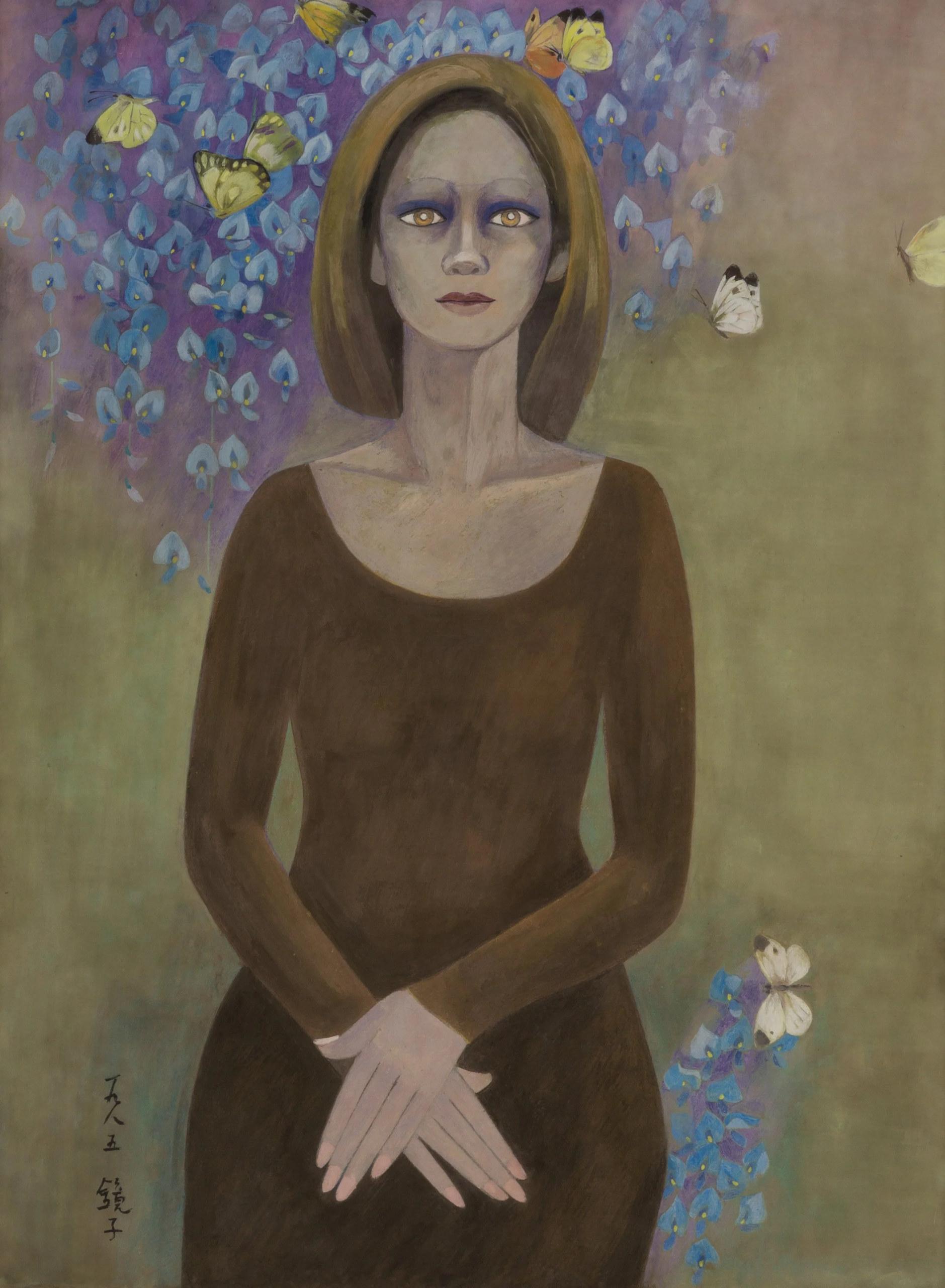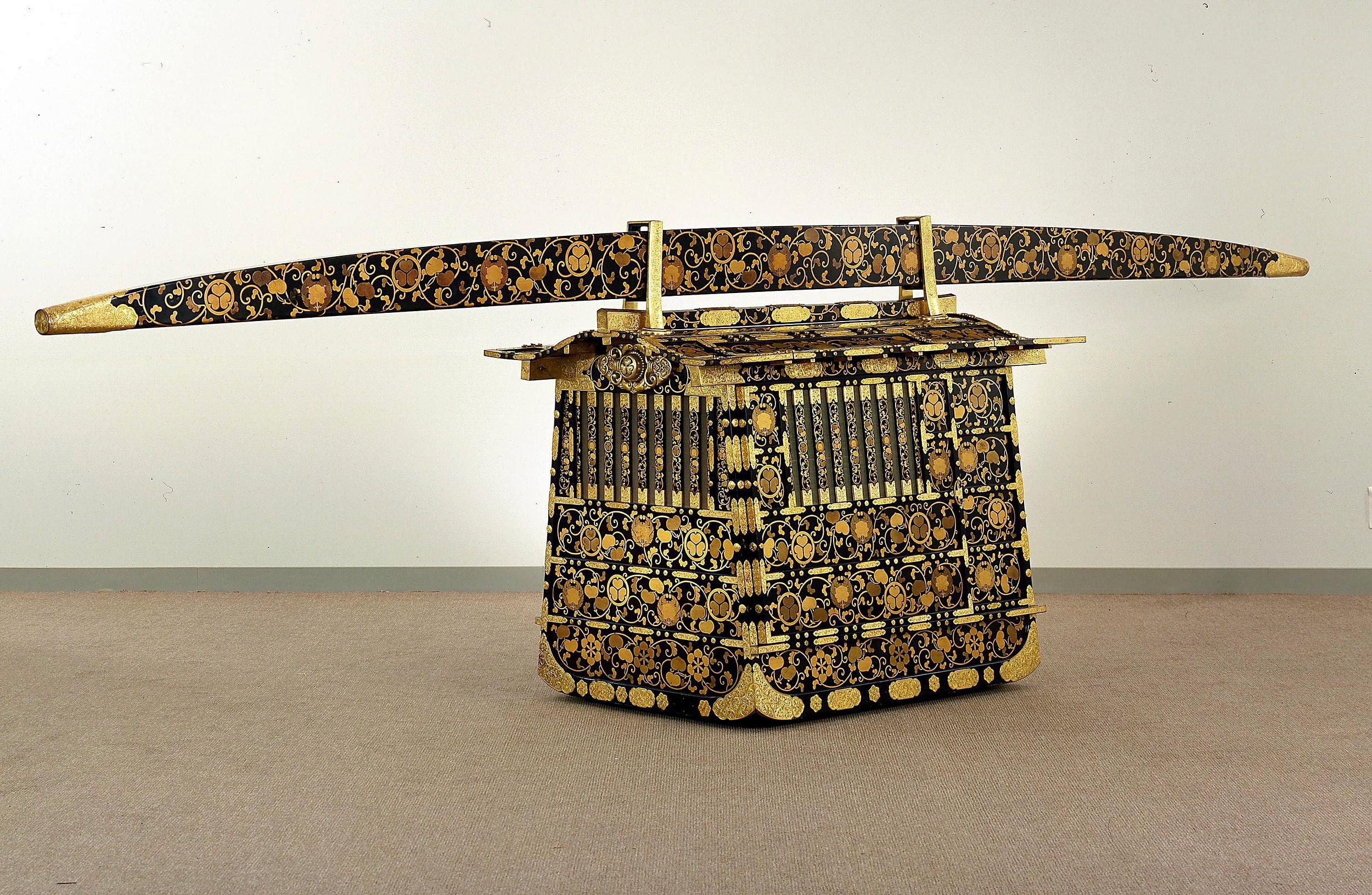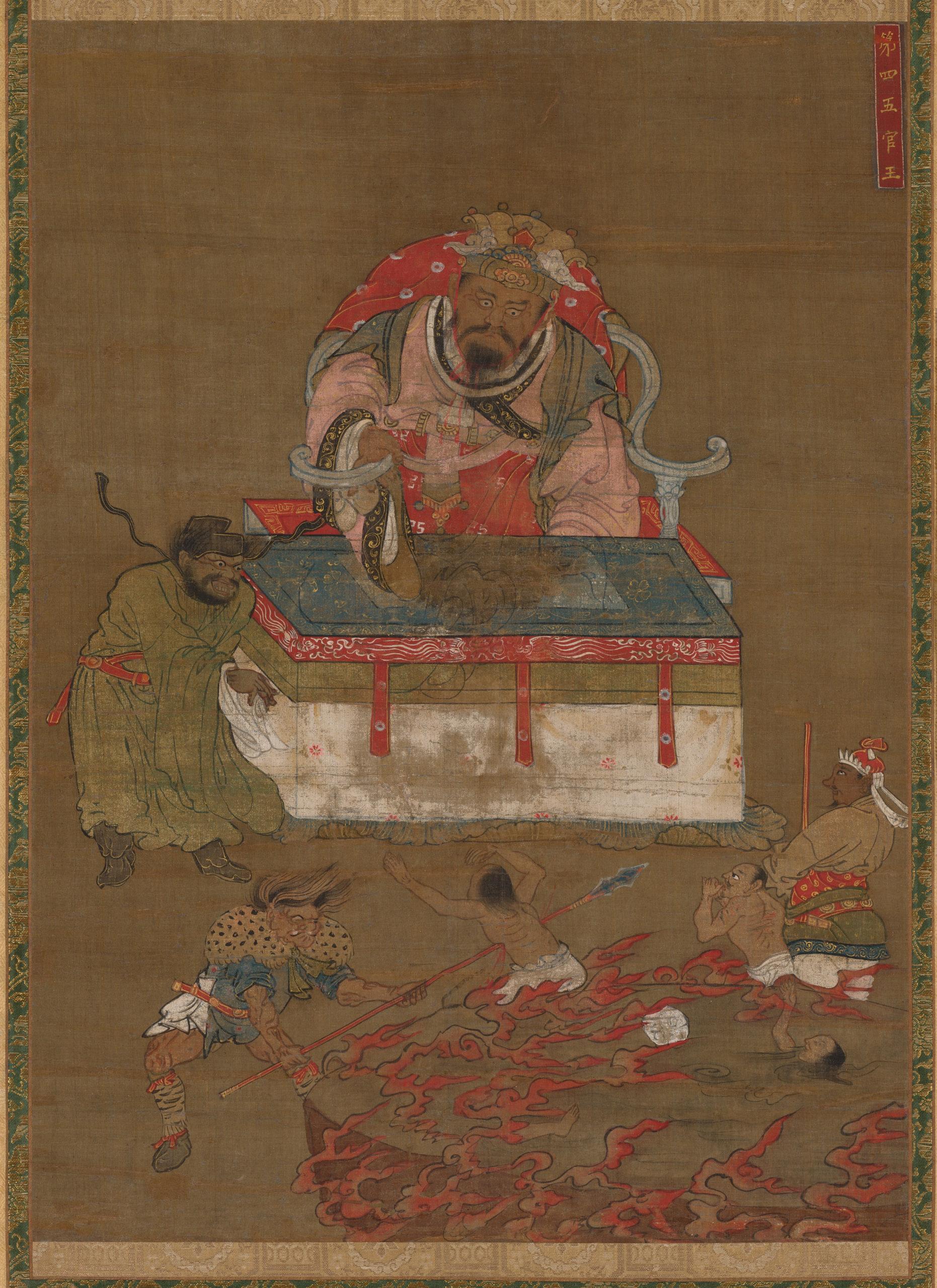
China Institute Gallery at 60, 1966-2026: Selections from Three Millennia of Chinese Art is open through 3 January 2027 at the China Institute Gallery on Washington Street. The rooms hold about eighty-five loans from more than thirty museums and private collectors, curated by Annette Juliano, Alfreda Murck, and David Ake Sensabaugh. Shang bronzes and Song fans share the floor with living ink. Near that later end, works by C. C. Wang, Wang Fangyu, and Wang Mansheng recall how Chinese painting and calligraphy became legible in New York: through scholar-artists who collected, taught, and painted in the same life.
Dancing Ink, 1984
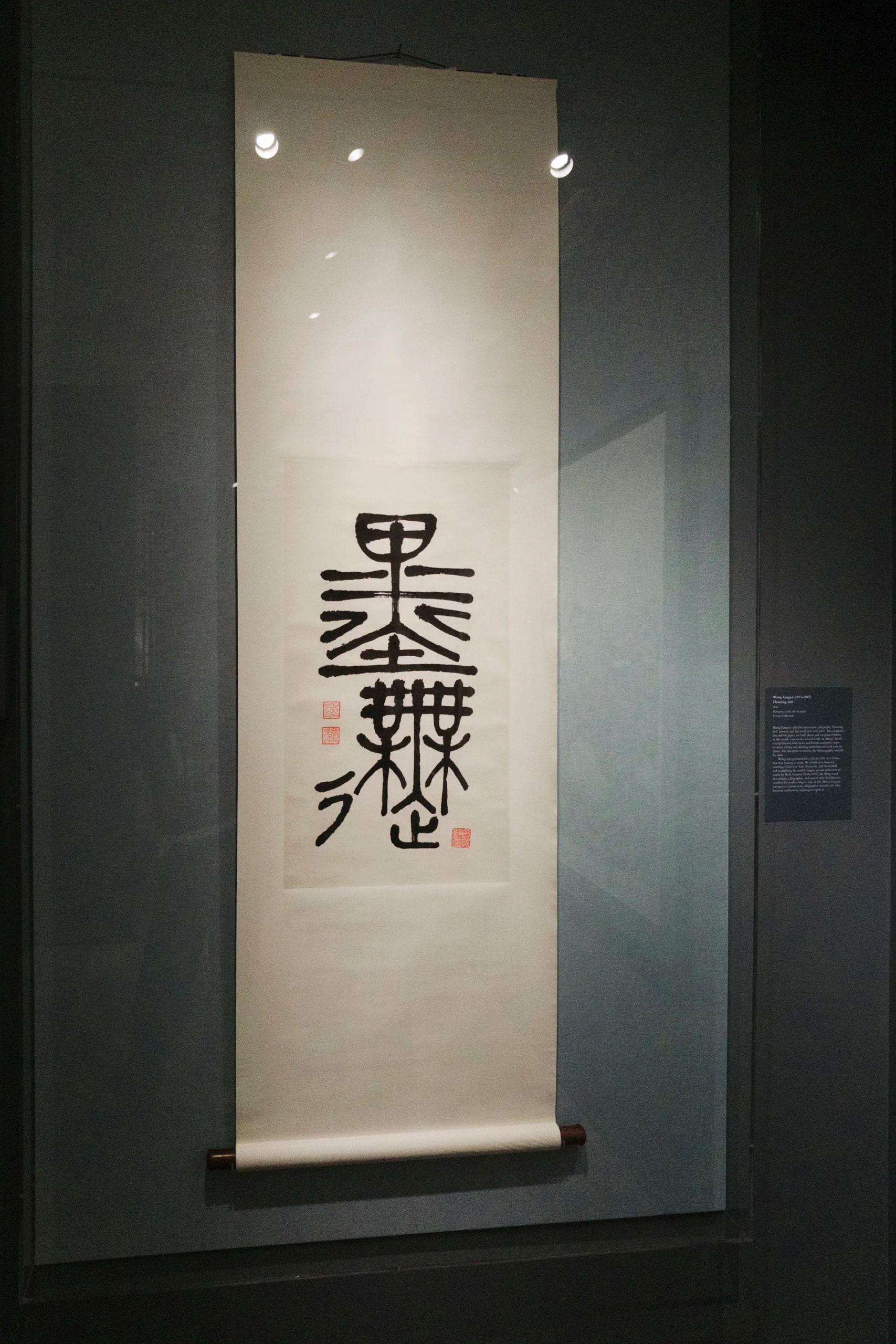
Wang Fangyu’s Dancing Ink hangs as a tall scroll behind glass: thick, rounded black characters on paper, red seals at the side, a wood roller at the foot. The wall label dates the piece to 1984 and places it in the calligraphy series that carried his brush into modern exhibition rooms without abandoning the disciplines he taught for decades. Fangyu was born in Beijing in 1913, emigrated to the United States after the war, took an M.A. at Columbia, and taught Chinese at Yale and Seton Hall for more than thirty years. He also assembled one of the major private holdings of Bada Shanren, the seventeenth-century painter whose spare birds and odd empty spaces still surprise viewers who expect only decorative landscape. The scroll reads differently once that collecting habit is in view. Chinese writing, for him, was motion and study before it was decoration.
China Institute made that connection public in 1999. A Literati Life in the Twentieth Century: Wang Fangyu, Artist, Scholar, Connoisseur, curated by H. Christopher Luce, hung Fangyu’s own calligraphy with works from his collection, including Bada Shanren, Qi Baishi, and Zhang Daqian, plus studio tools and seal books. Asian Art magazine treated the show as a portrait of a scholar-artist life brought into the twentieth century. Holland Cotter covered it for the Times the same spring. Collecting, scholarship, and the brush shared one small downtown room, and New York audiences could see how the three belonged together.
“This outstanding little exhibition is about a traditional way of life, that of the Chinese scholar-artist, carried into the twentieth century.”
Asian Art, on the 1999 Wang Fangyu hang at China Institute
C. C. Wang and Wang Mansheng
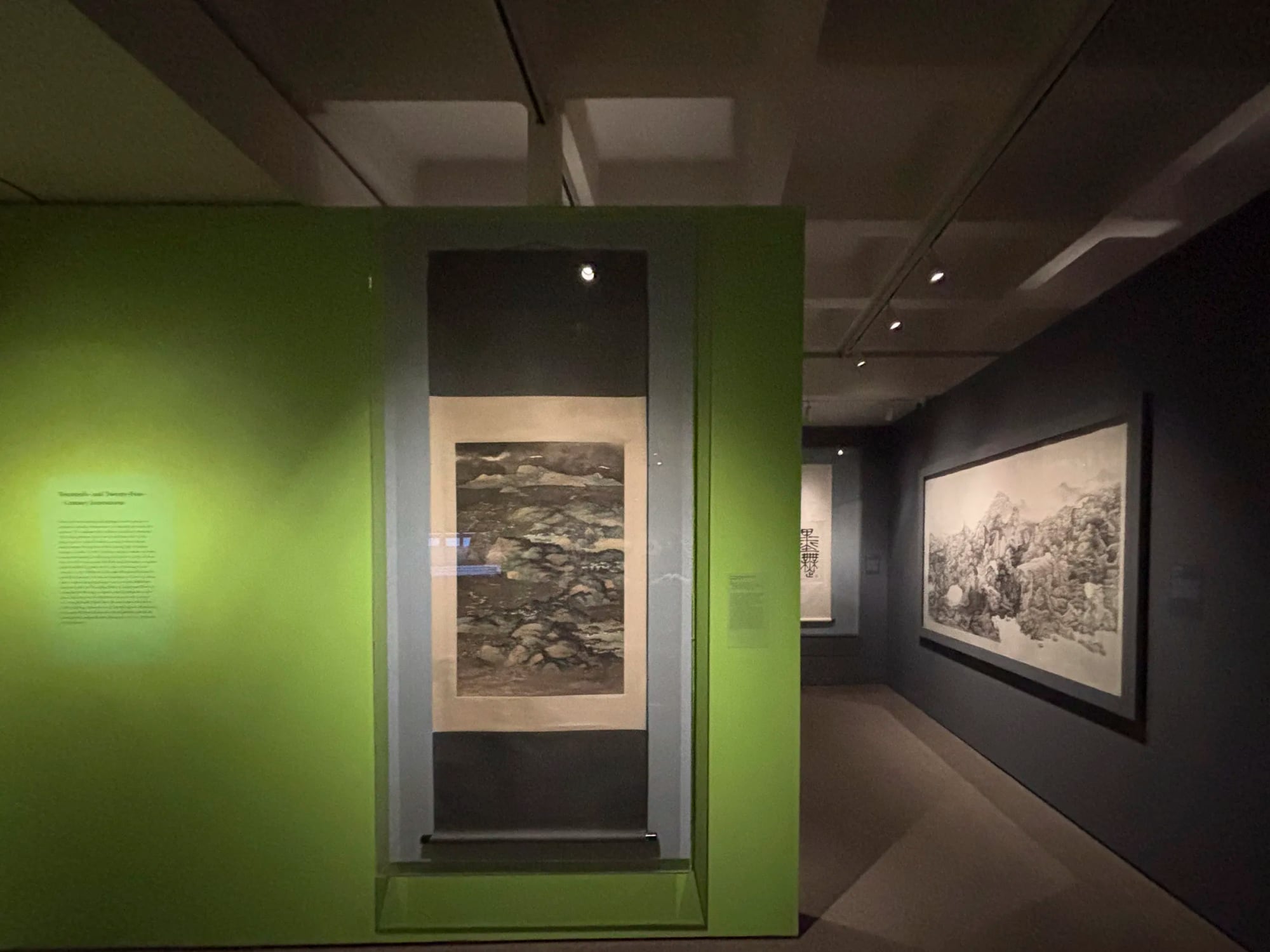
C. C. Wang, or Wang Jiqian, arrived in New York in 1949 already trained to read old brushwork as a painter. Born in Suzhou in 1907, he collected Song and Yuan paintings as working education, keeping earlier hands near his own desk. In 1973 the Metropolitan Museum of Art acquired a major group of early Chinese paintings from him while building a public home for the medium; the museum later named a gallery for him inside its Asian wing. China Institute showed his landscapes in Mind Landscapes in 1989, thirty works from the 1930s through the 1980s, organized with the Henry Art Gallery. In the anniversary hang he returns beside Fangyu, an older proof that New York learned Chinese ink from artist-collectors before megashow loans became the usual story.
Wang Mansheng, born in Taiyuan in 1962 and based in the Hudson Valley since the mid-1990s, is the living counterpart. He studied classical Chinese literature at Fudan, worked in television in Beijing, and turned full time to painting and calligraphy after moving to New York in 1996. China Institute included him in Inspired by Dunhuang in 2013-14; the anniversary coverage again places him with C. C. Wang and Wang Fangyu as the local diaspora line beside bronzes and jades. His landscapes and calligraphy keep the practice visible now, not only as a period style behind a rope.
Catalogues and the Downtown Classroom
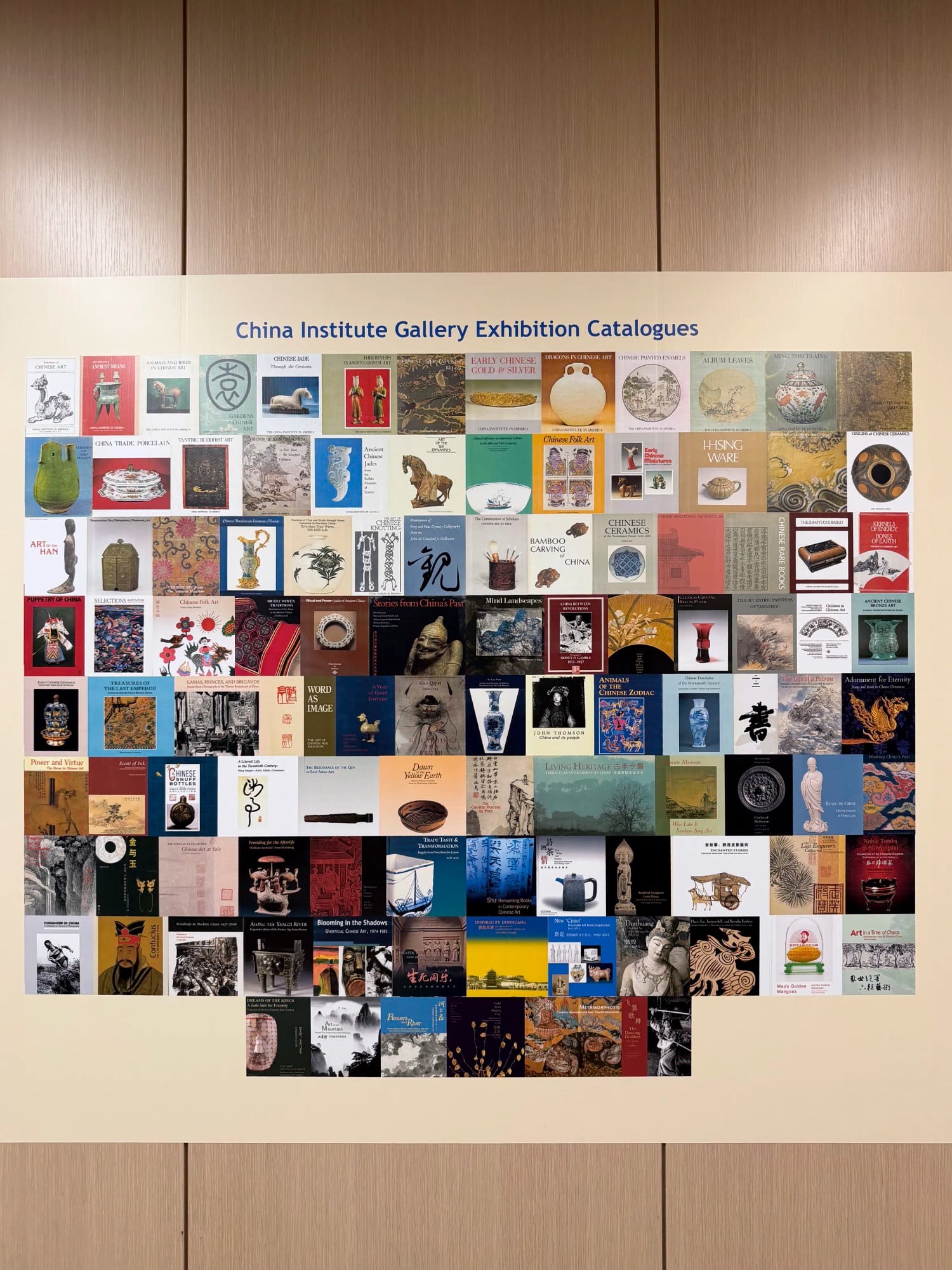
A wall of catalogue covers in the anniversary rooms marks the institutional record. Since 1966 the gallery has been the first nonprofit space in the United States devoted exclusively and regularly to Chinese art; the Institute itself dates to 1926. Willow Weilan Hai, director and chief curator for more than three decades before retiring as senior vice president in 2025, built the loan network and scholarly catalogues that gave these small rooms national weight. Acting director Xige Xia has described the anniversary hang as an exhibition of exhibitions: each object carries Chinese art history and the American story of how that art was shown. The three Wangs belong to that second story.
Enter at 40 Rector Street for 100 Washington Street, second floor. Gallery hours run daily 10:00 to 17:00, with free admission Thursdays from 17:00 to 20:00; adults are $15, students and seniors $10 with ID, children under sixteen free. Closed dates include Thanksgiving, Christmas Eve and Day, New Year’s Eve, and New Year’s Day; confirm on chinainstitute.org before you go. Give Dancing Ink ten quiet minutes, then walk the loans that recall older China Institute shows. Asia Society’s Rockefeller hang on Park Avenue remains the uptown contrast through early January; Adorned in Gold at the Smithsonian is the Washington craft parallel if you are stacking museum weeks.