Mainland taste used to reach the rest of us as a billboard and a shopping basket. The older map is more patient.
In imperial China, the wenren, the scholar-official who was supposed to be as fluent in art as in administration, trained across four accomplishments: the qin zither, the go board, calligraphy, painting. Around those sat poetry, gardens, tea, and the company you kept at a ya ji, the elegant gathering where all of it was performed for people who could tell. Taste was a register you lived in. Dress was one line in the score.
That grammar never fully left. It resurfaced in the collectors who hang Pierre Soulages beside Ming hardwood, the designers who treat a coat like a scroll, the hosts who turn a restored lane house into a salon, and the architects who build museums from the brick of demolished villages. The New Literati are mainland aesthetes for whom art, books, objects, dress, food, architecture, gardens, and travel still belong to one conversation. The celebrity economy still shouts from the billboards. These people set the quieter tempo underneath it.
"Spirituality, art, medicine, culture and inspiration is life. Fashion practice is my expression."
Liu Min, founder of Ms MIN, in a Rosewood Hotels placemaker interview
The Register Beyond the Wardrobe
Traditional literati culture prized ya, an elegant restraint that could read as plain until you knew what you were seeing. Amateurism meant the opposite of casual: immersion without market motive, the painter who valued the hand's honesty over polished display.
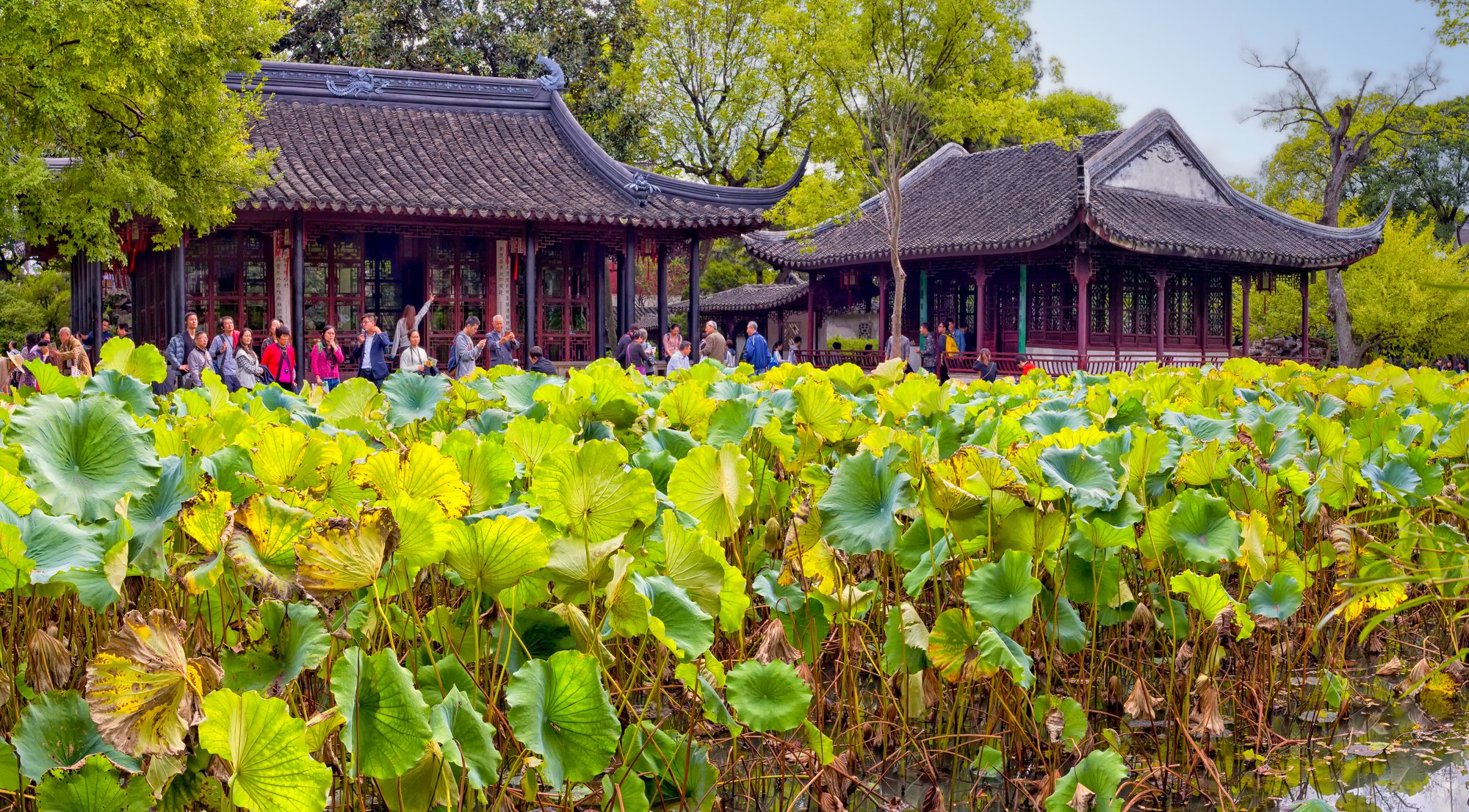
Contemporary mainland taste works the same way when it is working at all. Ask what someone can hold together: a dinner at Taian Table, a morning in a Suzhou garden, the chair they chose for the room where they read. The list only works if you can arrange it.
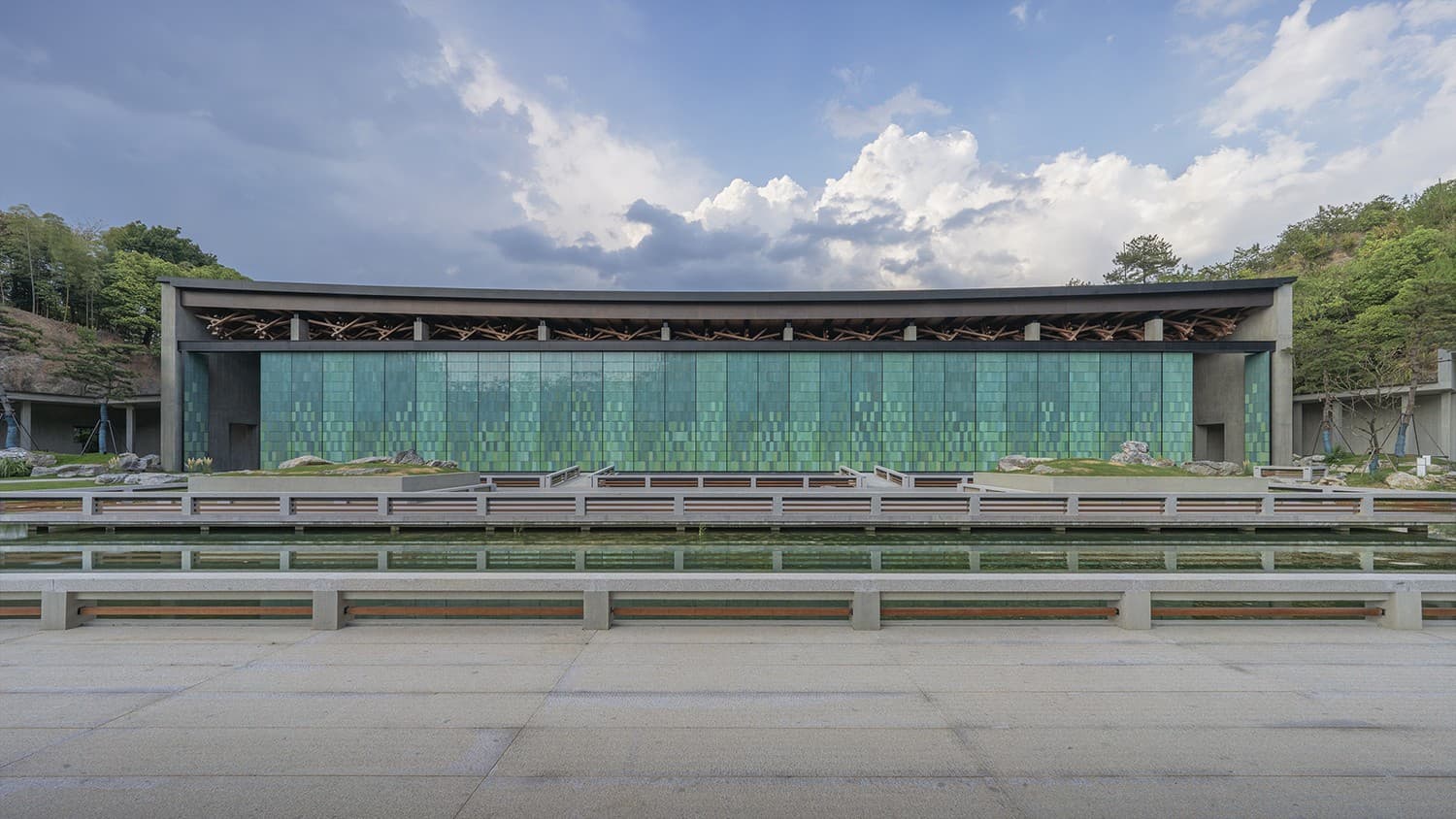
Wang Shu, who in 2012 became the first Chinese citizen to win the Pritzker Prize, works with his wife and partner Lu Wenyu under the deliberately unglamorous name Amateur Architecture Studio. He has spent decades arguing that slowness, salvage, and landscape memory are a form of resistance to the speed at which China knocks things down.
The building on this page is their case in point. The Hangzhou National Archives opened in Liangzhu in the summer of 2022 on the site of an abandoned quarry, thirteen buildings threaded into the leftover rock and water, screened in Longquan celadon. The brief asked for a Song garden. No Song garden survives anywhere, so the studio built one out of paintings, reading the layering and framed views of Song landscape scrolls back into something you can walk through. That is a literati act before it is an architectural one: assembling a place to live from books, because the books are what is left.
Collectors and Hosts Who Live With the Work
The most convincing mainland tastemakers today collect as hosts.
Jenny Kim, the Shanghai-based founder of the women's labels MO&Co and Edition, keeps Pierre Soulages at the entrance of her home and Ming dynasty huanghuali beside Brâncuși and Buddhist sculpture. She has told Tatler Asia that she buys on instinct, not on the index, which is how a literati collection has always been assembled: the object earns its place in a room somebody actually lives in.
Cherry Xu, a cultural entrepreneur and Tate Asia-Pacific Acquisitions Committee member, founded Cheruby to bridge fashion and contemporary art. Her nonprofit opened a permanent Shanghai space in 2025 with studio residencies, exhibitions, and workshops for artists, designers, and writers. For Rockbund Art Museum's gala she wore Samuel Guì Yang, a Shanghai and London label she already platforms. Wearing the designers you support is a small thing, and it is also the whole circuit in one evening.
Luning Wang runs RONG LU on Changle Road in a building commissioned by the late-Qing official Li Hongzhang and later occupied by the industrialist Rong Desheng, whose brother's former residence became Prada Rong Zhai. Wang calls the space a melting pot and curates it like a fashion showroom: seasonal selections, salon intimacy, first-person encounter with the work. No white cube required.
During Shanghai Art Week in November 2025, the city added another layer. The Collector's Residence, staged by Larry's List China partner Tyra Wang, took over a floor of the restored Guang Er Warehouse on the Suzhou Creek for thirteen days and gathered eleven galleries and institutions to hang painting, haute couture, ancient artefacts, and collectible furniture as though someone lived among them. Fotografiska Shanghai and Suhe Haus sit on the same stretch of water. A visitor could spend a day there without once being asked to pick a category, which was rather the idea.
Xie Jinyu, a Sichuan University professor who founded the Caicaiwu project, has spent a long collecting life arguing that any home can be arranged like a library: African carving beside Chinese ink, European maps beside hand-built chairs. That democratizing impulse is literati too. Taste stops being a class code the moment the table is yours.
For the museum-scale version of the same impulse, read The Collectors Shaping Contemporary Asian Art. Liu Yiqian and Wang Wei's Long Museum West Bund is the civic end of private obsession. This chapter is the domestic one.
Designers Who Treat Cloth as One Art Among Many
Fashion enters the literati story only when it behaves like calligraphy: slowly, specifically, and in dialogue with other arts.
Liu Min launched Ms MIN with Ian Hylton in 2010, drawing on Chinese medicine, calligraphy, and the solar calendar as openly as on fabric. The label sidestepped the runway hamster wheel early and reached the Met Gala in 2014. For its Taikoo Li shop in Shanghai, Lyndon Neri and Rossana Hu of Neri&Hu built the interior as a village fabric atelier: a timber house with overhanging eaves, cloth hung between wooden racks, a small courtyard paved in stacked roof tiles. Architects rarely read a clothing brand that accurately.
Uma Wang, the most export-ready Chinese designer of her generation, calls her method a "slow revolution." She begins from textile, prizes imperfection, and talks about garments as companions meant to outlast a trend cycle. For autumn/winter 2025 in Paris she took Piero della Francesca's Madonna del Parto, the rare Renaissance painting of a pregnant Virgin, and turned it into padded hoop skirts and hourglass coats. Borrowing an old form to argue something current is the literati move exactly.
Samuel Guì Yang and Erik Litzén, working between London and Shanghai, showed autumn/winter 2025 in a century-old three-storey house down a Shanghai alley and built the collection around the frame: self-invention, the lens we are seen through, the window that shortens the distance between inside and out. Yang cited Kieslowski's A Short Film About Love. The mood board held Eileen Chang, the Soong sisters, and Patti Smith, who got the bias-cut slip. The clothes flowed; the argument was literary.
Jiang Qiong'er founded Shang Xia in 2010 with Hermès behind her, then spent fifteen years proving that eggshell lacquer, bamboo marquetry, and xipi lacquer could carry a contemporary label. Pieces are now held by the British Museum and the Victoria and Albert. Exor took full ownership at the end of 2025, which makes the brand a genuine test of whether Chinese craft luxury travels on its own name. Its fifteenth-anniversary show, Wander Through Wonder, opened at the Huaihai Road maison in October 2025 and put the museum pieces back beside the shop floor. The tea tray on sale downstairs and the one in Bloomsbury are the same argument.
Song Tao, the Shanghai-born designer who started Self-made Company in 2002 and later opened Beijing's Yuan Museum, builds furniture on the premise that an object can carry dao, that a table is capable of holding a philosophical position. His studio compositions of wood, stone, and pine follow the old garden-house principle: pieces set out like a landscape in low relief, nothing forced. It is literati painting you are allowed to sit in.
If you want the food register of the same culture, The New Banquet: China maps the Michelin rooms where hosts still choreograph a table as carefully as a gallery hang.
Spaces That Teach You How to Look
Mainland taste is also taught by rooms.
Prada Rong Zhai, the 1918 mansion at 186 North Shaanxi Road that Prada spent six years restoring and now runs as an exhibition house, is the most literate address in Shanghai. Mi Shang, the fine-dining salon conceived with Wong Kar-wai, treats meal, antique, and art collection as one continuous script. Upstairs, the shows are serious: this spring's Diagrams, conceived by Rem Koolhaas's AMO/OMA, hung the Ming encyclopedia Sancai Tuhui across the second-floor ballroom facing W. E. B. Du Bois's 1900 infographics, two civilizations independently deciding that knowledge should be drawn. It closed in June. Check what has replaced it before you plan an afternoon; the house is open Tuesday to Sunday.
Neri&Hu's Design Republic Design Commune on Jiangning Road occupies the former Gordon Road police station, a red-brick relic of 1909, and gathers furniture, books, fashion, flowers, a gallery, an event floor, and a restaurant under one roof. Their Waterhouse at South Bund set quotations from Shanghainese literati travel writing into the walls. The lesson holds across both: beauty is something you live inside.
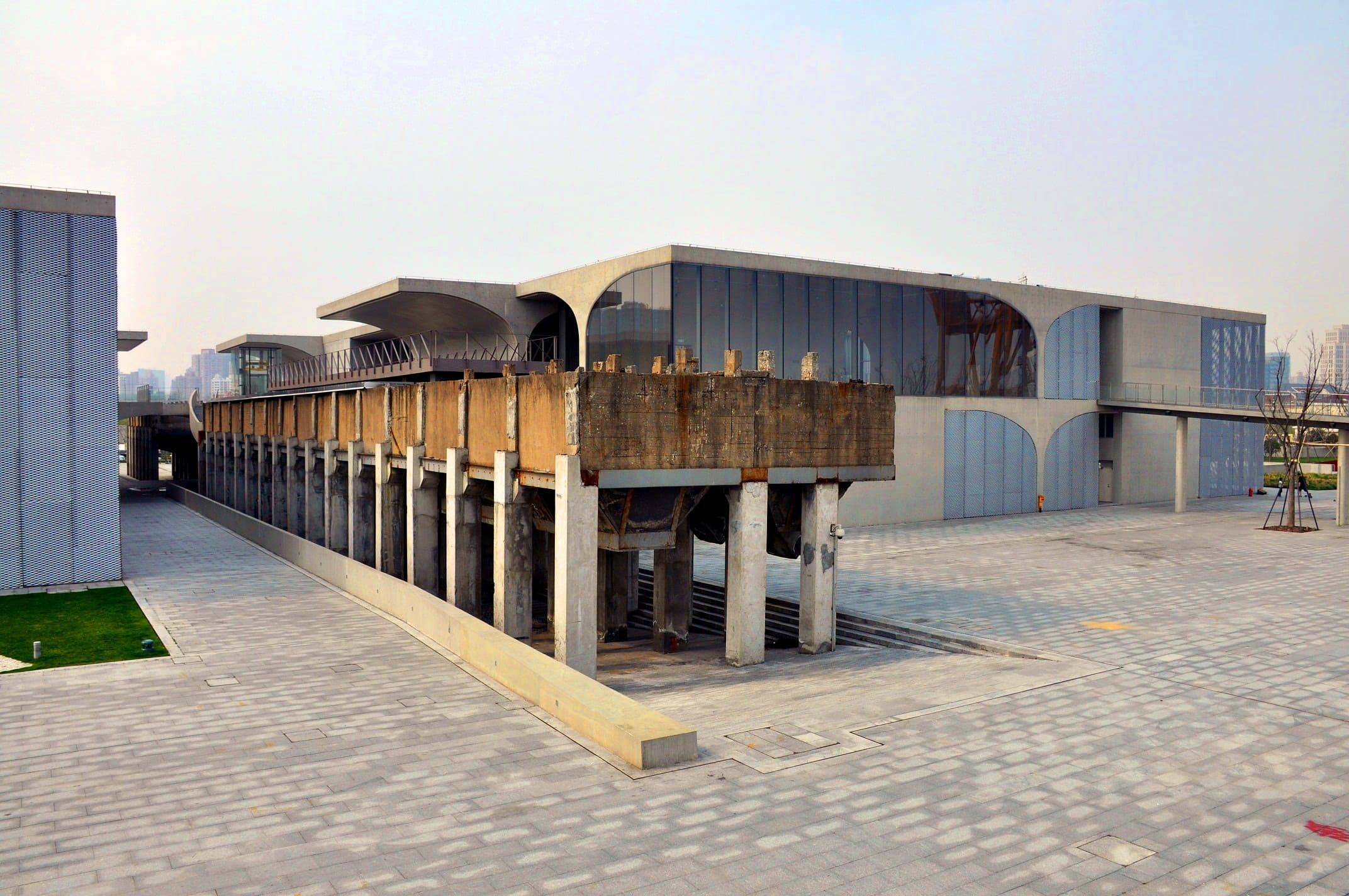
On the West Bund, Long Museum West Bund and the Power Station of Art anchor the public side of the same culture, coal-hopper architecture facing the river and biennale scale in a converted power station. November brings West Bund Art & Design and ART021 in the same week, the Xuhui riverfront against a Jing'an exhibition hall, with satellite fairs filling the warehouses in between. Stay central and take the metro rather than fighting fair-week traffic across the river, and set up WeChat before you land: tickets, reservations, and gallery contacts all run through it more reliably than the English-language homepages suggest.
How to Read the Room
Walk a Shanghai lane house gallery before you walk the duty-free hall. Notice whether the host can move from tea to painting to tailoring without changing registers. Ask which designers they wear to their own openings, not which brands pay them. Sit once in a garden where the path was composed before the selfie stick existed. Read The Banquet Guide to Shanghai for the city fabric, then filter it through this lens. Ask what all of it is doing in the same room.
Mainland luxury has spent several seasons trading handbags for beauty counters, as we noted in China's Luxury Consumer Is Trading the Handbag for the Beauty Counter. The literati response is different. Spend on the jar, yes, but also on the chair, the catalogue, the garden ticket, the museum membership, the table that outlasts you.
The billboard still matters on Nanjing Road. The wenren table matters longer.
This is the China chapter of The Tastemakers. Next: the United States, where diaspora stylists dress the room without waiting for European permission.