Young high-net-worth collectors spent more on fine art last year than anyone else in the Art Basel and UBS Survey of Global Collecting, and they were the least willing to put that collection on a public feed. Clare McAndrew of Arts Economics polled 3,100 collectors across ten markets in the October 2026 report, including Mainland China, Hong Kong, Singapore, and Japan alongside the United States, the United Kingdom, and Europe. Every respondent held more than USD 1 million in disposable household financial assets, not counting real estate or private-business holdings, and had already been buying art at screened levels. Gen Z respondents, ages 20 to 29, made up only about nine percent of that panel. Their average fine-art spend in 2025 was about USD 347,460, more than twice any older generation surveyed, and they accounted for nearly half of the buyers who paid more than USD 1 million for a single work.
The quieter figure is the one that changes how the market looks from the outside. Only about a quarter of those Gen Z collectors shared collection content publicly online, against roughly a third of millennials and boomers. Thirty-nine percent restricted in-person viewing to household or close family and friends, almost twice the rate of any other age group. Forty-two percent, the highest share in the survey, used invitation-only groups instead. The work still gets shown; the guest list is shorter.
“The generation raised on social media is, it turns out, the one most inclined to keep its collecting close.”
Noah Horowitz, CEO of Art Basel, on the Survey of Global Collecting 2026
What the averages leave out
Gen Z is a small slice of an already wealthy sample, and family routes into collecting run stronger for them than for the panel overall: forty percent named family as their primary start, and nearly nine in ten who inherited works kept them. A few large purchases can lift an average, so the USD 347,460 figure should be read as a signal of intensity inside a screened group, not as a portrait of every young buyer. Even with that caveat, the pattern holds across the report. Gen Z led spending in nearly every fine-art and collectibles category McAndrew tracked, and thirteen percent of them spent more than USD 1 million in total on fine art in the first half of 2026, against three percent of collectors overall.
What they buy still often begins with a painting. What happens after the sale is where the generation diverges. Online, thirty-six percent kept collection content inside private circles. McAndrew reads the invitation-only spike as a preference for narrowing the audience rather than abandoning sharing: young collectors still talk about what they own, just to a room they control.
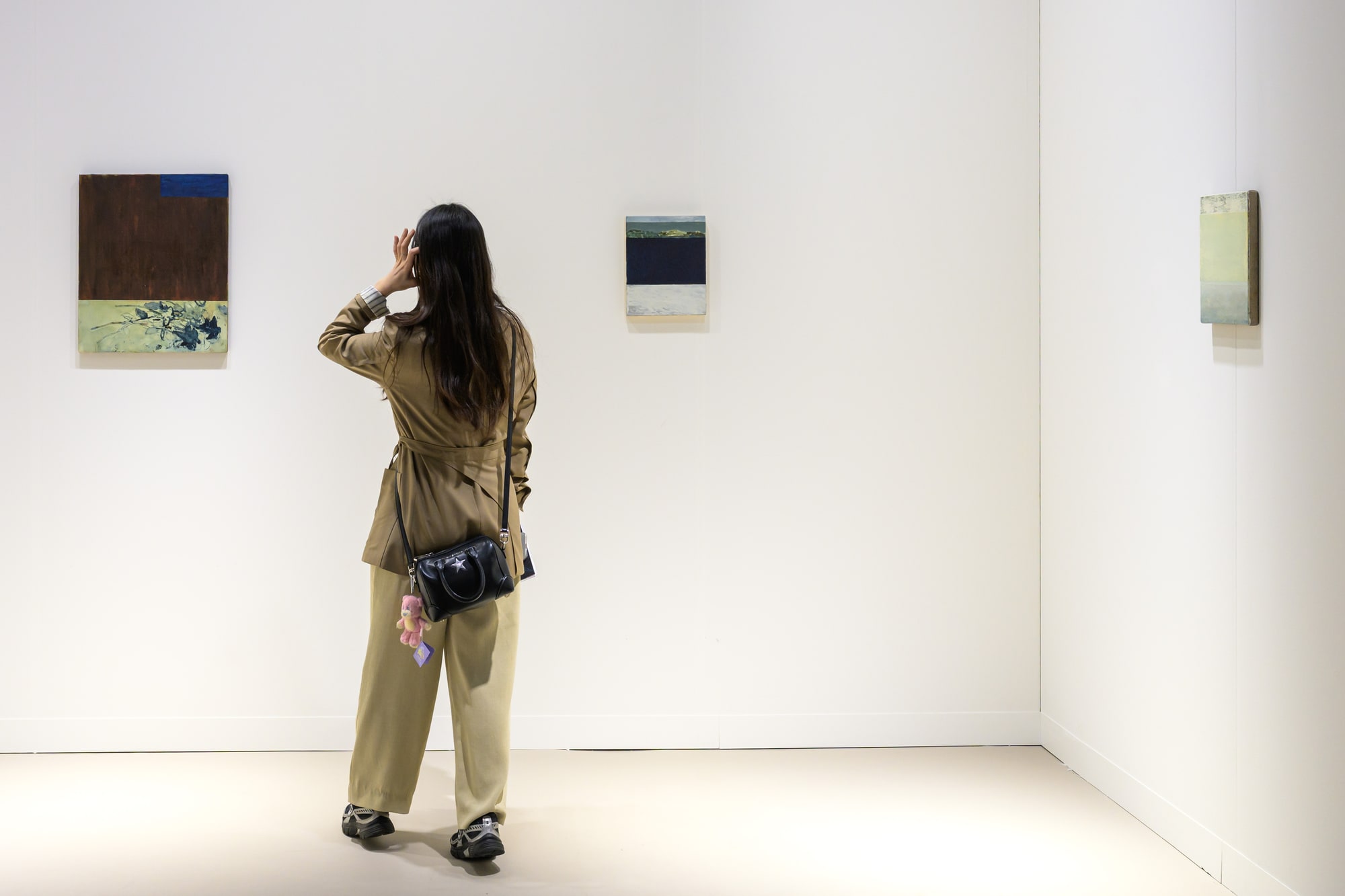
Private rooms, public fairs
Hong Kong and Mainland China were the most private markets on in-person access, with about a third of collectors limiting viewing to household or a close circle. Online, Hong Kong led at forty-three percent keeping content to household or a few chosen people, followed by Mainland China at thirty-one percent and the United States at fourteen percent. Mainland respondents still shared heavily inside bounded networks: forty-seven percent used private WeChat groups, which keeps the conversation lively without putting the collection on an open timeline.
Audrey Ou, whose family founded Shanghai’s Rockbund Art Museum, gave Art Basel a concrete picture of the alternative. Collections feel personal, she said, and a generation that grew up posting publicly now finds broadcasting the home wall a little too intimate. She co-hosted a private Beijing salon in which eight young collectors moved together through artists’ studios and collections. “We gravitate toward high-trust, shared experiences,” she said. When Gen Z collectors lend to museums, fifty-nine percent preferred anonymity and only six percent wanted full public credit, the lowest share of any generation in the survey. Supporting the institution mattered more than claiming the plaque.
Fairs have not lost them. Nearly three-quarters of Gen Z respondents in the survey had bought at one, second only to boomers, which is why the privacy finding lands oddly if you only watch the booth floor. Horowitz’s point is that trust, built in person and in tailored moments through the year, is what keeps the youngest buyers engaged after the discovery scroll. The public fair and the private chat are doing different jobs.
If Art Basel Hong Kong or the Basel week is already on your calendar, watch the smaller introductions that sit around the fair: dealer dinners, WeChat threads, studio days, a salon of eight. The Collectors Shaping Contemporary Asian Art maps the patronage that still surfaces in public institutions, and Why Art Basel Hong Kong Owns March explains why that week still concentrates the invitations. The October survey’s youngest high-net-worth buyers are spending. They are choosing who gets to look.