

On the George Nakashima Woodworkers site, the Conoid Host Chair sits beside its older sibling and looks, at first, like more of the same. Two walnut legs rake back on sled feet. A saddle-carved seat cantilevers off that pair. Hickory spindles rise to a crest rail that flares just enough to catch the eye. Then the Host version gives itself away: the seat is wider, the back taller, and arms can be added if a client wants them. The workshop’s note is short. Mira first drew the chair for a tall priest and his robes during chapel services. A dining table borrowed the same idea later. Whoever sits at the head of the meal needs a chair that can hold the body and the cloth without announcing a different house style.
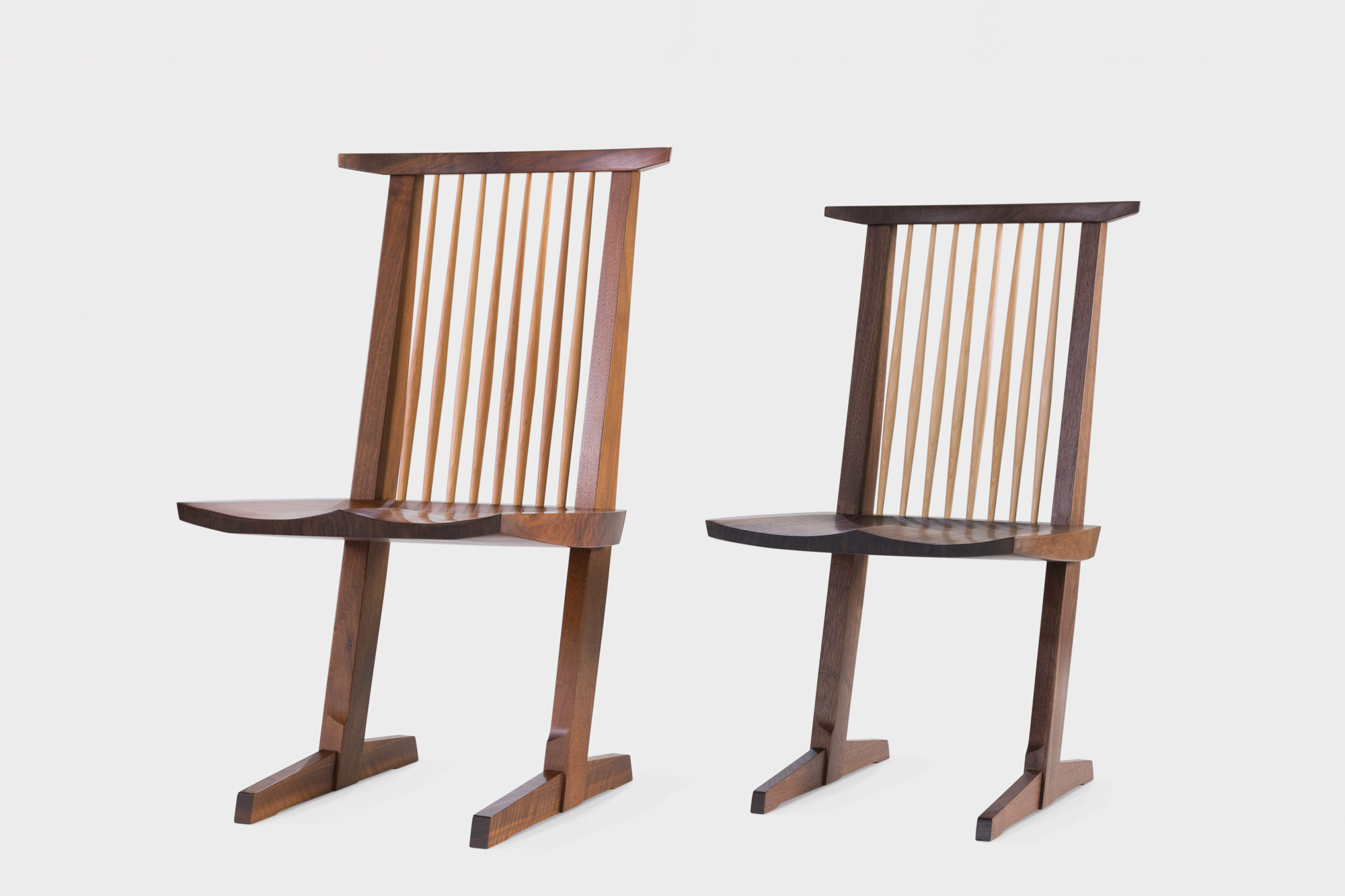
Conoid Host Chair in walnut with hickory spindles (left) beside the standard Conoid Chair (right), George Nakashima Woodworkers, New Hope, Pennsylvania.
After George Nakashima died in 1990, Mira became creative director of the New Hope, Pennsylvania, workshop she had rejoined in 1970. She kept the classics in production and, in 1998, showed her own Keisho line, using a Japanese word for continuance. The Host Chair is continuance of a practical kind. Collectors already know the Conoid silhouette. Mira changed the proportions so the chair could lead a table, seat a celebrant, or take the first place at dinner without looking like a museum loan.
“It’s a privilege to have our furniture here and have it be used. My father wanted his pieces to be used. He didn’t want them to be on display.”
Mira Nakashima, on the Connaught Grill commission, The Telegraph, February 2020
London put that preference to work. When the Connaught Grill reopened in early 2020 after two decades closed, interior architect John Heah and Connaught owner Paddy McKillen asked Nakashima Woodworkers for the woodwork. The studio sent twelve Conoid Host chairs, thirteen tables, and ten bespoke panels in American black walnut, with butterfly joints cut in East Indian rosewood. Mira has said it was the largest restaurant job she had taken on, large enough that she rearranged other clients’ deliveries to clear the shop calendar. From across the room the chairs still read as Conoids. Up close, the Host scale is what lets a Mayfair grill use handmade walnut as seating instead of scenery.
Kyoto is holding the older catalogue open at the same time. Side Gallery’s inaugural Kyoto hang, George Nakashima: Between Cultures and Material Traditions, runs from 12 November through 12 December 2026 at the Kita Residence, the 1920s house by Koji Fujii. The selection is vintage work from George’s lifetime, made chiefly by Sakura Seisakusho in Takamatsu, the manufacturer he began collaborating with in 1964 after sculptor Masayuki Nagare introduced him to the Sanuki Minguren circle. Those rooms are full of solid timber, natural edges, and joinery that treats a fissure as part of the composition: the grammar Mira still works in. Side Gallery notes that the Sakura relationship continued after 1990 with Nakashima Woodworkers. So while Kyoto shows the father’s Japan-made pieces, the Pennsylvania shop under Mira keeps fitting the same language to new bodies and new tables.
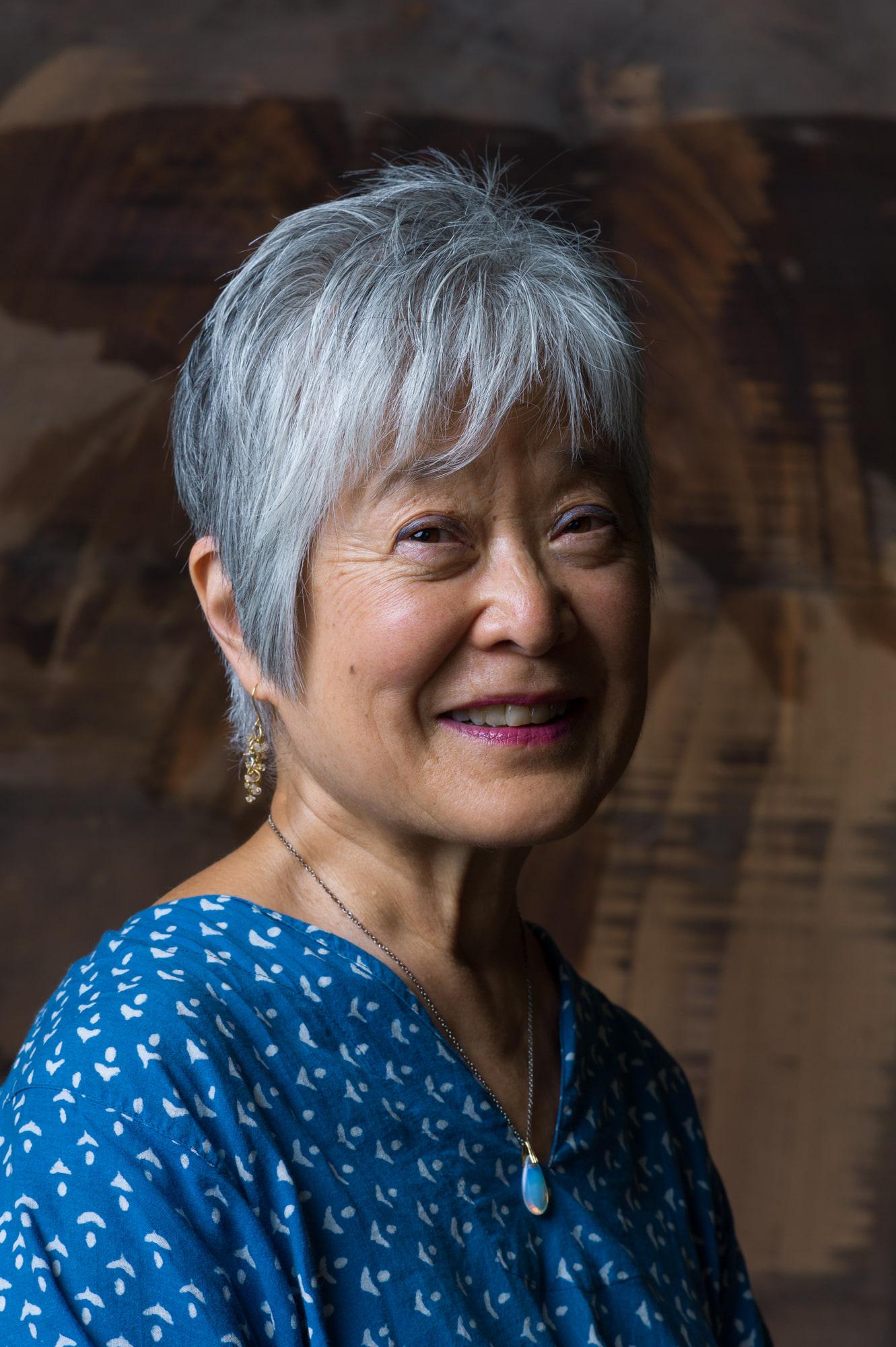
Born in Seattle in 1942 and raised in New Hope after the family’s wartime incarceration at Minidoka, Mira studied architecture at Harvard and took a master’s at Waseda University in Tokyo before returning to the compound. The Host Chair puts that schooling into a few clear measurements. The workshop lists it at about 22.5 inches wide and 24.5 deep, against the standard Conoid’s 20.75 by 21.5, with seat heights at 17, 17.5, or 18 inches. Auction examples signed under her name run about thirty-seven to thirty-eight inches high. She left the cantilever alone and simply gave the head of the table more room.
If you want the chair in use, book the Connaught Grill at The Connaught on Carlos Place and ask for a Host seat. Confirm current hours and dress on the hotel site before you go. If Kyoto is already on the winter route, ask Side Gallery about the Kita Residence hang rather than counting on a walk-up; the Stoop and Side collaboration has been appointment-only, and reservation windows can close mid-run. What Teo Yang Kept from Traditional Korean Furniture in His New Hong Kong Show follows another designer revising inherited joinery for contemporary rooms, and At Tokyo Modernism, the Furniture Is Inside a Ginza Hotel and a Sony Building tracks mid-century pieces you can sit with before you buy. Either way, the Host Chair is still the clearest meeting with Mira’s hand: same spindles, same sled feet, a wider place for whoever leads the meal.