

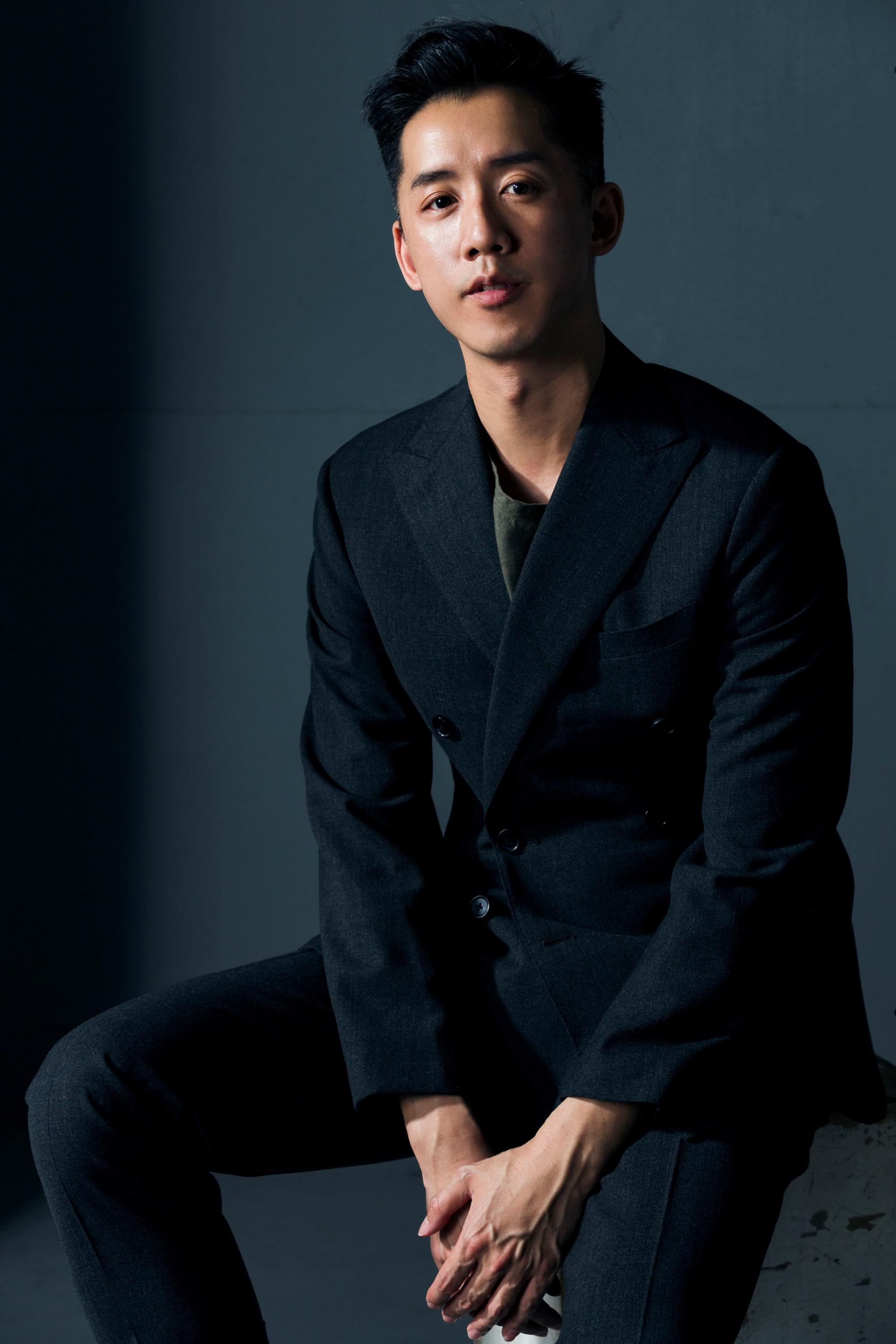
At The Upper House in Admiralty, the city falls away in stages. You leave Queensway for a discreet lobby, ride a lanterned escalator into daylight, and only then reach the rooms stacked above Pacific Place. André Fu designed that sequence for Swire Hotels before the property opened in October 2009. The climb still feels like his first full argument: luxury as residential calm, entered by degrees.
Fu, a Hong Kong-born interior architect who founded André Fu Studio after his Cambridge architecture master's in 2000, has spent twenty-five years refining that argument across Asia. He showed that ease could be engineered through lighting, materials, privacy, and room proportions, then left hotels where you can still check the claim overnight. The work travels because the places are bookable, and because the philosophy does not need translating once you are inside the room.
"One may consider my work being centred around spatial layering, a highly calibrated use of proportion and light; restraint in material selection combined with richness in texture; and an emphasis on craftsmanship over ornament."
André Fu, speaking to CNA Luxury in 2026
Upper House is still the place to start. Its 117 rooms, including twenty-one suites and two penthouses, sit on floors 38 to 49 and read closer to high-rise apartments than standard hotel keys. Bamboo and celadon schemes, solid timber, shoji glass, limestone, and lacquered paper keep the palette quiet; the bathrooms alone are large enough to change how you use the day. Guests who know Hong Kong's older luxury rooms notice the difference immediately: less gilt, more surface you want to touch, and corridors that do not announce themselves as circulation. On Level 49, the Sky Bridge hangs under an oval skylight above a forty-metre atrium, so daylight does the ceremonial work. Fu's brief then was a small hotel reminiscent of a private residence. When he returned in 2021 for Salisterra and the André Fu Suite, the house still held that soft light and residential scale.
At Four Seasons Hotel Tokyo at Marunouchi, reopened on 29 April 2026 after his first full redo of the fifty-seven-key house, privacy is built into the plan. Guests are met with Champagne and escorted upstairs for check-in inside the room. The lobby slows the station district with natural oak, grey marble, backlit shoji screens, and washi lanterns that allude to komorebi, sunlight filtered through trees. A Manor Beside Tokyo Station maps that arrival in full. Fu treats the front desk as a brief pause, then protects the guest behind a residential threshold. Rooms are rearranged for an unhurried flow between living and sleeping zones, closer to a manor rhythm than a tower corridor, with bronze and alabaster fixtures keeping the light soft after dark so the trains outside stay a view.
Materials do quieter work at Capella Taipei, which opened on 1 April 2025 along Dunhua North Road as Capella's first Taiwan house. Fu framed it as a modern mansion: bronze doors, intimate salons, and guest rooms with hand-painted De Gournay silk panels developed with André Fu Living. In Kyoto, Hotel The Mitsui (2020) put solid walnut, tatami references, and kimono textiles by Jotaro Saito into lobby and rooms facing Nijō-jō, with handmade washi lamps at night. Timber, stone, lacquer, and textile arrive sparsely, then finished richly enough that the hand stays visible. The effect is the opposite of a showroom: you remember how the room felt after the photograph has gone cold.
You can test all of this without a monograph. An Upper House night on a Hong Kong week still walks the upward journey. Marunouchi makes sense when Tokyo Station is the hinge of the trip; Capella Taipei when Dunhua is the corridor. The Banquet Guide to Hong Kong and The Banquet Guide to Taipei cover the surrounding days. In each case the room teaches first, and the city plan follows.
Fu has carried the same sensibility into objects, from Louis Vuitton's Ribbon Dance chair for Objets Nomades to André Fu Living tableware and lighting. The hotels remain the clearer proof. Light handled carefully, timber under the hand, a desk that does not dominate arrival, proportions that let the body settle: that is the architecture of feeling at ease.